
Birthdays:
Mine’s coming up.
But I’m not getting old.
Just like good wine, I’m at my best
When aged.

Birthdays:
Mine’s coming up.
But I’m not getting old.
Just like good wine, I’m at my best
When aged.

`
The pen really is mightier than the sword. That’s why dictators lock up journalists and let murderers go free.

I know there are some who will hate me.
And others speak evil of me,
For taking a stand for what’s moral
And for keeping this nation free.
They’ve already gagged social media
That work constitutionally —
Those that allow us to speak truth,
And keep our speech legally free.
But, frankly, I won’t let it stop me.
Their opinions are not worth a sigh.
They don’t have the sense to perceive truth;
Their ignorance quotient’s too high.
But thousands have sacrificed dearly,
To win and preserve liberty.
Their blood cries out now to my own soul
That I must fight to keep us free.
And then there are millions of babies
Whose cries echo down through the years —
Butchered and murdered expertly
As lib’rals emphatically cheer.
So I won’t be quiet and passive.
I’ll speak forth the truth loud and clear.
And I know the forces of evil
Will be quite incensed when they hear.
They’ll sputter and spew out their harsh threats,
And might even put me in chains.
But even in prison, I’ll be right,
And they’ll find that they’ve nothing gained.
Because there’s an end to life on earth,
And before their Maker they’ll quell.
No matter how they twist their stories,
They’ll still end up going to hell.

GREAT NEWS: The Healing Classes that I teach at a local college are going online this term:
Many of you know that as part of my Christian ministry I hold Healing Schools several times a year — in various venues: civic centers, churches, community buildings, private homes, etc. The Lord has used me in this particular form of ministry for over 20 years. Of course, I’ve been in active Christian ministry for over 50 years, with a strong focus on healing most of that time. A couple years ago the college where I teach creative writing classes decided to offer my healing classes as part of the college curriculum in their community education department. It’s been a great experience.
However, with the covid lockdowns, no classes met last year except what could be offered online. And unfortunately, many of the classes are going to have to revert to online only this spring term as well. So the administration and I decided we’d make the effort to set up the healing classes in a video format and offer them through YouTube.
Unfortunately, my video equipment has sound problems currently, so I’m not able to tape the lessons live. However I’m able to record the lessons using other equipment and put them into a video format. The audio lesson will be accompanied by something pleasant to look at on the screen. I’ve offered video lessons on other subjects in that format for years on my ministry YouTube channel, and they seem to be pretty popular. So I think this series of lessons will work out as well.
The course title is BIBLICAL PATHWAYS TO HEALTH & WHOLENESS. I’m posting the official course description here:
If there’s a chance you might be interested in taking this course, read on for more details:
The course will run 6 weeks, and will be conducted via YouTube and e-mail. I will e-mail each student links to the video lessons, along with study sheets and other printed curriculum that they can print out and keep. Every student will have access to a personal e-mail where they can ask me any questions or discuss any part of the material during those 6 weeks. The cost is minimal: $25.00.
When I do the healing schools as part of my ministry in other venues, I never charge for the classes. However, the college is required by the state to charge because they are required to pay a certain specified fee to the teachers, and they must cover the various expenses involved in carrying out an educational institution.
I’d like to invite all my followers who are interested in learning more about receiving healing from the Lord to register for the class. I generally have two kinds of students in the healing schools: people who are in need of healing personally and want to know more about what God says about His will to heal and His methods of healing — and people who don’t need healing personally but who want to share the information with others and help them receive healing.
We’ve had students in the past who found that after sitting in the class and absorbing God’s healing Word during the lessons, their bodies were well. The Word of God can do that when we give ourselves to it completely. Others have found that they left the classes with a much better understanding of how to use God’s Word as medicine for their own bodies and a renewed faith in God’s will to have them well and whole.
Anyone interested in taking the class is welcome to register. You don’t have to live in my state of Illinois. Students from all over the country and from other nations as well take classes from John A. Logan College. If you’re interested in taking the course online, you can register by either method listed below:
Online: https://www.jalc.edu/community-education/
By Phone: (618) 985-2828, Ext. 5.
Your identification information and a credit card are all that’s required.
You need to register by January 21.
I hope some of you decide to participate in the classes. I’d love to be able to interact with you on a more personal basis and about a subject that is very dear to my heart.

 My newest devotional book is out and ready to order — as a boost to your own personal meditation time, or as a gift to encourage someone you love.
Over 100 pages of encouraging, comforting, challenging devotional studies from God’s Word. A straight-forward and down-to-earth presentation of solid truths from Scripture that can be applied to every situation and every problem we face in our lives. Short and easy to read, each of these devotional studies will help build your faith and lift your heart as they focus you on the Lord and His way of doing things.
Available from Amazon.
E-Book is on a special sale from now through Christmas: $0.99
Paperback is $6.00
Find it HERE.
(I post this story annually as part of my celebration of the season. I hope it blesses you.)
♥♥♥
The following story is fiction – as are all the characters and the setting. However, the story was inspired directly by the real-life story of one of the most effective and compassionate men in ministry today. Bill Wilson, who is the founder of Metro World Child in New York City, was actually abandoned as a child and left alone on the streets of his home city in Florida. He was eventually rescued and greatly helped by a loving man of God, and that love led Bill Wilson to devote his entire life to rescuing inner-city children and ministering to their most vital needs – as well as those of their families.
The results of his work, both in the U. S. and internationally, would fill volumes. I have listened to him tell his own story more than once. He always concludes that story by sharing why he does what he does. And it is his reason – which constitutes the final statement by the main character in my story as well – that inspired me to sit down and write “The Rescue.”
I trust that the story will touch your heart deeply, and if it does, I encourage you to remember that it was inspired by the real life experiences of a great man of God. Readers can learn more about Bill Wilson’s ministry at the ministry website: metroworldchild.org. I am not personally affiliated with the ministry at all, nor did the people involved have any influence on my writing this story. However, it is my prayer that this story will encourage readers to pray about supporting Metro World Child with finances and with prayer.
THE CHRISTMAS RESCUE
© Sandra Pavloff Conner
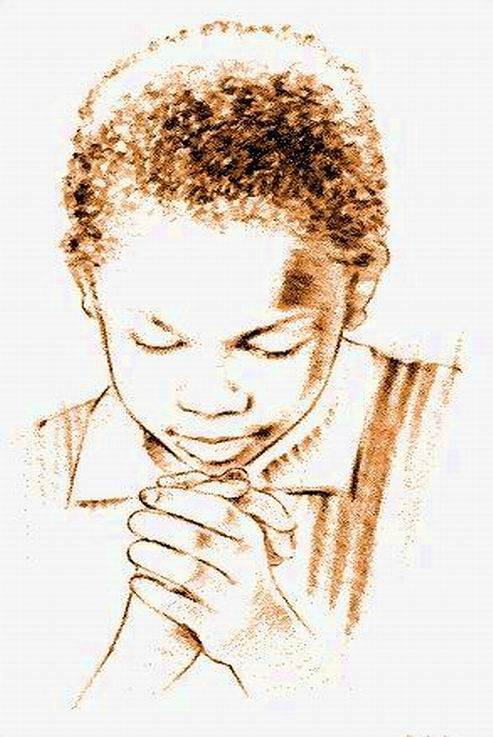 The old woman knelt shivering before the tombstone as her husband pulled away a pile of decayed leaves that seemed to cling defiantly to its base in spite of the wind that whipped at them repeatedly. It wasn’t bitterly cold — at least not like it had been many other Decembers in this city. But the wind was always stronger up here at the cemetery, and today, with no sun smiling down its warmth, the chill just seemed to beat its way into their elderly bones. Of course, sorrow had its own chill, and sometimes it was hard to tell if the icy feeling came more from the weather or from the pain within.
The old man finished his work and then joined her, slowing sinking to his own knees and removing his warm felt hat. Tears glistened in his eyes, but he wouldn’t let them fall. He had to be strong for her right now. He glanced sideways at her, seeing the tears flowing freely down her cheeks. She kept pressing her handkerchief to her face, to try to stem the bitter stream, but it did no good.
It had been a year and a half now since they had lost their second son. He had followed his brother into military service and then into war … and, finally, into the grave.
The old man shuddered out a deep sigh. He had brought his new bride to this country just one year before their first son had been born, and it had been a time of promise and happy expectation. The Lord had blessed them with two handsome, healthy sons, and they had been the sweetest blessing life had to give. He sighed now as he thought back over the years of raising two strong-willed, but tender-hearted boys. They had all been so happy … until ….
But he shook off the heaviness of those years of war – and the funerals – and the nights of wishing he could have gone in their stead. He knew his boys weren’t really in these graves here. He knew that for certain. They had believed in Jesus Christ, both of them, from the time they had been tiny little curly-haired youngsters. And they were in Heaven now. He couldn’t grieve for them, but for himself and his beloved wife, he couldn’t not grieve.
He leaned over toward her and put his arm around her shoulders now. “The wreaths look lovely, my dear. You’ve done yourself proud. I think these are the most beautiful you’ve ever made.” And she had made some beautiful flower arrangements, this wife of his. It had been her life’s work and a great joy at one time. Now, it seemed to always remind her of the need for flowers on these graves, and she took no joy in the work of her hands. Still … it kept her from sitting and mourning all the time, so he encouraged her to keep the business going.
And the money helped. There was no doubt about that. His pension and the little bit he made working as the church custodian were just enough to enable them to keep their house, modest as it was, and to cover their basic utilities.
But with both their incomes – and with a little extra help from the Lord from time to time – they lived well enough. And every year at this Christmas season they pulled out their special bank – the little treasure box where they had put aside a very small offering each morning during their prayer time with the Lord. They paid the tithes on their monthly income faithfully, of course, but this little extra offering represented their desire to do more than just what was expected of them. And each Christmas they asked the Lord what He would have them do with the money to help someone not as fortunate as they.
The old man smiled to himself now. Christmas Eve was just three days away. They needed to get to asking the Lord what His plan was for this year. He leaned over and kissed his wife on the cheek. “Come, Mama. We need to get into the warm. The wind is getting bitter.” She allowed him to help her rise from her knees and pull her coat tighter around her neck.
The wool scarf she wore on her head had almost blown off, and he straightened that too and then placed his hands tenderly on either side of her worn face. “Our wonderful boys are warm and safe in Heaven, Mama … looking down on these wreathes you have made for them and feeling proud. Now … we will go home and fix some hot cocoa and take out our silver bank and have our talk with the Lord about His plans for the money, hmm?”
She nodded her head in agreement, and they turned together to plod arm-in-arm out of the cemetery and down the lane to their car.
As they entered their back door, he stopped a moment and breathed deeply. “Ahhh . . . your kitchen still smells like molasses cookies and shortbread, Mama,” he said, pinching her cheek tenderly and grinning at her. “What do you say we have some with our cocoa?”
His wife was taking off her scarf and coat and hanging them on the pegs beside the door. “You’ll ruin your supper if you eat all that sugar right now, Papa,” she scolded him. It never occurred to either of them to refrain from calling each other by those names, even though they had no children living now. They had rarely called each other anything else since their two little ones had chosen those names for them. It had thrilled them so to be parents that they took pride in the names and wore them like crowns of honor.
Now he hung his coat and hat beside hers and grabbed her around the waist with both hands and began waltzing her around the kitchen. “Well, I have the solution to that!” he announced boldly. “We’ll just have molasses cookies and Scottish shortbread for our supper!”
“Now listen to you go on. What kind of supper is that?”
“Well … we’ll have a chunk of that delicious cheese you bought yesterday along with it, for protein,” he announced, as if that solved the whole question, whirling her around one last time and depositing her in a chair beside the table. At least she was laughing now, and that gave his heart a little ease. “You make the cocoa, and I’ll go get the treasure box.”
So while the milk warmed on the stove, Mama set the food out on the table. She was pouring out the cocoa when he returned carrying a small silver box that looked a little like a treasure chest. “Here it is, Mama,” he said setting it in the middle of the table and taking a seat beside her. “Now, let us thank the Lord for our food and enjoy it while the cocoa is good and hot, and then … then we shall count the money!”
When they had eaten their fill, and their faces were rosy with the warmth of the kitchen and the good food, they moved their utensils out of the way, and Papa pulled the box to him, unlocking it with the key that he always kept tucked away in his top dresser drawer. He dumped out the contents and began to straighten out the paper and sort the coins. “You count the coins, Mama, while I count the bills,” he said, and so they sat quietly, adding up their respective parts of the treasure.
When he was done, Papa picked up the little pad and pencil that he also kept in the box and wrote down his amount. Then he wrote down the amount Mama had in coins and added them together. He looked up at her beaming. “Mama, God has truly blessed us this year. We have put a total of seven hundred, four dollars, and seventy-two cents in our bank!”
“Oh, that’s more than last year or the year before either one!”
“Yes!” he said, nodding his head eagerly.
“Do you think the Lord has multiplied it for us?”
The old man smiled at her with eyes that were lit up with his faith that the Lord had done just that. “Now we must find out what our Lord wants us to do with it. Shall we pray right here, or go into the living room and kneel on the rug?”
“Let’s go and get down on our knees. We need to do everything we can to make sure we focus on the Lord. We wouldn’t want to make a mistake with so much money.”
So they moved into the living room and knelt down in front of their old but cared-for sofa, and, hand in hand, sought the Lord for His plan for the money they had given to Him during their morning devotions. After they had prayed for some time and were now both quiet and listening with their hearts, Papa whispered to Mama, “Do you hear anything yet, Mama?”
“Not yet, Papa. Perhaps, He will reveal something to us while we sleep tonight. He did that once before, remember?”
“Yes, that’s right. All right. We will expect that He will show us something, either as we sleep, or maybe when we first awake in the morning.” He grinned down at her with the eagerness of a small child. “I can hardly wait to see what He has in mind. I know we have to be patient. He may not show us until Christmas morning, you know. One time that’s what He did. But at least we know that He’s never taken longer than that to tell us what we must do, and that’s only four days away.”
Mama smiled at his excitement and rose from her knees, grateful for this generous-hearted husband that the Lord had given her. If only … if only he could have kept his sons to pour that heart into, she thought, shaking her head gently at the sad thought.
“No, Mama,” he said to her now, reaching out and lifting her chin and looking into her still bright blue eyes. “We will not be sad tonight. God has something happy for us to do, and we will enjoy it!” He leaned down and kissed her on the mouth. Then he raised his eyes heavenward and said, “Thank you, Good Lord, for giving me such a beautiful wife!”
“Oh, Papa . . .” she said, chuckling and shaking her head.
“Now,” he said turning her toward the kitchen, “I will help with the dishes, and then you shall read to me.”
The next morning the couple rose expectantly, eagerly anticipating the Lord’s leading about what to do with their money. But as the day progressed into evening, both had to admit that they just didn’t sense the Lord’s direction yet. So they retired that night with the prayer on their lips that He would show them tomorrow.
Again the following morning, they were a little disappointed, but since it was a day with much to be done, they quickly went about their business. Papa had more than the usual custodial work to do at the huge stone church in the middle of the city, because there were always extra services and celebrations this time of year. And Mama had finished the Christmas flower arrangements that had been ordered by two merchants whose shops were on the same street as the church. They always ordered the flowers for their holiday parties from her.
So after having a cozy breakfast, the couple loaded the flowers into the car and headed into the main part of the city. As they passed the corner one block from the church, they noticed a small boy sitting on a concrete bench on the sidewalk. “Would you look at that little tyke, Papa,” Mama said with a chuckle. “He’s bundled up all the way to his nose.”
“Well it is awfully cold,” Papa answered. “Wonder what he’s doing sitting there all by himself.”
“Oh, his mama probably told him to stay put while she ran into the bank behind the bench there.”
“Mmmm, probably, but … I don’t know … in these times, I don’t think I’d leave my little boy sitting by himself for even that long in a city this big.”
Mama sighed, “I know, Papa. Sometimes it seems to me that parents don’t take the dangers waiting for their little ones seriously enough.”
“Well, here we are,” Papa said in a more cheerful voice as he slowed down to look for a parking place close to the first store. “Are you sure you want to walk back down to the church? I can come and get you, you know.”
“Oh, Papa! Don’t be silly. It’s only two blocks. You just carry in one of the arrangements for me, and as soon as I’m done here, I can manage to carry the last one on to the shop two doors down. I’m sure they’ll both want to talk a few minutes, and then I’ll come down to the church to meet you.”
“Okay,” he answered, sliding into one of the few parking spots left on the street in this part of the city. While Mama carried the arrangement for the proprietor of the first shop, Papa carried in the other piece and set it down where Mama could get to it easily. He went on to the church and began his work, stopping almost an hour later when he realized that Mama had not returned yet. But just as he started down the hallway to the outside door to check on her, she walked in, bringing the biting air from outside with her, but flushed with a smile and twinkling eyes.
“Oh, Papa, they raved about my arrangements! They said they’d never seen anything they liked any better!”
He hugged her. “Well, of course, Mama! What else did you expect with your talent for working with flowers?”
“Thank you, Papa, but I happen to know you’re just a little prejudiced,” she said, pinching his cheek gently. “But come … I’ll help you with your work.”
So they worked side by side, finishing up the day’s list of tasks by noon, and left the church together. As they drove back the way they had come, they noticed that the small boy was still at the same corner, sitting on the bench alone.
“He’s been there all morning, do you think, Papa?” Mama asked, her tone beginning to sound worried. Papa looked at the boy as they passed and noticed that he kept looking in both directions, stretching his neck as if looking for someone or something in particular.
“It is peculiar, Mama,” he answered, but traffic was so heavy right at that time, that he had to give his full attention to working through it and getting into the correct lane to make their way back home. Concern nagged at him as he sat down to his noonday meal, and then troubled him off and on as he sat in his recliner and dozed during the afternoon. When the couple retired for the night, they prayed especially for the little boy they’d seen on the bench and his family.
The next morning Papa helped Mama finish her Christmas baking. She always made cranberry nut bread for four of the people in their church and popcorn balls and fudge for all of the children to take home after the Christmas Eve program. They stopped to have a ham sandwich and a cup of hot cider while the treats cooled enough for packaging. Then they began to wrap the gifts in gay paper and tie them with carefully worked bows, adding a candy cane to the top of each package.
When the last of the gifts was finished and set on the kitchen counter to wait for delivery, Mama made a meatloaf, while Papa scrubbed potatoes and prepared them for baking along with the meat.
“You know I can’t help thinking about that little boy we saw yesterday,” Mama said quietly as she worked. “I wonder who he was waiting for.”
“Probably some of his family who were doing last-minute Christmas shopping.”
“But wouldn’t you think they would have taken him with them?”
Papa looked up from the potato he was working on, thinking for a moment before he spoke. “No … not necessarily. Especially not if they were buying his gift.” He laid down his potato absentmindedly. “Still … you’d think they’d be a little hesitant to leave him there alone for so long.”
“You don’t suppose something happened to them do you, Papa?”
“Well, I wouldn’t know, of course, Mama, but I’m sure at least one or two police officers must have passed by their yesterday, and if something had been wrong, I’m sure the boy would have told them.”
Mama nodded her head and carried her meatloaf to the oven. “Of course. I hadn’t even thought about that.” She turned to look back at him. “Are the potatoes ready?”
“Yes, here they are,” he said carrying four potatoes over to the stove and laying them on the pan she had ready to slip into the oven beside the meatloaf.
After dinner, Papa read the newspaper to Mama, and then they watched a Christmas program on television. As they retired, they prayed once more for the young boy and his family and asked the Lord to show them by tomorrow what His plan was for the money He had helped them save this year.
First thing the next morning Papa drank hot coffee, wolfed down some of Mama’s gingerbread, and hurried off to the church to turn the heat up for the evening program. He also wanted to make sure that all the different props for the Christmas program were in place so that they would be easy to find at the last minute before the service began. But as he neared the block where the church stood, he was horrified to see that the little boy from two days before was still sitting on that same concrete bench. Papa hurriedly found a parking place close to the church and then walked back to the corner and sat down on the end of the bench opposite the young boy.
He could see that the child was very cold, even though he had on a heavy coat and a knit cap pulled down over his ears. He had his hands in his coat pockets, but once when he pulled a hand from his pocket to wipe his runny nose, Papa saw that he also had on gloves. He didn’t want to frighten the boy, but he felt frightened himself at the thought that this child could possibly have been sitting here for more than two days.
Why hadn’t the police done something about it? He thought about that question for a while, but then decided that there was so much crime and so many people with serious problems that possibly the police officers who were responsible for this area of town were unusually busy this time of year, just trying to take care of all of those other situations.
“Hi there, Son,” Papa said, his voice friendly and encouraging.
The big brown eyes just looked at him for a moment, and Papa saw a shiver run through the little body. “Hi,” the boy answered in little more than a whisper.
“I’m Jules Larson,” Papa said, holding out one gloved hand toward the boy. Slowly, the child pulled a hand from his pocket and reached it over to shake the old man’s hand.
“I’m David,” he said.
Papa nodded, letting go of David’s hand and watching him put it immediately back into his pocket. “Haven’t I seen you here on this corner for that last couple of days?”
David nodded, but didn’t speak. Instead, he just looked up and down the street again, much as he had been doing the other times Papa had passed by this corner.
“Well … you haven’t been sitting here all day and night, though, have you?” he asked.
David looked back at Papa and nodded again. Papa felt a cold wave of fear move through him and called out to Jesus under his breath.
“But …” Papa started to speak again, but then he stopped. He needed to figure out exactly what to say. After another minute, he sighed deeply and tried again. “But what about your family, David? Where are your mom and dad?”
David looked once more down the street and then turned his eyes on Papa. “My mom’s comin’ back for me,” he said, his lips trembling. Papa wasn’t sure if they trembled from the cold or because the boy was on the verge of tears.
“Where did your mom have to go?”
David looked up and down the street again, and then turned to look behind him once. He looked back at Papa and shrugged his shoulders. “Don’t know. She just said I should wait right here.”
“Do you live close to here?”
David shook his head. “Not anymore.”
“What do you mean? Did you used to live close?”
This time David nodded. “Unhuh,” he said, pointing back down the street. “Over in that other block. We lived in one of the apartments on the very top of that old brown building.”
“Well, why don’t you live there now?”
David shrugged his shoulders again. “Don’t know. Mom just said we couldn’t live there anymore. She put some of her clothes in a bag and told me to put on my coat, and then we left.”
“But did she put some of your clothes in a bag too?”
David shook his head. “I thought maybe she was goin’ to buy me some new clothes.”
Papa sighed, not liking the thoughts that came crowding into his mind with the boy’s last words. “So she took her clothes with her, but not any of yours?”
David nodded. “And when we got to this corner, she told me to sit down here and wait.”
“Is that all she said?”
David nodded. “Sometimes she goes away for a day or two, but then she comes home again, and we have something to eat. So I know she’ll be comin’ back for me,” he said, lifting his chin as if to ward off any rebuttal of that idea from the old man. But just then his lips quivered again and two tears slipped down his chapped cheeks.
Papa sighed inwardly and prayed silently with all of his heart. What was he to do? He couldn’t leave this little boy out here another night, and it was obvious to him that if his mother hadn’t bothered to pack any of his clothes, she had not intended to keep him with her. Should he go to the police? That’s probably what the police would tell him was the right thing. But, somehow in his heart, he just didn’t think he could bring himself to do that just yet. They would turn him over to the authorities, and he might end up in almost any kind of place while the legal aspects of his case were considered.
Papa shook his head silently. No … he couldn’t just turn him over to the police. What would Mama tell him to do?
He sat up straighter. Of course! That was the answer! Mama would say to bring him home and give him some warm food and a warm bed for tonight at least … and then they would pray for the Lord to show them what to do after that. But first, he’d have to do the necessary work at the church. He looked back at David.
“Well, I’ll tell you what, David. I think maybe your mama might have had to go farther than she planned to try to find another place to live. And I don’t think she’ll be able to come back for you for a while. But my wife and I … we used to have two little boys. They died in the war, and we miss them. We’d like to have you come to our house and eat supper with us and maybe sleep in one of the warm beds that we used for our boys. We could always come back here tomorrow and see if your mama is here waiting for you.” He knew that wasn’t a sensible plan, but he was counting on this boy, who looked no more than nine years old, to be too cold and tired and hungry to figure out how improbable it was. David was looking at him with wide eyes, full of indecision. He looked up and down the street again and than back at Papa.
“I’ll tell you what,” Papa continued. “I was going to go into that little coffee shop over there and get me some soup. How about you come with me, and I’ll get both of us some, and we can talk it over.”
David chewed on his bottom lip, and Papa could see the temptation on his face. What must it feel like to sit on this bench for nearly three whole days and have nothing to eat?
“What do you say?” he urged David again.
Finally, the boy nodded his head, and Papa stood and held out his hand to take David’s. Together they walked to the restaurant across the street, and once seated at the table, Papa ordered two steaming bowls of soup and added a glass of milk for David. He would have liked to have ordered him a big, juicy hamburger too, but knowing he probably hadn’t eaten anything in more than two days, he was afraid too much food at once might make the child sick.
Papa sipped his soup slowly, not really hungry yet himself, but David ate as if he were truly starved. “Did you have anything to eat yesterday?” Papa asked the boy.
David only shook his head and kept eating.
“Well, how about the day before?”
David shook his head again and picked up his bowl to drink the rest of the liquid from the soup.
“Well, I’ll tell you what, David. I could sure use some help to do my work at the church down the street. I wonder if you’d help me there for a little while, and then we’ll come back to the corner and sit a minute, just to see if your mama’s coming. Then, if we don’t see her, you come home with me, and we’ll have some more good food to eat. Would you like to do that?”
David thought, his brown eyes dark with the intensity of his concentration as he tried to decide what to do. Finally he nodded. “Okay,” he said, “but just for a little while, and then I gotta go back to the corner.”
“Good enough,” Papa said and rose from the table. They donned their coats and caps once more and made their way back out into the cold and down to the church. A couple of hours work put everything into good shape for the evening festivities. Papa had planned on him and Mama coming to the Christmas program, but he wasn’t sure now just what they would do.
He took David back to the corner, and they sat together for another thirty minutes, while Papa tried to listen to the Lord for instructions. Finally, he looked at David. “Well, now, let’s go home and have supper with Mama,” he said and then chuckled. “That’s what I call my wife, you see. Ever since we had our little boys, I’ve called her Mama, and she’s called me Papa.” For the first time David smiled just slightly, and Papa’s heart was lighter instantly.
“Well, as I was saying, let’s go home and eat some supper with Mama and then we can come to the Christmas program at the church and stop on this corner afterwards, just in case your mama comes along then.”
This time David decided more quickly and got up, reaching out to take Papa’s hand as he did so.
When they arrived home and entered the kitchen, Papa called out. “Mama, I’ve brought a friend home with me. Come and see.”
Mama came scurrying into the kitchen and stopped short as soon as she saw the boy. Her hand flew to her heart as she took in the situation without being told. She had known inside somehow that this little boy had been abandoned on that bench. She just hadn’t been able to shake that feeling, and now as she looked down into his dark, frightened eyes, she knew with certainty that what she’d felt was true. She hurried forward and reached out to shake his hand.
“Why, hello, young man! I’m so glad you’ve come home with Papa.”
“This is David … David McKenzie,” Papa said, “and I invited him to eat with us and then go to see the Christmas program. I even told him we could give him a warm bed to sleep in after the program if his mama hadn’t come back for him yet.”
Mama gave her husband a knowing look and then spoke to David, “We like having boys stay at our house,” she added, looking up at Papa to gauge his response to her use of the word ‘stay.’ He nodded his head in agreement and began helping the boy remove his coat and cap.
“We had a bowl of soup in town, Mama, but we could sure use something else hot,” he told his wife.
“Well, you show David where the bathroom is so he can use the bathroom and wash his hands and face in some warm water, and I’ll see what all I can find.”
After their mid-afternoon snack, Mama tucked David into the bed that her youngest son had used, and the boy had drifted into a deep sleep almost before she left the room. Then she went to an old chest that she kept in the hallway, and digging deep inside, she extracted two sets of clothing just about David’s size. For a moment her eyes clouded with tears, and she held the garments to her chest. But then she braced her shoulders and whispered, “Thank you, Lord, for having me save these garments all these years. You knew that little boy was going to need them.”
After his nap, a warm bath and clean clothes made David feel so much better that he couldn’t keep a smile from sneaking through when he re-entered the kitchen for another snack before they took off for the Christmas program. And during the program, David’s eyes were glued to every single action on the stage. The lights and music fascinated him, and he listened to the words, taking in the story of Jesus’ birth as if he had never heard it before.
At the end of the program, all the children received bags full of treats to help celebrate the Lord’s birthday, and as Papa and Mama led David out of the church, they turned once more toward the corner where he had spent three lonely, fearful days. “We’ll just sit here a short minute, David, and make sure your Mama isn’t right around here looking for you,” Papa said, and sat down, putting one arm around Mama and the other around David. But after about ten minutes, Papa shifted his position so that he could look right into David’s eyes. Mama looked over Papa’s shoulder, her face registering her pain for the boy’s situation.
“David,” Papa said, clearing his throat a little. “I know you want to believe your mama is coming back here to get you. But you see, son, I believe she was having some big problems and didn’t want you to have to go through them too. I believe she probably knew she couldn’t find another place to live with you, and that’s why she didn’t pack any of your clothes. She packed only her own, because she intended to have you sit here until someone came along who could help you and give you a good place to live. A place like she couldn’t give you.” Papa could see the tears glistening in David’s eyes just before the boy turned his head to look up the street as far as he could see, and then turned to look in the other direction one more time.
“Now, we could let you stay here, of course,” Papa continued. “But Mama and I …” he turned slightly to see his wife’s face, and she smiled at him through her own tears and nodded, so Papa continued. “Mama and I would like to have you come and stay with us as long as you’d want to.” He stopped and waited.
David looked at him and then at Mama. “Please come home with us, David,” Mama said in almost a whisper. “We’ll love you just like we did our own little boys years ago.”
“You can decide, David,” Papa said. “But we need to decide right now, because I don’t want to keep Mama out in this cold any longer. So what do you say?”
Once more David looked up and down the street, and then back at Papa. Suddenly he put his hands to his face and whisked away the tears that tracked down his cheeks. Papa could see decision in his eyes, and he knew the moment the boy faced the truth that his mother was not ever coming back to him. He heard Mama whisper just behind him, “Please help him, Jesus.”
David stood to his feet. “Okay,” he said.
Mama gave a glad cry and jumped up to gather the boy into her arms. Papa forced the tears filling his eyes to stay where they were, and he reached out to rest a hand on David’s shoulder. “You made the decision your Mama would have wanted you to make, Son,” he said. Then he stood up, putting an arm around each of them again. “Now,” he said with authority, “let’s go home and celebrate Christmas!”
Which is exactly what they did. And before David went to sleep, Mama and Papa told him more about the Jesus he’d learned about in the Christmas play. They told him how Jesus took all of people’s sins so that they could become good in God’s sight. They told him about the Father who loved little boys and welcomed them into His own family, and how they’d never have to be alone, no matter what, if they would allow the Father and Jesus to come and live in their hearts. So David made another right decision that night and offered Jesus a home in his own heart.
Just as they were getting into their own bed, Mama said, “Oh, my goodness Papa! We forgot about listening to the Lord about our $700.00!” But Papa reached out to take her hand in his. “Not to worry, Mama. I believe the Lord has shown us where to use the money this year, don’t you?” he asked, nodding toward the bedroom next door to theirs where David slept peacefully.
“Oh, of course!” she said, and giggled as he hadn’t heard her do since their own boys had been toddlers. “Clothes and books and toys and schooling, and so many other things. Isn’t it exciting, Papa? The Lord has trusted us with another little boy to raise for Him!”
So they did. And the days and weeks passed. Mama and Papa simply told friends and acquaintances that David was a friend of the family whose mother had become seriously ill and needed him to stay with the Larsons until she was well. In their own hearts and minds, they believed she would have had to be spiritually and emotionally sick to make the choices she’d made.
Friends were glad to see how much the elderly couple enjoyed giving the boy a safe, loving home, and they approved when Papa and Mama asked a young mother who home-schooled her own three children to add David to her classes. Papa used the $700.00 to help pay for the schooling expenses.
And the months rolled along, into the next year, and on to the next Christmas. That next Christmas Eve, Papa announced after their lunch, “It’s time for us to take a drive.”
So all three of them settled into the car, warm and cozy and ready for some kind of adventure. But as they neared their destination and David saw where they were going, he began to feel a tightness in his throat. His stomach began to ache, and tears burned his eyes.
Sure enough, Papa pulled the car into a parking place right beside the corner where they had first seen David sitting on a bench. And the bench was still there. “Let’s get out,” Papa said. He walked around the car and opened Mama’s door and then the back door for David.
“No … please!” David said, panic in his voice. “I’m sorry! Whatever I did that was wrong, I’m sorry. I won’t do it again! Please don’t leave me here again!” And then the tears that had started coursing down his cheeks became a flood of sobbing. “Please don’t make me stay here. I’ll be good. I promise!”
Papa and Mama were stunned. Mama sat down in the back seat, grabbed the boy, and held him close, “Shhh,” she said. “What’s wrong, dear?”
Papa knelt down in front of the door, reached in, and took David’s hand. “David … David … we’re not going to leave you here! Is that what you thought?”
David nodded his head, sniffing back tears as well as he could and leaning hard into Mama’s shoulder.
“Oh, no, no, no!” Mama said.
“No indeed, David,” Papa added. “We’d never give you up. Not ever! I’ve just brought us all back here so that we could remember how the Lord first brought us together. And I thought it would be good for us to sit here a minute and pray and thank Him for making us a family.”
“Would you like for us to do that, David?” Mama asked.
Sniffing again and trying to get the last of his crying under control, David looked at one and then the other with wide, surprised eyes. “You’re not going to leave me here?”
“Never, Son!” Papa said. “You’re part of our family for as long as you want to be. Just like you’re part of God’s family forever!”
So they got out of the car and sat on the bench together, hand in hand. They prayed and thanked the Lord that Christmas Eve for His love and mercies in their lives. Then the months rolled by again, and the next Christmas Eve found them at the same bench, praying the same prayer. They made the same journey the next Christmas Eve … and the next … and the next ….
~~~~~~~~~~
“Pastor McKenzie?” The voice seemed to come from far away. “Pastor McKenzie?” It came again more insistently. David shook himself slightly, realizing that his thoughts had been so concentrated on the testimony he’d been giving that he’d almost forgotten he was on an international Christian television program.
“I’m sorry,” he said, smiling apologetically now. “I was so caught up in remembering.”
“Do you still go back to that same spot every Christmas Eve?” the interviewer asked, her own voice husky with her response to his emotions.
“Yes,” he said, discreetly wiping the dampness from beneath his eyes with two fingers. Releasing a quiet sigh, David McKenzie leaned back in his chair and continued. “Yes, I still go back every year, and … and that’s also why I make sure that I drive one of the buses throughout those neighborhoods every Christmas Eve and pick up all the kids I can personally and take them to our church service.”
“Not many pastors of such a huge inner-city church would drive the bus themselves. It must be a heavy load of work, considering the fact that you have the Sunday School classes for several thousand children every week, plus all of the extra Christmas season services where you serve meals and hand out clothes and gifts to the thousands in need in the city.
“And you’ve begun similar work with children in similar situations in other nations, is that correct?”
“Yes. There are so many hurting children, and we touch only a fraction of them,” he answered.
“I’m sure after almost three decades of serving the Lord, you’ve had opportunities to move into many other areas of ministry. You’re a powerful preacher in your own right, and I’m sure you have connections that would open any number of doors to you. Have you ever thought about doing anything else besides reaching the hurting children in inner cities?”
He paused a long minute before answering. “I can’t do anything else,” he said, looking almost surprised that she had asked the question. “I can’t do anything else!”
“So … you would never consider turning your attention to any other kind of evangelism? Something on a larger scale that would bring you more into the public eye?”
David McKenzie smiled. It was a knowing smile. A smile that spoke of contentment and peace. And he looked directly into the eyes of the young woman asking the question. “No,” he said quietly, shaking his head gently. “No, I’d never considered that alternative even for one minute.”
“That’s interesting. May I ask why?”
“Because it’s only on the streets of New York, and countless cities like it, driving the bus through those ugly neighborhoods of ragged, hungry, frightened, hopeless kids to take them to Jesus … it’s only there that I can rescue the person I’m looking for.”
The interviewer’s eyes grew wide as she asked, “And who is that, Pastor McKenzie?”
“Myself,” he said, smiling at her as another trickle of tears made its way down his weathered cheeks. “Every time I pick up one of those hopeless kids … I’m really picking up myself.”
~ THE END ~

A FUTURE & A HOPE
(Jeremiah 29:11)
Another year is almost gone,
And with it go my fears.
I’m closing out two thousand, twenty,
By wiping away my tears.
I will not let past loss and hurt
Infringe on future years.
God’s promised a future bright with hope:
At His Word my heart cheers.

The fields are ripe for harvest.
Let’s be about our task
To spread the Lord’s great mercy
And love for all who’ll ask.
Let’s tell the world of Jesus
And how He took our sin.
How God’s granted forgiveness
To all because of Him.
Let’s concentrate on loving
The broken and the lost
And demonstrate with actions
God’s love at any cost.
Let’s pray the Lord of harvest
Touch hearts and draw them home.
The fields are ripe for harvest.
Even, so, Lord Jesus, come.
 Yes, it’s official. Book # 5 of the Smoky Mountain Series of inspirational novels is on the market. THIS FIRE IN MY HEART, which continues the story of many of the original characters from the earlier books while introducing us to new ones as well, is finally ready for readers.
Many of my readers who have followed my website for a few years know that when I lost my best friend (who had also been my best book editor) a little over three years ago, the grief and the loss were such that I was not able to return to any of the novels I had been working on, or to start any new works. I was able to write poetry during those years, which provided a healing process for me, but after writing and publishing 11 novels, I was suddenly at a complete standstill when it came to fiction writing. It was a terribly unhappy time for me, not only because of my personal loss, but because of the creative loss as well.
Many of you prayed for me, and the Lord did a wonderful work, particularly during the past year. Earlier this year, I was able to pick up the second novella in another series that had been about half done when my friend and editor died. And I was able to finish that short work and get it into the marketplace. But taking up the task of writing a completely new novel again — and one that fit into the series which has been the most popular of my works — was still quite daunting.
But during the past few months, I’ve experienced a fresh flow of creativity, and I am thrilled with the results. Not only did I write book 5 and get it into publication, but book 6 began to push its way into my psyche so strongly that it almost interrupted my completing book 5 just because I had to keep stopping to write down notes for book 6 that I didn’t want to forget. It’s a very happy problem for an author to have. 🙂
Anyway, folks, that’s a long way of saying that I’m celebrating. So I’ve launched both the E-Book and the Paperback versions of THIS FIRE IN MY HEART at special sale prices through the end of the month.
E-Book — $0.99
Paperback — $6.99
I’ll include a brief description of the story below, and if you’re interested in your own copy, you can find the book HERE.
What’s it about????
He was Cherokee, she Scottish-American. But the moment they met in the airport coffee shop, they were connected. Waiting out the fog, they talked like old friends. When her plane was called, he carried her bag to her boarding gate.
With disappointment in her voice, she said, “Wow, Chicago and Dallas – talk about two people going in opposite directions.”
Light flared in his eyes as he realized she didn’t want their connection to end any more than he did. Her pull on him was so strong that he reached out, thinking to touch her cheek, but caught himself just in time. Such an intimate touch with someone he hardly knew wasn’t like him, He quickly bent and picked up her bag and handed it to her, smiling.
“Opposite directions today,” he said, “but not always, I think. I will see you again, Joy.”
How do you know when you’ve met the right person to spend the rest of your life with? For a Christian believer, the Lord has guidelines. Even so, Joy McDaniels struggles with her heart and mind in conflict. But determined to focus on God’s Word and His way of doing things, she finally allows her heart to take the lead.

Most of my friends know that I have a great love for lighthouses, and several years ago, two of my best friends, Roy and Donna Manasco, came across a small print of a painting by Steven Sundram, “Sureal Moments,” which focused on a lighthouse standing as sentry over a vast expanse of beach during a storm, and a beautiful solid white horse approaching the lighthouse. They bought the print for me and presented it to me as a gift on a Sunday morning at church. I was delighted with the scene immediately, and after arriving home with it, I sat and looked at it for some time before setting it aside to concentrate on my work. I was in the middle of writing two novels at the time, and they needed all my attention. So I had intended to work on one of them most of the rest of the day.
However, I placed Steve Sundram’s picture against the music rack of my keyboard, and sat down on the sofa across from it to eat some lunch. As I ate, I kept looking at the picture, and it literally drew me into it until my imagination began to build to the point that I felt I knew the place personally. Words began flowing through me, as if I were describing it in detail for someone else. I felt that I knew the people who lived there, who walked that beach and shared their lives on it. (Although they are not visible in the painting, they are there.) I even felt as if I knew the horse. I knew his name was Moondancer.
But I also recognized what was happening inside me: I was on the verge of birthing a brand new novel based on that picture. Now, at that time, I had already written six inspirational novels, three of which had been published and were currently on the market. However, every novel I had written previously had been born out of a specific story in my own mind — based on a particular character, problem, or theme. I had never written a novel that focused on a setting of any kind, and even my five-book series The Smoky Mountain Series, keeps the focus on the setting at a minimum.
So starting a book based solely on a physical setting was completely out of character for me. Furthermore, I scolded myself for even thinking about starting a new novel when the current books were still not finished. Immediately, I jumped up, walked over to the picture, turned it around backwards so that I could not see it anymore, and tried to finish my lunch.
But by the time I had finished eating, the descriptive passages flowing through my mind had grown into paragraphs. I fought off the temptation to sit down to the computer and pull up a blank page. I told myself that I absolutely had to finish the other work, one part of which was facing a specific deadline. But those words kept pressing through me. I managed to leave the room and do something else for several minutes, but before I knew it, I was back in the living room, turning the picture back around and looking at it again. I put it down and picked it up multiple times.
Eventually I began to get a handle on the main character — a man who had suffered serious emotional trauma and needed healing. A man who had made his way to this ocean, this beach, this place – in order to find peace and quiet, time and solitude, a touch of eternity — so that he could heal. At that point I didn’t know what he had suffered or what he was running from. Nor did I have any insight into what form and process his healing would take. I just knew that the story would be his story; he would be living there temporarily, and that the other people who lived there were going to have a significant part to play in his healing.
I fought the temptation and the draw of that painting until 3:00 in the afternoon, at which time, I sat down at my computer, pulled up a blank page, and began writing the novel Racing Toward the Light. Of course, it didn’t have the title at that point. But I wrote everything I saw and felt in that painting, and I didn’t stop writing until I had the lighthouse inhabited and the main character named Noah Bennet. I still didn’t know what his terrible past was or what would happen to him in the story, but I was determined to find out. And I can say, without any reservation, that I virtually lived in that painting for the entire three months it took to write the story.
Over the next two weeks, I realized two things: this story would take the bold step of dealing with the subject of the supernatural, which had been experiencing a resurgence in literature and movies at the time. Several conversations that I had with other people concerning the surge of interest in supernatural subjects, especially witchcraft and its effects, led me to realize that I had the rest of the story in that subject matter.
I’ve learned that when an author lets a story begin to tell itself on paper, he finds that it has within itself much more than he ever thought about when he wrote the first word. This story, conceived out of a picture of an unnamed place, built itself into a masterpiece that takes an intimate look into the world of the supernatural while, at the same time, allowing readers to follow the earthly characters as their lives relate to and are impacted by the supernatural realm. The story of spiritual warfare in both realms is sure to inspire and encourage faith in the readers.
Racing Toward The Light also gradually eased its way into a powerful love story. That’s the second thing I realized: that in every book, whether the author planned it or not, there is a love story just waiting to be told.
But now, to the second leg of this author adventure: When the book was finished, I wanted, with all my heart to be able to use Steven Sundram’s painting for the cover. I contacted him to find out what terms he could offer for the use of his work, and I must say that he offered me a very generous proposal. That fact, in itself, was a blessing. Nevertheless, I did not feel that I could afford to accept. I knew that even if I got my hands on that amount of money, I would feel obligated to apply it to a number of other necessities. In fact, even before I contacted Steve Sundram, I had worked diligently to try to create a “second-best” cover, using a friend’s picture of another lighthouse. It was not very satisfying, of course, but I knew it would serve the purpose if necessary.
However, unknown to me, a very dear friend, who had read and been intrigued by Racing Toward The Light — and who had done a thorough job of editing it for me — had been meditating on the fact that this painting had been so powerful that it had ignited the spark that became this bold and brave story. He felt in his heart that it was wrong for the book to use a “second-best” cover. His words were, “It would be an injustice for this book to have any cover other than the painting that inspired it in the first place — the painting you lived in all the time you wrote the story.”
He insisted that I stay in touch with Steve Sundram and not refuse his offer. I couldn’t figure out why he was so adamant that I continue to plan on using the picture that inspired the book, and I felt a little uneasy about continuing to communicate with the artist, knowing I did not actually have the money in my hands.
Then one day, about two weeks after I had begun to confer with Steve Sundram concerning the use of his painting, this friend, who insists on remaining anonymous, simply handed me the money necessary to purchase the rights to use the painting. Now this individual does not consider himself a Christian, but he was so touched by this Christian-themed novel that he wanted to be a part of sharing it with others.
Because most of the novels I write focus on truths from God’s Word as they apply to our every-day lives, I do believe that the Lord inspires most of what I write. And He has had to work out some problems along the way with the writing, publishing, and marketing of several of those novels. But Racing Toward The Light seems to me to be the recipient of an extra amount of the Lord’s intervention. I consider the original gift of a painting that captured my heart so completely — and the outright gift of all the finances necessary to purchase rights to the painting for the cover — to be proof that the Lord has taken a hand in bringing this book to the reading world. The book was first published in paperback in 2009, and it has been available on Amazon in paperback and digital for the past four years.
Writing Racing Toward The Light was truly one of my greatest adventures as an author, and, personally, I believe it offers an adventure and a great blessing for everyone who reads it.
I’m offering the E-Book version of Racing Toward The Light at a special discount price of $0.99 for the rest of the month of October. The price is good from now until midnight October 31, 2020 (U. S. Central Standard Time). If you don’t own a Kindle, Amazon offers a free Kindle app for any device when you order the book.
You can find your copy HERE and start your own adventure with Racing Toward The Light.

There’s a quote floating around out there among writers and readers that says, “Every book you’ve ever read is just a different combination of 26 letters.” I don’t know where it came from originally. I’ve searched the Internet for a reference, but found none. However, I know that quote is true. And this past week, I’ve found myself thinking about that truth more than usual.
As many of my readers know, I’ve recently taken a dive back into my “Smoky Mountain Novel Series” to get book number 5 completed. It’s been a few years since I finished the first 4 books, and I actually had to go back and read a bit of some of them to make sure I still knew the characters well enough to continue the series. I found that I do, indeed, still know them and love them. And after a couple unsuccessful attempts at birthing book 5, I have finally managed to get it into the birth canal far enough that delivery is imminent.
But as I sat this morning pondering on this quote, I thought back over all the books that I have written. Now, I’m not even thinking about books by others that I’ve read — the multiplied thousands of them — and I wasn’t even considering them as I meditated on this thought. But considering just the books that I have written, I stand totally amazed at the vast differences in the subject matters, the characters, the environments, and the stories themselves that have all been created by using only these same 26 little letters.
I guess I’m unusually focused on language and it’s amazing power in the lives of human beings at this particular time because in book 5 of the series, I’m telling the story of a full-blooded Cherokee man who is very personally involved in a movement to restore the original Cherokee language to his people. While many of the elderly Cherokee still speak their native language, most of their children and certainly almost all of their grandchildren barely know and understand that language.
A major reason for that lack, of course, is the result of the U.S. government forcing thousands of American Indian children to leave their homes and families and attend boarding schools for years at which they were totally stripped of everything about their culture and their heritage. They were forced to use only the English language for all communication and were severely punished if they even spoke to each other in their native tongues. Naturally, that kind of treatment could easily and quickly eradicate an entire nation’s communication skills.
As I’ve been pondering these terrible events in history and working them into the story where they need to go for the sake of developing my main character, I’ve been thinking anew about how powerful language really is. And how powerful words are. As a devout Christian and one who tries to write mostly for the sake of sharing Gospel truths through my work, I’m very well acquainted with the importance the Lord puts on words. In fact He comes right out and tells us in Proverbs 18:21 that “Death and life are in the power of the tongue.”
So our words have great power to effect others. And as a writer, I try to always be aware of that fact. I know that words have driven men to hateful, heinous acts against each other, and words have brought an end to wars and brought comfort and courage to thousands in times of need. I try to be aware that all my words carry some degree of power to affect others and even the atmosphere around me — for good or for bad. I believe that the words I write are just as powerful as the words I speak aloud, so it’s my aim as an author to be the most responsible purveyor of words that I can possibly be. It’s a challenge, but it’s also a great adventure — taking 26 little letters and crafting them responsibly into brand new life-sized people and their stories.
If readers would like to check out “The Smoky Mountain Series” novels for themselves, they can find them, along with many of my other books, at this site.
World problems got you down????
CHEER UP!!!
As of this posting — It’s only 129 days and 2 hours until Christmas!



In routine life on Planet Earth, there’s one rather ordinary looking piece of equipment that is used by thousands of people every day. It’s called a compass. Hikers, hunters, military personnel, navigators on ships and planes, and even 12-year-old boy scouts and girl scouts out on field trips use a compass as a normal part of their activities. Most of us have used one at some point in time, or at least played with one just to see how it works. Its job: to make geographical directions clear so that we can find our way safely and expeditiously from one point on this earth to another.
But that compass will not help us — it will, in fact, lead us the wrong way and get us into trouble — it is fails to point its arrow accurately to the North. It it’s off just a tiny bit, it can cause us to go miles in the wrong direction and totally miss our destination. That compass must point its arrow to TRUE NORTH, or it does us no good at all.
Now for individual journeys from one geographical place to another, any average compass in good working order is good enough. But what about our life-long journey — our time from birth to death — when we make our way along the road of life with all its twists and turns and possible detours? What provides our source of accurate directions for that journey? Well, there’s only One who knows for sure how to navigate that life path successfully and wind up at the right places at the right times — as well as how to wind up in the right place at the end of the journey — and that person is our Creator — the One who made us to live this life in the first place.
We hear people today talk about how different people have different “moral compasses” — to each his own — everyone lives by his own standards. But the truth is that all moral compasses that don’t point to Jesus Christ are extremely faulty and will lead the followers into trouble — and eventually into destruction.
Jesus Christ is the only TRUE NORTH. If our life compass focuses on Him, we will be able to stay on course — with joyful results. It if does not point to Him, we’re lost — in more ways than one.
I hear people say things like this: “Well, there are people who do good an live right in this world who aren’t Christians.” And i agree that I know some people who love their families and who try to live by rules that are, for the most part, kind. But the fact is that the only reason those people act as positively as they do is that they’ve been taught the basic rules of God’s Word.
Now they may not recognize those words as coming from the Bible. And they may not have learned them in a church. But they were influenced by others — even by the laws of the land — to understand a lot about what’s right and wrong. Every law of the land in any nation that protects people and guides them to act in ways that avoid hurting someone else came originally from the plans for living right laid out in God’s original law.
The truth is that the only foundation any society — indeed any human being from Adam and Eve down — has for determining what’s right and wrong is God’s Word. That’s why God gave the original ten commandments: so man would know what was good and what was evil. And all the civilized nations in the word have laws that follow those ten commandments. No human being came up with those ideas on his own. His Creator taught him right and wrong.
Why did the Creator need to teach man? Because the only good there is in the universe is in God Himself and what proceeds out of Him.
Let me say that again: There is no good in this world except what proceeds out of God. Man is born sinful — selfish, self-centered, and out for himself alone. Prove it you say? Look at any little baby. He wants his needs met, and when they’re not met, he cries — and cries — and cries — until Mom and Dad stop whatever else they are doing and give baby whatever it is he wants. And as a child grows, he knows to focus on his own needs and wants without being taught. His wants come first.
Most parents — if they are responsible in their child rearing — begin teaching their children about kindness and consideration for others at an early age. But those things have to be taught. They never come naturally to any human being. Goodness, kindness, and generosity are learned behavior — coming either from instruction or environmental influence. There is no inherent good in any human being when left on his own.
The Word of God says it simply and succinctly when it says, “There is none good but God.” (Luke 18:19) and “There is none righteous, no not one” (Romans 3:10 and “All have sinned and come short of the glory of God.” (Romans 3:23). There is no inherent good in any human being when left on his own. He must receive his goodness from God.
Now, living on this earth in the right environment may help some people soak up understanding of some of that goodness. And they may exert some effort to make it active in their lives. Anyone who gets out in the rain gets wet. Anyone who gets out in the sun gets warm. But those conditions are superficial and temporary. So, in the same manner, anyone who is reared and nurtured in an environment of good, loving ways will, no doubt, soak up some of that attitude and that philosophy of life — and its accompanying behavior.
But as with the sun and the rain, those things are superficial and temporary. They will carry that person only so far and for only so long. He will ultimately fail in his morality and goodness. I have lived 72 years on this earth and been actively involved with thousands of people from all over the world, and I have yet to see an exception to this rule. Nor do I know any other people who have come across an exception. No human being other than Jesus Christ has ever lived without failing in morality and goodness. Until we receive Jesus Christ and put Him in control, everyone of us fails to live up to the goodness of God — the goodness required to be fit to live with Him for eternity.
The only good we know and do apart from Jesus is what we acquired by osmosis because God’s goodness managed to penetrate our soul a little. But without our spirit being born again by the entrance of Jesus Christ, that “goodness” is nothing but a garment we wear. What’s inside will eventually come to the forefront. And, yes, I realize I am repeating myself here, but with good reason. My experience with humanity has taught me that very few people can capture and hold onto a new concept the first time they hear it. And, for many people reading this article, the concept I’m sharing is new indeed. So explaining the same truth again — and in slightly different terms — is a safeguard and an insurance that more people will grasp this truth and let it help them move forward to what they need.
The exciting part of this truth is that once Jesus is allowed to come in and take control, His own righteousness is transferred into our being. At that point, we aren’t just trying to be good and do good because of some training that will eventually fail us. No. Jesus gives us His own inherent goodness and holiness. It becomes who we are because He has become the controller of who we are. We are one with Him.
And since He alone is TRUTH (John 1:17; John 14:6), He provides the infallible compass for our life from that point through all eternity. Do our souls and bodies sometimes fail to measure up? Yes, but Jesus, our unerring compass, lovingly points us back to the right direction, and the wrong steps we took gets corrected so that we don’t ever get completely off course again.
Jesus Christ is our TRUE NORTH. If you haven’t yet made Him the compass of your life, right now is the best time to do it. No matter how far off course you are at present, if you’ll turn your life over to Him, you will immediately see where “True North” is, and you’ll never have to worry about being lost again on this journey through life. Not only that, you’re guaranteed to wind up at the destination you were always intended to reach — in this life on earth and for eternity.
photo credit: Efraim Stochter (MW) @ pixabay.com
 The Happy Wordcrafter