SPEAKING AS A WRITER – # 4: YOU ARE A WRITER; YES YOU ARE


What an exhilarating experience it is to create something! Our God, of course, is the original Creator, but since He made us in His own image, we are also creative by our very genetic nature. I’ve written about this fact a number of times in the past, including it as an important part of my curriculum Releasing the Creative Writer in You.

Writers, particularly, need to be aware of this facet of their craft. Artists just naturally seem to understand that they have created something unique when they finish a painting or a sculpture. And jewelry makers and woodcrafters recognize the fact. But so often I meet writers who seem to feel that until they have completed an entire novel or at least a large collection of short stories or poems, they have not actually created anything of value. And then many writers feel that until another person has judged their work and labeled it “valuable” – someone such as a publisher or literary agent – then they are still “working” at being “creative.”

But the truth is that the intrinsic value of writing lies in this one potent fact: everyone who writes – once he has written an original piece of any size – has created something that never before existed. That person’s words in that specific form, making that specific statement, having that particular impact, constitute an entity that never existed before it came forth out of that individual. What’s more, it never would have existed – had no chance of ever seeing the light of the world – unless that individual had put it onto paper – or into his computer as the case may be.

Now, it’s true that most of us who write want others to read and appreciate what we’ve written. That’s fine. In fact, it’s a good thing. And the acknowledgment of others has its place in a creator’s life. But the fact is that whether or not anyone else reads what we’ve written – whether or not it ever boasts a publisher’s imprint or spends time on a bookstore shelf – every original piece we write is a unique entity that we have created out of ourselves. I encourage all the students in my creative writing classes to get that point indelibly planted into their minds and souls and to enjoy the power of it as they labor, even on their most frustrating, unfruitful days, to hone and polish their craft.

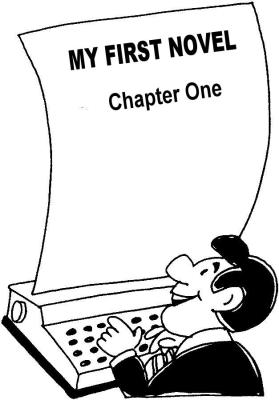
And just as an afterthought, I’ll add one more point that I tell my students – again and again – until I get it solidly established in each of them: Once an individual has written anything original, he has become a “writer.” I never allow my students to say that they are an aspiring writer, a would-be writer, or a prospective writer. Any individual who has created a piece of literature that never before existed is a writer, pure and simple, and should gladly embrace and acknowledge that fact to himself and to others as well.

SPEAKING AS A WRITER # 1 — IT ALL BEGINS WITH 26 LITTLE LETTERS

Welcome to the first installment of my series “Speaking As A Writer.”  I plan to post an article each week about writing — probably covering all kinds of territory: everything from general concepts to details of problems I’ve had getting a story to come together to explanations of how I came to write a particular story or poem in the first place. Several of the things I’ll share can probably be found elsewhere on this website from the past, because, after all, anything that’s really worth saying is worth saying at least twice or three times, right???

I will probably philosophize, maybe preach a little, no doubt make a few people mad, and most likely make fun of myself. But hopefully a lot of what I share will ring a bell — or strike a chord — with a few other writers out there — and maybe even a few readers as well. So let’s get started.


IT ALL BEGINS WITH 26 LITTLE LETTERS

There’s a quote floating around out there among writers and readers that says, “Every book you’ve ever read is just a different combination of 26 letters.” I don’t know where it came from originally. I’ve searched the Internet for a reference, but found none. However, I know that quote is true. And I’ve found myself thinking about that truth a great deal.

One particular morning, as I sat pondering on this quote, I thought back over all the books that I have written. Now, I’m not even thinking about books by others that I’ve read — the multiplied thousands of them. But considering just the books that I have written, I stand totally amazed at the vast differences in the subject matters, the characters, the environments, and the stories themselves that have all been created by using only these same 26 little letters.

I think I got particularly focused on language and its amazing power in the lives of human beings when I was working on book # 5  in The Smoky Mountain Series. The novel is titled  THIS FIRE IN MY HEART,  and in it I’m telling the story of a full-blooded Cherokee man who is very personally involved in a movement to restore the original Cherokee language to his people. While many of the elderly Cherokee still speak their native language, most of their children and certainly almost all of their grandchildren barely know and understand that language.

A major reason for that lack, of course, is the result of the U.S. government forcing thousands of American Indian children to leave their homes and families and attend boarding schools for years at which they were totally stripped of everything about their culture and their heritage. They were forced to use only the English language for all communication and were severely punished if they even spoke to each other in their native tongues. Naturally, that kind of treatment could easily and quickly eradicate an entire nation’s communication skills.

As I pondered these terrible events in history and worked them into the story where they needed to go for the sake of developing my main character, I thought anew about how powerful language really is. And how powerful words are. As a devout Christian and one who tries to write mostly for the sake of sharing Gospel truths through my work, I’m very well acquainted with the importance the Lord puts on words. In fact He comes right out and tells us in Proverbs 18:21 that “Death and life are in the power of the tongue.”

So our words have great power to effect others. And as a writer, I try to always be aware of that fact. I know that words have driven men to hateful, heinous acts against each other, and words have brought an end to wars and brought comfort and courage to thousands in times of need. I try to be aware that all my words carry some degree of power to affect others and even the atmosphere around me — for good or for bad.

I believe that the words I write are just as powerful as the words I speak aloud, so it’s my aim as an author to be the most responsible purveyor of words that I can possibly be. It’s a challenge, but it’s also a great adventure — taking 26 little letters and crafting them responsibly into brand new, life-sized people and their stories — or into messages that will change peoples lives for the better.


What I’m Doing for NaPoWriMo


Just a little note to let my followers here know that for this year’s National Poetry Writing Month 30-day challenge, I’m writing and posting all my poems on my regular poetry site: AHYOKA.  So if you’re interested in following the 30 days of new poems, just hop over there. In past years, I’ve posted the NaPoWriMo poems on this site, but I’m trying to get myself more organized, and I don’t always have time to post them here and on the poetry site both. So it’s only right to let the AHYOKA site do the job.

Hope to see all you poetry lovers over there.  🙂


When Violets Aren’t Violet

VIIOLETES - Anelka -- PX

Roses are red;
Violets are ———- purple!

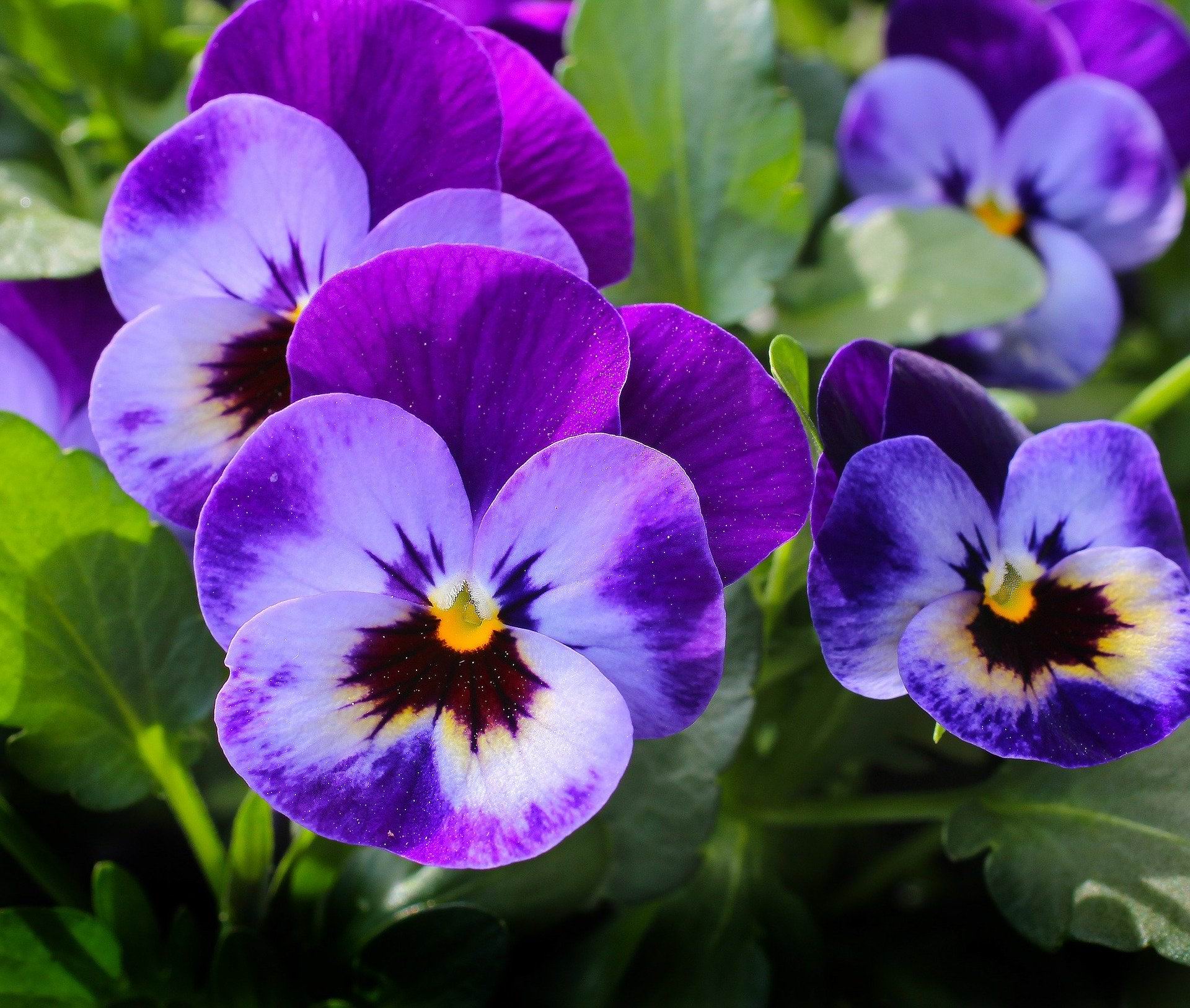
Doesn’t it bother anyone that numerous poets for centuries have painted those innocent little violets blue?  Of course, I know that there are, indeed, some strains of violets that are more blue — and even some that are pink and white. But I have to believe that they are the exception, because, after all, the very name of these flowers is spelled  v-i-o-l-e-t.

However, I’m not really complaining about the color of violets. I just got to thinking about that particularly well-known poetic line and about how we as poets really do feel we have our own kind of literary license. What is it about poets that makes them think they can write just anything they want to write as long as it rhymes and keeps the meter smooth and uninterrupted?  Well, I’ll tell you what it is about us:

We love words — the sounds of words — the rhythm of words — the music of words. And we love playing around with lots of different numbers of syllables. We love to hear consonants repeated, vowels repeated, digraphs repeated. And if we need to turn a sentence around backwards to get the right rhythm — or leave out a couple letters replaced by an apostrophe — or go beyond the norm with hyperbole — well, it’s all part of what we see as our job —— and to be honest —— it’s part of the FUN of writing poetry.

True poets follow rules of meter and rhyme and correct use of figurative language. But we also follow rules of emotion, yearning, and imagination.  So, yes, we do believe that it’s okay if we altar reality a bit here and there or say things backwards. If it helps make the poem touch a heart, grab the imagination, take the reader to another realm, or tickle his funny-bone, we figure we’ve done our job well.

And, personally, I think that’s why a poem can speak to readers in such unique ways. People don’t always realize it when they are reading a poem, but it’s those quirky kinds of things — those little excursions away from what is generally the “accepted” pattern — that has caused many a poem to grab a place in the reader’s mind and heart and stay there.

So okay … here’s my version:

Roses are red;
Violets are blue;
We don’t always stick
With only what’s true.
We’re looking for words
With meter and rhyme,
And if we can’t find them,
We might tend to whine.
So cut us some slack;
We’re doing our best.
If a poem gives you pleasure,
It passes the test.