Healing Book: New Edition, New Look, Lower Price

HEALING AMAZON BOOK COVER - FRONT ONLY w. shadowHey, I just want to let you all know that my book Healing Is For You! is now available in paperback from Amazon. It’s been on the market in paperback for years, selling in independent bookstores, at seminars, Bible schools, and through churches. And it went onto Amazon in digital format last year. But the only online retailer for the paperback was the publisher’s website, St. Ellen Press.

However, this week the book has come out in its fourth paperback edition, with a new look, new format, and lower price ($6.99) — and now it’s easy to order from Amazon.

It still offers a thorough study from God’s Word about healing for body and mind, and it still answers scores of the most troubling questions on the subject. Such as —-

Is it always God’s will to heal?

If it is God’s will to heal everyone, then why doesn’t everyone receive healing?

What part does medical science play in God’s healing plan?

Is it God who decides when each person dies?

How can I ever die if I keep getting healed?

If I don’t have faith for healing, can I get it somehow?

The book doesn’t promote any church doctrine. Rather it looks closely and carefully at God’s Word — especially the life and ministry of Jesus — who, according to the Word, is the only exact, perfect representation of God. It looks at God’s personal and perfectly-executed plan to get His people well and keep them well. It covers 9 separate means that God Himself has provided to get His healing power into us, and it looks carefully at 7 of the most common hindrances to our receiving that healing fully. It also offers a final chapter with more than 100 healing scriptures to use as medicine, just the way the Lord instructs us to do.

The Lord has graciously anointed and blessed Healing Is For You! to strengthen and encourage faith and help people receive healing from Jesus Christ. If you need healing, or you would like to better understand God’s healing plan so that you can help others get well, it will be a wonderful tool to help you move more fully into God’s loving, merciful plan to bless His people.


~~~


‘Releasing the Creative Writer in You’ Lesson 5

To access previous lessons in this series, simply click on “Creative Writing Class” in the navigation bar, and scroll through to find the lessons you need.

releasing-the-creative-writer-icover-editedLESSON # 5: DEVELOPING CHARACTERS

Plot-Driven Stories vs. Character-Driven Stories

(Plot, remember is basically the action – problem/conflict, attempts to resolve problem, climax, resolution)

Plot-Driven stories focus on the action. However, great-selling authors also develop their characters with care and detail. The most popular action novels generally have a large following because the readers can identify with the hero/heroine. It is hard to identify with characters that have no depth – are only one-dimensional. This problem is the biggest hazard of writing plot-driven literature. You must resist the tendency to let characters remain as one-dimensional beings who are obviously just manipulated by the author to fit the action.

Stories with no character development can entertain for the short-term but generally have no lasting quality.

Character-Driven stories give the reader someone to identify with. But those characters have to be “real, and they have to be living, changing, growing. (Unless your bent is focused on degeneration. Then they need to degenerate.) Every single character may not change significantly, but certainly your hero/herione will, and his changes will normally effect changes in other characters as well.

How Does Your Reader Get To Know Your Characters?

All great stories reveal and develop each individual character through use of three basic tools:

1. Pointedly describing the characters – physically, psychologically, emotionally. Giving your reader the details of the characters’ physical appearance or his psychological bent works well up to a point. But this tool needs to be used sparingly. It leads to just “telling” the reader about the character instead of letting the reader himself get to know that person the way he would get to know any person in real life.

2. Revealing a character’s speech, thoughts, and behavior. “A picture is worth a thousand words” is a quote often used to praise photography over verbal descriptions. But the truth of it applies to writing stories even when photographs or illustrations are not used. When an author uses his words carefully enough to show the reader what a character is like, rather than explaining through narration, the reader gets a much better handle on that character. Let your character speak and carry on dialogue with others. Let him act and react to others. His true nature will come out in his words and actions. It’s when the reader can discover for himself what a character is like that he more fully connects with him.

3. Describing opinions and reactions of other characters to that character. What the other members of the cast of your story feel and say about each character – and how they react to him — reveals that character in light of relationships within the story. That aspect of characterization adds much more depth to the story as a whole.

MAN PROFILEWhat About Your Hero/Heroine?

Hero/heroine: The principal figure in an action, event, or story. This person will obviously be the central focus of your story, and it is his development – his learning, changing, experiencing epiphanies, maturing, growing, becoming better, stronger, wiser, healthier, etc. that will give the story its meaning and satisfy your reader. It is the hero – along with the help of the other characters – who is the driving force behind the action.

WOMAN SILHOUETTE, PONYTAILAll other characters need good development as well. Having a well-developed hero with no one to interact with except one-dimensional, cardboard characters will stifle the hero’s development as well.

The Hero/Herione’s Progression:


Most good stories will take that hero through about 6 main stages as the story moves along:

1. Hero is introduced: You need to know how and why he is the center of your book.

Why will this guy – instead of someone else — do the job of making this book a great read?

2. The hero has experienced – or is experiencing – a certain amount of preparation for what he will do in the story. Let the reader see that he is a certain type of person and that he has had experiences that will eventually lead him to specific action or reactions later in the story. His actions and reactions need to seem real.

This process can include some involved background – if you have a long enough story to work with – and it can be added a little at a time as the action ensues. Or it can be a well-placed couple of sentences that use exact descriptive words. In a novel, you may tell the reader a little of the character’s background, but then let the rest come out through conversations with other characters, or a situation that causes the character to remember events in his past, etc. You may even introduce a separate character who reveals some of the main character’s past that lets the reader know what caused the hero to be the person he is today. Even in a short story, try to avoid just telling the facts. Let them come to light through as much natural action and interaction between characters as possible.

3. The hero moves into his journey – his quest – his effort to reach his goal – his effort to defeat an enemy. This aspect of the story will involve a series of battles or conflicts that come against him, and he must decide whether to go forward or pull back. His nature – that you have developed well – will determine that decision. (Now your reader may still be learning about his nature, and these decisions will give that reader a clearer and clearer picture of who this guy is. But YOU should already know his character well-enough to know what he will do and WHY.

(Occasionally, authors will find themselves in the middle of a scene, and suddenly feel the character pulling to go an unexpected direction. That situation can lead to a whole new aspect for the story that makes it better. However, it can also sidetrack a good story that’s well underway. So if this happens, take a little time to re-evaluate and determine if what this character seems to want to do really has value. You may even pull up a new document page and allow yourself to write the alternative scene with the character acting “out of character,” but don’t delete the original plan unless you are totally convinced that plan number two is much better.)

*** Keep double checking your story to make sure that every sentence is actually moving the story forward and not just filling up space on the page.  ***

4. The hero/herione will eventually come head-to-head with the main antagonist. You must decide how soon that takes place. They may have met very early in the story, but their battle for the climax of the story will not take place until your character development and your action is ready for it.

Who is that antagonist? He will be the killer, the rival lover, the mean banker ready to foreclose, the evil totalitarian government system that is taking over a free nation, a killer storm raging across the country, destructive beings from another planet, some mysterious disease that can’t be stopped by drugs, the devil himself. Whatever mask the antagonist wears, he is the embodiment of evil as opposed to the hero who is the embodiment of good. This antagonist, too, must be well-developed prior to this climaxing battle.

Note: Modern novels have had a tendency to produce heroes who are so imperfect and fallible that they offer no “higher level” of character or lifestyle to which the reader can aspire. That is certainly acceptable, of course, but the greatest novels of all time – those that have outlasted the millions that see bookstore shelves for 3 months and then dwindle away – are those with heroes or heroines who have something above and beyond the “average” or the mundane in their make-up. And in spite of the fact that people say they want “realism” in their books and movies, the truth is that almost every human being secretly wants a role model that is just a little “bigger than life” to identify with – and wants a level of life that is just a little bit better/higher/freer/more successful/more loving than what he is experiencing now.

So while you may not want to write a book that is particularly positive in theme or that has a “happy ending,” you may still want to be sure that your hero/heroine offers the reader something “better” than ordinary to identify with and aspire to.

By the time the hero enters into the decisive battle with the main antagonist, you must have made him so believable and reliable that your reader will know what to expect in his actions and reactions.

5. The hero will win the battle with the main antagonist. This action – whether physical, spiritual, or mental, will be the end of the climax of the story.

6. The hero will be changed/transformed by the end of the story. He will be different in some way. He may have learned something, found new qualities in himself he didn’t know were there, realized he’s capable of giving/loving/creating more, etc, etc. Also, as he moves into and enjoys these changes, they transfer to the reader, and the reader benefits from them as well.

This kind of strong identification makes for memorable, lasting stories – and also builds a strong base for any sequels or series that you want to create.

Needless to say, the other characters in the story will undergo their own changes, and these will be important to your reader as well. But the process of developing the hero and moving him through his 6-step process works the same way for each character. For the most part, you need to create each character with as much care as you do your hero. The “realness” of the other characters can make or break the story as well.

DRAGON W. BOY - LARGERThese basic rules of good character development apply equally in children’s literature — whether the characters are children or animals. The principles are still the same, and the readers respond to characters pretty much the same way at all levels.

So take time to get to know your characters personally. Write out a checklist that will clarify the basics aspects of their personalities, experiences, and relationships. Even writing up a complete character sketch on each one is never a waste of time. Everything you can do to make sure those characters are “real” will give your story that much better chance to find a special place in the hearts of readers for generations to come.


* Releasing the Creative Writer in You, © 2013 by Sandra Pavloff Conner

~~~

‘Releasing the Creative Writer in You: Lesson 4

To access other lessons in this series, simply click on “Creative Writing Class” in the navigation bar, and scroll through to find the lessons you need.

releasing-the-creative-writer-icover-editedLESSON # 4: PLOTTING YOUR STORY

First, let’s look again at the main parts of the plot of a story:

Most authors and writing teachers agree that all stories should have an arc of somewhere between five and eight steps. That arc takes the reader from a state of rest (before the story opens) into action, then through the process of one action causing another and another, until those actions reach a climax and finally ebb into the resolution of the story. A normal arc generally includes all of the following:

A. The presentation of the conflict

B. The hero’s attempts to resolve that conflict

C. His deliberate choices to fight or give up – use force or peaceful measures – take the legal way or the illegal way, etc.

D. His ultimate success or failure (the climax of the story)

E. The resolution into a changed situation, due to the outcome of the climax.

Each writing course will label these steps a little differently, but, in the end, they represent the same 5 simple parts of a plot that we’ve mentioned here. In the chapter coming up, “Developing Characters,” you will see a similar list of steps through which every hero and heroine move as they progress from beginning to end of the story. It is not particularly important that the writer label each individual step based on one writing course or another. What is important is that the writer understand that the natural progression of action or character development is most successful if it follows the pattern we see in real life, which generally does include an arc similar to the one we’ve just described.

SWORDS
CONFLICT

Conflict is always based in the very broad primary concept of Good vs. Evil. However, that “good” and “evil” can wear many faces.

Conflict can be rooted in the relationship and/or rivalry of two individual characters, two families, two nations, two worlds. It can also be rooted in one individual character’s battle with an ideology or a system (for example, a battle to avoid or annihilate a totalitarian government). Some stories create conflict between a character and some force of nature or some element or power outside of the human realm – such as a killer storm, a deserted island, a sorcerer’s curse, etc.

However, conflict can be totally internal as well – within one character himself – possibly between the character’s realization that he needs to overcome some aspect of his nature or personality and the desire on his part to avoid working at overcoming it or letting it go. Conflict can also be internal in the sense that the character is battling an enemy coming against his own mind or body (for example, a deadly disease).

Any or all of these kinds of conflict make for great stories, but you want to be sure that the type of conflict you choose is the best carrier of the story you’re telling so that the story accomplishes exactly what you want it to accomplish.

Also bear in mind that most good stories have more than one conflict going on. The major conflict will decide the resolution of the story, but while it is played out, many of your characters can be experiencing their own minor conflicts that affect how they act and react to the major conflict and how they fit into the climax of the story.

For example, you may have a story in which the main conflict is between law enforcement officers and a huge crime syndicate in their city, which they are trying to bring down. While much of your conversation and action will involve the actual fight between these two elements, some of your individual characters may be battling a sickness, or a divorce, or some kind of character flaw that they can’t seem to overcome. Each of those individual conflicts will have some effect on the job these characters do in resolving the main conflict. Of course, the longer the story, the more possible conflicts you can include.

WHERE TO START

In all fiction, the first three pages of any novel (and the first few paragraphs of any short story) are the author’s only chance to grab the reader’s attention. Once he has that attention, the action or characters must develop quickly enough and realistically enough to hold that attention and keep the pages turning.

Make sure you have your reader securely in your grasp by the end of chapter one. If he isn’t in a hurry to turn the page to chapter two, there’s a moderate chance that he will do so anyway, but most of the time, at that point, he’s usually made his decision about whether or not he’ll finish the book. (A few readers out there force themselves to finish every book they start, whether they like it or not, but you cannot count on that handful of people picking up your book.) And for the short story writer, it’s safe to say that after the first 500 words, the reader has decided whether the story is worth his time.

So how do we capture that reader and hang onto him? Science has the answer. Does that surprise you? Well, believe it or not, two of the world’s greatest physicists have provided the basic truths that generations of writers have used as foundational principles for telling stories. Albert Einstein, after years of scientific work and research came to the conclusion that “nothing happens until something moves.” And another great physicist and mathematician, Isaac Newton, is credited with giving us the basic understanding of the laws of motion. He proved that an object at rest stays at rest unless it receives pressure from an outside force. Then he further proved that an object in motion will remain in motion, going in the same direction, unless acted upon by an outside force.

SOCCAR PLAYER KICKING BALLSo what does that have to do with writing fiction? A LOT: Good plotting puts things into motion quickly and then makes sure they stay in motion, or change direction, or come to a complete stop in such a way that those actions carry the reader along at a satisfying pace. And the gifted story plotter makes sure that every one of those actions and reactions – every motion and counter-motion – has realistic motivation and cause. (And remember: ‘motion,’ as we refer to it here, can be physical, mental, or emotional. However, be careful to avoid getting  your reader bogged down in thoughts or emotions with no physical action to relieve them.)

When the writer begins his story, he needs to have some kind of action taking place in those first few pages – even if his story is mainly character driven. The reader wants to get to know the characters the way he gets to know real-life people – through talking with them, seeing them interacting with other people, and seeing what they do and how they do it. A couple centuries ago, authors got away with giving lengthy descriptions of characters early in their books, and readers put up with it. But in the 21st century, we can’t find those kinds of readers.

All rules have exceptions, of course, and if you are writing a totally character-driven story that requires your reader to be thoroughly acquainted with the thought processes of the main character, you just might be able to begin your story with a monologue of that character’s own thoughts. However, the point we made earlier bears repeating here: keep in mind that too many pages of thoughts with no accompanying actions does get boring for most people.

That being the case, even if you’re focusing on your reader getting to know and understand your main character in the first chapter (or the first page of your short story), you’ll want to let the character say and do some things that will make his nature and personality clear.

So when your reader sees the words “Chapter One,” he will generally expect to see a situation that was at rest before the story started now beginning to move in a specific direction because a character does something or a specific event takes place that starts the ball rolling. Some people like to line up long rows of dominoes and then knock them all down with just the touch of a finger on the first domino in line. Until the outside force – with a motive – does something to the first domino, they all just keep standing there, silent and boring. However, as soon as the outside force causes domino number one to fall against number two – at just the right angle – there’s no stopping the chain reaction. That’s the process of good story telling.

Now, the guy who pushes down that first domino has a motive. He wants to enjoy watching all the other dominoes fall down. In the same way, your first movement in your story –whether it’s by a character, a force of nature, or even a big machine – will have to have a motive. You may not want to disclose that motive in the first chapter, but you, as the writer, have to know what that motive is, and you have to build your story so that when the reader finally does discover the motive later on down the line, the whole story makes sense.

Directly below this article, I have included a sample Plotting Questionnaire that writers can use to help them lay out the important points of their storyline and get a good picture of whether they  have all the bases covered before they start.

It’s interesting to note that in the past few decades, the literary world has seen a slight shift in what readers want when they pick up action (plot-driven) novels. Even these readers now seem to want at least a lead character that they can relate to and develop feelings for. They want to know what makes that guy tick – what’s important to him and why – and what it is that he wants to accomplish. Because, ultimately, it’s what that main character wants to do – save a city – a country – the world – and all the battles he has to fight in order to do it – that makes the story.

So one of the most important things a good story teller can do — even in plot-driven stories —  is develop three-dimensional, true-to-life characters that his readers can relate to. And if the story is intended to be character-driven, then all of the characters need to be carefully developed so that the reader feels so attuned to them that he really cares whether they manage to get what they want by the end of the story. And if the reader really cares, he isn’t going to put that book down until he reads the words “The End.”

In the next lesson, we will discuss in depth the best ways to develop well-rounded characters.


* Releasing the Creative Writer in You, © 2013 by Sandra Pavloff Conner

PLOTTING QUESTIONNAIRE SAMPLE: USE THESE QUESTIONS TO BEGIN PLOTTING YOUR STORY.

PLOT QUESTIONNAIRE

Opening Sentence OR Opening Scene: Write this out to get started. Keep it down to about 1 to 3 sentences. You can always edit or augment it later.

Then write out the answers to the questions below. No need to use complete sentences unless you just want to do so.

Question 1: Does the reader need to know how or why the main character got to the place/position he is in when the story opens? If so, how did he get there?

Question 2: What is the main character’s primary goal or aim in this story? What will he be working toward that will make the reader want to see him succeed?

Question 3: What problems or conflicts will arise to hinder the main character’s carrying out his wishes/goals/plans?

Question 4: Is the main character going to solve the problem(s) and carry out his plans?

Question 5: Will he try some solutions that do not succeed before he finds the right solution? What will he try, and how will they fail.

Question 6: What final solution does he use that is successful?

Question 7: If he is NOT going to solve the problem(s), what will he try to do, and how will he fail?

Question 8: How does the story end?

Question 9: Have I put all necessary characters into place in the answers to the questions above?

Once you have these answers, you’re ready to lay out your outline of scenes in order, from beginning to end. It’s not necessary to use complete sentences or write in paragraph form in that outline. It’s  just for your own personal use: a picture of where you are going and how you plan to get there. The picture and the plan will sometimes change a little — or a lot — as you work through the story, but that’s okay. Ideas grow out of each other, and you may find that your story has a lot more to it than you originally imagined. Just keep double-checking to make sure that what your characters are doing and saying makes sense. Are their actions and reactions connected in a logical, realistic manner?

~~~

Breaking the Mold

BOOKS - darker with symbolSome of the happiest hours of my life have been spent reading great inspirational fiction. But during the past couple of decades, I’ve noticed a trend in that genre that troubles me deeply – not to mention that it takes the fun out of reading inspirational romance and mystery novels. What I’ve been seeing is that nearly every major publishing house now has a mold into which they force every Christian novel – with characters that are carbon copies of scores of characters before them, and with a plot that requires characters to meet within a certain number of pages and to carry out specific types of actions within a certain number of chapters – and worst of all – with themes that carry the reader into the erroneous doctrines of man’s traditions rather than the pure Word of God.

I’ve failed to find one inspirational novel in the past several years that does not promote the erroneous belief that God is behind every single thing that happens in our lives and, therefore, is behind all of the trouble, afflictions, sickness, hurt, and heartache that we undergo. The doctrine that says God deliberately allows (sanctions) those things in our lives in order to teach us something or bring us into a more Christlike character is rampant throughout the Christian bookstore shelves. Now, let’s not beat around the bush: If God deliberately allows those evils when He has the power and the know-how to restrain them it is exactly the same thing as His putting those things in our lives Himself. That teaching goes against everything Jesus Christ taught and lived.

I don’t intend this biographical vignette to be a major Bible lesson, but I will say here that the Word of God is extremely clear for the New Covenant believer that God says He is not in control of all things, and in fact He does not get His own way about a lot of things. He wants all men to be saved, but they will not be. Jesus taught us by His own personal example that God wants all the sick to be healed as well, because He never refused one sick person who came to Him for healing. Moreover, He sent out His disciples to visit the surrounding towns and to heal every sick person in those towns – announcing to them as they did so that they were experiencing the Kingdom of God in that deliverance and healing. He wanted the people in His own hometown to be healed as well, but His Word tell us clearly that He “could not” do any mighty miracles because of their unbelief.

God does not want us to suffer from sickness, deadly storms, earthquakes, accidents, or any number of other horrible destructive forces. But we experience them simply because we live in a cursed world where sin has opened the door to those things, and most of us do not yet have enough of a handle on God’s Word to be living every aspect of our lives according to it. But none of that is God’s plan for us. If it were, He wasted His breath when He breathed out Psalm 91 to the Psalmist and had it included in the canon of the Holy Bible.

So the Christian novels that promote the teaching that it is actually part of God’s will and plan for us to suffer the kinds of things Jesus delivered people from is simply another attempt by man to cop out of our personal responsibility to study and learn God’s Word for ourselves and then to believe it for ourselves. If we can blame God for all the problems we’re facing, we don’t have to take any responsibility for their cause or their cure either one. It’s convenient for the lazy believer, but it is a pack of lies about our God.

His Word also tells us clearly that He has given us His Word, His promises, and His Holy Spirit that will impart to us “all things pertaining to life and godliness” and will create into us the Divine nature of God. The teaching that problems, hardships, and heartaches create the Divine nature of Jesus Christ in us is a direct contradiction of God’s personal Word on the subject. Yet hundreds of inspirational novels that have lined the bookstore shelves for years now keep preaching that demonically inspired theme again and again.

So when the Lord called me to write inspirational novels, He called me to write stories that were true to His Word and that presented Him in the light of what Jesus showed us daily in His time with us on the earth. Jesus said He spoke only what the Father wanted Him to speak and He did only the works that the Father wanted Him to do. So I make every effort in my inspirational novels to show God doing exactly what Jesus did and said. And because He’s still the same “yesterday, today, and forever,” I show Him doing and saying the same things in the everyday lives of ordinary believers in the 21st century.

It’s past time for us to have some inspirational novels that don’t fit the molds. It’s time for stories that show us what it’s really like to live in the 21st century with a God who is just like Jesus Christ.

~~~

‘Releasing the Creative Writer in You’ – Lesson 3

releasing-the-creative-writer-icover-editedTo access other lessons in this series, click on “Creative Writing Class” in the navigation bar and scroll through to find the lessons you need.

LESSON # 3: WRITING FICTION

Fiction covers a wide range of genres, including short stories, novels, novellas, novelettes, scripts, screenplays, young adult literature, and children’s literature. Having a knack for writing well in one of those genres does not guarantee that a writer has an equal knack for the others. However, most of the time writers find that, with experience and practice, they can write successfully in several different genres at the same time. While all good writing requires some of the same characteristics, each of the different genres of fiction has certain elements that are peculiar to it alone.

SHORT STORIES

There are no hard and fast rules followed by all writers and publishers concerning what constitutes the length of different genres of literature. Each literary guide has its own specifications, but the information given in this text offers an average that takes into consideration the high and low ends of various guides. In general, short stories are considered any stories between 100 words (generally referred to as “flash fiction”) and 20,000 words. Often the stories that run between 100 and 3,000 words are referred to as “short-short” stories. Length does not matter, except for the purpose of meeting the requirements of a particular assignment. (Ex. Writing for a magazine that has a word limit, etc.)

What matters is whether you have all the elements required to satisfy the readers of the stories, and if you have developed the characters, setting, and plot thoroughly – without letting any areas of the work drag or become unnecessarily verbose. The writer must tell a complete story: an attention-grabbing beginning, the development of a problem or conflict, attempts to resolve that conflict, the climax, and a resolution/conclusion.)

In short stories, word choices are even more pressing than in longer fiction. Character development is trickier, due to less time. There are also fewer words for describing setting and characters, as well as for developing plot.

NOVELS

Novels require a larger tale – so a larger scope. You have more time to develop setting and characters, as well conflict and climax. Generally readers expect a little more than one simple conflict in a story of any significant length – simply because real life is that way.

Word choices are still extremely important because nothing drags as badly as a novel that is too wordy.

Novel length is generally considered anything between 50,000 and 300,000 words. But most publishers have a policy concerning length of each genre they publish, and authors will need to consult each individual publisher’s guidelines when considering submissions.

Novellas: When you have a story that really needs more than a short story format, but hasn’t enough plot for a full novel, novellas offer a good alternative. If you find yourself working on a short story, but realize you are up to 30,000 words, you need to consider expanding the story a little more and making it a novella. (Generally 40,000-50,000 words on average).

Novelettes: This category offers one more level in alternatives to short stories and novels. Novelettes also give the reader a story that is more involved than a short story, but that does not have enough plot to carry it the length of a full novel. Any work running between 10,000 and 30,000 words can be considered novelette length.

SCRIPTS AND SCREENPLAYS

For scripts and screenplays, dialogue will generally rule, and action must be 100% do-able. Words are at their highest premium in a story that must be acted out. The author must also consider and write in all the stage directions as well.

CHILDREN’S LITERATURE

In children’s literature, writers deal with all the elements common to adult short stories and novels, but children’s works require special attention to the level of language and frames of reference so that they fit exactly the age group for which the pieces are written. The ONLY way to do that successfully is to SPEND A LOT OF TIME WITH CHILDREN. Children’s literature is also generally much more successful with pictures and illustrations. Therefore, the author needs to be able to provide these elements or develop a good relationship with an artist/photographer who can.


ELEMENTS REQUIRED BY ALL FICTION GENRES

So what are the elements of a good story?

1. Characters

Get to know your characters personally. Your reader may never need to know how your main character did in school, whether he played baseball or worked cross-word puzzles, whether or not he took vacations with his family, etc. But you need to know him well enough to know those things. That doesn’t mean you have to list every event in his life before he steps onto the stage of your book, but you do need to sit and think about him from every direction. What are his strengths, his weaknesses, his fears, his goals, etc. It’s a good idea to sit down and write out a few of those traits and qualities for each character before you build your story around those people.

Chances are most of your characters will come from a real person you have had experience with, or – more likely – a composite of a number of real people. That is why keeping a journal and making character sketches is so important. You may be surprised how often an unusual trait you jotted down in a journal as you watched a man on the bus will come in very handy in making a person in your book seem more real.  Also, think about the fact that your characters had lives before they came into your book, and you need to know what those lives were like so that each character will seem REAL and not just an automation you have invented to walk through the pages and say certain words.

Sometimes the characters will be there to carry out the plot (Plot-driven story)

Other times, the characters will be the main story, and their inner struggles, changes, and growth (or deterioration) are what constitutes the story. (Character-driven story).

2. Setting

You know yourself best, and you must decide if you are a person who enjoys detailed descriptions of settings or not. If you enjoy them, chances are you will write them well enough that your readers will also enjoy them. However, if you do not enjoy them, then you must work at giving your story a setting that needs a minimum of description and that has no real importance to the story itself.

The purpose of your story will also determine a lot about the degree of attention paid to the setting. If you write a story focused solely on a romance, making the characters and their personal, emotional interaction the meat of your story, you can get by with simply letting the reader know the characters live in a large American city, or a village in the English countryside, etc., with very little detail. But if you write a story set on another planet, you need to be prepared with loads of details so that your reader will not feel out of sync with the characters they want to identify with.

(You will find more details concerning setting in the upcoming chapter on that particular element.)

3. Plot (Action – either physical or mental)

The plot of a story includes the following  5 basics:

A. Introduction.

Occasionally, a story may open with ordinary action shortly before the important action begins, but this method is tricky because of the need to engage your reader from page one. It’s generally better to open in the middle of some important action or conversation that will be explained in subsequent pages. Or you may use a prologue if you have to lay some groundwork that is not part of the main story. However, you need to use prologues and epilogues very sparingly. Some readers skip them altogether. This course discusses good opening ideas in a subsequent lesson.

B. Development of a Problem or Conflict

This problem/conflict can be physical, mental, emotional, or all three. (More details are available in the chapter on conflict, which will be included in a later lesson.)

C. Attempts to fix the problem, which generally do not resolve the main issue.

D. Climax – Problem comes to a head and meets the solution head-on

E. Resolution/Conclusion/The End

For more details concerning plot, see the chapter entitled “Plotting Your Story,” coming in a future lesson.

4. Theme: The central, recurring, unifying idea of a piece of literature.

What is the Purpose of Specific Action or Dialogue in Your Story?

Your theme can generally be found in the answer to the questions of why something happened or what effect it is meant to have. As your story develops, you (and your reader) will generally find that virtually all of the action and dialogue is happening – ultimately — for the same purpose: to bring about specific outcomes – all of which work together to affect the reader the way you want him affected.

5. Body Language and Dialogue

As you develop your plot, remember to use as much dialogue and body language as possible to help the reader see and hear the words and actions. Simply narrating them is much less effective. Quote your characters directly, and let the reader hear a sigh or see the character lean against a door frame. Describe a smile or the sound of the laughter. Allow your character to lean forward or backward, rest his head against the back of a chair, or fold his arms across his chest. No real person carries on a conversation without body movement as well, and you need that kind of description to keep your reader’s attention and make your characters “real.”

(More discussion on this aspect of writing stories is covered in the material on Developing Characters and in the chapter on Dialogue and Body Language. These segments will be included in upcoming lessons.)

cartoon-writer-pink-spikey-hair-2Do you need an outline before beginning?

The short answer is ‘No.’ Sometimes stories just jump out at us when we are doing a simple writing exercise or sitting quietly and meditating. It’s fine to just sit down to the keyboard and start writing out what is flowing through our minds.

However, do not expect to write excellent stories on a regular basis without having a strong idea of what you want the story to do – how you want it to play out – and who the characters are. You will need some kind of guidelines to help you stay focused and to make sure you have a thoroughly developed plot.

If you find that a story begins coming to life in your mind, go ahead and start writing it. Write until you know you are finished with what was pressing to get onto paper. However, once that is done, you do need to try to determine where you are going – what is going to happen to your characters – what do you want the ending to be – are you wanting the story to stir up particular emotions or teach any particular lesson or moral?

Then lay out a “loose” outline. You will, no doubt, change this outline a number of times, but having something to look at now will at least help you stay with your story instead of writing two or three different stories because of running off on tangents as you write.

You can use the old tried-and-true classic outline format to do your planning, or you can simply write out a few notes or a paragraph for each scene you plan to include in your story. Many authors plan out their entire novels in such paragraphs. And some writers plan out each individual scene as well as the effects of each scene on the people who were involved in it.

One plan includes writing each scene on a note card, followed by a second card explaining the effects of that scene. The writer can then lay out the cards in front of him as he begins each new chapter and write out what he sees in his notes. Naturally, there may be a number of additions or subtractions – or some moving scenes around – putting them into a different chapter – but that’s what creative writing is all about.

(NOTE: If, while you are writing one story, you do get an idea for a totally different story, stop long enough to jot down the main idea that came to you – along with any notes about a character that you know will be a part of that story. Then put those notes away until you are finished with the story in progress. EXCEPTION: The exception to this rule is that if you find yourself pulled back to the new story again and again – or the ideas for it are coming much easier than the ideas for the first story, then, by all means, put #1 away in a drawer, and write # 2. This may be your masterpiece!)

Most of the time, characters and plot tend to take on a life of their own as you write. Do not be alarmed if you find a character wanting to do some things or say some things that you had not intended. If you are brave, let it happen. Then go back to the piece a day later and see how you feel about it. The same is true with plot. You will very likely have new ideas that come along as you write, and your story may turn in a direction you hadn’t even considered in the beginning. You may end up with an entirely different ending than you planned.

Now, there is a thin line between letting your imagination and creativity have this freedom and in being confused about what you are writing. That is one reason to have an initial loose outline. Each time you find a character changing his or her nature, you can stop and ask yourself, is this helping the story or hurting it? The same is true with plot. Often, you will have to wait a day or two and go back to the story to make that decision, but most of the time, you will not be on a strict deadline.


* Releasing the Creative Writer in You, © 2013 by Sandra Pavloff Conner

~~~

Do The Job You’ve Been Assigned

Thursday some of my daffodils were showing off their bright yellow bonnets and waving in the breeze. Friday, a heavy, merciless rain drenched them and beat them to the ground. That event was followed by cold temperatures again, after two weeks of spring-like weather.

But this scenario is not new — for me or my daffodils. In fact, almost every year, within a very few days of their blooming, the weather becomes mean and cold again and beats up on those innocent little flowers. But also every year, once the rain is passed, the brave little plants turn their heads back toward the sun and start straightening themselves out. Today, Saturday, almost all of them are standing tall and strong once again.

I wrote about that annual event a few years ago, and then shared the article on YouTube in a video. So today, since I’m celebrating the resurrection of my little daffodils again this year, I decided to give that little devotional video a second airing here on my website. I hope it’s a blessing to you.


~~~

‘Releasing the Creative Writer in You’ – Lesson 2

To access other lessons in this series, click on “Creative Writing Class” in the navigation bar and scroll through to find the lessons you need.

releasing-the-creative-writer-icover-edited

LESSON # 2: IN THE BEGINNING

Introductory Thoughts, Answers to Frequently Asked Questions, And Fun Ideas to Get You Started

`

QUESTION: Where Do Good Writing Ideas Come From?

Successful Writing Rule # 1: If you are a writer, you’re full of ideas.

Ideas come from a myriad of directions, but two of the most common places – two that you can always depend on – are the following:

A. We have a storehouse of ideas inside us. Sometimes they just need a trigger in order to cause those ideas to “go off” enough to ignite a story. What are the subjects that you care about in the various aspects of your life? What do you feel passionate about? What do you like to discuss with friends or colleagues? What do you argue about most ardently? What makes you happy? What makes you sad?

The answers to all of these personal questions can be the key to a successful writing venture – whether fiction or non-fiction.

Do not accept the position of a “would-be” writer who feels he has to run around and ask other people for ideas because he has none of his own. The very idea that you have no ideas is a deception. So your first rule in fulfilling your writing goals is to recognize that you do, indeed, have ideas of your own, and if they are not rising to the surface, start digging as deeply as necessary until you find them.

B. We can see ideas and themes for writing all around us in life itself. How can we be sure we don’t miss them? Simply make a habit of deliberately allowing your curiosity and your imagination to exist unfettered. When your curiosity is free, and it latches onto something, then let your imagination go to work on that subject.

Author/Editor Micheal Seidman discusses this subject in his book Fiction: The Art and Craft of Writing and Getting Published (p. 20., Pomegranate Press, Ltd. ).  Let me pause here to say that I highly recommend this book, as well as other works by Mr. Seidman. He is an excellent instructor in the field of writing and marketing what we write.

In that book, he shares his belief that often we can find ideas most easily when we are not looking for them. He shares about an army lieutenant who trained Seidman’s unit in the expert use of rifles – particularly regarding sniper fire. Seidman quotes his lieutenant as saying, “Don’t stare directly in front of you; you won’t see anything … or you’ll see things that aren’t there. Either is deadly. What you do, gentlemen, is watch the horizon … use your peripheral vision. That’s how you’ll see the movement you have to be aware of.” Seidman often tells writing students of his own that the advice from his lieutenant can be applied to the writer’s craft as well.

And most writers would agree. Those of us who follow the advice proffered by the lieutenant often find that it is a great help in becoming an expert with our own weapon – the pen.

cartoon-writer-with-nin-quoteWhen you get up every morning, get up as a writer. Intentionally go through your day seeking to learn something you did not know previously – or learn more about a subject you thought you did know. Be open and expectant. Allow yourself to ask questions concerning the things you see people do or the things you hear them say. You will not always be in a position to ask the questions of others. In fact, only rarely will that plan work. But you can search your own conscious and subconscious mind for answers.

Apply the principle to events as well as people. When you find yourself involved in an event, ask yourself how and why things are happening as they are – or what would happen if one aspect of the event were opposite of what is taking place in reality. Once you learn to operate this way on a regular basis, you will be surprised at all the questions you will come up with, as well as some of the answers you receive. And remember, you are not necessarily stuck with the “real” answers. Often they are a great catalyst for a story or a non-fiction piece. But just as often the unexpected ideas that your own imagination comes up with in answer to those questions will be just as effective.

And always keep in mind that there are some basic questions that every generation has asked, since the beginning of time – and there are as many different answers as there have been generations. But it’s those questions – the ones that apply to every human being just because he’s a human being – that have a universality about them. And, as a result, those very questions often provide great subject matter for the stories we write.

Author Wally Lamb quoted one of his former writing teachers during an interview for Writer’s Digest recently. His teacher said, “You’re never going to tell an original story. … The world is a very old place and all the stories that matter to people have been told over and over.” (Writer’s Digest, March/April, 2014, p.43). The key to your success, dear writer, is to find a fresh way to tell those same stories. But you must begin by asking the same questions that caused them to be written in previous generations.

A word of caution: Bear in mind that writing a story with a universal theme does not mean that every person who reads your work will like it. He will not. And that is a good thing. If everyone liked everything that every great writer published, the human race would be nothing but a mass of confused, undecided, and uncommitted people. You want to live in a world – and write for a world – that is made up of people who are real individuals. They have ideologies, prejudices, and emotional attachments that differ astronomically. Some of them will find your writing exactly to their taste because it agrees with their ideologies, touches their emotional roots, and satisfies their longings. Those who do not find your work to their liking will like someone else’s work – and that simple fact, dear writers, is what makes the literary world – and the literary market – go  ’round.

Successful Writing Rule # 2: Never throw anything away.

If you write a sentence that records how you feel about one brief conversation, keep it. If you try to write a short story for an assignment, but it just won’t fit into the assignment requirements, don’t wad it up and toss it into the trash. That currently disqualified story may be the root of your finest novel some day. Create a file and keep everything you write that came from your own creativity. In fact, you can also keep quotes from many other writers as well, because they may spark ideas in the future. Remember, of course, that you are not allowed to “borrow” their ideas – just let them spark brand new ideas in you.

Successful Writing Rule # 3: Make frequent use of writing exercises.

Below are some examples of successful writing exercises that generations of writers have found helpful:

A. This first exercise is similar to the process followed in some party games, but it is also a never-fail story starter. Make yourself a collection of 1, 2 or 3-word phrases, single sentences, or longer specifically detailed single sentences. (If you have opportunity to have someone else create the lists, that will be even more challenging.) Write them in a tablet you do not use frequently, or, better yet, write each one on a separate piece of paper, fold it, and put it in a box or jar, or sandwich bag – whatever your style. When in need of an exercise for your creativity, draw one folded suggestion from the collection and sit down at your computer (or notebook) and begin writing. Write non-stop for a pre-specified time (5-15 minutes). Do not stop to edit or even think for any significant amount of time. This is a time when you are letting the creativity in your subconscious have its way without hindrance. (If, after the specified minutes, you find you’re onto a good thing, just keep writing.)

The really important thing about this kind of exercise is that you are totally disregarding all the “rules” of writing. You’re not interested in grammar, syntax, or even organization. And because you are free from all those restraints, your imagination is totally unfettered and able to release things from inside your conscious and subconscious mind that may never have seen the light of day otherwise.

I recall one evening when I was feeling sort of dull where my writing was concerned. I had been working on a couple pieces, but neither of them held any interest for me right then. So I decided to do what I instruct my students to do: pick up a two-word phrase and just start writing until I ran out of steam. No thinking. No editing. No rules. Just writing. By the time my imagination came to a halt, I had written the first two chapters of one of the best novels I’ve ever put out. Now I had no idea I was working on a whole novel. But what I discovered down deep inside of myself as I wrote birthed a beautiful idea that just begged to become a story. It needed some editing, of course, but that can always be done later. What matters first is getting the idea and the story onto paper.

B. Take an hour or so in a public place: restaurant, mall, grocery store, department store, book store, civic event – any place where you can observe people and listen to conversation. Watch how they act and interact; notice what they purchase, what they read, what they eat.  Listen to them converse. Jot down excerpts of their conversations that grab your attention. One particularly interesting writing exercise involves jotting down the last sentence you hear in an overheard conversation and, for the next five minutes (or tomorrow if necessary), sit quietly and let your imagination pick up at that point and continue the conversation, taking it whatever direction your own muse leads. It’s these times of faithful observation of “real” life that lead to the creation of believable characters who act and speak like “real” people.

One of the major earmarks of poor fiction is the creation of characters who often tend to move and speak as some programmed components of the book. They do what the author needs them to do, but they are not interacting and conversing in ways that real human beings would act and speak without the author’s contrivance.  However, many an observant author has watched and listened to an individual in a restaurant or public event and discovered the main character of his next successful novel in that person’s “real” behavior and speech. The character so conceived has the potential to grab the reader’s attention – and possibly his heart – and stay with him long after the last page of the book as been turned.

But back to the specific exercise: now take the notes you’ve made during observation and write a character sketch or a flash fiction story about what you’ve observed. (Flash fiction is simply a super short piece of fiction — generally between 25 and 500 words). Keep it and be on the alert to recognize a place where you can use that material in future work.

C. The third exercise is helpful for writers who are already involved in creating a story but are having trouble with one aspect or one scene. Take the scene you’ve been having trouble with and meditate on it during a long period of quiet and rest. Forget about what you originally intended to do with the scene and set your imagination free with it. It is important to be relaxed in this exercise. Even if you doze off, it is not a problem. Often in those moments between sleeping and waking, ideas rise to the surface of our minds easily because there is less conscious restraint on them at that time. More than once, I’ve wakened in the middle of a brilliant, technicolor action scene playing in my mind – a scene that I doubt I would have imagined with as much quality had I been awake to start with. Let your mind wonder and meander through as many pathways and mazes as it wants during this exercise, and see where your subconscious takes you. You may find that you have a whole new avenue for using the scene in that story – and you just might find that you have an entirely new story altogether.

dreaming-man-with-pencil-blueDeciding on Genre

A. Write what you are hooked on – what you read all the time or think about all the time. Many of you will read various genres, but there are one or two that really spark your interest or give you the greatest pleasure. Focus your own writing in those directions – at least to begin with.

B. Do Not try to write to fit what seems to be selling in the marketplace. Some writers/editors/publisher will tell you the opposite. But when all is said and done – particularly if you are interested in publishing with a mainstream publishing house – what you submit to a publisher today will not see a marketplace bookshelf in less than one full year and sometimes two. Self publishing will get your work out faster in the initial stages, but getting wide-spread distribution may take a lot longer.

As a result you cannot count on the best-selling genre this year to still be the best-selling two years from now, when your book is finally sitting in the bookstore or on the Internet retailer’s site. Some genres, of course (such as romance) are best sellers all the time. However, if you cannot write great stories in those particular genres, then your competition is going to be too stiff. Look for the niche that you and your creative talents fit, and you will have the best chance of capturing your share of the market.

C. Another point to consider: How important is personal satisfaction with your work in your estimate of whether or not you are a success? Do you see yourself as a strong individual – a leader? Or do you see yourself as a good follower – perhaps even a clone? There are possible sales for both kinds of writers, but the personal satisfaction with your work can be significantly lacking if you are a leader at the core of your being, but expend all your time and talent just following the crowd.


Examples of Non-Fiction Genres & Categories

Essays
Academic Assignments
Literary Anthologies

These may fall into various categories, including
descriptive, analytical, expository, persuasive, comic, etc.

Articles
Newspapers
Magazines
Educational Journals
Literary Anthologies

These may fall into various categories, including
descriptive, analytical, expository, persuasive, comic, etc.

Books
Autobiographies
Biographies
Memoirs
Travel Journals
Analysis/Expository
How To/Self Help
Histories

Media Reviews
Books
Movies/Plays
Music

Miscellaneous Categories
Precis
Book Report
Letters
Business Reports


Examples of Fiction Genres & Categories

Commercial Fiction Category

This genre makes up a large part of the books found on
mainstream mass-market bookstore shelves and Internet sales sites.
They include both plot-driven and character-driven stories and
can sometimes cross over into the Literary Fiction Market.

Literary Fiction Category

Often more character-driven than plot-driven and generally
considered a little more “intellectual” than commercial fiction. However, more and
more writers are crossing the barriers between these two categories.

Some of the Most Common Genres From Both Categories
Romance
Women’s Fiction
Mystery/Cozy Mystery
Horror
Thriller/Psychological Thriller
Political Intrigue/Espionage
Science Fiction
Humor


*Releasing the Creative Writer in You, © 2013 by Sandra Pavloff Conner

~~~

69 and Feelin’ Fine


coffee-steaming-neon-green-jpg
Editor’s Note: Coffee & chocolate help keep you young.

I turned 69 on the very first day of this month. There, I’ve said it again without any pain. It’s been amazing to me how truly painless the experience has been.

Now, I’ve never been a person who was particularly concerned about my age. I’ve never tried to hide it or felt the need to lie. I did lose the opportunity to further a relationship with a man who, before finding out my age, was seriously interested in our friendship growing. However, when he discovered — to his shock I might add (what can I say: I look good for my age) — that I was 9 years older than he, his interest just switched off completely.

Personally, I think he is rather shallow — but I won’t say that out loud because it would sound like I was guilty of “sour grapes.” But I really do have a reason to consider him less than mature in that area because I know several very happily married couples with the hubby being the younger of the two. In fact, it’s quite a common thing in my experience, so, naturally, I figure anyone who doesn’t at least want to give the relationship a chance has to be a little shallow.

But I digress. Back to the subject at hand: When I was in my 20’s, I looked forward to being 30. In fact, I was eager to get there because I was just sure that I would be mature and stable and have my life well under control, with a positive future ahead. But, doggone it, when I got to 30, I discovered I was still the same not-very-organized, procrastination-oriented, speak-before-thinking, but fairly happy girl that I’d always been. Not to say that I didn’t have a sensible job or didn’t take responsibilities seriously. I did, but I wasn’t established in the career I had degrees for, nor did I have a husband and family. So much for being “settled.”

As the years rolled by, I realized that “being settled” wasn’t all it was made to look like, and I relaxed and decided to just be who I was and give it my best. That was a great decision, and since then, the Lord has led me into several avenues that have made my life very rich and fulfilling.

When I got to 40, I didn’t sweat it. I was married by then and was pursuing one career that gave me a lot of enjoyment. I was involved in a lot of Christian ministry, and that had always been one of my more important goals. So 50 came along with no sweat as well and rolled right on by. I lost my husband when I was 54, and I will admit that the prospect of facing going into my 60’s alone did seem a little daunting, but I knew the same Lord who had carried me through all the other years of my life was still there.

So, even though I can’t say that I was excited about turning 60, I am happy to say that it didn’t depress me, and I sailed right on through just fine, still basically enjoying life.

But for some reason — and I honestly don’t know why — the idea of turning 69 hit me very hard. When I thought about it, my stomach sort of knotted up, and I felt vaguely depressed. I prayed about it, and the sensible part of me lectured me about being silly. Nevertheless, I continued to feel “down” and found myself hesitant to accept the age transfer. If anyone asked me how old I would be on February 1st, I found myself feeling a little choked at saying the number out loud.

But then the big day came — and went — and I enjoyed every minute of it. And yes — if you think I sound surprised — you’re right. I was surprised. But it was like something broke loose inside of me — or got unlocked somehow. I was able to say the number without the slightest hesitation. I was able to, with a genuine smile, actually take ownership of 69 years of age.

From the moment I took that ownership, I realized that something very positive was going on. Now I suddenly feel as if I have a new beginning — sort of right out of nowhere. It’s as if I’ve got my ‘second wind,’ as athlete’s term the experience. Some kind of shadow has been lifted, the way ahead is clear, hurdles don’t even look as big as they used to, and I’ve decided I’m definitely going for the gold. So — 101, here I come!

~~~

Living a Grateful Life

SMILEY - YEL,ORANGEHave you ever noticed how much better your life is when you’re grateful for all the good things in it? Oh, I know, I know … life is full of aggravations — some huge, but most of them quite small in the scheme of things. I’ve had my share and, frankly, I’ve had a lot more than my share a few times. But I’ve realized that being aggravated, upset, worried, angry, or just out of peace does no real good for me or anyone else and takes a negative toll on me personally.
In contrast, when I am actively grateful for the positive gifts in my life, I find I feel better physically, I think much more quickly and clearly, and I make a positive difference in other people’s lives. Of course I’m referring to being grateful for the big things like a loving family, trustworthy friends, a job, a place to live, food to eat, etc. But sometimes I’m actually sensible enough to be grateful for the small, ordinary things like being able to see the night sky and wonder at it — for being treated kindly by a clerk in a store — for having pleasant-scented dishwashing liquid to enjoy as I do the day’s dishes (by hand).

Whether it’s a small patch of flowers in the yard, a delicious cup of coffee, a local police officer who offers to help with a contrary auto license plate, a computer tech on the other end of the phone who’s willing to go the extra mile to fix my problem, or a family of the cutest little groundhogs out enjoying the day even though they are living where they shouldn’t be (in my neighbor’s yard) — when I realize that they have actually added beauty, energy, interest, and/or some degree of help to my life — and when I take the time and energy of thought to just appreciate that fact — my whole quality of life is just better.

One day a few years ago I was quietly meditating on spiritual things, and the Lord suddenly dropped a little chorus into my heart. I started singing it over and over (to the tune of a little fun song I used to sing as a child), and the truth of it registered deeply inside of me. Now, you won’t be able to hear the tune (because I’m not inclined to sing it into my computer and post a sound bite at this point), but I will share the words with you:

“I will have a grateful heart;
A grateful heart is a cheerful heart;
A cheerful heart is medicine,
So I can be well and strong.”

Now, I believe the Word of God is exactly that: The Word of God. So I believe that, not only is it true and trustworthy, but it also works. If we will believe it and live it, it will manifest God’s blessings in our lives. And that Word tells us in Proverbs 17:22 that a cheerful heart does good like a medicine in our bodies. Long years after that Word was written, human physicians have proven that cheerfulness and inner joy have a very positive effect on our physical health and, in fact can actually get people well. So the words of that little chorus the Lord gave me are a very good prescription for well-being.

I’m not perfect at maintaining a grateful heart — yet — but my mind is made up: I know for myself that being actively grateful for all the positive, pleasant things in my everyday life, no matter how small they are, makes my entire life a much better experience. And one of the things I’m grateful for today is that I’ve learned that lesson.


After writing this piece, I realized it was a good answer to Colline’s question about what we’re grateful for this week, so I’ll link to her post in case you’d like to respond to it as well.

~~~

Prompt Nights: Valentine’s Day Special

Well, it’s only natural that the topic for this week should be “love.”  I decided to offer up one serious piece and one not-so-serious (make that totally irreverent) piece. I’m sure you’ll be able to decide which is which. And you might as well hop over to “A Dash of Sunny” and take part in this week’s challenge.

LOVE RUNS THROUGH ME

Exif JPEG

Like a stream running through the mountains,
Like a cool wind sweeping o’er the plains,
Like a river rushing to the ocean,
Like blood coursing through the veins,

Like a current running through a cable,
Like a song swirling through the mind,
Like inspiration flowing through the poet,
Like compassion coursing through the kind,

So love for you is running through my soul,
Super-charging me; causing me to grow,
Reminding me that loving makes us whole.


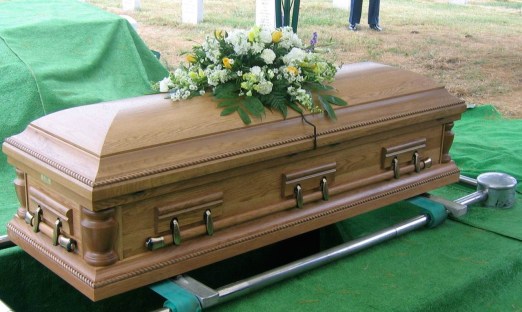
VALEDICTION TO A PASSING LOVE

casket-over-plot-cropped

I have not loved you well,
Nor have I loved you long.
So it is with no strong regret
I sing this parting song.

Your passage through my life
Has barely touched my soul,
So mourning will not weigh me down.
In fact, I feel quite whole.

Adieu, my love, adieu.
I bid you fond goodbye.
And at your grave, for memory’s sake,
A few tears I will cry.


~~~

‘Releasing the Creative Writer in You’-Lesson 1

releasing-the-creative-writer-icover-editedWelcome to the first of a series of lessons excerpted from my writing curriculum Releasing the Creative Writer in You.*  As I mentioned in the post last week introducing this series, I’m beginning with a couple articles I have posted previously — about three years ago. But they provide the best introduction to this series, and then we will proceed from there into other territory. I hope writers find these posts encouraging, comforting, enlightening, challenging, entertaining, or all of the above.

LESSON# 1: SO YOU WANT TO BE A WRITER?

Then DO IT!

Mystery author Agatha Christie once said, “The best time for planning a book is while you’re doing the dishes.” There’s a lot of wisdom in that statement.

You know, you don’t have to live an unusual life — or even a particularly exciting life — to be a great author. In fact you can live a very ordinary, chicken-frying, auto-repairing, laundry-washing, diaper-changing kind of life and still write books that will lift people out of the ordinary and into a place where imaginations rise to peak places, where new dreams are ignited, and where hope and faith bring victory into life’s struggles.

So pick up that pen, sit down to that computer keyboard, or start dictating into that recorder — whatever method works for you.  If you’re sure you want to write, start writing.

cartoon-quote-kingNow that you’ve started, you come to your next decision. Do you want to be an “occasional writer” – sharing an idea or a complaint only now and then – when the mood strikes you? Or do you want to be a “serious writer” – making writing one of your primary goals in life and, therefore, at the top of your list of priorities.? If your answer is the first option, then you are free to write or not, depending on how you feel on any particular day. However, even in that situation, the more you write, the better you will be at it when you feel it counts.

But if you are serious about writing – if you feel it is a necessary part of your feeling successful in your life – then you must live by a different law: You must commit to writing on a regular basis and stick with the program, regardless of how you feel on any particular day – or how anyone else feels about your work. Now that doesn’t mean you must be at your keyboard every single day from 6:00 to 8:00 a.m. or from 12:00 to 3:00 every afternoon. In this crazy world of ours, most of us have so many responsibilities and so many people and things needing our attention that there are just going to be some days when nothing goes according you plan.

But being serious does mean that writing gets a place of priority in your plans. If you really do want to write things that matter and that people will want to read and look forward to more of the same, then you do have to force yourself to develop some kind of schedule that gives the process of sitting down and writing more attention than you would give a hobby.

Unfortunately, this decision to be a serious writer must be made anew every few days. The “new” wears off after a while. The excitement turns to frustration after several days of reaching for just the right words and falling short time after time. The bright ideas seem to fade a little when the family and friends don’t find your first chapter exciting enough to want to listen to you talk about it for three hours non-stop. But if you really do want to write, you must make yourself write faithfully and regularly, regardless of the struggles involved. If you sit at your keyboard three hours and type onto the screen only one sentence worth keeping, you have accomplished writing a sentence that never existed before.

And therein lies the intrinsic value of writing. Everyone who writes becomes a creator. Once you have written an original piece – no matter how small or how large – you have created something that never before existed! That fact is not dependent upon whether anyone else reads it.  Or whether anyone else likes it if they do read it. The proof of your creativity does not rest in your work’s boasting a publisher’s imprint or finding a place on a bookstore shelf.  Get this straight: once you have written an original piece, you have created an entity that never before existed. I repeat that point because it is a powerful reality that very few writers recognize.

And another related fact that many unpublished writers seem to miss is that once you have created a written product, you are a writer. You’re not “going to be” a writer. You’re not a “would-be” writer. You’re not an “aspiring” writer. You are a writer. You are an author. You are a creator. When you do recognize these two truth, they will empower you to keep creating and to create even more effectively.

Also, once you recognize them, you will come to realize a third truth that is just as important: As a writer, you have a heavy responsibility to your readers. From the moment an individual picks up your work and reads the first sentence, you begin to influence that person – for good or evil. And the more of your work people read, the greater your influence grows.

So it is important to remember that, although you may feel you are writing for yourself, if you intend to allow your work to be read by anyone else at all, your words will have some kind of influence on that reader. There is a passage in the Bible, Luke 12:48, that says, “For unto whomsoever much is given, of him shall much be required.”

Although the statement is found within the pages of Scripture, it is a truth outside of those pages as well. It is a law of life for anyone committed to living responsibly. When we are endowed with the powerful gifts and talents that allow us to create through the written word, we then become accountable for what we do with that word.

One final thought: If you love to write, then you have a gift for writing. You may need to develop it, nurture it, and discipline it. Most writers have to work hard at those endeavors. But you need to recognize that if you genuinely love to write, then there is a gift inside that calls you to give yourself to it.

cartoon-quote-wrightThe goal of this course, then, is four-fold:
1. To acquaint students with the basic skills required to express themselves well through writing.

2.   To help students discover and use their innate talents and abilities for creative expression.

3. To acquaint students with the unique characteristics and requirements of multiple genres of literature and help them determine which genres best fit their individual writing strengths.

4. To help students develop a consciousness concerning their responsibility as writers and help them learn to use every tool at their command to fulfill that responsibility successfully.


* Releasing the Creative Writer in You, © 2013 by Sandra Pavloff Conner
–  –  –  –  –  –  –  –
To access other lessons in this series, click on “Creative Writing Class” in the navigation bar and scroll through to find the lessons you need.

~~~

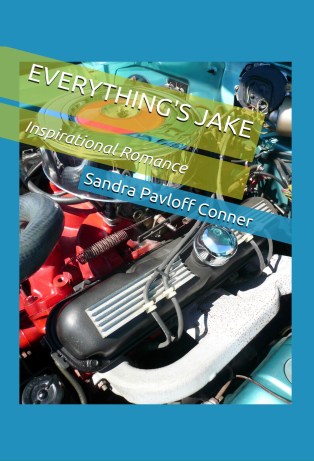
‘Everything’s Jake’ – Love at the Auto Repair Shop

everythings-jake-amazon-cover-2-for-e-bookIt all began with a dream. Yep, it’s another one of those stories. Two of my novels came from dreams that stayed with me long after I woke. I just knew I had to pick up from that point and finish those stories — one of which turned out to be EVERYTHING’S JAKE.

In fact, I can’t even take credit for the title because it was part of my dream as well.

It’s just a little love story. But, then again, it’s a whole lot more than a love story. It’s about finding out who you really are and learning to like that person – and discovering that liking who you are opens the door for the best relationships with other people. It’s about family – and friends who are just like family. It’s about letting God’s way of loving take control of your heart.

In this inspirational novella, you’ll meet Mariah Jacoby. She’s happiest working under the hood of a car, but she’s convinced that grimy hands and greasy smudges on her face aren’t exactly what guys are looking for in a girlfriend. Unfortunately, though, she’s having trouble holding down a job in any other field, despite college degrees and an upbeat personality. Desperate to change her unemployed status, she finally admits it’s time to face the fact that she’s really a “grease monkey” at heart. But dare she hope there’s a guy in her future who’s dreaming of a girl who smells like engine oil?

It’s a relaxing read, and it’s available from Amazon in print as well as in digital format.

Print Version is $4.99

Digital Version is $1.99

Check it out, and please don’t forget one other thing. If you like it, please go back to Amazon and leave a short review telling everyone how you enjoyed it. As most of you know, we authors are dependent on word of mouth from our readers to help us find more readers. So thanks in advance. (Oh, and if for some reason you don’t happen to like it — well — just don’t say anything, okay?) 🙂

~~~

Share Your World 2/6/17

If you’d like to join the “Share Your World” fun, you can find the details here at Cee’s site.

BOX OF CHOCOLATES

Question # 1: Regarding your fridge, is it organized or a mess inside?

Exactly what is the definition of “organized”?  If it means that my milk is always on the left side of the top shelf, and my butter is always in the butter compartment, and my cheese is always in the cheese drawer, then it’s organized. However, if it means that all the other things in there are neatly placed in their own specific place — or that there are no left-over containers that have been sitting there for a few weeks, getting pushed farther to the back every day — then I would have to confess to the “mess.”

Question # 2: Do you prefer your food separated or mixed together?

I want all my food on the same plate so I can enjoy it all together. That doesn’t mean that I stir it all up together. But I eat some of all of it throughout the meal. To me the flavors of any food are made better by the complimentary flavors of all the accompanying food. I know a few people who eat only one item at a time until it is gone and then start in on the second item. When it is finally gone, they move on to the next and the next. Seems like a boring, miserable way to eat a meal to me. I went to grade school with a girl whose parents insisted that the whole family eat that way. I always felt sorry for her.

Question # 3: Do you prefer reading coffee table books (picture), biographies, fiction, non-fiction, educational?

Yes, yes, yes, yes, and yes.

Question # 4: Close your eyes. Listen to your body. What part of your body is seeking attention? What is it telling you?

My tummy, my brain, and my palate are all talking at once. They are saying, “Give us some chocolate!!!”

Bonus Question: What are you grateful for from this past week, and what are you looking forward to in the week ahead?

I’m grateful for all the celebrating I got to do for my birthday, and for the load of presents I received.

Next week, I am going to be working hard getting everything in gear for the next Healing School, which begins February 21. It is one of my favorite parts of the ministry the Lord allows me to do, and I’m really looking forward to it, and to seeing many people receive healing from the Lord during those 6 weeks.

~~~

Daily Post Prompt: The Scent of You


woman-looking-up-for-profileThe scent of you:
It calls me from my worried place
And draws me into quiet peace
As your essence gently folds
Around my soul.

The scent of you:
It fills my senses with delight
And stirs the embers of desire
Into a lavish, living fire
That satisfies.

The scent of you:
It causes me to seek to know
My inner self, my deepest soul,
And then to strive to be the best
That I can be.


Take part in today’s prompt by visiting the Daily Post.


~~~