Weekly Smile 83

Visit Trent’s World to participate in Weekly Smile.


Exif JPEG

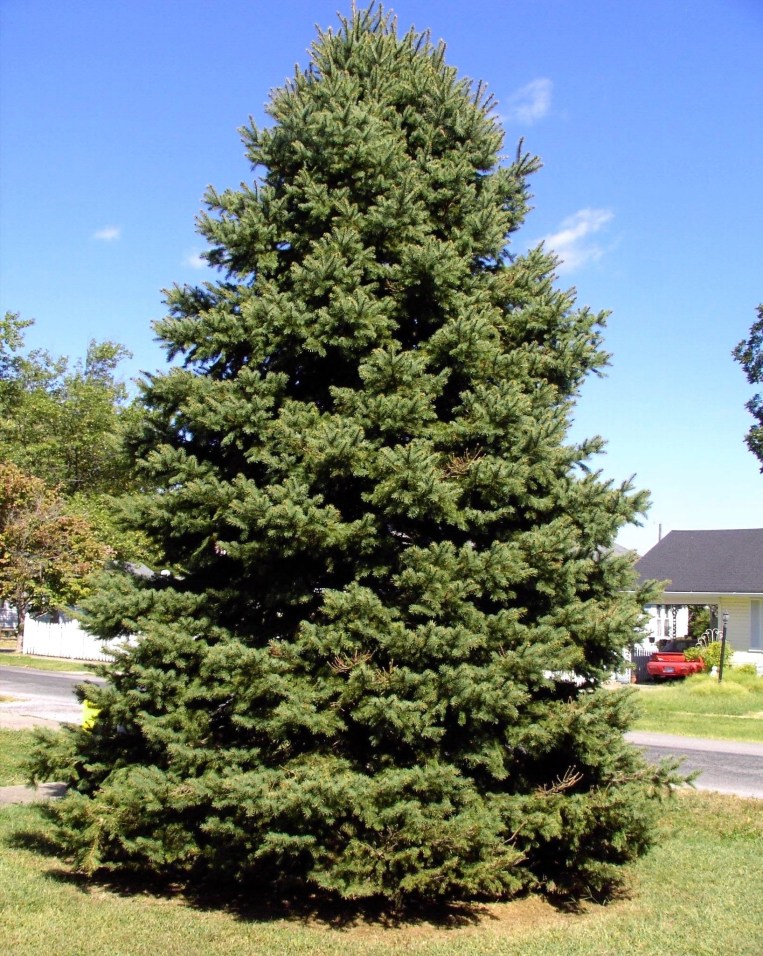
This week I am smiling broadly because the Mockingbirds are back, nesting in my huge Blue Spruce tree in my front yard. They used to nest there, but I haven’t seen them in a couple years. But today I saw Mama bringing food to her babies there. It made me really happy. I didn’t get a picture of the nest, of course. The tree is huge and thick, so I couldn’t even begin to get deep enough inside to get that kind of shot. But I did include a picture of the tree itself. Of course this picture is a few years old, so the tree is even taller and and fatter now. You could say I raised it from a babe. Well, it was about 5 feet tall and bending way over to the side to get sun because it was growing in a tub beneath a super tall Blue Spruce that had had the lower branches cut off.

The poor baby was getting too big to grow straight anymore beneath that mature tree. Not only that, it was in an old wooden barrel, and it didn’t have room to spread it’s roots. So it had pushed it roots down through the slats in the barrel and into the ground. It belonged to my cousin, and he asked me one day if I wanted it. (That was 17 years ago.) I said I’d be thrilled to have it — but there was a small Sweet Gum in the yard when we’d bought the house, and I’d want it removed to place the Spruce there. He gladly removed the Sweet Gum and brought me the Blue Spruce. When we planted it, he drove a strong steel pipe into the ground and braced the Spruce’s trunk to it so that it would begin to grow straight. I prayed for it a lot in the early years, so that it would get a really solid hold in the ground and be able to grow properly.

Now, 17 years later, it is a gorgeous, stupendously healthy tree that stands well over twenty feet tall and would require at least a dozen people linking arms to reach around its circumference. I named the tree Big Blue, and yes, I do talk to it and love on it. I don’t hug it because it’s just too prickly, but every once in a while I pet it’s branches and pray for it. Over the years, it’s provided homes for Mockingbirds and Cardinals, and probably a few others that I haven’t been as aware of.  But this week, Mockingbirds have dibs on it, and I’m enjoying their enjoyment of their home.


~~~

Share Your World – July 24.2017

Cee’s ‘Share Your World’ challenge is a great way for bloggers to get to know one another better. If you’d like to participate, you can get the details HERE.

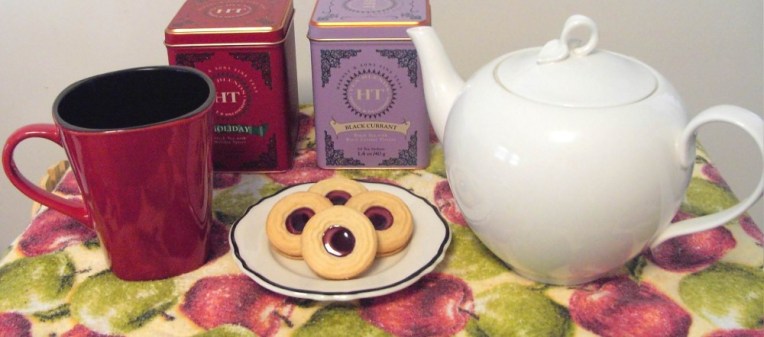
cropped-tea-cookies-on-apple-cloth-cropped.jpg

Question # 1: List some of your favorite types of teas.

My very favorite tea of all is English Breakfast Tea. I also enjoy Irish Breakfast Tea, and Chamomile Tea. I especially like Chamomile if I’m super stressed because it is a very soothing, calming drink.

Question # 2: If you had to describe your day as a traffic sign, what would it be?

I’m assuming this question means what kind of traffic sign would best represent what my day is like. That being the case, I’d have to say a “Yield” sign. That’s mainly because I’ve had several very stressful, problem-filled days this past week, and I know from past experience — and am being reminded again today — that the best way to deal with those days is to “yield” to the Lord and His promises. His Word says that we should cast all of our care on Him because He “cares for us affectionately and cares about us watchfully.” (1 Peter 5:6-7.) He has promised to deliver us from every evil and to heal us of every ill. So my job is to believe those promises and speak them over my life, yielding up my problems to Him so that He can solve them — and yielding myself to Him, knowing I’m coming out in victory.

Question # 3: What are a couple things people could do for you on a really bad day that would really help? 

Well, no matter what’s causing the bad day, prayer from friends who believe strongly in the Lord and His Word will always help. And, of course, in the same way that a mother’s kiss and a few of her home-baked cookies will help us when we are children — so a friend’s warm hug and a sweet treat prepared or purchased “just for me” always seems to help as well.

I’m reminded as I’m writing this of the first Christmas I faced after my mother’s death. I was in my early 30’s, but I felt some of the “little girl” coming to the surface during that first year without her. We had always been very close, and I missed her horribly. (I still miss her very much even 30 years later.) I was not actively grieving because I knew she was with the Lord Jesus and rejoicing in His presence. So I rejoiced in that truth. But my life had a very empty and lonely place nevertheless.

One day, just a few days before Christmas, a really good friend of mine came to my door unannounced with a gift — a plate piled absolutely full of all kinds of homemade Christmas cookies and candies. I was so surprised and delighted I didn’t have words. The specialness of the gift was not in the treats themselves, but in the fact that it brought a particular kind of comfort and love to me at that crucial time.

You see, all of my life, my mother had made loads of Christmas goodies every single year, and my sister and I found that one of our favorite Christmas experiences was working with her in the kitchen at those times — and then indulging in all those goodies for the next couple of weeks. In my sadness, I had not tried to bake or plan special menus during the holidays that year. I missed our special Christmas indulgences, but trying to make them myself just wasn’t the same. I think it was the love my mother put into making all of those things that had been the real blessing after all.

But when my friend handed me that plate, I felt the power of that same love. She had put together that gift as a special act of love for me personally, and that gift did more than anything else the whole year to make me feel less bereft and less hurt. It was almost as if my mother had sent her to me with those particular treats.

So even though it may sound a little trite to some people, the truth is that yes, in the midst of a really bad day or bad experience, sometimes just a little homemade cookie or fudge can change the whole atmosphere and direction of that day. It’s all about letting people know they are loved.

Question # 4: Regardless of your physical fitness, coordination, or agility, if you could be an athlete, what would you do?

Well, I have to admit that I am not big on athletics. I’m a person who walks briskly to help myself stay fit, but I rarely engage in athletic games. I like word games. However, I do enjoy playing tennis occasionally, and I really enjoyed archery when I was involved in it during my school years. I also loved dancing, and took several dance classes in college. But to say that I’d devote myself to any one of those things with the commitment and rigor required to be considered an “athlete” in that field would be stretching it a good deal.  So — I guess I’d just have to say I’d prefer to be a Scrabble or Bananagrams champion.

BANANAGRAMS GAME - PUB DOMAIN


~~~

Weekly Smile 81

It’s hot as blazes here where I live — heat index of 108 even at night — so, naturally, my thoughts turn toward Christmas. Well, to be honest, I think about Christmas a lot anyway. It’s my favorite holiday, and because my family always celebrated in a big way, we have lots and lots of wonderful memories and traditions that we still enjoy. I always smile when I think about any of them. I always smile just thinking about Christmas. I listen to Christmas music and watch Christmas movies all year long, and I have a website devoted exclusively to that holiday. If you’d like to visit, here’s the link: “Merry Christmas, World!”

Anyway, one thing that made me smile this week was this picture I took of this gingerbread house. I didn’t construct it. A friend of mine did: a man who had always wanted to make a gingerbread house, but never had the opportunity as a child and evidently didn’t feel it was a seemly thing to an adult man to do. But a few years ago, at the age of 54, he decided to purchase a kit and build himself a gingerbread house. I was so happy that he took that plunge. He enjoyed it immensely, and when it came time to deconstruct (i. e. eat) it, he made sure I was there and shared it with me. The photo still makes me smile.

ks-gingerbread-tight-trim1


To participate in ‘Weekly Smile’ visit “Trent’s World.”

Share Your World – July 10, 2017

Taking out some time to participate in Cee’s ‘Share Your World’ this week. Hop over to the link to get the details and share some of your own world.

Question # 1:  How do you like to spend a rainy day?

RAIN IN CITY - ENLARGEDI generally like to take advantage of a rainy day to do one of two things: read a book or write a book. Sometimes I just want to snuggle down with a hot cup of coffee and a great book and while away the whole day. Other times, I sit down to my computer and write, write, write. Either way, I guess you could say I have “storytime.”

Question # 2:  List at least 5 favorite treats.

  1. Trips to the Great Smoky Mountains
  2. Teaching someone about Jesus Christ or teaching someone how to do something that will make them happy.
  3. A book that captures my attention and won’t let go and makes me feel happy when I get to the words “The End.”
  4. Easy conversation and playing word games with friends and/or family.
  5. Chocolate
  6. Chicken Salad
  7. Coffee — especially with friends

Question # 3:  Where’s your favorite place to take out-of-town guests.

I very rarely have out-of-town guests these days. When I do, I like to take them with me to church. We don’t have any great scenic areas or historic landmarks in my neck of the woods, so I’d have to take them on a trip with me to offer them that kind of entertainment. Since they are already on a ‘trip’ to see me, another ‘trip’ isn’t appealing. So we usually sit and visit or stop by a local restaurant for a quiet meal — where we can also sit and visit.

But as I was thinking about this question, I started remembering the years my family and I lived in Nashville, Tennessee. Almost all of our family was from the northeast, so we had a lot of out-of-state visitors during those years. We liked taking them to a lot of different places, but I think the two most popular things on the list were President Andrew Jackson’s home the Hermitage, and the original Grand Ole Opry (at the Ryman Auditorium in downtown Nashville.)

HERMITAGE - JIM BOWEN - LICENSE - CCBY2.0
Hermitage: Jim Bowen – License: CCBY2.0

My sister and I sat down one time and tried to count the number of times we’d been to the Hermitage, and I think we came up with 17 visits in about 3 years. Of course we didn’t mind, because we loved the place: old ante bellum plantation with everything you’d expect to see there. Since I’ve always been fascinated with history, it was like a dream come true to spend hours there.

Question # 4:  You are trapped in an elevator. Who would you want to be trapped with?

I do not want to be trapped in an elevator with anyone at all!!!  And this question reminds me of a story prompt I use with my students from time to time in my creative writing classes. It is not my own prompt, but one that was passed along by another teacher. You suddenly find yourself trapped in an elevator with the one person you cannot stand to be around. Tell the story.


~~~

Weekly Smile 78

This week on “Weekly Smile” Trent sparked my memory about a post I did a little over a year ago concerning smiling. So I decided it would be a good time to dig it out of my archives and give it another run. I need to follow the advice in my own post more often. Hope it’s an encouragement to everyone else out there.


COW WITH SMILEY EYES

When your smile is sincere, it will always show in your eyes.

Would you like to try a happiness experiment?  Some of you may have tried it when I posted about it previously. But it never hurts to repeat something that has positive results. You can carry out this experiment on any day you choose, but if you start early, you’ll have more time to accumulate results.

Here are the steps:

  1. Make it a point to smile all day long – at every person, at every animal, and at yourself every time you look in the mirror.
    `
  2. Every time you talk to someone (no matter what the topic) make it a point to say something positive to that individual.
    `
  3. Deliberately stop 7 separate times and thank God out loud for some blessing in your life.
    `
  4. At the end of the day, take stock of how you feel and record the results of the experiment.


______

Weekly Smile 77

I’m participating again this week in Trent’s Weekly Smile project. I love to focus on positive, happy things in my life, and this weekly invitation to post about what made me smile during the week is a good way to make sure I focus on the good. I hope some of my readers will follow this link to Trent’s World and jump in with their own posts about things that make them smile.


Exif JPEG
Dayspring Calendar, 2017


I’m serving ‘coffee with a smile’ for my post today. This picture is from my Dayspring calendar that is about nothing but  — you guessed it — coffee. I do enjoy coffee — and tea as well. I don’t enjoy cold drinks very much. I generally prefer something warm — especially with a meal. It can be regular coffee, half & half coffee, decaf coffee, tea, herbal tea, or hot chocolate.

I’m fairly eclectic when it comes to drinks and food. But I have to say that coffee is my choice most often. I think it comes from the fact that, in my family, a good cup of coffee has always been associated with family togetherness, wonderful fellowship, and comforting relaxation.

And, just to be frank, I’m tired of hearing all the uninformed critics out there who try to make coffee drinkers feel guilty because there is an element of caffeine in coffee. I have always maintained that, since the Lord told us in Genesis that He made the seed-bearing trees and plants for us to ingest, then we should be able to partake of coffee with a clear conscience and a happy heart. And let’s not forget that God made the coffee bean with the caffeine in it. We human beings did not add the caffeine the way we add so many artificial ingredients into our food. That caffeine must have some good qualities in it, or the Lord would not have put it into the bean in the first place.

Furthermore, there have been numerous medical and scientific experiments done over the past half dozen years that prove coffee has many beneficial qualities for the human body — everything from quickening our brain function to eliminating headaches as quickly as aspirin to protecting the body against several kinds of cancer and heart problems. Naturally, nothing is good for our bodies if we partake of way too much of it, to the exclusion of other important elements. But in moderation, coffee is a great blessing.
****** I figured Trent’s blog was as good a place as any to vent. 🙂

But, seriously, every time I smell that unique, soothing, uplifting aroma of fresh-brewed coffee I smile.  Yep — every time. So, here you go: Have a cup on me ……………

coffee-steaming-yellow-jpg

~~~

My First Year With Dad

DAD & ME FT. WAYNE - CROPPED

In this picture my dad and I are out for a walk in front of our apartment in Fort Wayne, IN, in 1949. My dad had served as a Marine during WWII. Shortly after he came home, he married my mom, and they brought me into the world. We moved to Ft. Wayne for Dad to go to college, and while there he wrote for the Ft. Wayne News-Sentinel to make money. We did’t have much in material goods, but we had a happy home. He never lost his love for writing but passed some of his talent for it to me — as did my mom.

Wishing a Happy Father’s Day to all you dad’s out there.


~~~

Weekly Smile # 76

I’m posting a “smile” for Trent’s weekly invitational about “happy subjects” again this week. If you’d like to get involved hop over to his site and get the particulars.

Today, I want to share a photo by a wonderful friend of mine who is a professional photographer in Wisconsin. Terry Valley and I have been friends since high school days. Our lives took routes into different states over the years, but, thanks to technology, we’ve been able to remain close. Maybe it’s because I know Terry so well that I find his work so delightful, but I honestly think he has a keen eye and an artists feel for so much of what he photographs.

Anyway today, I’m sharing one of my favorites of his pictures. It was actually a spur-of-the-moment shot as he was driving past a corn field right after a storm. Every time I look at this picture, it makes me smile. And since I’m currently using it as my laptop wallpaper, I’m smiling a lot this week.

CLOUDS & CORNFIELD - TERRY w. credits


~~~

Coffee Thursday 5/11/17 – Coffee You Eat

`Exif JPEG

No, you didn’t misread the title. There really is coffee that you eat. It’s the brainstorm of the U.S. chocolate and coffee product manufacturer, Tierra Nueva — based in Miami, Florida. I came across the product as it is being sold through Krispy Kreme Doughnuts in my area of the country.

Tierra Nueva has three different versions of the coffee thins — Latte,  Espresso, and House Blend. Krispy Kreme’s versions offer three flavors: Original Glazed Doughnut, Cappuccino, and Caramel Machiato.

Called “Coffee Thins,” each of the individually wrapped thin squares — a little less than 2 inches in size — is composed of a blend of 100% of the coffee bean — plus some chocolate, some flavoring, and a few other ingredients to help give it texture and hold it together. And because it is made primarily of coffee, the producers say that it has the same effect in the body as coffee we drink from a cup.

However, just how many squares make up a cup of coffee — and how big a cup — is a little confusing. The packages show a picture that clearly indicates that one square is equal to one cup of coffee. (Now whether that’s a real 8 ounce cup or the common 6 ounce cup that most traditional coffee makers measure is not clear.) And the explanation is further muddied by the online advertisements — one of which says that each square is equal to 1/4 cup of coffee, while the other one says 3 squares equal one whole cup of coffee. (Still no indication of what size cup). So, my fellow coffee drinkers/eaters, I guess you’ll just have to try them out for yourself and decide what they offer in comparison to the liquid.

How do they taste? Well, now there I can help you more. I discovered the Krispy Kreme brand at my local Kroger store, and the first thing I did — after taking the pictures — was talk with one of the employees, Mr. Brian Dilday. He said he had tried the Glazed Doughut flavor and he really liked it. So, since he seemed to think it was a worthwhile investment, I decided I’d try one, but I went for the Cappuccino. It is very smooth and has great flavor. It definitely tastes like coffee — and chocolate — and cappuccino.

More recently, I discovered that Dunkin’ Donuts has produced their own version of coffee thins as well, but I haven’t sampled any of those.

I guess the big question is will I buy more coffee thins and eat them regularly? No, I don’t think so. I really enjoy drinking my coffee. Furthermore, a good deal of my enjoyment of coffee is the rich, comforting aroma while it’s brewing, and as it steams up from my cup. You can’t get that from a little square piece of chocolate. Added to that drawback, is the fact that I often like to enjoy eating something sweet along with my coffee, and if I ate the “Coffee Thins” while I drank the coffee, I’d end up with a definite caffeine buzz. Normally, I can’t tell any effect of the caffeine in the coffee I drink. And often I even drink the half caffeine/half de-caff kind, and I can’t tell any difference between them. But if I made a habit of drinking and eating coffee at the same time, I think it would be a severe lack of moderation on my part. And why bother???? I enjoy a cup of coffee rather than a bar of coffee. Plus — in the long run, brewed coffee is still cheaper per cup than the ‘candy bar coffee.’

I couldn’t help but wonder if this phenomena migh turn out to be a little like the digital book readers. They give you the printed words of a book on a lighted screen, and, yes, it’s true you can get the sense of the story just as well as when you’re turning the pages of an actual book. But there’s just so much extra satisfaction in holding that book, smelling the paper and ink, and turning each page individually that cannot be replaced by a hard, flat digital reader. Similarly, I’ll not be replacing my warm, fragrant, fortifying cup of good hot coffee with a little bar any time soon.

If you’d like to know more about “Coffee Thins,” and locations for purchase, you can simply go online and type in the general term “coffee thins.” That will get you a big selection of websites that tell you more about the product and give you lists of stores in your area and online.

Until next week, enjoy your coffee, my friends — however you ingest it.

~~~

Releasing the Creative Writer in You – Lesson 8

To access other lessons in this series, click on “Creative Writing Class” in the navigation bar and scroll through to find the lessons you need.
releasing-the-creative-writer-in-you-coverLESSON 8: EDITING – MAKING SURE WE’VE SAID IT IN THE BEST WAY POSSIBLE.
(What do we look for?  How do we fix it?)

1. GENERAL MANUSCRIPT FORM –  For both fiction and non-fiction:

If your material is published in book form, you will automatically have a title page, and a copyright page on the back of the title page. All of your identifying data for the book, for you, and for the publisher will go there. But if you are not to that point yet, and you’re preparing a manuscript to send to an agent or a publisher, there are some basic rules you want to follow. They are mostly just good sense and thoughtfulness, but sometimes people who are genuinely talented in creating stories have never had much training in laying out their material. So this section is primarily for those people.

Use regular letter size paper, and, in general, it’s best to leave the pages loose. Staples can sometimes get in the way when an editor reads. It’s often good to use a title page as your first page, and you’ll want to put the title, your name, and the copyright information on that page. Also, be sure to check the submission guidelines from whatever company you’re submitting to, in case they want other information as well. It’s a good idea to also include the word count on that title page as well.

On the first page of the actual text — if you have a short story — repeat the main title at the top and go down at least 3 or 4 lines (more if you like) before beginning the story. If you’re submitting a novel, then you don’t need to repeat the title at the top of that page; the Chapter number is sufficient.

Double-space every single line of the paper so that the editor can write between all the lines. (And even if you’re writing the final draft for yourself, having those blank spaces lets you do a lot of editing and re-writing where it can be easily read.)

Indent the first sentence of every paragraph at least 5 spaces to the right.

Leave at least a 1-inch margin on top, bottom, and both sides. (Always remember that white space is your friend.)

Use 12pt. Or 13pt. font for text of the story at all times. (Anything else is too small for comfortable reading, and anything larger causes your manuscript to be too bulky.)

In the top left corner of each consecutive page, put your last name and the title of the story. Put page numbers in right-hand corner.

All of these rules may seem unimportant, but you want to remember that all of those editors and agents you’re sending to generally have so many hundreds of manuscripts pouring in weekly that they cannot possibly read them all. As a result, they will just naturally gravitate to the manuscripts that are neat, easy to read, and pleasing to the eye.


2. GRAMMAR AND WORD CHOICE:

Run-On Sentences
One of the most common errors in the manuscripts I see is the run-on sentence. That problem develops when a writer tries to tie two complete thoughts together with just a comma between them. It has become so common in today’s society that I see it even in published books. But it is a serious mistake and often leads to confusion for the reader.  I have listed several examples of run-on sentences below along with a couple possibilities for fixing the problem.  The fix is generally just a matter of replacing incorrect commas with periods or semi-colons, which tell the reader that one thought is complete and another thought is beginning. When those two thoughts are very closely related, the semi-colon is an acceptable punctuation. Otherwise, use a period.

EXAMPLES:

I have this problem, well, more like a gift, no on second thought it’s a curse.

Correction: I have this problem, well, more like a gift; no, on second thought, it’s a curse.

Or: I have this problem, well, more like a gift. No, on second thought, it’s a curse.

Well, you won’t have any trouble with it, it was easy.

Correction: Well, you won’t have any trouble with it; it was easy.

Or: Well, you won’t have any trouble with it. It was easy.

Or: Well, you won’t have any trouble with it because it was easy.

She just stared at me, all of them did.

Correction: She just stared at me; all of them did.

Or: She just stared at me. All of them did.

Or: She just stared at me, as all of them did.


COMPUTER WITH TONGUE OUTActive Voice vs. Passive Voice Verbs

Every year at Christmas, hundreds of lights had been strung throughout the property, and each Christmas Eve carols were sung by the townspeople who gathered there.

Correction: Every year at Christmas, the owners strung hundreds of lights throughout the property, and each Christmas Eve, the townspeople gathered there and sang carols.

A wonderful time was had by all.

Correction: Every one had a wonderful time.

Papers had been drawn up by the city council to create a historical monument of the old mansion.

Correction: The city council drew up papers to allow for creating a historical monument of the old mansion.

The sale of the property three years ago had been handled by buyer’s attorney.

Correction: The buyer’s attorney had handled the sale of the property three years ago.

Lunches are packed, clothes laid out, and dogs let outside. Now it’s time to wake three sleepy headed children. Teeth are brushed, hair braided, backpacks are in front of the door. Warm coats, hats and gloves are put on the children.

Correction: After packing lunches, laying out clothes, and letting out the dogs, Dawn is now ready to tackle the job of waking three sleepy-headed children. After breakfast, she braids hair, and once the children have brushed their teeth, she helps them get their backpacks in front of the door and bundles them into warm coats, hats and gloves.


Parallelism

I had been fired, thrown out of my room, condemned to die, and had numerous curses about my future heaped upon my head.

Corrected: I had been fired, thrown out of my room, condemned to die, and cursed for the rest of my future.

She loved to sing, dance, play the piano, and talking with her friends.

Corrected: She loved to sing, dance, play the piano, and talk with her friends. – OR –

She loved singing, dancing, playing the piano, and talking with her friends.


She was intelligent, serious-minded, and liked being alone.

Corrected: She was intelligent, serious-minded, and introverted.


Punctuation

Quotation Marks:

Use quotation marks at the beginning and end of any words that are dialogue.

All commas and periods go INSIDE quotation marks — ALWAYS.

Question Marks and Exclamation Points go inside the quotes if they are actually part of the quoted material, but if they are not, they go outside.

“When do we eat?” he asked.

Did you hear him say “We will eat at six.”?

Also use quotes for titles of poems, songs, articles, chapter headings, or short stories.

Special Note About Dialogue: When writing dialogue, be sure to start a new paragraph every time the speaker in a conversation changes – even if the speaker says only one word. Being sure to change paragraphs helps your reader understand who is speaking in each sentence, and this procedure also cuts down on the need to use as many tag words (such as he said, she asked, etc.)

When you need to use tag words, try to use words that will not disrupt the important words in the dialogue itself. Occasionally a word like yelled, shouted, mumbled, etc. can be effective, but the vast majority of the time, writers need to stick with the simple words like said, asked, answered. Those words are generally acknowledged by the reader’s brain without the reader actually having to interrupt the flow of the dialogue to give them any attention. Never use tag words that do not fit the tone and vocabulary level of the rest of the story or that require a reader to have to figure out the meaning or run for a dictionary.

Example: “I think you need to re-think your decision,” he interposed. (Rather, simply say, “I think you need to re-think your decision,” he said.)

Italics:

Use italics to show emphasis of a word in your narration or in the dialogue of your story.

“I absolutely refuse to accept your excuse.”

Also put titles of books, newspapers, magazines, plays, major works of art, court cases, ships, aircraft, and spacecraft in italics.

(Titles of poems, articles, or short stories are put in quotes.)

Italicize foreign words and words, numbers, and letters referred to as such. (A few foreign words have become so accepted into the English language that they do not require italics, but if you have no idea whether that is the case or not, you may always italicize the foreign word.)

Your v’s look like u’s.

I can’t say the word detritus.

What is the meaning of the word moi?

Non-Essential Elements in a Sentence

All words or phrases that are not essential to the main meaning of a sentence – which are added simply for the sake of emphasis or as extra information – are set off from the rest of the sentence with a set of commas, parentheses, or dashes.

She gave her speech, surprisingly, without saying one critical word about her opponent.

My little dog (a fuzzy gray mutt) is very good with kids.

When interrupting the flow of a sentence in a manner that could confuse the reader – or when you want to draw special attention to the interruption – always use dashes on either side of the interrupting phrase.

Also use dashes when using dialogue in a story, and one character interrupts another.

“I will not listen –”

“Don’t tell me you will not listen to me.”


Past Perfect Verb Tense (Using the helping verb had)

When you write a sentence in past tense, but are also referring to an action that took place farther into the past than the main action of the sentence, you must use Past Perfect Tense for that previous action.

Donald worked with the equipment exactly as his dad had taught him.

We all knew that the teacher had endured all she could take from us for one afternoon.


Adjectives and Adverbs

Avoid using adjectives and adverbs whenever possible. Make every effort to use such strong, colorful, specific nouns and verbs that modifiers are unnecessary.

Instead of saying this: She wore a bright red dress. Say this: She wore a scarlet dress.

Instead of saying this: The man walked slowly down the road, as if his feet weighed a ton. Say this: The man plodded down the road.

In general, follow this rule: Never use two or more words then one will do the job.


Pronouns and Antecedents

Every time a pronoun is used, it MUST CLEARLY refer to a noun that has been used previously. And the pronoun must agree with the noun to which if refers (known as its antecedent) in both gender and number.

Examples: Everyone cleaned their plates. (Everyone is singular, so pronoun has to be as well.)

Correction: Everyone cleaned his plate.

Sarah was with Kate when she signed up for the play. (‘She’ is ambiguous; which ‘she’?)
Correction: Sarah was with Kate when Sarah signed up for the play.

Be especially careful with words such as this, that, which, it. When using these pronouns, double-check to make sure your reader will know exactly which noun used earlier is the antecedent, and if there is no one single noun to which they refer, avoid using those pronouns and find a noun to use instead. One of the biggest mistakes inexperienced writers make is using this or that or it to refer to a general idea or some vague concept that was mentioned earlier. The antecedent must be one single noun that can be pointed out easily.

Example:

Writers often misuse pronouns. This results in confusion.

Correction: Writers often misuse pronouns. This misuse often results in confusion.

Or: Writers often misuse pronouns. Such mistakes often results in confusion.

Or: Writers often misuse pronouns, thus causing confusion.


GREEN TYPTER - GOLD W. TEXT
Wordiness and/or Repetition

When you edit, one of your main jobs will be to cut out any words that are not absolutely necessary.

EXAMPLE 1

He was headed towards her. She wanted to run but knew he would see her. As he came closer, she sneaked around the tree. so he wouldn’t see her. She let out a sigh of relief as she watched him disappear over the hill. She knew what she had to do now. Run.

Just deleting the words is enough correction of this section.


EXAMPLE 2

She ran, heading for the path she had taken to get there. She was running for her life. or that’s how it felt anyway. She continuously looked over her shoulder, making sure she didn’t see the gunman. The scene of the gunman throwing his victim in the well kept flashing in her mind as she ran.

Corrected: She continuously looked over her shoulder and tried to keep scenes of the gunman throwing his victim in the well from flashing through her mind as she ran.

(This change cut 28 words out of the text without changing the meaning or the effectiveness of the scene. In fact, making the scene this much tighter makes it more effective in capturing the emotions of the reader.


EXAMPLE 3

The next step was to go to Cherokee and sign into our room and get ready. We had not taken into account the many curves in the road that have to be taken at twenty-five and thirty miles per hour when we had estimated the miles and time from Pigeon Forge to Cherokee. The drive seemed to take forever …..

We then headed for Cherokee to sign into our room and get ready. We were surprised by all the curves in the road and the twenty-five to thirty miles an hour speed limit. The drive seemed to take forever ….

(This change cut 20 words out of the text, and a reader involved in the story will appreciate the cut.)


Descriptions

When describing people, places, or events, keep in mind that you and your reader are concerned about three main aspects:

Space
Mood/Tone
The 5 Senses

When describing places, be sure to keep in mind how the reader will “see” the picture you are giving him. Ask yourself these questions:

Are you moving Front to Back, Side to Side, Top to Bottom, Bottom to Top, and are you consistent in those movements?

Are you moving Up a Hill or Down a Hill?

Are you entering through a door or looking through a window, and can you really see everything you’re describing from that vantage point?

When setting the Mood, be sure to use words that have connotations that will stir up the right emotions and thoughts in your reader.

Don’t forget to make use of all five senses whenever possible. Many writers resort to sight and sound for all of their sense information. But smell, touch, and taste can be very powerful descriptors and make your writing stand out.


Transition Words:

When connecting thoughts, ideas, or actions within a paragraph or in the move from one paragraph to another, be sure you do not leave your reader wondering what relationship the ideas/actions have to each other. Make use of good transition (connecting) words to avoid problems.

If you want your reader to understand that one idea or action causes another, using words like “therefore” or “as a result” or “thus” to begin the next sentence can be very helpful.

If you have been showing one side of an issue or idea, and you are now going to look at some aspect of the opposite side of the issue, words like “however” or “but” or “nevertheless” help the reader prepare his mind to switch gears.

If you are continuing to add multiple examples or layers of information to make your point, using words like “also” or “in addition” or “furthermore” will help keep the ideas connected.

Be sure the words you use for transition make absolutely clear what the relationship is between the ideas or actions. If in doubt, look up the words you are considering in a dictionary and be sure of their meanings before using them. Use of a thesaurus (lists of synonyms) is also helpful. If, for example, you know you want a word that means “also,” but you do not want to use that particular word again, you can use a thesaurus to get a good synonym that will do the same job. As you edit, look for places that need transition words or phrases, or that may be using words that confuse the issue.

Remember: Never add words just to add words. Be sure you NEED them to make the text flow well. Your number one rule is still to say as much as you can, as specifically and colorfully as you can, in as few words as possible.


Paragraphs:

Each individual paragraph should be devoted to developing one point or aspect of your article or story. In non-fiction, whatever you focus on in the first sentence of your paragraph should then get some detailed development before you move out of that paragraph — and any other main points should be saved for another paragraph, rather than having all the thoughts thrown in together. (Some writers use a form that does not make the main point of each paragraph in the first sentence, but until you are a seasoned, experienced writer, you will have much more success if you try to get your reader focused on the main idea of each individual paragraph with the first sentence.)

In fiction, paragraphs can change more irregularly. For example, in dialogue, every time the speaker changes, a new paragraph begins. And sometimes, in order to heighten suspense, authors may use a separate paragraph for each step of action in an especially important scene. Still, you want to be sure you are changing paragraphs for a specific and necessary reason, and not just because you don’t know how to develop ideas. Fiction allows for more freedom of form, but you want to be sure you decide on the form you will use throughout the story and stick with it from beginning to end.


When I teach my college creative writing classes, we don’t usually have much class time to spend on basic grammar. The curriculum assumes that students have learned the basics and used them for years prior to taking the writing classes. However, there are always students who, for one reason or another, never got a good grounding in grammar in the past, so I do try to include a lot of these basics in the material I hand out for them. We generally take one class period to go over most of these points, and then they take this chapter home to study. But they can ask questions throughout the rest of the term if they need to do so.

You may do the same. If any of these rules of good writing cause confusion or raise other questions in your minds, please feel free to leave your questions in a “Comment” window below.

Happy Writing.


* Releasing the Creative Writer in You, © 2013 by Sandra Pavloff Conner

~~~

Coffee Thursday 5/4/17 – For Those Iced Coffee Lovers Out There


ICED COFFEE - naturepost pixabay
Courtesy Naturepost / Pixabay

Good morning, all you coffee lovers. Here we are at another “Coffee Thursday.”  I do love these posts — mainly because I love coffee. Today I decided to focus on some interesting material I came across for iced coffee lovers. I’m inserting links to two other sites with information you’ll enjoy.

First is a site that focuses on coffee ice cubes. I have to be honest and say I never thought of that. I do drink iced coffee occasionally, but even when I drink it hot, sometimes when I first pour it from the pot it’s too hot to drink immediately, and I’ll grab a small ice cube to throw in and cool it off just a dab. But, of course, it does weaken it. If I made coffee ice cubes, that would be perfect. Also, I agree with what the author of this article says about the last couple inches of iced coffee left in a glass. It’s sooooo watery. Now, with coffee ice cubes — problem solved.

HERE’S THE LINK TO ‘COFFEE ICE CUBES.’

Now the other interesting treat I came across this week is coffee popsicles. Wow!  Do they look good!!!  Here’s the article that gives a great recipe. There are other recipes out there, of course — some made with cream and some not. (These are made with a little cream, by the way.) I think I’m definitely going to try these soon. Hope you enjoy reading about these 21st-century coffee adventures.

LINK TO ‘ICED COFFEE POPSICLES’

If you try either of these suggestions, let me know. And, as always feel free to share your own coffee post on your blog and hop over here with your link.

Enjoy your coffee today. Bottoms up!


~~~

Coffee Thursday 4/13/17: The Story of Maxwell House Coffee

`
One of my favorite coffees is Maxwell House. I also really enjoy Folger’s and one or two other brands. But my family and I used Maxwell House regularly for years.  One of my favorite places to live has always been Nashville, Tennessee, and, interestingly enough, Maxwell House coffee was born there.

A colonel by the name of John Overton, Jr. built a magnificent hotel in Nashville in 1869 and named it in honor of his wife, whose maiden name was Maxwell. Over the years, until it was destroyed by fire in 1961, that hotel hosted seven different Presidents of the U. S. , as well as many other famous persons.

About 23 years after the Maxwell House opened, a man by the name of Joel Owsley Cheek came to the Maxwell House to offer the owners his special-blend coffee. Joel Cheek had moved to Nashville from Kentucky, worked as a salesman for a wholesale grocery company, developed a serious interest in coffee, and eventually established his own coffee company and developed his own special blends. Believing he had a blend that was perfect for use at the Maxwell House Hotel, he offered them the opportunity to purchase from him.

The Hotel contracted to sell the coffee on trial for a period of time, and during that time so many of the visitors to the Maxwell House raved about the coffee that it became a house feature and gained a wide reputation. Cheek named it after the hotel. President Theodore Roosevelt is quoted as complimenting the coffee during his visit to the hotel in 1907, and it is he who is credited with the statement “It’s good to the last drop.” That simple sentence became the advertising slogan for Maxwell House Coffee for many years.

And, of course, the Maxwell House coffee, as a product of Cheek’s coffee company, went on to be sold nationwide and even further. Cheek acquired a partner named Neal, and eventually the Cheek Neal company was bought out by another company, which changed the name to Maxwell House Products Corporation (later changing to General Foods Corporation).

The Maxwell House Hotel now has a brand new home in Nashville (Millennium Maxwell House, Nashville), but the coffee is still the same great-tasting beverage it has always been. And it really is “good to the last drop.”

Now, just for the fun of it, I’ve thrown in two very old Maxwell House Coffee TV commercials.  (And don’t forget to share your own thoughts on coffee in a post on your blog, then leave us the link in a comment box below.)


~~~

I’m In the Chips!

Exif JPEG

I’m normally not a big potato chip eater. When I was a teenager, I could eat chips by the bag full, but in my adult years, I only rarely have some with a sandwich. However, occasionally — very occasionally, thank God — I get sort of a craving for them, and I’ll go out and buy 2 or 3 bags — or cans, depending on the brand.

Unfortunately, this past week I discovered Lays’ Southern Biscuits & Gravy potato chips. Evidently they are a new flavor that is not really all that new. They’ve been on the market since 2015, but I didn’t know it. I guess that was a year that I didn’t have any particular craving for chips, because I never even noticed them. Now I can’t believe I ever lived without them.

I don’t know what it is for sure that makes them sooooooo gooooood I can’t quit eating them. The flavor is terrific. And, yes, they do taste like sausage biscuits and gravy. But when I eat biscuits and gravy, I don’t have any trouble stopping after two biscuits. Not so with these chips. I literally have to FORCE myself to close the bag and put it away. Then I end up going back to it before the day’s over.

A couple years ago, at Christmas time, Pringles came out with a new flavor chip called Pecan Pie. Some of my family and friends turned their noses up at the thought, but since I really like the combination of sweet and salty, I decided I’d like to try them. OHHHH MY GOODNESS! They were delicious! So, naturally, I bought several cans. But I did stop eating those chips fairly easily — because they were seasonal and left the market after January. They came back again during this last Christmas season though, and I lost count of the cans I bought.

Oh, well, I’m sure that since I hadn’t seen these biscuits and gravy chips before now, they will not be on the store shelves all the time either. So I’ll just enjoy them while I can and TRY not to feel too guilty. One thing that helps is having all my work online to do. When you have to type on a keyboard almost all day, it’s really hard to do if your fingers are greasy and salty from eating potato chips. So I do have good reason to put the bag away.  And I will … well … after just one more … and maybe just one more ….


~~~