
The Rescue: A Christmas Story – Part 1

The following story is fiction – as are all the characters and the setting. However, the story was inspired directly by the real-life story of one of the most effective and compassionate men in ministry today. Bill Wilson, who is the founder of Metro World Child in New York City, was actually abandoned as a child and left alone on the streets of his home city in Florida. He was eventually rescued and greatly helped by a loving man of God, and that love led Bill Wilson to devote his entire life to rescuing inner-city children and ministering to their most vital needs – as well as those of their families.

The results of his work, both in the U. S. and internationally, would fill volumes. I have listened to him tell his own story more than once. He always concludes that story by sharing why he does what he does. And it is his reason – which constitutes the final statement by the main character in my story as well – that inspired me to sit down and write “The Rescue.”

I trust that the story will touch your heart deeply, and if it does, I encourage you to remember that it was inspired by the real life experiences of a great man of God. Readers can learn more about Bill Wilson’s ministry at the ministry website: metroworldchild.org. It is my prayer that readers will pray about supporting that ministry with finances and with prayer.

THE RESCUE – PART 1
`
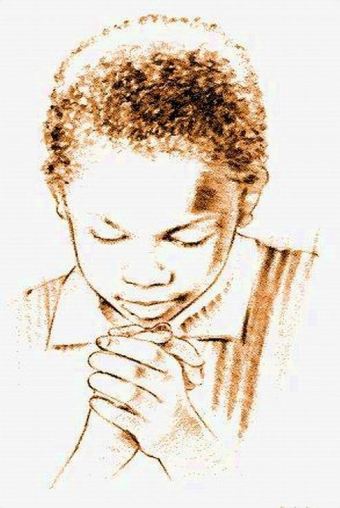
boy-praying-1-itense-bronze

The old woman knelt shivering before the tombstone as her husband pulled away a pile of decayed leaves that seemed to cling defiantly to its base in spite of the wind that whipped at them repeatedly. It wasn’t bitterly cold — at least not like it had been many other Decembers in this city. But the wind was always stronger up here at the cemetery, and today, with no sun smiling down its warmth, the chill just seemed to beat its way into their elderly bones. Of course, sorrow had its own chill, and sometimes it was hard to tell if the icy feeling came more from the weather or from the pain within.

The old man finished his work and then joined her, slowing sinking to his own knees and removing his warm felt hat. Tears glistened in his eyes, but he wouldn’t let them fall. He had to be strong for her right now. He glanced sideways at her, seeing the tears flowing freely down her cheeks. She kept pressing her handkerchief to her face, to try to stem the bitter stream, but it did no good.

It had been a year and a half now since they had lost their second son. He had followed his brother into military service and then into war … and, finally, into the grave.

The old man shuddered out a deep sigh. He had brought his new bride to this country just one year before their first son had been born, and it had been a time of promise and happy expectation. The Lord had blessed them with two handsome, healthy sons, and they had been the sweetest blessing life had to give. He sighed now as he thought back over the years of raising two strong-willed, but tender-hearted boys. They had all been so happy … until ….

But he shook off the heaviness of those years of war – and the funerals – and the nights of wishing he could have gone in their stead. He knew his boys weren’t really in these graves here. He knew that for certain. They had believed in Jesus Christ, both of them, from the time they had been tiny little curly-haired youngsters. And they were in Heaven now. He couldn’t grieve for them, but for himself and his beloved wife, he couldn’t not grieve.

He leaned over toward her and put his arm around her shoulders now. “The wreaths look lovely, my dear. You’ve done yourself proud. I think these are the most beautiful you’ve ever made.” And she had made some beautiful flower arrangements, this wife of his. It had been her life’s work and a great joy at one time. Now, it seemed to always remind her of the need for flowers on these graves, and she took no joy in the work of her hands. Still … it kept her from sitting and mourning all the time, so he encouraged her to keep the business going.

And the money helped. There was no doubt about that. His pension and the little bit he made working as the church custodian were just enough to enable them to keep their house, modest as it was, and to cover their basic utilities.

But with both their incomes – and with a little extra help from the Lord from time to time – they lived well enough. And every year at this Christmas season they pulled out their special bank – the little treasure box where they had put aside a very small offering each morning during their prayer time with the Lord. They paid the tithes on their monthly income faithfully, of course, but this little extra offering represented their desire to do more than just what was expected of them. And each Christmas they asked the Lord what He would have them do with the money to help someone not as fortunate as they.

The old man smiled to himself now. Christmas Eve was just three days away. They needed to get to asking the Lord what His plan was for this year. He leaned over and kissed his wife on the cheek. “Come, Mama. We need to get into the warm. The wind is getting bitter.” She allowed him to help her rise from her knees and pull her coat tighter around her neck.

The wool scarf she wore on her head had almost blown off, and he straightened that too and then placed his hands tenderly on either side of her worn face. “Our wonderful boys are warm and safe in Heaven, Mama … looking down on these wreathes you have made for them and feeling proud. Now … we will go home and fix some hot cocoa and take out our silver bank and have our talk with the Lord about His plans for the money, hmm?”

She nodded her head in agreement, and they turned together to plod arm-in-arm out of the cemetery and down the lane to their car.

As they entered their back door, he stopped a moment and breathed deeply. “Ahhh . . . your kitchen still smells like molasses cookies and shortbread, Mama,” he said, pinching her cheek tenderly and grinning at her. “What do you say we have some with our cocoa?”

His wife was taking off her scarf and coat and hanging them on the pegs beside the door. “You’ll ruin your supper if you eat all that sugar right now, Papa,” she scolded him. It never occurred to either of them to refrain from calling each other by those names, even though they had no children living now. They had rarely called each other anything else since their two little ones had chosen those names for them. It had thrilled them so to be parents that they took pride in the names and wore them like crowns of honor.

Now he hung his coat and hat beside hers and grabbed her around the waist with both hands and began waltzing her around the kitchen. “Well, I have the solution to that!” he announced boldly. “We’ll just have molasses cookies and Scottish shortbread for our supper!”

“Now listen to you go on. What kind of supper is that?”

“Well … we’ll have a chunk of that delicious cheese you bought yesterday along with it, for protein,” he announced, as if that solved the whole question, whirling her around one last time and depositing her in a chair beside the table. At least she was laughing now, and that gave his heart a little ease. “You make the cocoa, and I’ll go get the treasure box.”

So while the milk warmed on the stove, Mama set the food out on the table. She was pouring out the cocoa when he returned carrying a small silver box that looked a little like a treasure chest. “Here it is, Mama,” he said setting it in the middle of the table and taking a seat beside her. “Now, let us thank the Lord for our food and enjoy it while the cocoa is good and hot, and then … then we shall count the money!”

When they had eaten their fill, and their faces were rosy with the warmth of the kitchen and the good food, they moved their utensils out of the way, and Papa pulled the box to him, unlocking it with the key that he always kept tucked away in his top dresser drawer. He dumped out the contents and began to straighten out the paper and sort the coins. “You count the coins, Mama, while I count the bills,” he said, and so they sat quietly, adding up their respective parts of the treasure.

When he was done, Papa picked up the little pad and pencil that he also kept in the box and wrote down his amount. Then he wrote down the amount Mama had in coins and added them together. He looked up at her beaming. “Mama, God has truly blessed us this year. We have put a total of seven hundred, four dollars, and seventy-two cents in our bank!”

“Oh, that’s more than last year or the year before either one!”

“Yes!” he said, nodding his head eagerly.

“Do you think the Lord has multiplied it for us?”

The old man smiled at her with eyes that were lit up with his faith that the Lord had done just that. “Now we must find out what our Lord wants us to do with it. Shall we pray right here, or go into the living room and kneel on the rug?”

“Let’s go and get down on our knees. We need to do everything we can to make sure we focus on the Lord. We wouldn’t want to make a mistake with so much money.”

So they moved into the living room and knelt down in front of their old but cared-for sofa, and, hand in hand, sought the Lord for His plan for the money they had given to Him during their morning devotions. After they had prayed for some time and were now both quiet and listening with their hearts, Papa whispered to Mama, “Do you hear anything yet, Mama?”

“Not yet, Papa. Perhaps, He will reveal something to us while we sleep tonight. He did that once before, remember?”

“Yes, that’s right. All right. We will expect that He will show us something, either as we sleep, or maybe when we first awake in the morning.” He grinned down at her with the eagerness of a small child. “I can hardly wait to see what He has in mind. I know we have to be patient. He may not show us until Christmas morning, you know. One time that’s what He did. But at least we know that He’s never taken longer than that to tell us what we must do, and that’s only four days away.”

Mama smiled at his excitement and rose from her knees, grateful for this generous-hearted husband that the Lord had given her. If only … if only he could have kept his sons to pour that heart into, she thought, shaking her head gently at the sad thought.

“No, Mama,” he said to her now, reaching out and lifting her chin and looking into her still bright blue eyes. “We will not be sad tonight. God has something happy for us to do, and we will enjoy it!” He leaned down and kissed her on the mouth. Then he raised his eyes heavenward and said, “Thank you, Good Lord, for giving me such a beautiful wife!”

“Oh, Papa . . .” she said, chuckling and shaking her head.

“Now,” he said turning her toward the kitchen, “I will help with the dishes, and then you shall read to me.”

The next morning the couple rose expectantly, eagerly anticipating the Lord’s leading about what to do with their money. But as the day progressed into evening, both had to admit that they just didn’t sense the Lord’s direction yet. So they retired that night with the prayer on their lips that He would show them tomorrow.

Again the following morning, they were a little disappointed, but since it was a day with much to be done, they quickly went about their business. Papa had more than the usual custodial work to do at the huge stone church in the middle of the city, because there were always extra services and celebrations this time of year. And Mama had finished the Christmas flower arrangements that had been ordered by two merchants whose shops were on the same street as the church. They always ordered the flowers for their holiday parties from her.

So after having a cozy breakfast, the couple loaded the flowers into the car and headed into the main part of the city. As they passed the corner one block from the church, they noticed a small boy sitting on a concrete bench on the sidewalk. “Would you look at that little tyke, Papa,” Mama said with a chuckle. “He’s bundled up all the way to his nose.”

“Well it is awfully cold,” Papa answered. “Wonder what he’s doing sitting there all by himself.”

“Oh, his mama probably told him to stay put while she ran into the bank behind the bench there.”

“Mmmm, probably, but … I don’t know … in these times, I don’t think I’d leave my little boy sitting by himself for even that long in a city this big.”

Mama sighed, “I know, Papa. Sometimes it seems to me that parents don’t take the dangers waiting for their little ones seriously enough.”

“Well, here we are,” Papa said in a more cheerful voice as he slowed down to look for a parking place close to the first store. “Are you sure you want to walk back down to the church? I can come and get you, you know.”

“Oh, Papa! Don’t be silly. It’s only two blocks. You just carry in one of the arrangements for me, and as soon as I’m done here, I can manage to carry the last one on to the shop two doors down. I’m sure they’ll both want to talk a few minutes, and then I’ll come down to the church to meet you.”

“Okay,” he answered, sliding into one of the few parking spots left on the street in this part of the city. While Mama carried the arrangement for the proprietor of the first shop, Papa carried in the other piece and set it down where Mama could get to it easily. He went on to the church and began his work, stopping almost an hour later when he realized that Mama had not returned yet. But just as he started down the hallway to the outside door to check on her, she walked in, bringing the biting air from outside with her, but flushed with a smile and twinkling eyes.

“Oh, Papa, they raved about my arrangements! They said they’d never seen anything they liked any better!”

He hugged her. “Well, of course, Mama! What else did you expect with your talent for working with flowers?”

“Thank you, Papa, but I happen to know you’re just a little prejudiced,” she said, pinching his cheek gently. “But come … I’ll help you with your work.”

So they worked side by side, finishing up the day’s list of tasks by noon, and left the church together. As they drove back the way they had come, they noticed that the small boy was still at the same corner, sitting on the bench alone.

(To be continued.  Look for Part 2 tomorrow.)

~~~

Christmas E-Book – $0.99 Today Through December 24.

stocking-full-promo-2

My Christmas short-story anthology, Stocking Full of Stories, is on a special holiday sale at the Amazon Kindle Store.  It will be only $0.99 until midnight December 24.

Christmas is about love – and laughter – and hope – and second chances. This collection of 11 original Christmas stories covers all those subjects and then some. From poignant to funny to heart-warming and faith-inspiring – you’ll find a little bit of everything in this Stocking Full of Stories. Read the book straight through for an evening of well-rounded Christmas pleasure. Or pick and choose, one story at a time, depending on your mood.

Give yourself a gift this Christmas: fill your stocking with these stories of the season. And while you’re ordering, go ahead and send one to someone you love.

Amazon also provides a free download for a Kindle app so you can read on any of your devices.


~~~


Friday Fictioneers 12/2/16: Solitary Confinement

I’m determined to participate in this week’s Friday Fictioneers. The prompt for the 100-word story is the picture below, compliments of Jan Wayne Fields.

PHOTO PROMPT © Jan Wayne Fields
Copyright Jan Wayne Fields


SOLITARY CONFINEMENT

He crossed out the date. Two years now – and only a little crazy. The symptoms had abated, but government doctors weren’t negotiating about his exile.

“Sorry, Nigel,” they’d said at the last visit, looking through the visors of their protective headgear and patting his arm with their sterile gloves. “Lessening symptoms don’t mean anything. The disease won’t die out – until you do. There’s still no cure. Total isolation is still mandatory to avoid spreading. We appreciate your obedience in staying strictly within the circle painted around your camp. The cameras show you’ve been diligent about it.”

He sat now staring at those cameras. He’d rigged them to cover for him, and so far no one suspected a thing.


~~~

Prompt Nights Challenge: Life is a Masquerade

I’ve chosen to offer a piece of fiction for this week’s challenge. The topic is masks, facades, and lies. To participate in Sanaa’s challenge visit her site here.


THE TRIAL OF MARYBELL WESTMORELAND

man-shoveling-full-yardMarybell Westmoreland was, at the delicate age of 82, a soft, pink-cheeked, quiet woman. Standing merely five feet, one inch tall, she nevertheless commanded total respect from rich and poor, elite and scoundrel.

No one really knew for sure how rich she was. Very few people ever saw her actually spend money, but she always had a well-stocked larder, immaculate gardens, late-model vehicles, elegant gowns, and hoards of priceless jewelry.

She seldom entertained these days, but when she did, the party was one for the society columns to slobber over. She nearly always had a guest list that included several members of royalty – from half a dozen different countries – as well as homeland celebrities and scores of friends. They ate; they danced; they gossiped; they groveled where necessary; and they had an all-round rollicking good time.

That’s why, when the Thursday morning papers reported that Marybell Westmoreland had been arrested and charged with poisoning her gardener, citizens from all around the world were in shock.

“I just do not believe it!” one duchess was heard to exclaim to her husband as she slammed down the paper at the breakfast table. “Why, we’ve known Marybell for decades! She hasn’t an evil bone in her little body!”

“Mmmm,” replied her hubby. “Well, my dear, these things generally do take one by surprise, you know.”

“Nonsense! They have the wrong person; that’s all! You’ll see!”

“Well … time will tell, my love,” hubby replied, as he finished his coffee and rose to gather his hat and briefcase, preparing to head out for a meeting.

“I must send her a telegram to encourage her!” he heard his wife add as the butler let him out the front door.

And so the duchess sent her telegram – as did scores of other friends and family from all echelons of society.

Having been released on an exceedingly large bail, Marybell Westmoreland, chose to go straight to her home and refused to see anyone or go out in public for any reason. News reporters swarmed the area just outside the boundaries of her property, hoping to get a tiny glimpse that would allow a chance at a photo that would, no doubt, at least triple the sales of their particular newspapers.

One enterprising young woman reporter did manage to talk one of the maids into speaking with her, and when asked how Miss Westmoreland was behaving, the maid answered, “Oh, she’s the same as ever, Lord love her. She goes about the house hummin’ to herself just like usual, and she has her meals at the right time, and eats like a horse. It’s a sure bet she ain’t worried about gettin’ a death sentence.”

By the time three months had passed – and the scheduled trial was still two more weeks away — the reporters went back to ordinary stories and let the old lady go on about her life uninterrupted. Gossip seemed to die down. There just wasn’t enough activity taking place in Marybell’s day-to-day life to add any fuel to the fire.

Finally, the trial began. Each side presented various forms of what they considered evidence, but everything was so circumstantial that most of the people following the proceedings had made up their minds within three days that there would be nothing to convict the old bird.

They were all the more shocked then, when the defense attorney put Marybell on the stand herself. Naturally, the judge asked her publicly if she understood that she did not have to testify, and she replied that she did understand. “But I don’t mind, Your Honor,” she told him. “I’ll be glad to testify. After all, it’s my own trial, is it not? How ill-mannered would I be to expect people to come to my trial if I don’t even act like a good hostess and talk to them!”

The judge rolled his eyes and turned to her attorney. “Do you agree with this decision, Mr. Withers?”

“No, Your Honor, but my client has insisted.”

“Very well. Proceed then.”

“Thank you, Your Honor,” he said and cleared his throat for the coming interrogation. After asking Marybell to verify her name and other identifying information, he went right to his first shocking question.

“Now, Miss Westmoreland, will you tell us, please, did you poison your own gardener, Mr. Samuel Trustbody?”

“Yes, I did,” she replied, looking him directly in the eye.

The audience in the courtroom – including both attorneys and the judge – sucked in an audible breath.

“I beg your pardon?” said Mr. Withers. And days later, one reporter made the comment that the look on the  poor defense attorney’s face at that moment was one for the history books.

Very calmly, as if she did that sort of thing every day, Marybell replied, “I said, yes, I did.”

Mr. Withers cleared his throat again. “You are saying that you poisoned your gardener, Mr. Samuel Trustbody, in order to kill him?”

She nodded her head, her soft pink cheeks looking just a little pinker than usual, but with no other sign of any agitation. “Yes, that is correct.”

Poor Mr. Withers had never lost a case so quickly, and he just did not know how to deal with the situation.  He cleared his throat again, but when he began to ask the next question, his voice came out so squeaky that he had to start again. “And … may I ask why you killed your gardener, Miss Westmoreland?”

“Well, you see I had to.”

“Go on, please. Why did you have to kill him?”

“Because he just insisted on digging up the whole yard behind the greenhouse to plant a new garden. Naturally, I couldn’t let him do it. I tried to talk him out of it. I even ordered him not to do it. But all he would say was that his contract with me said that he had free rein to plant anywhere he saw fit, and he was convinced no other place would be right for that kind of garden.”

“But … surely … madam … that was not sufficient reason to take his life!”

“Oh, I had to! Don’t you see? If I had let him go back there and dig up all that area, why … he would have discovered all the other bodies I’ve buried back there.”


Daily Post Prompt: Copycat

I admit I actually wrote this story last year, but it fits today’s prompt so perfectly that I’m using it anyway.

THE CASE OF THE COPY-CAT CRIMES

man-at-desk-brown

Detective Becker pressed his left hand against his temple. It was tender from the pain where a migraine was threatening, but he had to go over this list of people who had received threats in the past month. The letters had all been made out in the same way: typed words that had been cut and pasted – one word at a time – onto a black sheet of paper and mailed in red envelopes. He’d sworn he’d figure out the nexus they shared that had made them victims of such a hateful attack, but time wasn’t on his side any longer, because the first two people on the list had already been killed.

His buzzer sounded, and his secretary reported that he had a call waiting on line one: his superior, Detective Wagner. “Yes sir,” Becker spoke into the phone. “What can I do for you?”

“The press has gotten wind of the fact that eight other people have received threatening letters. They’re pushing for a story, but, of course, we can’t tell them anything that could disrupt the investigation. I just wanted you to be forewarned that they’ll be waiting outside the front door when you leave the office.”

“Thanks for the warning. I slip out the basement entrance.”

“Have you figured out any connection yet between the two who are dead and the other eight?”

“I think I may have, Sir. All of these people served on a jury together about fifteen years ago. The decision of that jury was unanimous and resulted in the death sentence for the man on trial.”

“Who?”

“Malcom Leiberman.”

Dead silence on the other end of the line caused Becker to stay quiet and wait. He could hear that the wind outside had started blowing harder, and he knew the storm that had been predicted was almost upon them. Finally, Wagner responded: “You know, of course, that Leiberman was convicted of perpetrating a series of murders after sending out threatening letters to his victims.”

Becker sucked in his breath. “No sir … no, I haven’t had time to research the case yet. But that’s too weird.”

“Yes,” replied Wagner. “And now I think I know who we’re looking for. His brother swore he’d get revenge. But then he got sick with some disease that the doctors said was incurable, and he was hospitalized for years. I guess everybody forgot about his threats. I know I did. But we need to find out if he’s still alive, and if so …”

“I’m on it, Sir,” Becker said. “I’ll call you back as soon as I have the information.”

Two hours later, Becker walked into Wagner’s office with a medical report. “He’s alive all right,” he said, laying the report on his superior’s desk. “And living right here in the city.”

“You’ve got an address?”

Becker nodded.

Wagner rose from his chair and strapped on his gun. “Let’s go get him and save eight people’s lives.”

~~~

Friday Fictioneers: October 28, 2016

I haven’t had opportunity to take part in Friday Fictioneers for a while, so I’m enjoying getting back into the swing of things this week. The photo is courtesy of Peter Abbey To take part in the 100-word story challenge visit Rochelle here.  My story is below the picture.

PHOTO PROMPT © Peter Abbey

A HOUSE DIVIDED

The lush Georgia countryside stretched and drowsed along the river. Union troops who had crossed the enclosed bridge lay behind trees and bushes, rifles ready. Their informant had guaranteed the Rebs would be hauling cannon and ammunition across the bridge just before sundown.

Bennett tasted bile; his heart pounded. From the time he’d made his choice, he’d known this moment was bound to come, but he wasn’t ready. Men and wagons approached the bridge, unaware, steadily making their way across. Leading the contingent was the younger brother he’d helped raise. Tears traced Bennett’s dirty cheeks as he aimed his rifle.


~~~


Prompt Nights # 29: Loss & Madness

sad_face-sweat-greenThis week’s prompt delves into the various aspects of loss and the volatile  emotions it can cause — and considers the possibility that there is a strong connection between loss and madness. I’m offering two pieces for this challenge. The first is a poem that considers loss without the madness — although making the decision to let the wrong person go from our lives could very possibly help keep us from going mad. The second piece is a work of prose that I actually posted in the past in connection with an entirely different challenge, but it seemed to fit this one so well that I thought it deserved a second bow. It does include a degree of madness connected with loss

DECISION

Let him go.
It’s time to admit you’ve been a fool
And take possession back of your own soul.

At first encounter
You saw the good was mixed with bad
The right choice then by now would make you glad.

But foolish child,
You were intrigued, so closer crept
And threw out counsel that you should have kept.

“Do not touch.”
Three words so easy to understand;
Unguardedly, you opened heart and hand.

It’s harder now,
But still you have to make the choice.
And this time listen to the wiser voice.

You call it love,
But such a love that’s unrequited
Just leaves the soul living life one-sided.

Even if
He claimed to share the love you feel,
The danger of forbidden fruit is real.

Let him go.
And pray the feelings soon will die.
To hope for more would be to live a lie.

Let him go.


SECOND THOUGHTS

I’ve thought about you countless times this past year. I sometimes wish I hadn’t been so hasty to make the decision. There are days when I wake up thinking how good it would be to still have you beside me for a few hours. And, of course, every time I make the curried chicken casserole I think about you. It’s downright lonely in the kitchen these days. And I don’t even cook most of the time. I do carry-out.

I don’t order from our favorite Chinese place, though, and I don’t go in there anymore because they almost always ask me, with sadness in their eyes, how I’m doing now that you’re gone. That gentle couple who own the place really got to like you. I think you were probably their favorite customer during the three years we ate there. I miss the Chinese place, and some of the other haunts we made our own. But I’m finding new interests and new friends, and things will work out.

But — sometimes — on a summer evening — when the windows are open to the gentle night air and someone’s laughter floats across the breeze, it reminds me of your laugh. I think that’s one of the things I miss most about you. You were so abandoned when you thought something was funny. You never held back.

But then, as well as I can remember, you never held back on any emotion. And that fact, of course, is what finally led me to make my decision. You just couldn’t seem to hold back on your feelings for all the other men in your life — even my best friend — a man I’d thought would have my back through thick and thin — especially after all we’d been through together in the war. But you were just too much for him. He fell just like all the others. And so I made the decision.

Yeah — as I consider it all again now — I know it was the right thing to do. It put a stop to the hurting for me and for all the rest of ’em too.

The only thing is that — on nights like tonight — with the fragrance of the roses you planted drifting in from the garden — and the radio playing an old song we used to dance to — well — I have to admit to myself at least — I do feel just a little sorry that I poisoned you.


To participate in this week’s challenge, visit “A Dash of Sunny.”


~~~

100-Word Challenge for Grownups # 186

Julia has offered us another 100-word challenge this week with the following prompt:

“… looking back, I remember …”

I have to confess that I’ve cheated a tad. I’m about 19 words over, but I just didn’t have any more time to spend cutting it down further.


COMPUTER READING - TRQUS

STARTING OVER

“Looking back, I remember how easy everything was – especially communication.”
“Tell me, Grandpa.”
“Computers ran everything, including phones and automobiles.”
“Really!”
“And almost everyone could be reached by Internet.”
“I’ve heard about Internet.”
“It’s been twenty-two years since the grids went down.”
“And that shut everything down?”
“Yep. Nothing could be manufactured, vehicles couldn’t run, almost all communication shut down. Our nation had been attacked by E-bombs, and our irresponsible government had no back-ups.”
“Did we fight back?”
“Couldn’t. No way to fire missiles, no planes. And once we were down, other free nations were attacked. The whole free world reduced to walking, writing with wooden pencils, and bartering goods for food and water. Grandson … your generation has a big job ahead of it.”


~~~

100-Word Challenge For Grownups – Week #184

Julia’s back into the swing of things with her 100-Word Challenge for Grownups this week. The prompt is the following phrase:
“… and just when Harold thought it couldn’t get any worse …”

Visit Julia’s blog to get the details of participating.

SAD SMILEY - FLESH COLORYOU CAN’T WIN ‘EM ALL

Harold slapped the alarm, grabbed the remote and clicked on the TV as the lottery numbers came up. Grabbing his ticket, he checked off the list.

“I won! I won!” He jumped out of bed, stepping on his boxer, Dolly.

“Woof! Woof!” Dolly joined in the excitement.

Barely thinking, Harold threw on clothes and started downstairs. Dolly ran under his feet, and Harold tripped, rolling down the flight in record time. Rubbing is head and his tailbone, he made it to the kitchen to warm up yesterday’s coffee.

The microwave blew a fuse, so he opted for juice, which he spilled on the floor. He bent to wipe it up and dropped his winning ticket into the puddle. And just when Harold thought it couldn’t get any worse, Dolly snatched up the ticket and chewed it to bits.

~~~

Friday Fictioneers 6/8/16 –

To join the fun of Friday Fictioneers 100-Word Story Challenge, just follow the link for the details. Photo by Jan Marler Morrill.  My story is below the picture.

PHOTO PROMPT © Jan Marler Morrill


Sebastian had said, “Follow the alley until it curves right. Stop at the blue door in the wall. Knock four times.”

Okay, here was the turn. Yes … the blue door. Four short raps. She held her breath. … No answer. … She waited. … Still no answer.

Drat the man!  Why all this mystery? Couldn’t they just meet at a cafe?

Lying on the floor inside, Sebastian stretched his arm to reach the door handle. But the knife in his back had done its work. He lost consciousness as the girl turned in frustration and left the alley.

Friday Fictioneers Reruns: ‘But Not Always’

I haven’t had much time to write lately, so since the Friday Fictioneers challenge is doing summer reruns this month, I took advantage of the situation. I’m “reruning” the story I originally wrote for this challenge way back in ?????

Photo copyright belongs to Rich Voza.  My story is below the picture.

Frid Fict Plane


BUT NOT ALWAYS

He was Cherokee, she Scottish-American. But the moment they met in the airport coffee shop, they were connected. Waiting out the fog, they talked like old friends. When her plane was called, he carried her bag to her boarding gate.

A question in her eyes, she said, “Wow, Chicago and Dallas – talk about two people going in opposite directions.”

Light flared in his eyes as he realized she didn’t want their connection to end either. He reached out and traced one gentle finger down her cheek.

“Opposite directions today,” he said, “but not always, I think.”

A spark in her eyes leaped to his, just as the boarding line began moving, and he promised: “I will see you again, Joy.”

~


~~~


Daily Post Prompt: Countless

Visit the Daily Post to find out how to participate in today’s prompt.

Exif JPEG
`

THE DECISION

`I’ve thought about you countless times this past year. I sometimes wish I hadn’t been so hasty to make the decision. There are days when I wake up thinking how good it would be to still have you beside me for a few hours. And, of course, every time I make the curried chicken casserole I think about you. It’s downright lonely in the kitchen these days. And I don’t even cook most of the time. I do carry-out.

I don’t order from our favorite Chinese place, though, and I don’t go in there anymore because they almost always ask me, with sadness in their eyes, how I’m doing now that you’re gone. That gentle couple who own the place really got to like you. I think you were probably their favorite customer during the three years we ate there. I miss the Chinese place, and some of the other haunts we made our own. But I’m finding new interests and new friends, and things will work out.

But — sometimes — on a summer evening — when the windows are open to the gentle night air and someone’s laughter floats across the breeze, it reminds me of your laugh. I think that’s one of the things I miss most about you. You were so abandoned when you thought something was funny. You never held back.

But then, as well as I can remember, you never held back on any emotion. And that fact, of course, is what finally led me to make my decision. You just couldn’t seem to hold back on your feelings for all the other men in your life — even my best friend — a man who I’d thought would have my back through thick and thin — especially after all we’d been through together in the war. But you were just too much for him. He fell just like all the others. And so I made the decision.

Yeah — as I consider it all again now — I know it was the right thing to do. It put a stop to the hurting for me and for all the rest of ’em too.

The only thing is that — on nights like tonight — with the fragrance of the roses you planted drifting in from the garden — and the radio playing an old song we used to dance to — well — I have to admit to myself at least — I do feel just a little sorry that I poisoned you.


~~~

WP Discover Challenge: Apology = ‘Sorry’ (a short, short story)

SMILEY - SAD FACE - BLUEToday WP has challenged us to write a post that relates to an apology. One of their many suggestions for ‘how’ to respond to the challenge was to write a story about an apology gone wrong. I decided to take that direction just a tad farther, urged along by a couple episodes I’ve known about in real life that gave me the basis for this tale. (All names have been changed.)

One of the sad realities in this life is that not everyone who hurts another person can even comprehend that he/she is actually responsible for inflicting wounds and damaging lives. For those self-focused, clueless people, the word “apology” has no significant meaning. I’m grateful that the vast majority of people I know in this world do understand and practice making sincere apologies when they are warranted.

On to the story:

SORRY

“Get out! Get out! Get out!” Marcy’s voice bounced off the walls of the living room and echoed down the hallway to the front door, where Ryan stood, putting on his coat. Sadness overwhelmed him. He was beyond using words. They wouldn’t do any good anyway because she couldn’t hear them now. Her mind was so filled with her own pain and her need for revenge that it couldn’t receive anything from outside.

Ryan knew, in the objective part of his brain, that he couldn’t deny he was partly responsible for things coming to this point. But even as he accepted that truth, he also realized that he was more sorry that he had told her than he was about having committed the acts themselves.

He was a man, after all. Even the pastor of the church he occasionally attended had acknowledged that sometimes a man had needs that couldn’t be ignored. He’d heard him talking to another member, and he’d said that if a man couldn’t get those needs fulfilled at home, it was understandable that he’d feel driven to look elsewhere. That had surprised him a little, until he remembered that the whole reason the congregation had hired that particular man was because of his loose, liberal leanings where scripture was concerned. Ryan liked the way the guy explained scripture. You weren’t supposed to take it literally for every single situation in your life.

Ryan had told Marcy what that pastor had said and even offered to go with her to meet with him and let him explain it all to her. She’d refused, shouting, “Pastor! He’s no pastor! No man of God would condone what you’ve done! He’s nothing but a hypocrite the rest of you hypocrites voted in so that he’d tell you what you want to hear. His brains are probably the same place yours are, and I won’t lower myself to describe where that is.”

Ryan shook his head from side to side in obvious expression of his befuddled thoughts. Women! Who could figure them? It wasn’t as if he had left her and committed himself to some other woman, after all. He’d just had sex on several occasions. What was the big fuss about anyway? Marcy hadn’t seemed too interested in that part of their marriage lately, so why should it bother her if someone else took care of that part of his life?

He shook his head again in disgust as he opened the door and stepped out into the 0° chill factor. He pulled his coat up around his neck and hurried to unlock his car and get in. He was angry at himself for not at least waiting until warmer weather to get kicked out of the house. He guessed he’d have to bunk down in a motel for the night and see what tomorrow brought. Maybe during the night he could think up some kind of apology that would work on her. Confounded women!

Yeah … he was sorry all right – sorry he’d told her.


~~~


Friday Fictioneers 4/29/16 – ‘Sales Appeal’

I haven’t had a chance to participate in Friday Fictioneers in a while, and I’m just getting in under the wire this week. But the picture conjured up this little story, and I couldn’t pass up sharing it. The picture prompt is courtesy of Mary Shipman. My story is below the picture.

PHOTO PROMPT © Mary Shipman

SALES APPEAL

“Pops, when you asked me to come and help with the store, I had no idea you’d been losing money the past ten years. What’s the deal with all these tools and auto parts? And your line of pipe and chewing tobacco is weighing down the shelves.”

“I’m just well-stocked.”

“But your only customers the month I’ve been here are genteel ladies. They don’t buy that stuff.”

“Yeah, the men never shop here.”

“Well, get me the ladder. I’ll fix that.”

(Two hours later)

“Ivan, you can’t hang all those women’s undergarments from the rafters! It will embarrass our customers.”

“Not the customers we’re after. You just wait and see. We’ll have men customers coming out our ears by next week.”


~~~

Remembering Izzy — a short story

IRONING BOARD AND IRON - CLKER
http://www.clker.com/

Sometimes when I’m feeling sad and this ol’ world starts to creepin’ in on me — heavy-like — I take myself away from other people and huddle down in my old creakin’ rockin’ chair in my bedroom. I sit by the window just rockin’ away and lookin out — not seein’ anything in front of my eyes, but seein’ all kinds of things in my memories.

And at times like these — when I’m hurtin’ powerful bad in my soul — I like to remember Izzy best of all. Her real name was Isadora Bradshaw, but none of us kids ever called her Isadora — not me or my sister or any of our friends who came to visit. In fact, nobody I knew back then called her Isadora. She was just Izzy to all of us who loved her.

She was the best of the best was Izzy. About 200 pounds of love and laughter. Her full, round, black face would get all shiny with sweat whenever she was scrubbin’ the floors or haulin’ big loads of clothes from the wringer washer and carryin’ them out to the clothesline — or when she was standin’ at the ironin’ board with her feet in the tub of ice water.

Yes sir, I have to chuckle every time I think about it now. The picture’s still just as clear in my mind as it was every ironin’ day in the summer. Izzy said ironin’ on a summer day was the hottest one job in the whole world. She said it always made her think about how hot hell must be gonna be, and it made her want to go read the Good Book before she went to bed. Izzy loved that Good Book. And she loved the Lord. Gosh-a-mighty, I can still sing every old hymn that sweet ol’ black lady taught me.

But back to the ironin’ days: Izzy said she sweated so much the sweat would drip on the clean shirts she was ironin, so she decided to start standin’ in a big tub of ice water, and that way it kept her cooled down. When I was a little squirt, I didn’t understand how dangerous that could be, but when I got a little older and had learned a few things about electricity, I told her, “Izzy, you’re gonna electrocute yourself standing in that tub of water while you’re plyin’ that electric iron.”

“Lordy, Honeybear,” she’d say — she always called me “Honeybear” — from the day I was born I guess — but she’d say, “Lordy, Honeybear, if I was a goin’ to lectrify myself doin’ this, it would have done happened years ago. Now, you stop you’re worrin’ bout your old Izzy. If the good Lord did see fit to take me home while I was a ironin’, I don’t suppose it would hurt a thing — ceptin’, of course, you and your pa’s shirts would still be all wrinkled.”

I finally got to the place that I just laughed with her about it. And later on — when she was too old to work as our maid any longer and pa had a little three room house built out in the back for her to live in for the rest of her life, she and I would sit and remember those days and laugh ’til there were tears in our eyes. That was several years after I had finished high school and moved about a hundred miles away to take a job. I’d never been one to hanker after college, and I landed a job doing work that suited me and just stayed with it. I always made time to come home a couple weekends a month to see the family. But I got to be honest. It was Izzy that I really came home to.

Why that dear old black woman was like a second mama to me. My real mama was a good woman, and I know she loved me, but she was awful busy durin’ my growin’ up years with all of her society doin’s, and it was Izzy who made my breakfast, who listened to me read the stories in my grade-school reader, who listened to my hopes and dreams and fears when I’d spill ’em out non-stop the way a growin’ boy does when he’s goin’ through those years of change and uncertainty about life.

And it was Izzy who prayed for me all the time. I heard her prayin’ many a night. After she finally got her work finished up, she’d sit out on the back porch and talk to the Lord, and I’d sit by my bedroom window listenin’ to those prayers. Back then, I didn’t know the Lord yet, and my heart yearned for the kind of easy, lovin’ relationship that Izzy had with the God of the universe. And, of course, it was Izzy who finally led me to give my life to the Lord.

That one act made all the difference in my life, of course, but one of the most important things it did was to make me even closer to Izzy. She said once I was a Christian, that made her and me real family. Of course, to me, Izzy was always my family, but I eventually came to understand what she meant.

I came to understand a lot more than that too. Eventually, I realized that Izzy was a woman caught in a transition time in our nation. She wasn’t a slave. Nobody was a slave anymore. But she had been brought up by a family who had known slavery. Her own great grandparents – in their teen years – had been among the slaves freed after the Civil War. And livin’ in the deep south as they did, they just couldn’t seem to get more than one step away from it in their thinkin’ – mostly because the rest of the south couldn’t get more than one step away from it either. Their world revolved around an unspoken cast system, and Izzy and her family were still on the bottom.

She should have had opportunities for education and a career. She shouldn’t have been relegated to doing all the cooking, cleaning, and every other kind of drudgery work for someone else in someone else’s home. She should have had a home of her own with a good man and a passel of kids and a place in society where she could be involved with the rest of the world — just the way mama was able to do. But Izzy wasn’t a revolutionary. She wasn’t out to change the world. She took what came to her and thanked the Lord for a family to work for that she could also love.

By the time I understood all of these truths, Izzy was 78 years old and finally livin’ peacefully in her little 3-room house behind our big house. Most people called our house a mansion, but to me, it had always just been our house. And with Izzy there, it was all I needed for those growin’ up years.

I finally married, but we didn’t have any kids, and eventually my wife and I went our separate ways. I never took the chance again. Sometimes I wish I had, but wishin’ about it now is wasted energy. After the divorce, I used to sit and talk with Izzy about what I thought had gone wrong. She listened, but she never passed judgment on me — or on my wife. She just loved me, and that was enough.

Well, Izzy’s gone now — to live with her dear Lord. And me — I’m old and tired — and lonely. My family’s gone, and I miss ’em: my sister Ella and Mama and Papa. I miss the visits to the old home place. I live here in this place they call a “senior facility,” but it ain’t what I call really livin’. The truth is I’m just bidin’ my time until I go on home to be with the Lord too. Some days I have pain in my body, but most every day I have pain in my soul. Somethin’ in me still yearns to do things and go places and try out a few more dreams. But the will isn’t enough when the strength isn’t there.

So while I’m waitin’, I sit here in my quiet room, rockin’ and lookin’ out my window and rememberin’.  And it ain’t so bad really — as long as I sit here and remember Izzy standin’ there at the old ironin’ board, her feet in that pan of ice water, and us laughin’ together to beat the band . . . and singin’ the old hymns, and . . . .


THE END


~