The World’s Leading Educator: YouTube

`
COMPUTER READING - LIGHT GRAYDid you know that you can learn how to do absolutely anything on YouTube?  Whether you want to learn how to operate the newest technological device, bake a cake, build a website, fix a toilet stool, make a podcast, correct a grammar problem, skin a beaver, or find Jesus Christ — instruction is at your fingertips on YouTube. What a revolution in education.

Of course, we do have to be sensible enough to distinguish what’s genuine instruction from some “nit-wit’s” bid for attention, but that’s not too hard to do — especially if you watch more than one video on the same subject. So if you’re in need of instruction and haven’t checked out YouTube, go for it. You’ll be surprised at how much you can learn to do for free. I continually stand amazed at — and grateful for — such technology.

Anybody seen my beaver-skinning knife?????????


~~~

Daily Post Prompt: Heal — ‘Healing Is For You!’

`
I have much to share about today’s Daily Post prompt: heal. And the best way I know to do that is to share two links. The first is a video reading of Chapter One of my book Healing Is For You! I hope it encourages and lifts all my readers. The second link is to the Amazon page where you can find the book in paperback or digital, in case you’d like your own copy.

Now, have a blessed and healthy day!


You can click on the book to go to the Amazon store and purchase a copy.

HEALING AMAZON BOOK COVER - FRONT ONLY w. shadow


+++

Coffee Thursday 3/30/17

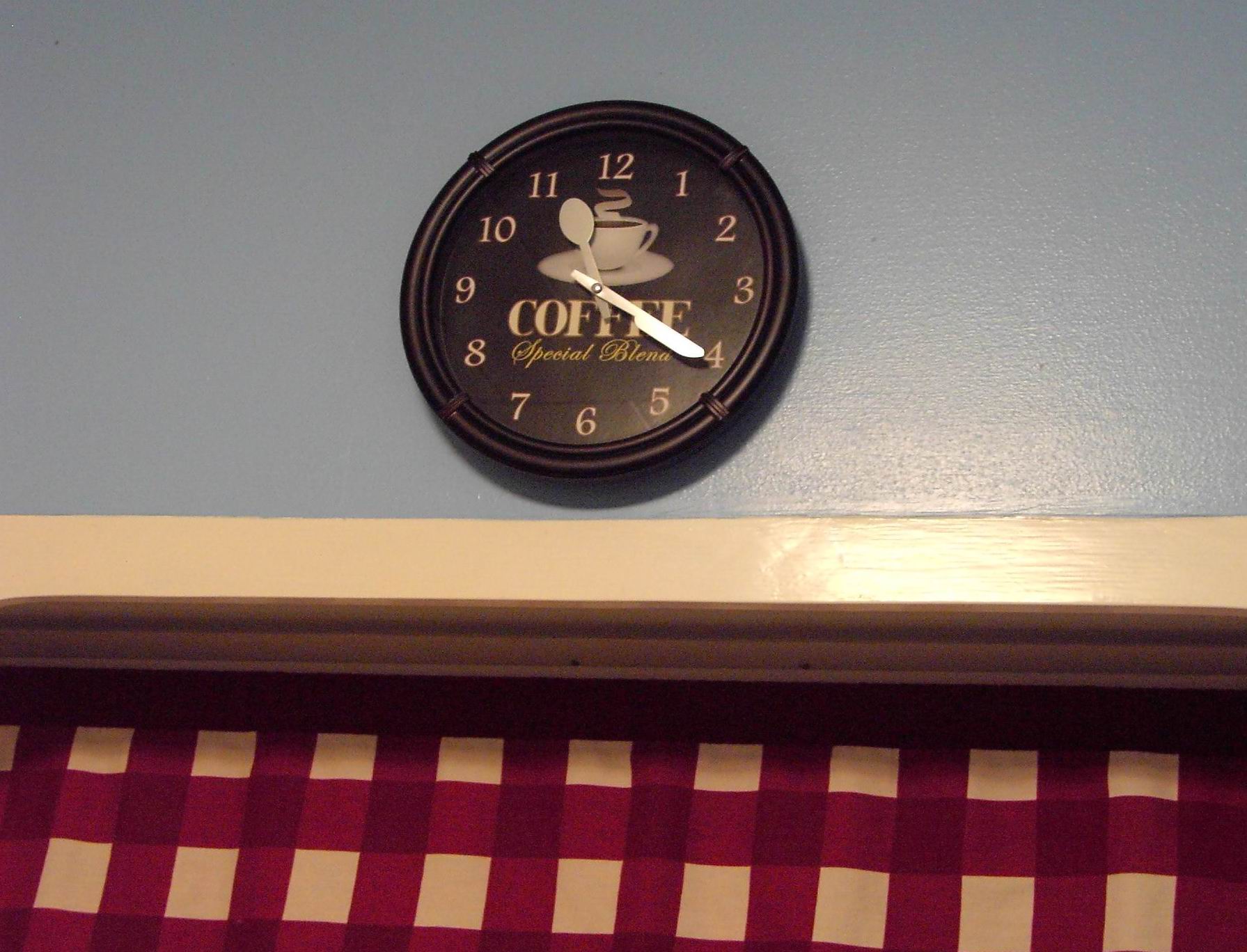
My coffee clock tells me it’s time to write about coffee again.

I learned just this week that coffee plants were originally exported from Africa to countries all over the world, and that currently there are 70 different nations that cultivate coffee.  I never paid must attention to the kind of coffee beans used in the coffee I buy, but over the past couple years, I’ve learned about Arabica and Robusta beans. Now, I think I’ll take special notice of exactly what the can or bag says when I take it off the shelf for purchase.

One of the things that helped educate me was a series of “cozy mystery” novels that center around a fictional coffee house in Greenwich Village run by the main character Claire Cosi. The series, Coffeehouse Mystery, is the work of a husband and wife team who write under the pen name of Cleo Coyle. If you love a good mystery, and you enjoy coffee as well, it’s probably a series you’d enjoy spending time with.

But be sure that when you sit down with the book, you have a fresh cup of your favorite coffee right at hand. Reading just isn’t the same if you can’t pick up that lovely cup or trusty mug and take a sip now and then.


And don’t forget: You’re invited to share your “coffee thoughts” by way of prose, poetry, pictures, or graphics. Just post on your own blog and hop over here to give us your link in the comment window below. (And you can post any time this week. It doesn’t have to be Thursday.)

~~~

Daily Post Prompt: Purple – The Royal Color

PURPLE EQUATION 2

Christ’s blood seeped from the puncture wounds the thorns produced around his head. His blood ran freely from the scourging that tore apart his back and torso. It gushed from his side slashed open by the soldier’s spear. His bright red blood mingled with death’s morbid, black shroud that afternoon on Calvary’s infamous hill.

But during the somber three days following that seemingly fatal failure, that precious red blood inundated the black of death — mixed with it and overcame its fearful depths — and thus created the regal color of victory. And purple reigns forever, the color of royalty upon the throne of the universe. Salvation is complete.

______________________________________________________________

Those of you who visit both this site and my ‘Hangin’ Out With God’ site, will notice that today I’ve chosen to post the same response to the prompt on both. I hope you don’t mind.
To participate in the prompt visit
Daily Post.

***

‘Releasing the Creative Writer in You’ – Lesson 6

To access other lessons in this series, click on “Creative Writing Class” in the navigation bar and scroll through to find the lessons you need.
releasing-the-creative-writer-icover-editedLESSON # 6: BODY MOVEMENT AND DIALOGUE MAKE A STORY COME ALIVE

As you develop your plot, remember to use as much dialogue and body movement as possible to help the reader see and hear the words and actions. Simply narrating it is much less effective. Quote your characters directly, and let the reader hear a sigh or see the character lean against a door frame. Describe a smile or the sound of the laughter. Allow your character to lean forward or backward, prop his foot on a stool, rest his head against the back of a chair, or fold his arms across his chest. No real person carries on a conversation without body movement as well, and you need that kind of description to keep your reader’s attention and make your characters “real.”

Beginning writers often find themselves skipping this very important principle. They get involved in “telling” their story and just continue to narrate the events without any individual detailed action and without letting their characters carry on real conversations. That lack of material is generally why some beginning writers have problems filling out scenes and developing entire novels. But once you get into the habit of adding these two very important elements to your writing, you will find that you enjoy writing even more, and that you have less problem creating real-life, fully developed scenes for your story.

Now, of course, adding just any old movement or dialogue will not work either. The characters’ behavior and conversations have to fit the story and be totally relevant – even important – to the story itself. Keep checking to be sure that every conversation and every scene is actually moving your story forward and not just taking up space.

Remember also, that tag words (things like “he said / she asked”) need to be kept at a minimum and need to be simple, ordinary words as often as possible. Some new writers have the mistaken idea that they should reach for a variety of words or for unusual words to use with quotes. That’s exactly what you don’t want to do. Those unusual words stick out like the proverbial “sore thumb” in the middle of dialogue and interrupt it. Except in very rare instances, you’re much better off using the ordinary words like “said” or “asked.” Occasionally, in a scene where they would be perfectly applicable, you might venture out to tag words like “whispered” or “shouted.” But the number one rule is to keep those tags as inconspicuous as possible.

The next rule you want to remember is to begin a brand new paragraph each time the speaker changes in a conversation – even if the previous speaker said only one word. When you stay faithful to that rule, you end up needing far fewer tag words to begin with – particularly if you have only two speakers. Once you identify the original speaker and then identify the person who answers him, changing paragraphs for each one will keep your reader aware of who is saying what. If your conversation lasts for more than a page, you need to throw in a couple more tags here and there, just for extra clarity, but it’s amazing how easily readers will follow your conversations with no other help when you follow these two basic rules.

QUIVER FULL COVER - GOLDBelow, I’ve given you two versions of the same excerpt from my novel A Quiver Full of Arrows. The first excerpt uses very little body language and dialogue. The author narrates what is happening, but does not show the characters in action or let them speak on their own. In the second, you will see how much more color and interest is added by letting the characters speak their own words in normal conversation and by showing the reader even small unremarkable body movements.

In order to better grasp the way these writing tools are used, I’ve made the dialogue a sort of turquoise color and the body movement sections a shade of purple. I tried highlighting them, but could not get the highlights to copy and paste into this editing window. So I’ll work with what I’ve got.  And the color variation will help you see exactly what was added to get the better version.

Version # 1 – Mostly narration with only a small amount of body movement or dialogue. (Remember: dialogue is only the words within quotation marks. Any other mode of letting your reader know what a character said is narration.)

Peanut shells! Again! Handfuls of peanut shells scattered around the steps of the front porch!

How were they getting there?

Lawson Wainright walked around the small piles that were littering the sidewalk and the edge of the grass beside the steps. He stood for several more minutes, looking around the yard, turning his tall, lean body full circle . . . but there was no one in sight.

He looked up into the branches of the tree just a few yards away. He supposed it could be birds or squirrels. But he just didn’t think an animal would leave the shells looking like this. The nuts had obviously been broken open carefully. . . . .

He went to get a rake and some garbage bags to gather up the shells. While he was raking up the shells, Elmer Peabody, his 75-year-old neighbor from across the street came over. “Looks like you’re rakin’ up peanut shells again,” he said.

Lawson agreed and asked Mr. Peabody if he had seen anyone unusual in the neighborhood recently. Mr. Peabody replied that he hadn’t seen anything so far and asked if the shells were all still intact the way they had been the other times. Lawson told him that they were.

Eventually Mr. Peabody began to walk around the area himself, looking closely at the foundation of the house, where Lawson had added white latticework that ran along the front, below the porch, and met the steps on each side.

Elmer was leaning down close to the foundation right where Lawson had been raking up the shells, and all of a sudden he shouted. “By Jove! Did you know that your lattice is broken here, L.W.?”

“Broken?” Lawson asked. “Where?”

“Right here,” Mr. Peabody answered and handed Lawson a piece of the loose lattice.

Lawson couldn’t understand how it could have broken because he had put it in place last summer, and it was all secure. He finally stooped down and looked more closely.

The area under the porch was spacious and dry, and Lawson crawled in to have a better look.

“What in heaven’s name!” he shouted from under the porch.

“Did you find something?” Elmer asked.

Lawson crawled back out from under the porch and looked up at Elmer. “I found two sleeping bags and a can of peanuts under there,” he said. He was hoping Elmer might be able to help explain what was happening, but Elmer was equally stunned.

After a few seconds, Lawson laughed out loud. He told Elmer that he felt like the three bears who had come home and found someone had been sleeping in their beds. Elmer asked Lawson if he had any idea who it could be.

“I don’t have a clue,” Lawson said. But, suddenly, he remembered something.


Version # 2: A considerable amount of dialogue and body movement has been added to this version. Compare the effectiveness of Version # 2 with that of Version # 1. Which story will hold your reader’s attention better and help him relate to your characters?

Peanut shells! Again! Handfuls of peanut shells scattered around the steps of the front porch!

How were they getting there?

Lawson Wainright walked around the small piles that were littering the sidewalk and the edge of the grass beside the steps. In frustration, he ran his hands through his short brown hair, and as he did so, the sunshine caught sections of it and highlighted them with streaks of copper. He let his hand slip down to the back of his neck, massaging it a little as he shook his head back and forth slowly, still trying to reason out the solution to this strange development.

Then he stood for several more minutes, resting both hands on his hips and looking slowly around the yard, turning his tall, lean body full circle . . . but there was no one in sight. He looked up into the branches of the tree just a few yards away. He supposed it could be birds or squirrels. But after a moment, he shook his head again. No … he just didn’t think an animal would leave the shells looking like this. The nuts had obviously been broken open carefully. . . . .

He shrugged his shoulders now and let out a sigh, turning as he did so to walk around the house to the garage, where he extricated a lightweight rake from a jumbled collection of yard care equipment. He returned to the front yard, where he began to rake the small piles into one larger heap in order to scoop them into a garbage bag he had carried over along with the rake.

“Hey, L. W.” The voice of his seventy-five-year-old neighbor across the street got his attention. “Looks like you’re rakin’ up peanut shells again.”

Lawson couldn’t help chuckling and shaking his head in consternation again as he stilled his rake and looked at Mr. Elmer Peabody. “Looks like,” he called back, leaning slightly on the rake now as he gave his attention to his favorite neighbor.

“Still no idea how they’re gettin’ into your yard?” Elmer asked as he started across the street.

“Nope. You still haven’t seen anything or anyone unusual, have you?”

“Not so far.” Mr. Peabody took off his gardening hat as he crossed the yard and scratched his almost bald head. “’Course, that don’t mean nothin’,” he added. “I hardly ever look outside after dark, and early in the mornin’ I’m eatin’ my breakfast and lookin’ out my back window at the birds.” By the time he’d finished answering Lawson’s question, he was beside him, watching him finish his clean-up job. “Were the shells all neat and clean again like the other times?”

“Yeah … just exactly like the last three times.”

“Mm-mm!” Elmer Peabody grunted, shaking his head back and forth. He began to walk around the area in tight circles, finally bending over and looking along the foundation of the house, where Lawson had added white latticework that ran along the front, below the porch, and met the steps on each side. …

All of a sudden Elmer shouted, “By Jove! Did you know that your lattice is broken here, L.W.?”

“Broken?” Lawson asked, stepping over to stand beside his neighbor. “Where?”

“Right here,” Mr. Peabody said, reaching out to take hold of a loose 3-foot section of the white lattice and lift it away from the rest of the porch. He held it up for Lawson to inspect.

“Well, I’ll be!” Lawson said, taking the piece of latticework in his hands. “How on earth did that happen? I just put that up last summer, and it was all secure.” He studied the piece of wood he held in his hands. “Hmm … it looks like the nails have been worked loose and just pulled out, but nothing’s broken off.He stooped down to look more closely under the porch.

The area beneath the porch was quite spacious, and stayed fairly dry most of the year, unless they had heavy rain or snow. He could easily crawl under it himself and move around, but he hadn’t done so since he’d put up the lattice. Now he got down on his hands and knees and eased his way into the three-foot opening.

“What in Heaven’s name!” His voice came out sounding muffled from beneath the porch, and Elmer Peabody leaned a little closer to hear better as Lawson spoke again. “I don’t believe my eyes!”

“What’d you find?” Elmer asked, excitement filling his voice now. This was an adventure for him. He hadn’t had this much interesting activity in his neighborhood since Hilda Gates, next door to him, had set her kitchen on fire trying to make a big rum cake. ….

Lawson hadn’t said anything else for a minute or so, and Elmer leaned in even closer and stuck his head inside the opening.What did you find? What’s going on?”

“Sleeping bags!”

Sleeping bags?” Elmer couldn’t believe he’d heard right.

“Yeah … two of them, and a big metal can full of peanuts!” Lawson began to ease backwards out of the opening, and Elmer moved away to give him room.

“Did I hear you right? Sleeping bags?”

Lawson was still crouched down close to the ground, and he looked up at Elmer, his face a perfect picture of consternation. “Elmer, there are two rolled-up sleeping bags under my porch, and a large metal can full of peanuts in the shells.” His eyes still registered his shock, and then a quizzical look came into them, almost as if he hoped that his neighbor, somehow, would have the explanation.

When he realized that Elmer’s face was as full of surprise as his own must be, he added, grinning in spite of himself, “I feel a little like the three bears who came home and discovered that someone had been sleeping in their beds.” He laughed out loud then. In spite of the obvious seriousness of the discovery, he couldn’t help himself. “Mr. Peabody … somebody’s been sleeping under my porch!”

“And havin’ a midnight snack on top of that,” Elmer said, chuckling and scratching his head again. “By Jove! I wonder who in the world it could be.”

Lawson shook his head again and picked up the piece of lattice to replace it. “I can’t imagine – unless – ” His voice trailed off, and he sat back on his haunches, looking off into space. . . . He had just remembered a recent news story. …


With this second version, not only is the scene fully fleshed out, but the reader actually feels that he is getting to know the two people involved. As we discussed in the chapter on developing characters, we get to know real people in our lives by talking with them, seeing them in action, and learning how they treat and interact with others. That’s also the best way for readers to get to know the characters in a story. As a result, those characters seem real, and the reader connects with them enough to want to read to the end.
__________________

* Releasing the Creative Writer in You, © 2013 by Sandra Pavloff Conner

NOTE:  My schedule has become a little over-loaded this month, so I’m going to have to hit the ‘pause’ button on my plan to offer a creative writing lesson every Saturday. I’ll try to post a lesson at least once a month for a while, but that may be the best I can do. I hope these have been a help and encouragement to some of you, and I’ll add more as often as I can.

~~~

Healing Book: New Edition, New Look, Lower Price

HEALING AMAZON BOOK COVER - FRONT ONLY w. shadowHey, I just want to let you all know that my book Healing Is For You! is now available in paperback from Amazon. It’s been on the market in paperback for years, selling in independent bookstores, at seminars, Bible schools, and through churches. And it went onto Amazon in digital format last year. But the only online retailer for the paperback was the publisher’s website, St. Ellen Press.

However, this week the book has come out in its fourth paperback edition, with a new look, new format, and lower price ($6.99) — and now it’s easy to order from Amazon.

It still offers a thorough study from God’s Word about healing for body and mind, and it still answers scores of the most troubling questions on the subject. Such as —-

Is it always God’s will to heal?

If it is God’s will to heal everyone, then why doesn’t everyone receive healing?

What part does medical science play in God’s healing plan?

Is it God who decides when each person dies?

How can I ever die if I keep getting healed?

If I don’t have faith for healing, can I get it somehow?

The book doesn’t promote any church doctrine. Rather it looks closely and carefully at God’s Word — especially the life and ministry of Jesus — who, according to the Word, is the only exact, perfect representation of God. It looks at God’s personal and perfectly-executed plan to get His people well and keep them well. It covers 9 separate means that God Himself has provided to get His healing power into us, and it looks carefully at 7 of the most common hindrances to our receiving that healing fully. It also offers a final chapter with more than 100 healing scriptures to use as medicine, just the way the Lord instructs us to do.

The Lord has graciously anointed and blessed Healing Is For You! to strengthen and encourage faith and help people receive healing from Jesus Christ. If you need healing, or you would like to better understand God’s healing plan so that you can help others get well, it will be a wonderful tool to help you move more fully into God’s loving, merciful plan to bless His people.


~~~


Coffee Thursday – 3/15/17

`
COFFEE STEAMING - SEPIACoffee: It’s the elixir of love.  I know there are those who believe that title belongs to various other concoctions, but not so. It’s coffee. I’m sure of it.  In fact, as I was preparing to do this week’s “Coffee” post, I started thinking about how I’ve used coffee as the primary beverage between the romantic couples in all my novels. So I thought I’d throw together three excerpts from those stories for today’s take on the subject.

From Cameron’s Rib, page 119.

Thursday morning Suzanne sat across from Cameron at his desk and placed her tape recorder between them as she prepared to begin their interviews. The room was fragrant with the chocolate, hazelnut coffee they were enjoying, and as Cameron looked across at Suzanne, he felt a sense of deep contentment, sharing this time with her. …


`
From Jonah’s Song, pp. 95,96.

That decision being made, they decided to play a game of Scrabble and have more coffee, and before they knew it, the evening had grown late, and all four of them were ready to turn in.  At the door to his room, Jonah turned to Vallie, who was just opening her own door.  …  “Why don’t we plan on setting down around 9:00 tomorrow morning,” he said. “And see what we can come up with.  That way we’ll have time to run through the music a couple of times before tomorrow night.”

Vallie nodded her head.  “That sounds fine.”

“Good,” he said, smiling his signature smile at her now.  “And thank you, Valentina … for agreeing to be my partner in this venture.”

Vallie smiled back, genuine happiness in her face.  “I’m happy to do it, Jonah.  Goodnight.”

“Goodnight, my dear,” he said, and turned to open his door.

As Vallie prepared for bed, she kept thinking about how he had called her “my dear” several times recently.  Every time he had said those words, Vallie had felt a tingling all through her.  She told herself he hadn’t meant anything special by the term, but still, the endearment lodged in her heart, to be taken out again later and treasured. …


`
From Slate, pp.3-6.

Slate sat in a back booth at Katy’s Koffee Korner,  his eyes slowly scanning the room. They came to rest on a woman sitting alone in a booth across from his. She was sitting with her head bent forward and was massaging her temples.. Headache, he surmised, and glanced back at the waitress, winking at her as she set his coffee on the table and promised to be back with his breakfast in a couple minutes.

While he ate,  Slate glanced occasionally at the woman across from him. She had raised her head now and was sipping her coffee, her eyes closed. Her hair was a warm light brown shade, with just a tinge of highlights from the sun here and there. It barely skimmed her shoulders in soft waves. Her features weren’t classically beautiful, but she was really pleasant to look at. Her complexion was unblemished, and her eyes and eyebrows seemed to be etched in at exactly the right angles to highlight her whole face. Her mouth was rather wide, and her lips looked as if an artist had sculptured them. Yes, all in all, the sight was something he took pleasure in this morning.

He’d evidently taken just a little too much pleasure, because he’d been staring. Suddenly, she looked up and right at him, a question in her large, brown eyes. Almost exactly the color of a copper penny, Slate thought to himself as his attention focused on those eyes. He was caught off guard by the vulnerable look on her face, and instinctively he smiled his most genuine smile at her and then went back to concentrating on his food. A minute later, he heard her conversation with the waitress who had come back to bring her a fresh carafe of coffee.

“Can you give me exact directions from here to the Sandstone Motel?” she asked.

“Sure, Hon. It isn’t hard. I’ll write it down for you and be right back.”

“Thank you,” she answered, smiling and lighting up her face for just a moment, but when the waitress left, she went back to rubbing her temples and then her eyes. She finally leaned her head back against the high divider of her booth and closed her eyes, but Slate, glancing sideways at her, noticed a couple of tears trickling down her cheeks. After a minute more, she took a deep breath and opened her eyes, wiping the tears from her face with her hands, and by that time the waitress was back with her directions.

“Thank you so much,” she said and handed the waitress some bills. “This is for you.”

“Thanks, and you come and see us again, Okay?”

“If I have time,” she said smiling slightly at the retreating waitress, and then she slid out of her seat and stood up. Before she could take a step, she swayed and reached for the back of the booth to regain her balance. She was sitting in the last booth across from him, and no one else had noticed the unusual action. She sat back down on the edge of the booth, holding her head. Slate had learned better than to interfere in someone else’s business, but something about her just seemed so vulnerable that he couldn’t keep from getting up and walking over to her booth.

“Are you all right, Miss?” he asked, resting one hand on the table and leaning towards her. She looked up at him then, her eyes registering her pain.

“Yes,” she answered in almost a whisper. Then she cleared her throat and tried to speak louder. “It’s just this stupid migraine headache. They often make me woozy. Eating should help, but I guess the food just hasn’t had time to get into my system yet. I’ll just sit here another minute. Thanks,” she added, smiling wanly.

Slate sat down in the other side of the booth. “How about another cup of coffee?”

She turned back into the normal sitting position in the booth and nodded her head as he picked up the carafe and poured some into her cup. She began drinking it immediately, and Slate stepped over to his own booth and retrieved his cup, bringing it back with him. He poured fresh coffee for himself and topped hers off again. She smiled at him, her eyes seeming to show a little relief now. …


If you’d like to join in the fun for “Coffee Thursday,” just post your own picture, story, article, or poem on the subject and hop over here to leave us the link in a “Comment” window below. I look forward to seeing your take on coffee this week.

“`
~~~

Coffee Thursday 3/9/17

`COFFEE MAN - RED,YELLOW

My, there’s just nothing that quite equals the soothing, uplifting aroma of fresh-brewed coffee. And I’m tired of hearing all the uninformed critics out there who try to make coffee drinkers feel guilty because there is an element of caffeine in coffee. I have always maintained that, since the Lord told us in Genesis that He made the seed-bearing trees and plants for us to eat, then we should be able to partake of coffee with a clear conscience and a happy heart. And let’s not forget that God made the coffee bean with the caffeine in it. We human beings did not add the caffeine the way we add so many artificial ingredients into our food. That caffeine must have some good qualities in it, or the Lord would not have put it into the bean in the first place.

Furthermore, there have been numerous medical and scientific experiments done over the past half dozen years that prove coffee has many beneficial qualities for the human body — everything from quickening our brain function to eliminating headaches as quickly as aspirin to protecting the body against several kinds of cancer and heart problems.

Naturally, nothing is good for our bodies if we partake of way too much of it, to the exclusion of other important elements. But in moderation, coffee is a great blessing. And considering the fact that, in my family, a good cup of coffee has always been associated with family togetherness, wonderful fellowship, and comforting relaxation, coffee is, for sure, a substantial ingredient in the recipe for living the good life.


If you’d like to participate in “Coffee Thursday,” simply post your own article, picture, story, or poem about Coffee, and hop over here to leave the link in a Comment Window below. I’m looking forward to your posts.

~~~

Buttermilk

I just want to say that I LOVE Farm Fresh Buttermilk.  It’s the only brand that I enjoy, but some days I suddenly  find myself desiring a glass of its rich, cold goodness. Yesterday was one of those days, so I indulged myself.

Exif JPEG


Take part in the challenge by visiting Daily Post.


~~~

Do The Job You’ve Been Assigned

Thursday some of my daffodils were showing off their bright yellow bonnets and waving in the breeze. Friday, a heavy, merciless rain drenched them and beat them to the ground. That event was followed by cold temperatures again, after two weeks of spring-like weather.

But this scenario is not new — for me or my daffodils. In fact, almost every year, within a very few days of their blooming, the weather becomes mean and cold again and beats up on those innocent little flowers. But also every year, once the rain is passed, the brave little plants turn their heads back toward the sun and start straightening themselves out. Today, Saturday, almost all of them are standing tall and strong once again.

I wrote about that annual event a few years ago, and then shared the article on YouTube in a video. So today, since I’m celebrating the resurrection of my little daffodils again this year, I decided to give that little devotional video a second airing here on my website. I hope it’s a blessing to you.


~~~

‘Releasing the Creative Writer in You’ – Lesson 2

To access other lessons in this series, click on “Creative Writing Class” in the navigation bar and scroll through to find the lessons you need.

releasing-the-creative-writer-icover-edited

LESSON # 2: IN THE BEGINNING

Introductory Thoughts, Answers to Frequently Asked Questions, And Fun Ideas to Get You Started

`

QUESTION: Where Do Good Writing Ideas Come From?

Successful Writing Rule # 1: If you are a writer, you’re full of ideas.

Ideas come from a myriad of directions, but two of the most common places – two that you can always depend on – are the following:

A. We have a storehouse of ideas inside us. Sometimes they just need a trigger in order to cause those ideas to “go off” enough to ignite a story. What are the subjects that you care about in the various aspects of your life? What do you feel passionate about? What do you like to discuss with friends or colleagues? What do you argue about most ardently? What makes you happy? What makes you sad?

The answers to all of these personal questions can be the key to a successful writing venture – whether fiction or non-fiction.

Do not accept the position of a “would-be” writer who feels he has to run around and ask other people for ideas because he has none of his own. The very idea that you have no ideas is a deception. So your first rule in fulfilling your writing goals is to recognize that you do, indeed, have ideas of your own, and if they are not rising to the surface, start digging as deeply as necessary until you find them.

B. We can see ideas and themes for writing all around us in life itself. How can we be sure we don’t miss them? Simply make a habit of deliberately allowing your curiosity and your imagination to exist unfettered. When your curiosity is free, and it latches onto something, then let your imagination go to work on that subject.

Author/Editor Micheal Seidman discusses this subject in his book Fiction: The Art and Craft of Writing and Getting Published (p. 20., Pomegranate Press, Ltd. ).  Let me pause here to say that I highly recommend this book, as well as other works by Mr. Seidman. He is an excellent instructor in the field of writing and marketing what we write.

In that book, he shares his belief that often we can find ideas most easily when we are not looking for them. He shares about an army lieutenant who trained Seidman’s unit in the expert use of rifles – particularly regarding sniper fire. Seidman quotes his lieutenant as saying, “Don’t stare directly in front of you; you won’t see anything … or you’ll see things that aren’t there. Either is deadly. What you do, gentlemen, is watch the horizon … use your peripheral vision. That’s how you’ll see the movement you have to be aware of.” Seidman often tells writing students of his own that the advice from his lieutenant can be applied to the writer’s craft as well.

And most writers would agree. Those of us who follow the advice proffered by the lieutenant often find that it is a great help in becoming an expert with our own weapon – the pen.

cartoon-writer-with-nin-quoteWhen you get up every morning, get up as a writer. Intentionally go through your day seeking to learn something you did not know previously – or learn more about a subject you thought you did know. Be open and expectant. Allow yourself to ask questions concerning the things you see people do or the things you hear them say. You will not always be in a position to ask the questions of others. In fact, only rarely will that plan work. But you can search your own conscious and subconscious mind for answers.

Apply the principle to events as well as people. When you find yourself involved in an event, ask yourself how and why things are happening as they are – or what would happen if one aspect of the event were opposite of what is taking place in reality. Once you learn to operate this way on a regular basis, you will be surprised at all the questions you will come up with, as well as some of the answers you receive. And remember, you are not necessarily stuck with the “real” answers. Often they are a great catalyst for a story or a non-fiction piece. But just as often the unexpected ideas that your own imagination comes up with in answer to those questions will be just as effective.

And always keep in mind that there are some basic questions that every generation has asked, since the beginning of time – and there are as many different answers as there have been generations. But it’s those questions – the ones that apply to every human being just because he’s a human being – that have a universality about them. And, as a result, those very questions often provide great subject matter for the stories we write.

Author Wally Lamb quoted one of his former writing teachers during an interview for Writer’s Digest recently. His teacher said, “You’re never going to tell an original story. … The world is a very old place and all the stories that matter to people have been told over and over.” (Writer’s Digest, March/April, 2014, p.43). The key to your success, dear writer, is to find a fresh way to tell those same stories. But you must begin by asking the same questions that caused them to be written in previous generations.

A word of caution: Bear in mind that writing a story with a universal theme does not mean that every person who reads your work will like it. He will not. And that is a good thing. If everyone liked everything that every great writer published, the human race would be nothing but a mass of confused, undecided, and uncommitted people. You want to live in a world – and write for a world – that is made up of people who are real individuals. They have ideologies, prejudices, and emotional attachments that differ astronomically. Some of them will find your writing exactly to their taste because it agrees with their ideologies, touches their emotional roots, and satisfies their longings. Those who do not find your work to their liking will like someone else’s work – and that simple fact, dear writers, is what makes the literary world – and the literary market – go  ’round.

Successful Writing Rule # 2: Never throw anything away.

If you write a sentence that records how you feel about one brief conversation, keep it. If you try to write a short story for an assignment, but it just won’t fit into the assignment requirements, don’t wad it up and toss it into the trash. That currently disqualified story may be the root of your finest novel some day. Create a file and keep everything you write that came from your own creativity. In fact, you can also keep quotes from many other writers as well, because they may spark ideas in the future. Remember, of course, that you are not allowed to “borrow” their ideas – just let them spark brand new ideas in you.

Successful Writing Rule # 3: Make frequent use of writing exercises.

Below are some examples of successful writing exercises that generations of writers have found helpful:

A. This first exercise is similar to the process followed in some party games, but it is also a never-fail story starter. Make yourself a collection of 1, 2 or 3-word phrases, single sentences, or longer specifically detailed single sentences. (If you have opportunity to have someone else create the lists, that will be even more challenging.) Write them in a tablet you do not use frequently, or, better yet, write each one on a separate piece of paper, fold it, and put it in a box or jar, or sandwich bag – whatever your style. When in need of an exercise for your creativity, draw one folded suggestion from the collection and sit down at your computer (or notebook) and begin writing. Write non-stop for a pre-specified time (5-15 minutes). Do not stop to edit or even think for any significant amount of time. This is a time when you are letting the creativity in your subconscious have its way without hindrance. (If, after the specified minutes, you find you’re onto a good thing, just keep writing.)

The really important thing about this kind of exercise is that you are totally disregarding all the “rules” of writing. You’re not interested in grammar, syntax, or even organization. And because you are free from all those restraints, your imagination is totally unfettered and able to release things from inside your conscious and subconscious mind that may never have seen the light of day otherwise.

I recall one evening when I was feeling sort of dull where my writing was concerned. I had been working on a couple pieces, but neither of them held any interest for me right then. So I decided to do what I instruct my students to do: pick up a two-word phrase and just start writing until I ran out of steam. No thinking. No editing. No rules. Just writing. By the time my imagination came to a halt, I had written the first two chapters of one of the best novels I’ve ever put out. Now I had no idea I was working on a whole novel. But what I discovered down deep inside of myself as I wrote birthed a beautiful idea that just begged to become a story. It needed some editing, of course, but that can always be done later. What matters first is getting the idea and the story onto paper.

B. Take an hour or so in a public place: restaurant, mall, grocery store, department store, book store, civic event – any place where you can observe people and listen to conversation. Watch how they act and interact; notice what they purchase, what they read, what they eat.  Listen to them converse. Jot down excerpts of their conversations that grab your attention. One particularly interesting writing exercise involves jotting down the last sentence you hear in an overheard conversation and, for the next five minutes (or tomorrow if necessary), sit quietly and let your imagination pick up at that point and continue the conversation, taking it whatever direction your own muse leads. It’s these times of faithful observation of “real” life that lead to the creation of believable characters who act and speak like “real” people.

One of the major earmarks of poor fiction is the creation of characters who often tend to move and speak as some programmed components of the book. They do what the author needs them to do, but they are not interacting and conversing in ways that real human beings would act and speak without the author’s contrivance.  However, many an observant author has watched and listened to an individual in a restaurant or public event and discovered the main character of his next successful novel in that person’s “real” behavior and speech. The character so conceived has the potential to grab the reader’s attention – and possibly his heart – and stay with him long after the last page of the book as been turned.

But back to the specific exercise: now take the notes you’ve made during observation and write a character sketch or a flash fiction story about what you’ve observed. (Flash fiction is simply a super short piece of fiction — generally between 25 and 500 words). Keep it and be on the alert to recognize a place where you can use that material in future work.

C. The third exercise is helpful for writers who are already involved in creating a story but are having trouble with one aspect or one scene. Take the scene you’ve been having trouble with and meditate on it during a long period of quiet and rest. Forget about what you originally intended to do with the scene and set your imagination free with it. It is important to be relaxed in this exercise. Even if you doze off, it is not a problem. Often in those moments between sleeping and waking, ideas rise to the surface of our minds easily because there is less conscious restraint on them at that time. More than once, I’ve wakened in the middle of a brilliant, technicolor action scene playing in my mind – a scene that I doubt I would have imagined with as much quality had I been awake to start with. Let your mind wonder and meander through as many pathways and mazes as it wants during this exercise, and see where your subconscious takes you. You may find that you have a whole new avenue for using the scene in that story – and you just might find that you have an entirely new story altogether.

dreaming-man-with-pencil-blueDeciding on Genre

A. Write what you are hooked on – what you read all the time or think about all the time. Many of you will read various genres, but there are one or two that really spark your interest or give you the greatest pleasure. Focus your own writing in those directions – at least to begin with.

B. Do Not try to write to fit what seems to be selling in the marketplace. Some writers/editors/publisher will tell you the opposite. But when all is said and done – particularly if you are interested in publishing with a mainstream publishing house – what you submit to a publisher today will not see a marketplace bookshelf in less than one full year and sometimes two. Self publishing will get your work out faster in the initial stages, but getting wide-spread distribution may take a lot longer.

As a result you cannot count on the best-selling genre this year to still be the best-selling two years from now, when your book is finally sitting in the bookstore or on the Internet retailer’s site. Some genres, of course (such as romance) are best sellers all the time. However, if you cannot write great stories in those particular genres, then your competition is going to be too stiff. Look for the niche that you and your creative talents fit, and you will have the best chance of capturing your share of the market.

C. Another point to consider: How important is personal satisfaction with your work in your estimate of whether or not you are a success? Do you see yourself as a strong individual – a leader? Or do you see yourself as a good follower – perhaps even a clone? There are possible sales for both kinds of writers, but the personal satisfaction with your work can be significantly lacking if you are a leader at the core of your being, but expend all your time and talent just following the crowd.


Examples of Non-Fiction Genres & Categories

Essays
Academic Assignments
Literary Anthologies

These may fall into various categories, including
descriptive, analytical, expository, persuasive, comic, etc.

Articles
Newspapers
Magazines
Educational Journals
Literary Anthologies

These may fall into various categories, including
descriptive, analytical, expository, persuasive, comic, etc.

Books
Autobiographies
Biographies
Memoirs
Travel Journals
Analysis/Expository
How To/Self Help
Histories

Media Reviews
Books
Movies/Plays
Music

Miscellaneous Categories
Precis
Book Report
Letters
Business Reports


Examples of Fiction Genres & Categories

Commercial Fiction Category

This genre makes up a large part of the books found on
mainstream mass-market bookstore shelves and Internet sales sites.
They include both plot-driven and character-driven stories and
can sometimes cross over into the Literary Fiction Market.

Literary Fiction Category

Often more character-driven than plot-driven and generally
considered a little more “intellectual” than commercial fiction. However, more and
more writers are crossing the barriers between these two categories.

Some of the Most Common Genres From Both Categories
Romance
Women’s Fiction
Mystery/Cozy Mystery
Horror
Thriller/Psychological Thriller
Political Intrigue/Espionage
Science Fiction
Humor


*Releasing the Creative Writer in You, © 2013 by Sandra Pavloff Conner

~~~

69 and Feelin’ Fine


coffee-steaming-neon-green-jpg
Editor’s Note: Coffee & chocolate help keep you young.

I turned 69 on the very first day of this month. There, I’ve said it again without any pain. It’s been amazing to me how truly painless the experience has been.

Now, I’ve never been a person who was particularly concerned about my age. I’ve never tried to hide it or felt the need to lie. I did lose the opportunity to further a relationship with a man who, before finding out my age, was seriously interested in our friendship growing. However, when he discovered — to his shock I might add (what can I say: I look good for my age) — that I was 9 years older than he, his interest just switched off completely.

Personally, I think he is rather shallow — but I won’t say that out loud because it would sound like I was guilty of “sour grapes.” But I really do have a reason to consider him less than mature in that area because I know several very happily married couples with the hubby being the younger of the two. In fact, it’s quite a common thing in my experience, so, naturally, I figure anyone who doesn’t at least want to give the relationship a chance has to be a little shallow.

But I digress. Back to the subject at hand: When I was in my 20’s, I looked forward to being 30. In fact, I was eager to get there because I was just sure that I would be mature and stable and have my life well under control, with a positive future ahead. But, doggone it, when I got to 30, I discovered I was still the same not-very-organized, procrastination-oriented, speak-before-thinking, but fairly happy girl that I’d always been. Not to say that I didn’t have a sensible job or didn’t take responsibilities seriously. I did, but I wasn’t established in the career I had degrees for, nor did I have a husband and family. So much for being “settled.”

As the years rolled by, I realized that “being settled” wasn’t all it was made to look like, and I relaxed and decided to just be who I was and give it my best. That was a great decision, and since then, the Lord has led me into several avenues that have made my life very rich and fulfilling.

When I got to 40, I didn’t sweat it. I was married by then and was pursuing one career that gave me a lot of enjoyment. I was involved in a lot of Christian ministry, and that had always been one of my more important goals. So 50 came along with no sweat as well and rolled right on by. I lost my husband when I was 54, and I will admit that the prospect of facing going into my 60’s alone did seem a little daunting, but I knew the same Lord who had carried me through all the other years of my life was still there.

So, even though I can’t say that I was excited about turning 60, I am happy to say that it didn’t depress me, and I sailed right on through just fine, still basically enjoying life.

But for some reason — and I honestly don’t know why — the idea of turning 69 hit me very hard. When I thought about it, my stomach sort of knotted up, and I felt vaguely depressed. I prayed about it, and the sensible part of me lectured me about being silly. Nevertheless, I continued to feel “down” and found myself hesitant to accept the age transfer. If anyone asked me how old I would be on February 1st, I found myself feeling a little choked at saying the number out loud.

But then the big day came — and went — and I enjoyed every minute of it. And yes — if you think I sound surprised — you’re right. I was surprised. But it was like something broke loose inside of me — or got unlocked somehow. I was able to say the number without the slightest hesitation. I was able to, with a genuine smile, actually take ownership of 69 years of age.

From the moment I took that ownership, I realized that something very positive was going on. Now I suddenly feel as if I have a new beginning — sort of right out of nowhere. It’s as if I’ve got my ‘second wind,’ as athlete’s term the experience. Some kind of shadow has been lifted, the way ahead is clear, hurdles don’t even look as big as they used to, and I’ve decided I’m definitely going for the gold. So — 101, here I come!

~~~

Living a Grateful Life

SMILEY - YEL,ORANGEHave you ever noticed how much better your life is when you’re grateful for all the good things in it? Oh, I know, I know … life is full of aggravations — some huge, but most of them quite small in the scheme of things. I’ve had my share and, frankly, I’ve had a lot more than my share a few times. But I’ve realized that being aggravated, upset, worried, angry, or just out of peace does no real good for me or anyone else and takes a negative toll on me personally.

In contrast, when I am actively grateful for the positive gifts in my life, I find I feel better physically, I think much more quickly and clearly, and I make a positive difference in other people’s lives. Of course I’m referring to being grateful for the big things like a loving family, trustworthy friends, a job, a place to live, food to eat, etc. But sometimes I’m actually sensible enough to be grateful for the small, ordinary things like being able to see the night sky and wonder at it — for being treated kindly by a clerk in a store — for having pleasant-scented dishwashing liquid to enjoy as I do the day’s dishes (by hand).

Whether it’s a small patch of flowers in the yard, a delicious cup of coffee, a local police officer who offers to help with a contrary auto license plate, a computer tech on the other end of the phone who’s willing to go the extra mile to fix my problem, or a family of the cutest little groundhogs out enjoying the day even though they are living where they shouldn’t be (in my neighbor’s yard) — when I realize that they have actually added beauty, energy, interest, and/or some degree of help to my life — and when I take the time and energy of thought to just appreciate that fact — my whole quality of life is just better.

One day a few years ago I was quietly meditating on spiritual things, and the Lord suddenly dropped a little chorus into my heart. I started singing it over and over (to the tune of a little fun song I used to sing as a child), and the truth of it registered deeply inside of me. Now, you won’t be able to hear the tune (because I’m not inclined to sing it into my computer and post a sound bite at this point), but I will share the words with you:

“I will have a grateful heart;
A grateful heart is a cheerful heart;
A cheerful heart is medicine,
So I can be well and strong.”

Now, I believe the Word of God is exactly that: The Word of God. So I believe that, not only is it true and trustworthy, but it also works. If we will believe it and live it, it will manifest God’s blessings in our lives. And that Word tells us in Proverbs 17:22 that a cheerful heart does good like a medicine in our bodies. Long years after that Word was written, human physicians have proven that cheerfulness and inner joy have a very positive effect on our physical health and, in fact can actually get people well. So the words of that little chorus the Lord gave me are a very good prescription for well-being.

I’m not perfect at maintaining a grateful heart — yet — but my mind is made up: I know for myself that being actively grateful for all the positive, pleasant things in my everyday life, no matter how small they are, makes my entire life a much better experience. And one of the things I’m grateful for today is that I’ve learned that lesson.


After writing this piece, I realized it was a good answer to Colline’s question about what we’re grateful for this week, so I’ll link to her post in case you’d like to respond to it as well.

~~~