The Cinquain Mood Has Struck Again

Exif JPEG
The gun.
I must work fast.
I’ll have to hide it well.
At least the deed is fin’lly done.
I’m free.
*

MAN WITH BIG EYES CROPPED sepia

Your hair!
It’s a new cut?
What do you call that style?
What do I think?  Well – uh – I’d say –
Unique!
*

Exif JPEG

Dasies
Are happy flowers.
My very favorites.
Bright white petals; sunshine middles.
Pure joy.
*

~

Once Upon A Time In Any Language

Just got to thinking today that so many of our stories have characteristics and qualities that are both generic and universal. I decided to experiment a little with writing a story using nonsense terms instead of normal nouns and verbs.  I’m certain you will be able to understand the story with very little trouble. It was fun, and I think it helps focus on the fact that sometimes it isn’t just choosing the right word that matters. It’s how we put those words together into a setting that gets the job done.

DRAGON - PUB DOM -- Friedrich-Johann-Justin-Bertuch_Mythical-Creature-Dragon - TALL
Public Domain — Artist: Friedrich-Johann-Justin-Bertuch


THE BONDO DELAFOR

The young delafor wandered through the cogem, wishing he could find a delafora to be his rhuba. He’d heard the fonders tell of bondo delafors who had won the hands of delaforas by zonering the terrible goganbulls. He knew the goganbulls were threatening the cogem, and many delafors were terrizon of them. He didn’t know if he were bondo enough to zoner a goganbull or not, but he hoped he’d have a chance.

One day the great kinba of the cogem announced that a goganbull had been spotted just outside the cogem. The great kinba porsayed that he would give the most beautiful delafora to the delafor who zonered that goganbull.

So the young delafor raced to his stetsa, hopped on, and took off to find the goganbull and zoner it. When he found the goganbull, it was maxma!  It was so maxma that the young delafor’s stetsa reared up, threw the delafor off, and ran away. Now the only thing the delafor had was his pontier. So he looked the goganbull in the eye, stood up straight and tall and shumed toward him. Keeping eye contact, he shumed all the way to within two feet of him. The goganbull gloamed and hot smeltz came from his buzzle.

But the young delafor rememberd the beautiful delafora who was porsayed by the great kinba. The delafor wanted that delafora for his rhuba very badly. So he aimed his pontier and shumed the last two feet toward the goganbull; then he flumed his pontier right into the goganbulls corva. With one horrible gloam, the goganbull fell over, and black smoke roold from his buzzle. Then all was quiet.

The young delafor took his pontier and whapped off the goganbull’s henda and carried it back to the great kinba. That day the young delafor won the most beautiful delafora in the cogem to be his very own rhuba. And they both lived schnookumy ever after.

TU  FEND


~~~


Behind the Scenes During the Writing of ‘Cameron’s Rib’ – Book # 2 in ‘The Smoky Mountain Series’

CAM'S RIB FOR FB - LARGER
Readers often ask me how I came up with an idea for a story or for one particular character, and, of course, there are as many different answers as there are stories and characters. Many times ideas come from such ordinary situations and events that they aren’t particularly memorable, but, once in a while, there are some rather unusual circumstances involved. I consider the creation of the main character for Cameron’s Rib one of those unusual situations.

When I was writing the first novel in The Smoky Mountain Series – Set Free To Love – I had no intention of working on a series. In fact, to be quite honest, I didn’t like the idea of a series at all. So I wasn’t thinking of any of my characters in terms of giving them qualities that would make them long-lasting enough to travel through several stories. But since this series is an inspirational work, focused on faith in the Lord Jesus Christ, I feel I can thank the Lord sincerely for working in me to create characters who did have the right qualities for longevity, and I’m especially grateful where Pastor Cameron McDaniels is concerned.

You see, in book # 1, I had a love story developing, and, in the good old tradition of romance, I needed a second man to form a love triangle – temporarily. I decided that the pastor in the story – being single and about the right age – would fill the bill perfectly. He was supposed to have a rather important part to play in about three chapters, but after that, he was intended to fade away into the background.
But something happened along the way to fading him out. He just didn’t seem to fade. I put up with him for the rest of the story, and, in truth, he didn’t interfere too much, but you can only imagine my surprise when, by the time I was writing the last chapter of Set Free To Love, I suddenly had the seeds of a brand new story about the same people; only in this new story, Pastor Cameron McDaniels was the star!

Like any good writer, I had put the developing chapters of the first book into the hands of some people who would be able and willing to tell me honestly where the book had strengths and weaknesses. By the time those readers had neared the end, they all agreed that I simply could not allow the story to end with one book. They felt I was obligated to continue following the lives of the main characters so that readers could do so as well. And I have to admit that, by that time, I was so in love with these wonderful people I had created that I knew I wasn’t ready to let them go either.

But never had I imagined, even for one minute, that this “temporary extra” I had thrown in to facilitate my love triangle would literally take over the series.
Not only did he become the star of the second book in the series – to the point of having his name in the title (another deviation from my plans) – but he also became the only character from the first book who maintained a leading role in every book in the series.

Years before I started writing novels, I heard a writer say that characters often had a mind of their own, and that once a novel was started, it often began to write itself – turning out to be something other than the author’s original plan. I have to admit that I didn’t really believe that. Now, however, after writing ten complete novels and having three others in progress, I can testify to the fact that characters really do have a mind of their own, and a story can eventually take over and write itself into something more wonderful than the author originally imagined.

For myself, since I write mainly inspirational novels that help people know the Lord and His love in a practical way, I’m trusting that it’s the Lord Himself who takes over and develops my stories and characters to their fullest extent. And I’m truly grateful, because I can honestly say that many of my novels have turned out to be much richer and so much more satisfying than I imagined when I sat down to that keyboard.

I hope all of you who choose Cameron’s Rib will enjoy reading it as much as I enjoyed writing it. I hope you fall in love with Pastor Cameron McDaniels and Suzanne Peterson. And, most of all, I hope their love story – and the truth about how much the Lord Himself cares about the love between a man and a woman – will encourage you in your own love story and your own life.

Get your copy of Cameron’s Rib downloaded today from Amazon’s Kindle store. And remember, if you don’t have an e-reader, Amazon offers a free app that will turn any desktop or laptop computer into an instant e-reader.  (Of course, you can still find the printed version at St. Ellen Press.)

Happy Reading!

~~~

100-Word Challenge for Grownups – Week 163 — ‘Heroine’

Julia’s 100-Word Challenge this week is the prompt:  “… but it was there just a moment ago …”

CLASSIFIED FILE

HEROINE

“But it was there just a moment ago,” Sonya insisted.

Gregor’s face distorted with anger and fear.

“I put it on your desk exactly as you instructed,” she said. “Honestly!”

“This office was locked, Sonya. Except for you, no one had entrance.”

Sonya circled the room, looking under furniture, rummaging file drawers, dumping wastebaskets. “Give me time; I’ll find it!”

He grabbed her by the throat. “To whom have you betrayed me?”

She stalled for time. In another hour, Interpol would have the information they needed to bring down this tyrant’s regime. Even if she had to die, it thrilled her to know she had made it all possible.

~~~

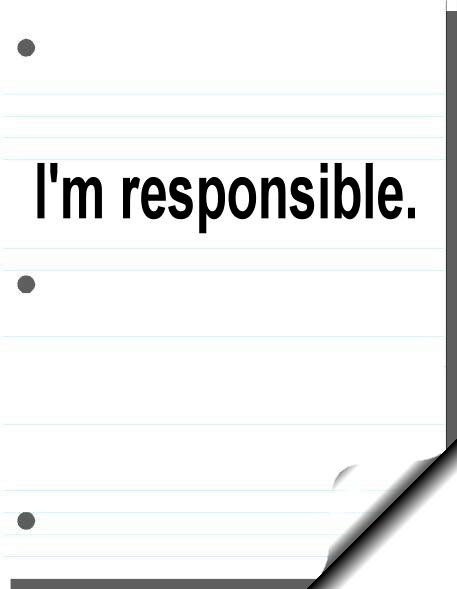
Who’s Responsible????????

PAPER WITH THREE HOLES - textPAPER WITH THREE HOLES - text 2

Okay, now I’ve seen it all.  I’m so fed up with all this “politically correct” crap (and I use that word because there’s only one other that would do the job better, but I don’t use that kind of language).  I just bought a new notebook to record some Bible lesson notes in, and I have to admit that I didn’t read all the words on the front of said notebook before I purchased it. It looks like any number of others, with a colorful cover and 80 sheets of college-ruled paper inside.

But this morning, as I prepared to type the notes from it into the chapter of one of my books, I found myself reading the text in a little white box on the front. Here’s what it says: “Paper from responsible sources.”

Now just WHAT does that mean?????????

I’ll tell you what it says to me. It says that because society has gone bonkers about what they call “saving the earth,” and all of these “green” people insist on using only recycled materials, companies are now trying to look good in the eyes of those people. So I’m guessing that this company didn’t use recycled paper, so, of course, they can’t say “made from recycled paper.” But they want to sound to everyone as if they use recycled paper, so they say, “Paper from responsible sources.”

Now, I grant you that I may be totally wrong about this situation. I may have misjudged the company completely. But if I have, then I’d appreciate their telling me what “responsible sources” are. I mean, anyone who makes paper should be responsible for the paper they make. Any reputable paper manufacturer is responsible to provide good quality product and stand behind it.

So what’s the deal??????

And why am I making such a big deal out of it anyway?

Well, the answer to that last question is what I said in the first paragraph. I’m totally fed up with all this “politically correct” mania, and I think this situation just helps prove how totally ridiculous and also how worthless the whole concept is. Politically correct words and actions are hypocritical as often as they are genuine — no, actually, I believe they are hypocritical more often than they are genuine.  And if we don’t recognize that fact soon, we are going to end up being the most deceived society of people who have ever lived on this earth.

Well, I guess I might have one other reason for making an issue of this subject: It gave me something different to blog about.


~~~

Sneak a Peek at “Quenton’s Honor”

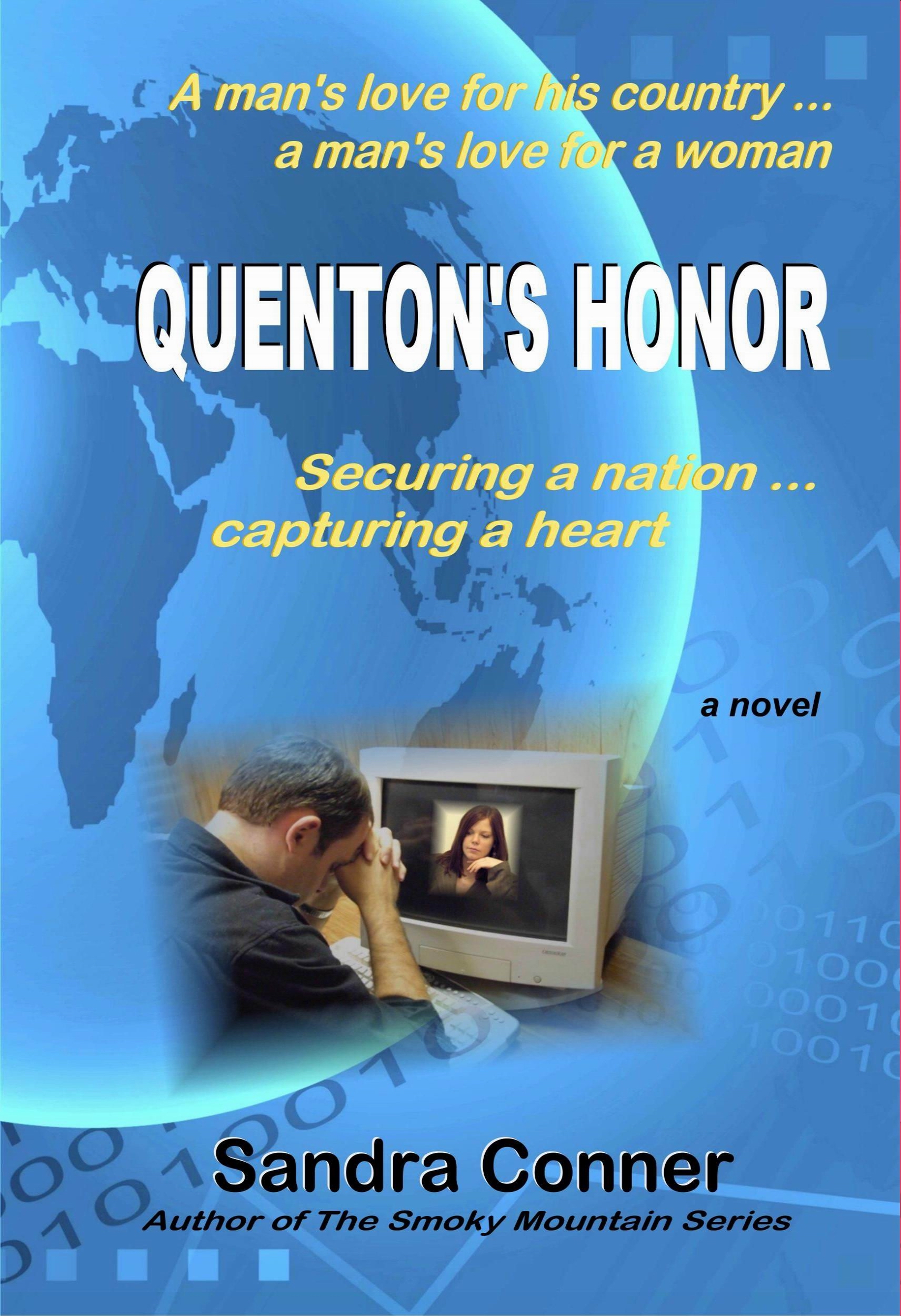
QUENTON FRONT COVER -- NICE AND SHARP FROM CD FOR KINDLEJust thought I’d tease some of you a little with an excerpt from the first chapter of my novel Quenton’s Honor.  Go ahead. Take a chance. Read it. Maybe you’ll decide that one chapter just isn’t enough. If so, you’ll find it for sale on Amazon’s Kindle Store, for only $3.99. And if you don’t have a Kindle, a Nook, an iPad, or an iPhone – no problem. Amazon has an app that you can download for free to turn your computer into a digital reader for any book you buy.  Enjoy ..….

QUENTON’S HONOR:  Chapter One

(Karachi, Pakistan)

“I hope you duly appreciate your cook, Mr. Ahmed,” Quenton said, addressing his Pakistani host as they walked from the dining room with the two other men who were also guests for the business dinner they had just finished. “That was one of the most delicious meals I’ve had in a long time.”

“Indeed, I do appreciate his talent, Mr. Sutherland,” he answered laughing. “Especially since he serves me meals just as delicious even when I am alone.”

“You’re a lucky man.”

Ranjit Ahmed turned toward a closed door and opened it into a cozy library, inviting his guests inside. “Please join me in here for some relaxing conversation now that our more serious business is taken care of.”

“If you wouldn’t be offended, gentlemen,” Quenton said, taking in all three men in his glance, “I’d like to be excused to check on my personal e-mail and perhaps answer some of the most pressing communications.”

“Certainly, Mr. Sutherland. This has been a very pressing trip for you, and I imagine you’re feeling the strain of it about now, and probably long for your bed and sleep as much as more conversation.”

“There’s some truth in that,” Quenton answered, laughing. He turned to shake the hands of the two other men. “Thank you so much gentlemen, for taking the time to meet with me this evening and answer my questions. Your information has been very useful in deciding what kind of help is most needed by the people here in your country.”

“It was our pleasure,” one of the men answered him.

“Indeed,” the other added. “We’re very glad to know that our information has been of benefit. We appreciate your generosity in orchestrating such humanitarian efforts, Mr. Sutherland.”

Quenton turned back to his host. “I’m hoping your offer of the use of the computer in your office is still open. It shouldn’t take long to access my e-mail and print out anything I really need.”

“Feel free to make use of it, Mr. Sutherland. I’ll not be using it again until morning myself. And if you find that there isn’t much that needs your immediate attention, please join us here when you’re through. Otherwise . . . I’ll see you in the morning.”

“Thank you. Goodnight.” Quenton turned and walked down the hall to the office he’d seen as Ranjit Ahmed had shown him around his beautiful home that morning. He entered the office and closed the door, going immediately to the desk and computer terminal.

As he moved the mouse, he was surprised to see a letter replace the screen saver. Hmm . . . must have been something Ahmed had been working on, and he had forgotten to close it out before he left the office. Quenton was a natural born reader, and he often found himself scanning any written material in front of him without even thinking about it, regardless of what it was. By the time he realized he was reading a letter that was none of his business, his eyes had scanned over a couple of lines where the mention of three specific time zones caught his attention, and he automatically started reading again from the top of the page.

“The main components will be in place by midnight in the Pacific Time Zone, which will make it 2:00 AM Central, and 3:00 AM Eastern. The product should have saturated the market within a few hours of the initial entry. Response should be almost immediate, so departure should be as early as possible after the business has been transacted. The last communication from here will take place twenty-four hours before the appointment time. After that, there will be no way for you to access this information or communicate with this site.”

Quenton shook his head slightly. “This is one odd letter,” he said, not even realizing he was talking to himself out loud. He leaned back in the desk chair, thinking and still mumbling out loud. “I had no idea Ahmed did business with anyone on both coasts too. I was sure he told me we were the only American company he’s been connected with for the past three years.” He shook his head again and re-read the words. For some reason he was unable to dispel a faint sense of something shady here. The terminology seemed almost purposely vague.

He shrugged his shoulders. Oh, well, it really had nothing to do with him if Ahmed wanted to do business with somebody else too. “It’s not like I’m trying to corner the market in his line,” Quenton said now, and started to open a new window in the browser to access his own mail.

But something just kept nagging at his mind so much that, instead of opening a new window, he found himself pulling up the information that would tell him who the letters had been sent to. He didn’t recognize any of the e-mail addresses, but he just couldn’t keep himself from pulling his notebook from his coat pocket and jotting them down.

Then he laughed quietly to himself. “This is stupid. I act like I’m in a spy movie,” he said, shoving his notebook back into his pocket and getting down to his own business. He found only one item he needed to print out, so within thirty minutes, he was back in his bedroom preparing to get some sleep.

He must have lain there for at least another hour before he finally dozed off, but it felt as if he were instantly awakened by the slamming of car doors close by. He rolled over in the bed and looked at the clock: midnight. Well, evidently, he’d been asleep longer than he thought. He supposed the car doors indicated the other guests finally leaving. But as he lay there, he heard voices in the courtyard below his room, and after several minutes, he realized he hadn’t heard any car engines running, or the sounds of any cars driving away.

He got up and looked out the window. He could see the courtyard easily, and he was surprised to see Ranjit shaking hands with a man who hadn’t been with them at dinner. The next thing he knew, Ranjit was turning and speaking to someone else who was already out of site in the doorway of a room that opened right onto the courtyard and driveway. Instinctively, Quenton stayed back far enough to be sure he was out of sight, which wasn’t too difficult, since he hadn’t turned on a light. He saw Ranjit and the first man enter the room off the courtyard also and close the door.

Well, he was wide awake now. He might as well put on his robe and go back down to the library and find something to read. Ranjit had told him to help himself to any of the books during his two-day visit. He didn’t encounter anyone else in the hallways, but for some reason, he walked especially quietly. He wasn’t sure why, but he didn’t feel exactly comfortable wondering around someone else’s house after midnight. It seemed a little creepy.

He shook his head at his own feelings and mumbled to himself. “I must be letting Steve’s warnings about the dangers of this trip get to me.” His vice-president had done everything in his power to change Quenton’s mind about making the trip, citing a number of possible scenarios that could end unhappily. He shook his head again and kept walking, determined to find himself something enthralling to read and get his mind off this foolishness. He opened the door to the library and turned on the light, crossing the carpeted floor to peruse the shelves. As he moved to the shelves on the back wall, he realized he could hear voices again, and glancing around, he realized the library was situated right next door to the room he’d seen the men enter a few minutes ago.

Well, he didn’t want to listen and get his mind bogged down with something that wasn’t any of his business, so he’d tune them out and get his book and leave. But the fact that they were speaking English worked against him. He couldn’t seem to not hear what they were saying … at least some of the time. One of the men had a softer voice, and Quenton missed his words, but he could hear Ranjit and one of his visitors pretty clearly.

Quenton pulled himself up short again with a mental lecture about minding his own business, but about that time he heard the words, “The system in San Francisco is more difficult to get into than the others. Do you think we should try a different avenue there?”

“There’s no other avenue that will reach nearly as many people,” Ranjit answered. “Tell them to keep trying.”

“But they’ve tried everything they can think of already, and time’s running out.”

“There has to be a way! A water system that large has to have a weak spot somewhere.”

WATER? Quenton’s hearing sharpened instantly. His heartbeat picked up speed, but he deliberately tried to settle it with deep breaths, because he was determined to listen now. Why would they be interested in San Francisco’s water system? He began to wonder if he had spent too much time the past year listening to talk about possible terrorist plots.

At that thought, his heart started pounding again so loudly that he had to walk right up to the wall and lean against it to hear any more words.

The soft-voiced man was saying something now, but he couldn’t make out any of it except the word Chicago.

“That’s right,” Ranjit said now. “If they can figure out a way to access the system in Orlando and Chicago, there is a way to take care of it out there too.”

CHICAGO!! ORLANDO!! Quenton’s mind jumped back to the letter he’d seen earlier in the evening referring to the three specific time zones. He’d wondered about the letter being in English, but he knew that was a common language for businessmen in this part of the world to use, and it hadn’t made him particularly suspicious. But now he realized that the letter must have been going to people in all three of those cities, and would draw less suspicion if it were in plain English, just in case it ended up in the wrong hands at some point.

He was having a hard time shutting down his own racing thoughts enough to listen to the rest of the conversation. But he could hardly hear anything clearly now. They must have moved to the opposite side of the room. He pressed his ear to the wall, but still couldn’t make out any of the words. But suddenly he noticed that the drapes at the library window that faced the courtyard were still open, and anyone walking toward the drive could see him in the room, leaning against the wall. He’d better grab a book and get back to his room. He’d find a way to get back to the computer after everyone else was in bed. He could surely find some answers there.

He quickly reached up and grabbed a book on the history of Pakistan and slipped out of the library silently. Once back in his room, he changed into jeans and a knit shirt. He couldn’t seem to stop pacing, waiting to hear the midnight visitors leave. When he finally heard car doors slamming again, about an hour later, he eased up to the window and looked out. Sure enough, both men were leaving, and Ranjit turned toward the house.

One of his servants came up to him and spoke in a rather secretive manner Quenton thought, but Ranjit’s only response for several seconds was just to nod his head as if he understood. Finally he glanced up toward Quenton’s window, but Quenton forced himself not to jump back. He didn’t believe Ranjit could see him through the lightweight drapes anyway, but even if he could, it shouldn’t be anything out of the ordinary for someone awakened by the cars to glance out of the window. Ranjit’s glance lasted only a couple of seconds; then he again moved toward the house, along with his servant.

Quenton sat down to wait. He’d have to give all of them time to get to bed and, hopefully, to sleep, before he ventured out again. He closed his eyes, weariness from the trip . . . and from his own troubling thoughts . . . weighing him down. He sighed heavily. He really didn’t want any part of this at all. Could he just ignore everything he’d heard and go on and finish his own trip and get back home? All he wanted to do was help some of the people in these countries, hoping to bring just a little bit of peace to some of them … even in the midst of almost unceasing conflict and turmoil.

His father had been diligent to teach him that a man blessed with much wealth had the responsibility to use that wealth to benefit mankind as much as he possibly could. James Sutherland had lived by the rule that if you give some of what you’ve been blessed with to others in need, you will continue to be blessed even more – and then can be an even greater blessing – and the cycle will continue. And to the best of Quenton’s memory, that policy had never failed his father at any time. So he had continued to live his own life the same way.

He smiled to himself now, his head resting on the back of the chair. He’d wanted to be just like his dad ever since he could remember – always following him around – begging to go with him to the office or to visit clients – to “help” carry his golf clubs around the green or to sit beside him on the boat with his own cane fishing pole hanging over the side, waiting for a nibble. And, of course, when his dad had become a believer, Quenton had always been ready to accompany him to church – at least as a very young boy.

But by the time he was out of high school and on his way to college, he didn’t figure he had time for God and church. He knew his parents were disappointed – as was his grandmother, who’d told him stories of faith from the time he was a toddler – but he had to start living his own life sometime, and the day he left for college seemed as good a time as any. Those feelings only intensified when he began to listen to the questioning ideas and attitudes that were so plentiful in his classrooms and among the people who became his friends.

He sighed again. Oh, well, religion just wasn’t for him, but he had to admit that it hadn’t done too badly by his dad. He had been an extraordinarily successful man, and Quenton was honored to have had him for a father. He would continue to live by the principles his dad had instilled into him – at least as far as business was concerned – to the best of his ability.

He glanced at his watch now. He’d waited long enough. It was time to slip down to the office.

As he stepped into the hallway thirty minutes later, the house was silent as a stone. He slipped easily down the corridor and turned to the left, heading quickly for the office. He had planned to use the excuse that he had forgotten to access his business computer’s e-mail, should he get caught at the terminal at such an unusual hour. But he hoped that wouldn’t be necessary.

He closed the door silently and eased his way around the desk to the chair in front of the terminal. He was thankful for an almost full moon, because it gave just enough light to avoid stumbling over something. He turned on the screen and found that it gave enough light to see the keyboard clearly. Now to discover the right password.

He was more grateful than ever that he had expanded the family company into the manufacturing of computer hardware and that he’d forced himself, in the process, to learn a great deal about how all of the various systems functioned. He’d learned more than one way to scour those systems for the information he needed. He worked quickly and as silently as the computer itself would accommodate, holding his breath almost the whole time. … Bingo! He had it. Now to get into the rest of the e-mails and possibly some related files. He checked the time, knowing he needed to hurry, but wanting to take the time to assimilate what he read so that he didn’t have to write it all down.

As he worked his way back through letters preceding the one he’d discovered tonight, he found more details. By now he felt sure he wasn’t imagining things. All these details had the makings of a thoroughly organized plan to infiltrate city water systems with a deadly substance. But what he couldn’t find were dates. His neck was rigid from the tension, and he reached back to massage it, closing his eyes for just a moment. He had to find the dates.

He opened his eyes again and pulled up another document. The wording was extremely odd, and just as he was concentrating on trying to decipher what must have been some kind of coded instructions, the office door swept open and the overhead light flashed on. Quenton jumped … just enough that his hand hit the mouse, and it slid off the desk to the floor. With that motion, his tiny window of opportunity for closing down what he had been reading dissolved into thin air.

~

(© 2004 Sandra Conner)

~

Success

I’ve never touched a star;
Never tried to reach that far.
Perhaps my goals are all too short, too frail.

My dreams are all mundane:
Never seeking wealth or fame,
Nor for great contributions to be hailed.

But when all’s said and done,
I’ve loved folks – one by one –
And in the end, it’s Love that will prevail.

~~~

Yep, Got A New Title

Well, it’s this way. I never have been able to get the tag line to work on this theme.  And I wanted my new tag line to say, “The right word makes all the difference.”  But since it won’t post on my site — unless I create a graphic with the title and the tag line myself and post it as a header — I decided that maybe I’ll just make that statement my new title.  Don’t know if I’ll stick with it, but I’m in the mood to experiment this week, so …… why not? Sorry if it confused anyone.  I rather like it.  Maybe some of my visitors will as well.


~~~

A Weighty Problem

MAN ON TRACK MACHINE
There was a young  fat guy named Jim
Who longed to be handsome and slim.
But Jim loved to eat:
Three square meals, loads of treats.
So weight loss for Jim looked quite grim.

But one day the new girl in town
Looked him over and gave him a frown.
Poor ol’ Jim was in love,
And when push came to shove,
He determined to get his weight down.

He refused all desserts and all treats;
Spent ten months at the gym down the street.
He jogged, and he ran;
He followed the plan,
‘Til finally he turned out quite sleek.

So in his new suit and fine hat,
He stood on the girl’s “Welcome” mat.
When she came to the door,
Poor ol’ Jim hit the floor.
She had grown quite disgustingly fat.

~~~

My Cadillac For Your Camel

CAMEL'S IN DESERT
[Haven’t had much time to blog this week, so I’ve gone back and pulled a few things from my archives that spoke to me in some particular way. This article was one of those things.]

We all live by a value system of some kind. Each possession, each day, and each person in our lives has a different value, and sometimes that value changes. The title of this article is a joke, of course, poking fun at the truth that most value is relative. But what makes it relative? What, in the final analysis, determines an item’s value?

There are millions of affluent citizens of several nations who value their Cadillacs — or a number of other expensive automobiles with big gasoline engines — as one of the most important and life-enhancing items they could own. On a roster of possessions that represent the most positive assets in life, those glossy, high-powered autos head the list.

But let that Cadillac owner find himself stranded in the middle of a blazing desert: sand blowing into every nook and cranny, including his engine — no roads of any kind — no gas stations.  Suddenly, a slow-moving, bad-smelling, comically-proportioned camel is worth a whole lot more to that guy than the Caddy, and he’d gladly make a trade. Value.

By the same token, a woman who finds herself happily married to a kind, thoughtful man will value that man highly — more highly than any of the other people in her life. Her next-door neighbor may be married to Attila the Hun, and she finds herself valuing her time away from him with others much more than she does him.

The woman who’s wished all her life for a huge two-story home with five bathrooms, and who has the money to care for that house and hire help — as well as be free to stay home and enjoy it most days — will value that house highly. But the gal who struggles to make ends meet by working three jobs and going non-stop from sun-up to sun-down will value a one-bedroom apartment that is easy to clean and maintain with no extra fuss.

So what is it, really, that gives something its value? It seems that it is the owner of that ‘something.’  The person to whom the thing belongs and for whom it fulfills a purpose or meets a need is the one who imbues it with its value.

Well, I, for one am thrilled to realize that truth. Because I know for sure to whom I belong.  And I know for sure — because He told me Himself — what service I perform and what needs I meet for Him. Nor am I an isolated case. There are millions more just like me — yet unique at the same time — and bearing equal value in the eyes of our owner.

My owner is the God of the universe, the Creator of all things — including me. His Word tells me clearly (Revelation 4:11) that all things — including me — were created by Him for His pleasure. And, in fact that is my number-one job: to give my Heavenly Father and the Lord Jesus Christ pleasure. Surely, I am assigned to do other things: to love others; to teach them what the Word says about Jesus and how He, as God, came to save us from our own sin and rebellion; and to show by my whole life the true nature of God. But those assignments do not substitute for God’s original purpose in creating me: His own enjoyment of a family just like Him.

But not only does He own the whole human race because He created us. When we rebelled against Him and turned away, breaking our relationship with him completely, with no hope to get it back, God came in the person of Jesus Christ and paid the supreme price to buy us back into His possession. He made us the first time (an easy and delightful experience for Him); He bought us the second time (a gut-wrenching, horrific, thoroughly bloody experience for Him).

But you know what’s really interesting to me?  The Word of God tells us in Hebrews 12:2 that Jesus faced all of that sacrifice for us — laying aside the privileges of Divinity and re-defining Himself in human flesh, living a life never once stained by sin, and taking our sin and the horrible shame, beating, crucifixion, and separation from God that we deserved — because He saw something beyond that sacrifice that would give Him so much joy that it far surpassed the evil He would have to endure.

Now, tell me please, what joy could the Lord of the universe – Creator of all things — what possible joy could He have been missing that made such a horrific sacrifice necessary? The only thing He was missing was a relationship with man. Since man, by his own volition, had irrevocably broken that relationship, nothing could restore it at that point. The only hope was if God could find a way to “re-create” the human race — to make them righteous enough again to fellowship with Him.

The triune Creator had everything else He could possibly want, but not one of those things could give Him the joy that His relationship with us could give. Dear friend, it was for man — for you and me — that He longed. It was for you and me that He made the decision to suffer such agony and death.

So how valuable are we? Is there anything in the universe that could be bartered for you and me? Is there anything that can be offered to Jesus Christ in exchange for His relationship with us that would tempt Him to give us up? Not on your life, my friend!  He already made that choice, once and for all, when He laid down everything else for us.

Remember, He didn’t just decide to come down to earth for a moment in time and go through the motions. He came down to go through the reality of taking on our sin, taking on our separation and banishment from the Father God, taking on our death. His only hope was in the eternal Word of the living God, who had spoken that He would raise Jesus up with new life once the legal price for sin had been paid in full. Had that Word failed, Jesus would never have seen Heaven again, and we would be lost and undone — without God and without hope — forever.

But He did see Heaven again. He came up out of that grave with eternal life to offer anyone who would accept the sacrifice He had made. (John 3:16-18, 1 John 5:11-12). So when we accept His sacrifice and accept Him, that new life comes into us and we are “born again.” (John 3:3-5). We become “a new creation: a new species,” created in the righteousness of Jesus Christ Himself. (2 Cor. 5:17).

Yes, it’s easy to identify Jesus Christ as our owner — twice over. He created us; then he paid for us. A critical reader will stop here and note the fact that I am repeating this point for the third time in this article. And he would be correct. I am repeating this astounding truth so many times because this world has a way of draining it right out of us. It’s so easy to give mental assent to what we’re discussing here but miss the power of it as a reality in our lives. So once more I will remind all of us:  He laid everything on the line — Heaven, His eternal throne, His own life — for us. And therein lies our value.

It doesn’t matter how we feel about it. It doesn’t matter what we think. And it doesn’t matter what anyone else thinks about the situation. Our worth is set for eternity, and no one — absolutely no one — is going to get Jesus to trade us for anything else at all.


~~~

Farmer Webster’s Oak Tree

OAK TREE - WALKING IN MIST - CREATIVE COMMONS LICENSE -- FREE
The giant oak had reigned supreme o’er farmer Webster’s woods.
But there’d been talk of late that ‘neath those woods lay soil quite good.

And then one day bulldozers came and men with churning saws,
The wood did spew; trees fell – not few – into bulldozers’ jaws.

The giant oak shook to his roots; his life he held quite dear.
And closer as the enemy came, he trembled hard with fear.

To be cut down and sawed into – the thoughts he could not bear.
And oh the shame of being transformed into some wimpy chair.

But when a dozer plowed his way and scoured to left and right,
It passed him by and left him there, his roots still clinging tight.

Soon all around had been laid bare: a sorry sight to see,
But then one morn, before the sun, came planters bearing seed.

And week to week, with gentle rain and warmest, friendly sun,
The seeds did sprout and then did bear their harvest one by one.

Now mighty oak stands solitary sentry o’er that field,
And season after season hungry folks receive its yield.

And farmer Webster often stops to rest beneath Oak’s shade,
And blesses God for giving land and food for which he’d prayed.

~~~

If some of you think this poem sounds familiar, you are correct. I did post it in the past as part of a NaPoWriMo challenge. But I sat reading it today and just fell in love with it again, so I decided to post it once more for all the visitors who didn’t get to read it the first time.

Photo: “Oak Tree – Walking in Mist” – Creative Commons License — Free.

`