I Have a New Poetry Blog!

Hey, all you WordPress friends,

I want to tell you about my new poetry blog. I am experimenting with a new blog on a separate hosting site, and I’d like your feedback. So when you get time, hop over and visit and leave me a comment. The only negative I’ve found is that, in spite of my setting things so that it isn’t required, the site seems to require everyone to do that word verification thing before posting comments. Other than that, if you are a WP blogger, you can click on the WP symbol and just paste your own blog address in the window. That should do it. If you try to comment and have a problem, please let me know. That could be a deal-breaker as far as whether I stay on that new site or not.

Thanks. Hope to see you at “Pick a Peck of Poems.” http://pickapeckofpoems.blogspot.com/

Longing For Them Now

A poem by Sandra Conner

Bright flashes of blissful moments,
Fluttering pages of Christmas memories.
Drifting through my mind.
Pages of memories of childhood beam
With living, expectant Christmas dreams.
Longing for them now.

Remembering how each page was able to ignite
My imagination, which brought each one to life.

Oh happy, happy days!
Bright daydreams & wishes,
Make-believing magic,
Found within the pages –
The Christmas catalogs.

~ ~ ~


(Visit this link and get lost in the hundreds of pages of nostalgic Christmas catalogs that span a period of 6 decades.

http://www.wishbookweb.com/)


Well, I’ll Be Blogged!

by Sandra Conner

I think I have a lot to say —
Too much to finish in one day.
If I record a daily log,
I’ll have the skeleton of a total blog.

And if I flesh that skeleton out
And give it life, I have no doubt
Readers will gather round about
And greet each shining post with joyful shout.

I’ll shock the timid, cheer the sad,
Enrage the liberal and make him mad,
And all I write, be it good or bad,
To cyberspace my own two cents will add.


The Writer Writes

by Sandra Conner


I think I’ll write a poem …
Type, type, type …
Words, words, words …

‘Twill have to be a story …
Type, type, type …
Words, words, words …

No … I guess a novel …
Type, type, type …
Words, words, words …

A saga will be better …
Type, type, type …
Words, words, words…

A trilogy is called for …
Type, type, type …
Words, words, words …

My editor now reads it …
Delete, delete, delete …

I have a two-line stanza.

Fireflies

by Sandra Conner

Fireflies – lightning bugs — brighten up the night.
Blinking here, blinking there – in constant flight.
It matters not how tiny is their light; it captures me;
And every time they blink and wink, again I look to see.
Because no matter how thick the darkness of the night,
It does not have the power at all to overcome that light.

An Old Maid: Poem by Lila Colloton

(This poem is the work of a very dear friend of mine, Lila Colloton, who, at the age of 80, is still an active poet and a journalist for an area newspaper.  Her poems have been published in several different venues, including her book Rhyme, Rhythm, and Reason. What makes this particular poem especially delightful, in my opinion, is that she wrote it at the tender age of 16.)

AN OLD MAID

by Lila Colloton

Being an old maid would be fun I guess:
No diapers to wash or children to dress;
You may go shopping whenever you can;
Don’t have to sit home and wait for your man.
Yes, being an old maid would be fun I suppose:
Just one person’s dishes and your very own clothes.

But just stop to think before you continue:
Don’t you feel sort of funny within you?
Kind of an empty feeling I bet.
Just suppose Mom and Dad hadn’t met.
Where would you be?
Nobody knows:
Probably just part of the breeze that blows.

So stop debating before it’s too late;
When he calls up, don’t break that date!


© 1932 Lila Colloton

If I Could Touch the Face of God

If I could touch the face of God,
I’d plant a tender kiss.
I’d wrap my arms around His neck
In such a sweet embrace.

I’d whisper in His ear
The words of love my heart cannot contain.

Oh …

If I could reach
To kiss the face of God.

~ ~ ~

© Sandra Conner 2009

Love’s Freedom

I turned to Love and said, “I must be free.”
And Love said, “Surely. Take your liberty.”

I asked, “In truth? You set me free to roam?”
Then Love replied, “Just please remember home.”

And so I flew to north, south, east, and west.
And finally back to home I came to rest.

Then turned to Love and said, “You were so brave,
To let me try my wings. So much you gave.”

Love smiled and said, “Refusal to set you free
Would mean I loved — not you — but only me.”

Tribute To An “Ordinary” Poet

My mother was a beautiful woman, inside and out.  She was kind, generous, gracious, and hospitable to everyone she come into contact with. She loved people, and she saw “specialness” in very ordinary people and very ordinary events in life.  Then she celebrated that “specialness” in poetry.

Yes, my mother was a poet.  I don’t imagine anyone would call her work “world-shaking,” but it was a collection of words and emotions that gently lifted up the people and events in her “ordinary” life — and lifted up the God who had given all of them to her.

As I look at the clock on my computer screen, I see that we have just crossed into the “second day of spring,” and every spring I am reminded especially of two of my mother’s poems.  They are probably my favorites of all of her work.  Her book, Life Is Worth Living, includes poems on many subjects, and she even wrote a poem to me specifically at one point in her life. Each of those poems has its own unique place for its own unique reasons. But, somehow, for me, these two poems best represent my mother’s gifts for seeing “specialness” in small, everyday things. I’d like to share them with you.

NEW LIFE

Why the Crocus – a pretty little thing –
Should burst forth, the first sign of spring?

Though buried and dormant in snow and cold,
Will bear new blossoms, so bright and bold.

Of all the plants, like flowers and trees,
The Crocus is the first, the smallest of these;

A rainbow of colors, like one in the sky,
Yet so close to the earth. I wonder why
He chose the Crocus, so very, very small,
To show the world there is new life for all.


WISH I WERE A BUMBLEBEE

Now I’m safe high up in this tree.
Or could he be fooling me?
Gone away far too soon;
Hardly ever leaves ’till noon.

Oh, to bark or snarl or chase
Would take that grin off of his face.
Or if I were a bumblebee,
Bet that cat would be afraid of me!

One little wren don’t have a chance
When that arched back starts to prance.
But I will figure out how, some day,
To make him prance the other way.

Oh, for two horns – like a bull;
I’d show him just who had some pull.
Or if I were a bumblebee,
Bet that cat would be afraid of me!

Just like a snake in the grass,
Lie and wait for him to pass.
Or to buzz around his ears
Would show up some of his cat fears.

Oh, to sting him on the nose
Sure would keep him on his toes.
Yes, if I were a bumble bee,
That darn cat would be afraid of me!


Oh, to sting him on the nose
Sure would keep him on his toes.
Yes, if I were a bumblebee,
That darn cat would be afraid of me!


Poems: © 1979 Vera Faye Pavloff
Crocus Photo: © 2011 Brenda Calvert

Bird Photo: © 2011 Beautiful Free Pictures


Waiting On Tomorrow?

If I had known in days gone by
The things I know today,                               

I’d have thought and felt and acted,
Sometimes, in different ways.

If yesterday’s tomorrows
Hadn’t come ahead of time,
If they’d waited ’till I’d learned some more
And had made it to my prime,

I would have done a better job
Of living properly;
If wisdom from today had been
More than a mystery.

And now I’d like to put a hold
On life’s full speed ahead,
Just until tomorrow brings me
Knowledge from up ahead.

Why, I could guarantee success!
I could live the perfect way!
Could I just get my tomorrows
To become my yesterdays!


©Sandra Conner 2012


Please Tell Me It Kept You Up Until 3:00 A.M.

I was browsing this week through some old newspaper columns I had written and came across one that focused on Winnie the Pooh, By A. A. Milne.  In the column, I had mentioned that, had he still been with us, Milne would have turned 125 that year. But as I perused the article, I began to think more and more about how long-lasting books and their effects on us can be. I still remember so many things that I read in books as a child. And I am constantly amazed when I look at the authors that I have loved best over the years and realize that, since those books were written (some even hundreds of years ago), every single generation has discovered them anew and chosen them as favorites.

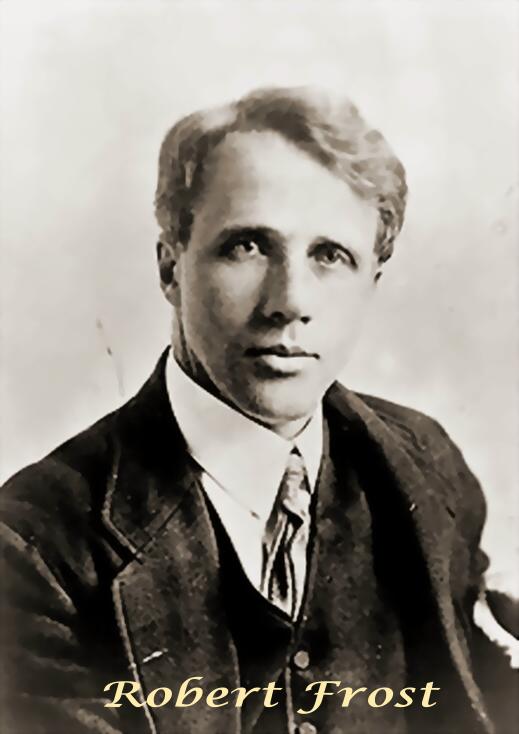
I was especially blessed to learn that one of my little nephews, Josiah, at the age of two, had come to love one of my favorite poets almost as much as I do.  There’s no question that Robert Frost has been one of the most quoted, most loved, and most written about poets to grace American literature. And several succeeding generations have read his works with great pleasure. But I did not suspect that a 2-year-old boy would find him so appealing, until I realized that amid the scores and scores of books Josiah has in his ownership, his very favorite is a book devoted entirely to the poem “Stopping By Woods On A Snowy Evening.”  Now, this book is not a children’s version, paraphrased for young minds. Not at all.  It is the entire poem in the author’s original text, along with a few photos that are applicable.  His love for this poem caused me to realize anew just how powerful and almost eternal great writing can be. In an age when all kinds of multi-dimensional media are vying for kids’ attention, this quiet, unpretentious poem — this great piece of literature — is a 2-year-olds’ favorite “story.”  How blessed Robert Frost would feel to know that.  Hopefully he does.

Naturally, all of this thinking led to my going over in my mind the list of my personal favorites. Now, I won’t try to write out that list in this article, because it would make this piece way too long — and inevitably I’d forget one and feel compelled to come back and edit.  Then the next day, I’d have to edit again to add another, and so on. But I’m sure most of you who love to read know exactly what I mean.  And it gives me a warm, comforting feeling to know that, no matter how “modern” or “technologically advanced” we get, people keep looking for and finding something valuable, lasting, and often  life-changing in books that have been around a long time.

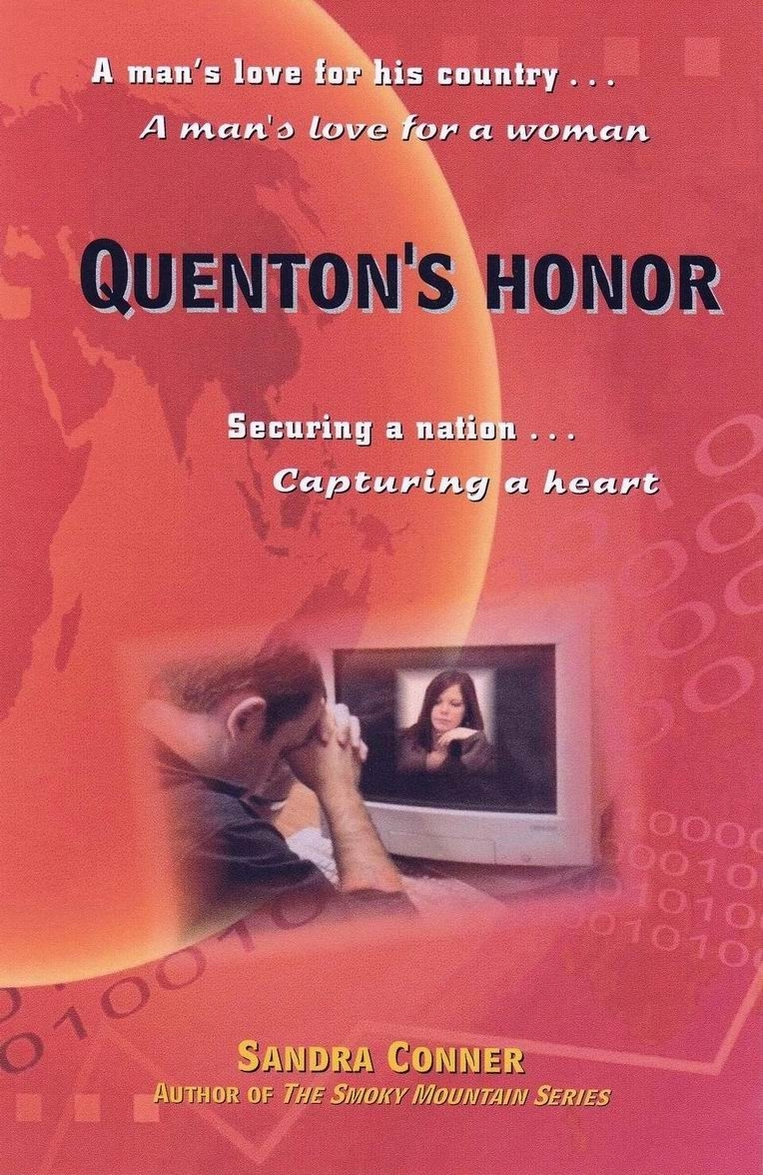
As an author myself, I hope I too can write books that will touch people at the core places of their hearts and lives so that what I write will be considered valuable enough to be chosen by generation after generation.  I will never forget the thrill of realizing for the first time that something I had written really did have the power to capture people’s attention to the point of making them forget everything else and to move them to great depths of emotion. A couple years ago, a woman who was reading one of my inspirational novels, Quenton’s  Honor, said to me one day, “Boy, I’m not happy with you!  I started reading that book last night, and I couldn’t put it down.  It was 2:00 in the morning before I was able to make myself put it down and get some sleep.”

She has absolutely no idea how thrilled I was at her words.  But it got better.  A couple days later, I walked into the office where she worked.  She was in tears — almost sobbing.  I hurried over to her and said, “Barbara, what’s wrong?” She mopped her face and  blew her nose, trying to stem the tears enough to answer. In the meantime, I saw that she had the book in front of her on the desk.  She then looked up at me with tears still streaming down her face and slobbered out the words, “I’m just now reading where …” (and proceeded to tell me the scene she was reading from the book) ” … and I just can’t stop crying!”

I remember thinking, “Yes!  That’s exactly where I wanted you to cry!” I decided maybe she’d feel better if she knew that, so I said, “Wow, Barbara, that’s great!  That’s exactly what I want the reader to feel from that scene.  Thank you!  You  couldn’t put it down to go to sleep, and you cried in all the right places!  That’s terrific!”

Of course, I’d like to have the same powerful effect on readers all the time, the way a couple of other current authors do.  For example, I’m a Vince Flynn fan. In my opinion, he literally “wrote the book” on high-concept political intrigue.  Every sentence is packed, and for that reason, I find it almost impossible to put his books down once I start reading.  And since he has kept me up past 3:00 a. m. on a number of occasions, one of my goals in life is to write a novel that will keep Vince Flynn up until 3:00 a. m. as well.  Wish me success.

Snowchild

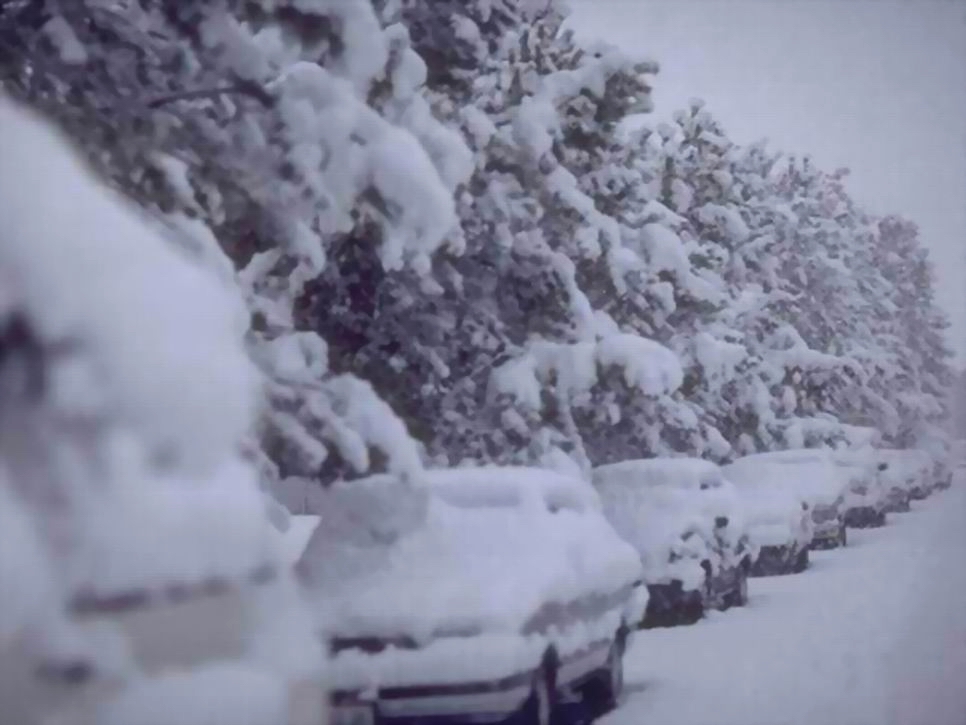
We recently had a weather forecast for snow and other wintery precipitation in our area.  I was feeling all the usual negatives that come with that kind of forecast, while hearing children and a few friends exclaim how much they were looking forward to it.  Their attitude put me in a worse mood, and while sitting looking out the window, wondering when it would start, this poem came to me.  I hope it strikes a chord in a few of you, my readers.  The photograph is of my gorgeous Blue Spruce tree in my front yard.

SNOWCHILD                                                  

When I was a child, I thought as a child,
And snow was a thing so delightful!
From school we were free; we got wet to the knees,
And our mom’s day was thrown all off schedule.

But now that I’m grown, I must do on my own
All the chores Mom and Dad used to dread:
Stock up food by the loads, drive on slippery roads,
Shovel snow, and repair that old sled.

Now I look with dismay at the skies leaden gray
As I trudge to the store for supplies.
De-icer and salt sell out fast with no halt.
I need new boots to tread on the ice.

The wind from the north is bitter and harsh,
But my temperature, still it is rising;
I am in a foul mood, for I see nothing good
That can come from a snowstorm arriving.

But then the flakes start, and I feel in my heart –
Watching white, fluffy, wonderful, wild
Filling all of my world with such beauty unfurled –
That in truth I am still just a child!


~


Blessed Invasion

Most of my life I have been enthralled with the theme of Elizabeth Barrett’s poems that speak to Robert of how his love saved her from death.   Being a poet myself, I decided one day that I would like to re-affirm that theme in a piece of my own creation. The sonnet is not my personal forte (although I have written one or two over the years) so I have not tried to emulate that particular medium.  But I decided to try to express in my more comfortable style of verse what I believe is the substance of what Elizabeth and Robert experienced together, as well as what I believe to be the root source of that substance.

BLESSED INVASION

Invaded by pure Love, Death must submit,
And bow its ugly head and bend its knee.
As the target of a perfect marksman must take the hit,
So Death, in spite of struggling, had to set me free.
Though pressing down to close my coffin lid,
Death was thrust back by power: your love for me.

King Jesus led the way in warring thus.
He came with love so pure it pierced the gloom.
And taking on Himself the curse sin brought to us,
He opened up the way to enter our own tomb,
And facing Death, He said, “Your time is up.
My love strikes death to Death. Now Life will bloom.”

Even so, He seems to’ve passed His love to you,
And coming now upon me, frail and spent,
You have not wasted time in wondering what to do,
But instantly to my own lifeless heart you bent,
And kissed my lips with love as with sweet dew,
Dissolving Death. Now Life arises — permanent!

© Sandra Conner 2009

Photo: Jon, pdphoto.com


Love Letters: 574 and counting . . .

How do I love thee? Let me count the ways.
I love thee to the depth and breadth and height
My soul can reach when feeling out of sight
For the ends of Being and ideal Grace.
. . .
I love thee freely, as men strive for Right;
I love thee purely, as they turn from Praise.
I love thee with the passions put to use
In my old griefs, and with my childhood’s faith.
. . .
And if God choose,
I shall but love thee better after death.

(Sonnet # 43, Sonnets from the Portuguese, Elizabeth Barrett Browning)

As I type the words onto this page, the month of February, the ‘Month of Love’ has just blossomed. Valentine’s Day – and all the trimmings! Yes, whether we’re in the mood or not, we are going to be surrounded all month by reminders that it is a good thing to love.

The Word of God says that all of the Ten Commandments of Jehovah are fulfilled in living our lives in genuine love. It also says that fear is cast out of our hearts and our lives by love. And, most important of all, it tells us repeatedly that the God we serve is Love. He’s what it’s all about, and He’s the source of all genuine love. But when the Word talks about love, it’s referring to much more than just an emotion. Certainly, the emotion is important – and extremely satisfying. But the love that really makes a difference in this world is love that does something.

Love, according to the original language of the scriptures, is the fulfilling of a duty or a responsibility to another – whether to God or to the people in our lives. It works good toward another person whether it ‘feels’ something or not. The truth is that feelings of love – like feelings of anger, happiness, hurt, etc. – come and go. But the act of loving another person is fueled by that deliberate intent of the will to do them good. Like faith, real love is more of an action verb than a noun.

I’m grateful that in my life I have known a great many people who love in this active way. But every time I ponder the subject of love – and especially around Valentine’s Day, when people are prone to send little ‘love letters’ to each other in the way of commercial Valentine cards – my mind turns to two lovers of the past who knew and experienced the power of love to change people’s lives completely.

Poets Elizabeth Barrett and Robert Browning lived one of the most powerful and life-changing love stories ever experienced by human beings. Much of their poetry, especially “Sonnets from the Portuguese,” describes that love and the power it had to overcome enormous obstacles, and to vanquish debilitating sorrow and hovering death. While the best remembered and most often quoted lines from all of those sonnets are the words, “How do I love thee? Let me count the ways,” the truth is that some of the most riveting portions are Elizabeth’s descriptions of how that love destroyed death and renewed her life. In Sonnet VII she says this:

“The face of all the world is changed, I think,
Since first I heard the footsteps of thy soul
Move still, oh, still, beside me as they stole
Betwixt me and the dreadful outer bring
Of obvious death, where I, who thought to sink
Was caught up into love and taught the whole
Of life in a new rhythm . . . .”

In truth, it was that love that literally saved Elizabeth’s life and gave both lovers many happy years of marriage and fruitful writing that blessed the world for generations. It also gave them a son, whom they loved dearly.

But prior to their marriage, Elizabeth and Robert courted, primarily by letter, for a period of 20 months. During that 20 months, they exchanged a total of 574 love letters. Think of it: 574 love letters! In 20 months, that is an average of more than 28 letters each month. Never running out of ways to say “I love you,” and never growing tired of manifesting that love openly.

Have you, dear readers, experienced the joy of seeing that love gives life to those who need it? My Valentine’s wish for each of you is that you will experience that reality.

And, by the way, does the person you love know without a doubt how you feel? Why not take advantage of this ‘Month of Love’ to make sure?