
~
Join the fun. Meet the creator and host of “Six-Word Saturday” here. http://www.showmyface.com/search/label/6WS%C2%A0
~~~
~
Join the fun. Meet the creator and host of “Six-Word Saturday” here. http://www.showmyface.com/search/label/6WS%C2%A0
~~~
During the last decade of my life, I was blessed with a friend named Brenda McKeand. She was a talented writer and poet, as well as a very committed nurse. She was also a tremendous encourager, and she was one of my greatest cheerleaders as I made my ventures into authorship.
Brenda is with the Lord now, but she left us her work, which keeps her alive in our midst. Several of the pieces are poems that she collected into a book entitled, The Summer of Riding Horses: About Nursing and Other Things. The “other things” have to do with love of every kind. The individual poem from which she took the title is a love story of the first order. Powerful and touching, it is one of my favorites of all of her work. I’d like to share it with my readers.
For those of you who are familiar with the midwestern U. S. the setting to which she refers will be clear. If you are not familiar, I will tell you that Paducah is the name of a fairly large city on the northern edge of Kentucky. It sits right on the Ohio River, and the whole area is about a two-hour drive south of the town where I live now – and where Brenda lived all the time I knew her. During the last part of the 1800’s and early part of the 1900’s, the whole area was an entryway into the states of Illinois and Indiana when peoples from several nationalities, including Native Americans, came down the river, moving west, looking for a better way of life.
Paducah itself has many wonderful memories for me personally. My mother lived there as a young woman, and she told me stories of being a waitress in the largest hotel in Paducah. She was one of many “girls” who served guests “ham and red-eye gravy” that Brenda describes so colorfully. I agree that the city and the surrounding area provide the perfect setting for her poem.
 THE SUMMER OF RIDING HORSES
I met him at the river where Paducah lies,
with its magnolia trees, ham, and red-eye gravy
served by girls with soft southern accents.
He was part Indian, with sun-seasoned skin
and dark pony tail;
All denim and silver, he wore turquoise
around his neck on a black string.
Here, I learned to love horses –
to feel them tremble and shiver,
smelling of leather saddles,
sweat, and hay-scented stables –
and ride down country lanes
with shifting shadow patterns,
and leaves flitting down.
He grew restless in the fall,
making a bow I dared not touch,
as he would no longer touch me.
He drank the black tea,
purifying for the hunt
in the Cherokee tradition –
asking the deer’s permission
to take its life
and mine
to let him go.
~~~
© 2010 Brenda McKeand
~~~
“Let us be grateful to people who make us happy; they are the charming gardeners who make our souls blossom.” (Marcel Proust).
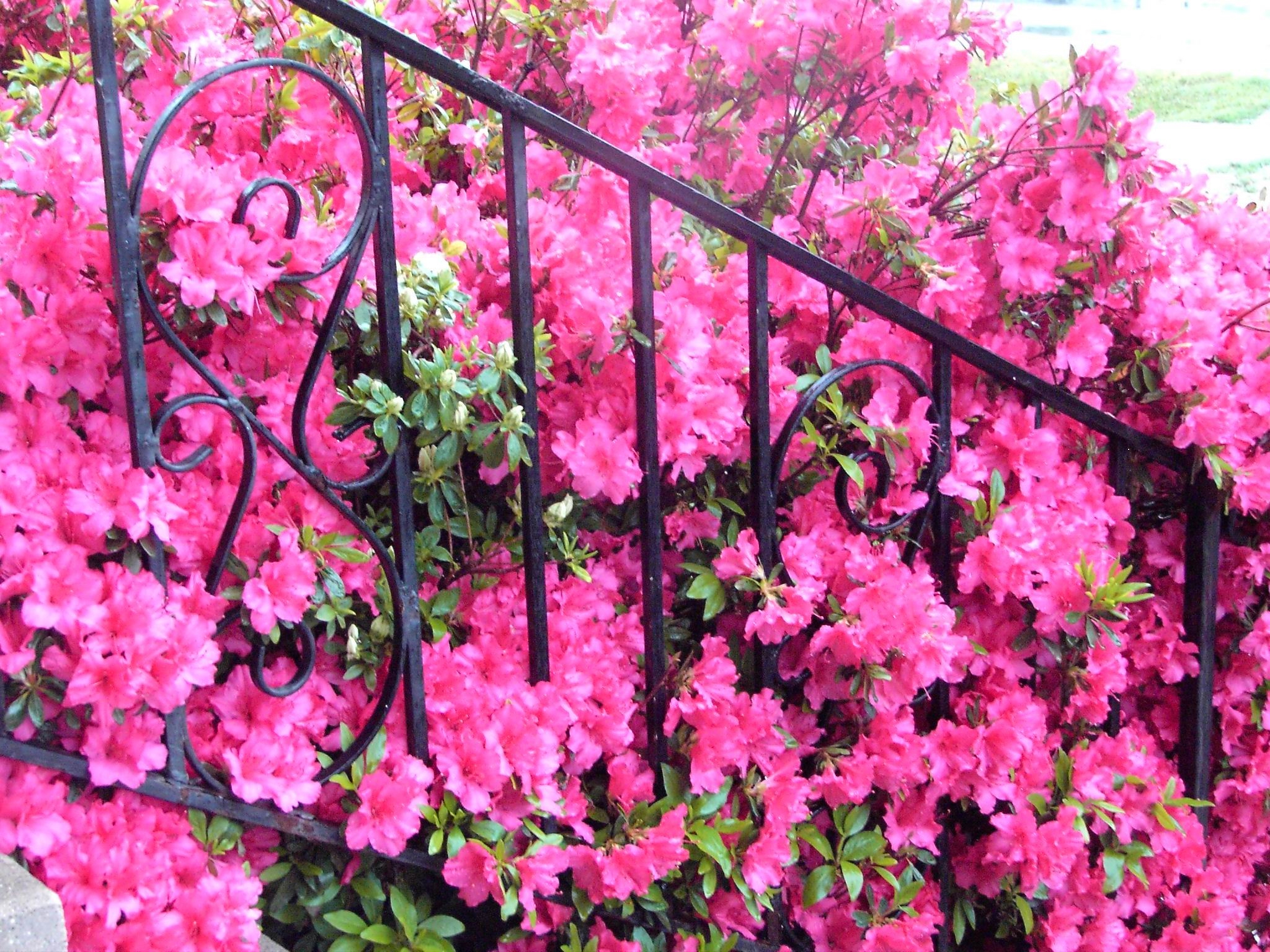
During the last six months, I lost my father, my closest uncle, and three wonderful friends. During these experiences, I have found myself thinking of several others I’m close to who have also recently gone on from this world to be with the Lord. Each of those people were truly “charming gardeners” in my life. They added so much richness to my life and so much joy that it is impossible to adequately describe the effect of their lives upon mine.
Some of them I saw virtually every day, some every month or two, and a few only a couple times a year. But our love and our relationship was a living, active reality that I was constantly aware of possessing. It’s only natural then, I suppose, that I am still a little overwhelmed, from time to time, at the void I experience just knowing they are not here with me any longer. Just yesterday, I was driving along in my car, and suddenly a new realization of the void each of them has left rose up in me, and I found myself saying, “My life is getting so empty.”
I am thrilled to be able to say that each of those individuals knew the Lord Jesus, and I have no doubts that we will be reunited in Heaven in the future. But the interim – the time of my living out this earthly struggle without them – weighs heavily on me.
Now, I would hasten to add that I do still have a few family members and several other wonderful friends alive and active in my life, and they still add to my joy. So, in truth, my life is not technically “empty.” But it’s still true that the presence of those lost – and the effect of their presence on me – has left an empty place that nothing else, and no one else can fill.
However, I have also realized that this “garden” I call my life still bears the fruit of their influence upon it. They have tilled the soil of my life, and they have enriched it with the nutrients of their love, their grace, and their personal gifts. They have planted seeds of themselves in that garden. And they have indeed caused my soul to “blossom.” So I have the joy of knowing that I will continue to produce those “blossoms.” I will continue to bear the fruit of their plantings in my life, so I still have a very real part of them with me.
I’m so grateful for those “blossoms.” And I count them very dear. I find that I also count more dear than ever before the presence and influence of those who are still a physical part of my life. I find myself wanting to spend more time with those loved ones and to be sweeter and kinder to them than ever before. And I understand more every day that nothing else in this world – no physical wealth, no fame, no prestige or power – can compare in value to the personal relationships we have with the people who love us and depend on our love.
One of the greatest treasures I could wish for those of you reading these words is that you have the blessing of such “charming gardeners” in your own life, that you bear the fruit of their planting, and that you become a “charming gardener” in the lives of all those you have relationship with.
~~~
~~~

~
~~~


~
~~~
~




~
~~~
I SAW GEESE FLYING NORTH: SPRING!

Visit the creator of 6-Word Saturday here:
http://www.showmyface.com/search/label/6WS
~~~
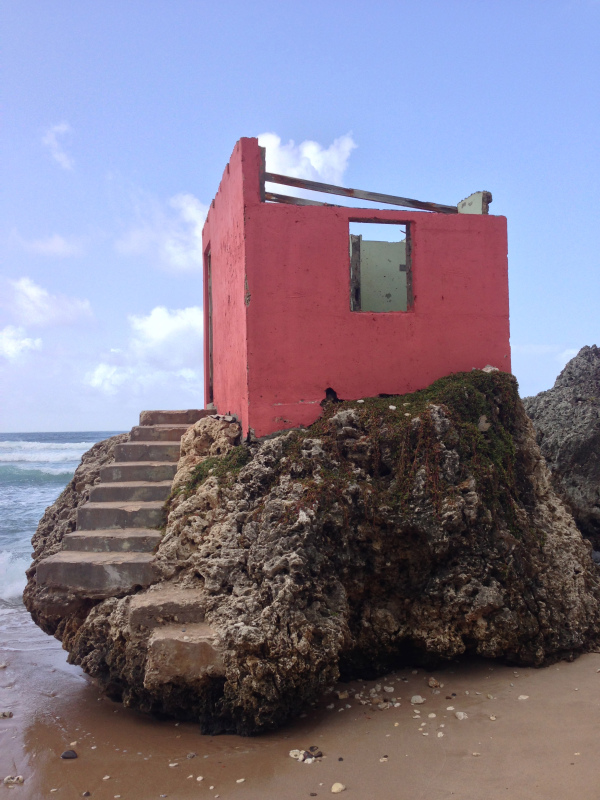
Yay! I get to take part this week. Our photo comes from fellow writer Dawn Q. Landau. My story is below.
FREE
Nick jerked awake in the prison’s isolation cell when the earth began to shake violently. An eerie light suffused the night sky outside the high window, explaining the situation well enough: Mt. Hideki had erupted.
Suddenly the concrete prison complex began to shift and groan, and before he could think how to protect himself, the entire building began to slide down the ridge toward the sea. Momentum from the slide increased pressure, and as it reached the beach, the building broke apart completely. He felt his own cell block stop suddenly, but heard an ear-splitting roar as the remainder of the prison rushed into the angry sea.
He was free.
~~~
Visit our hostess, Rochelle, to find out how you can take part in the fun.
http://rochellewisofffields.wordpress.com/2014/01/08/10-january-2013/
~~~
Okay, I know I told you this series had three parts. It did, and I posted them all. But then this evening I got to thinking about this quirky little poem I wrote a little over a year ago. And I thought how neat it would be to add it to the series as a ‘just for fun’ capstone. So here’s Part 4 – my little poem titled “The Writer Writes.”
 THE WRITER WRITES
I think I’ll write a poem.
Type, type, type …
Words, words, words …
‘Twill have to be a story.
Type, type, type …
Words, words, words …
No … I guess a novel.
Type, type, type …
Words, words, words …
A saga will be better.
Type, type, type …
Words, words, words …
A trilogy is called for.
Type, type, type …
Words, words, words …
My editor now reads it.
Delete, delete, delete …
Delete, delete, delete …
I have a two-line stanza.
~~~
HAPPY YEAR OF THE AUTHOR!!! I just hope you have as much fun being an author as I do.
~~~
PART 3: THERE’S POWER IN THEM THERE WORDS!
Writers are referred to by numerous terms. Some of those terms carry connotations that determine the way other people perceive — and receive — what we write. Here are a few of the things we’ve been called. Do you see yourself in any of them in particular?
Scribes
Wordcrafters
Wordsmiths
Ink Slingers
Artists
Journalists
Pencil Pushers
Sword Weilders
Scribblers
Scripters
Quill Drivers
Hacks
Knights of the Pen
Composers
After you peruse this list and find yourself — most likely in several of these titles — I’d like you to stop and think about one more term that describes every one of us: Creators. I made this point in the first article of this series, but it is so important that it’s worth bringing up once more at the conclusion.
We are creators every time we write something original — no matter how long or short — no matter how good or bad. Take a few minutes and look at a piece you’ve written. The fact that it is there before your eyes means that you have CREATED an entity that never existed before you put words onto paper. How powerful is that? Do you feel it?
It is a beautiful and exhilarating truth to realize that our Creator has willingly placed within us the ability to create — even as He does — with our words.
We, the writers of the world, are truly an elite group of human beings. Edward Bulwer-Lytton, in his play Richelieu, wrote, “The pen is mightier than the sword.” But many great men throughout preceding centuries – as far back as the poet Euripides in 406 BC — have expressed that exact same truth. They were so right. In all the history of mankind, it has been words that have moved men to take up swords — not the other way around. And it has been words that have caused men to put down swords. Whether for good purposes or bad, words stirred men to physical action. And in many cases, it has been words that created such a powerful response and commitment to a belief that, even though threatened with destruction by the sword, men and woman still wielded their pens to continue the promulgation of that belief — and were successful in those efforts.
Powerful? Yes. Exciting? Indeed. Scary? You bet. Because with so much power comes an equal amount of responsibility. We must never lose sight of the fact that words really do create — for good or evil. And words move people — to good or evil.
POWER
One man may wield with ease a sharp-honed sword,
And drawing blood, strike death with that long knife.
Another for his weapon chooses words,
Yet with dead aim, he too destroys a life.
‘Twould seem that power resides in reservoirs
And can be drawn and used for peace or strife.
And ’tis the Master Wordsmith’s Word that teaches us:
In our words is the power of death and life. *
~
You are a writer! Use your power wisely!
~~~
* (Reference to Holy Bible, Proverbs 18:21)
Surprise: There’s also a Part 4: “Just for Fun”
~~~
PART 2: GET IT OUT THERE!
In Article I of this series I mentioned that I am currently seeing the doors opening to one of the most exciting era’s of writing the world has known since the invention of the printing press. Those doors are opening primarily in the area of publication.
In this day, writers have so many avenues to choose from for the publication of their work. We are no longer constrained to grovel at the feet of the “big name” publishing houses, who periodically throw a bone out to one or two new writers, but who demand such absolute control of the work produced by those writers that the original creator of the work has very little – if any – say in how it is produced and marketed. He also receives a mere pittance for his share of the profits.
So many of those houses have genre molds that they use to produce their books, and no matter what an individual author is capable of writing, he is forced to make his work fit that mold. Moreover, almost every one of the mainstream publishers has closed their doors to communicating with individual authors on a personal basis (unless those authors have already produced a couple “best sellers” for them). Authors must now hire agents to do the communicating for them – and to take part of the profits.
Now, for writers who have no problem with being pressed into molds, or with putting some of their hard-earned money into the agent’s pocket, or with waiting at least a year to see their book published, that avenue is still an option. But for those writers who believe their work is worthy of being produced at the length and in the format that they choose personally, and who don’t want to pay a third party to talk for them, there is an ever increasing number of options that are just waiting to be accessed.
For example, there are very small, independent publishers all over the world who can offer writers high quality products and help with marketing, but who often get overlooked in the rush to get to the big names. There are university presses that are also a good possibility – especially if your work is in any way academic in nature. And there are numerous channels for publishing your work independently.
Author published books were once looked down on by the market place, but not any longer. In fact, during the last decade, independently published books have made their way to the top of the charts in the marketplace. Author-published books are claiming spots on the best-seller lists and raking in tens of thousands of dollars for their enterprising authors. Of course, books published by the authors must also be marketed by those authors, but it’s also common for authors of books published by the biggest publishers in the country to have to do a large amount of work to promote and sell their own books.
In recent years, one of the biggest markets in the world, Amazon.com, has established programs through which they offer modern authors the tools with which to put their work into book format and the platform from which to sell it. Their original program was CreateSpace, which offered both a free publishing program and one that allowed authors to pay a moderate sum for publishing help. It grew into a very successful venture – both for Amazon and for authors.
Then Amazon created the Kindle Direct Publishing program, which offers publication in digital format – and an accompanying program called KDP Paperback, which offers publication of paperbacks. The KDP programs give authors a choice of using a free program, in which the authors do all the formatting and cover creating personally, or using Amazon’s editorial and production help, which costs a fee. This year, Amazon has discontinued the CreateSpace program and merged it into the KDP programs.
E-books, in general, have become the most popular thing since ice cream, and there are numerous online programs — other than Amazon — that allow authors to format their work into that highly-marketable form. A few of those are also free. And, yes, there are multiple authors who have independently published their own e-books, marketed them, and started raking in enough money to quit their “day jobs.”
Amazon is not my favorite company in the world, but let’s face facts: it is the biggest marketplace. If the company is going to offer an author a chance to put his book into print (or digital format) and then offer to put it in the online store, what does any author have to lose? Even authors who still want to search for agents and publishers who may like their books and agree to publish them, can still make use of Amazon or other free programs while they’re waiting. They will get their names into the marketplace, get their books read, and get great experience in dealing with the market and with the reading public, and that’s never a waste of time or energy.
I would suggest staying away from most of the vanity presses out there. If you’re not familiar with the term “vanity press,” I’m talking about those publishers who ask you to pay them to publish your book. I have more than one friend who has been badly burned by such companies. Now all of them are not a bad choice. But many of them are, so you want to be very careful. You want to be sure, first of all, that the price they charge is not going to force you to price your books so high (in order to recoup your money) that they won’t sell.
Also, vanity presses tend to take the money and give you a stack of books, but that’s where they stop. If they are not going to help you market the finished product, then you are better off to lay out your own material in the format you choose and simply pay an independent printer to print up however many copies you want to start with. If you think your work needs more editing first, but you can’t afford a professional editor yet, try hiring a college student who is majoring in English or journalism. They’re less expensive than professional editors, but generally quite knowledgeable, and usually very careful because they love composition.
Often, depending on what kind of look you want your books to have, you can even purchase very low-priced equipment that will allow you to produce your books entirely on your own, using a staple-stitch, a coil, or a plastic comb for the binding. Those bindings are becoming more and more popular. And when well-done, some of those bindings actually hold together better than many of the cheaply produced “perfect-bound” paperbacks.
One other thought worth mentioning here is that collaboration can be a wonderful thing. If you find yourself just too timid to step out in the beginning — or if even the lesser expensive channels are just too much for your pocket book right now — you might consider combining your efforts with those of a fellow author or photographer. A combination of photographs and inspiring words that match them makes a pretty impressive book. Or a collection of short stories from the pen of two completely different kinds of writers offers readers a greater variety in one book than one writer alone can offer.
Now, obviously, once you have copies of your books in hand, you must think about marketing. If you choose a program like one offered by Amazon, it comes with a package deal that automatically markets the book via their own webstore. If you have your own copies printed, you will have to do the leg work contacting bookstores and other retailers. But that part is often great fun and can make you many new friends in the book world. Offer book-readings and signings in local libraries, local stores, community events, etc. Even an occasional ad in a newspaper is not super expensive and can pay off well. And, of course, all social media platforms offer access to thousands of people who just might be interested in learning about your newest book.
I should mention that there is one independent publishing cost that is somewhat exorbitant (at least in my opinion). That is the cost of ISBN’s. In the U. S. we must order them in sets of at least 10, and that, along with matching bar codes, can get a little pricey. However, remember that ISBN’s are not mandatory – at least in the U. S. (Check your own nation’s laws on this one.) They are extremely helpful in marketing books, but many local bookstore owners prefer adding their own bar codes to the books from their own accounting system, and will often willingly offer a local author’s book as part of their stock without an ISBN. There are definite advantages to having the ISBN, of course, especially as it allows your books to be listed in a huge directory of books available to the general marketplace. If you choose to work with a publishing house or one of the programs offered by Amazon, those publishing platforms will take care of assigning ISBN’s for you if you wish.
Another publishing avenue that has worked for some authors is to offer their work (whether short stories, essays, poems, or novels broken up into chapters) to periodicals. Many a great novel has seen its first audience via the pages of a magazine or newspaper that offered the story one chapter at a time, and then went on to win itself a place on the best-seller lists. There are also multiple online magazines that offer stories/articles by free-lance writers, and like e-books, online periodicals are definitely here to stay.
Personal essays and memoirs have reached a new level of popularity in the last decade, and the marketplace has a healthy list of periodicals – both in print and online – that are open to submissions from unknown authors. Many are even seeking new authors to add to their list of contributors. Then, of course, there are all the specialty periodicals like travel journals, food journals, home improvement journals, and magazines that focus on sewing, hunting, social/political issues, etc, etc. The list is almost endless, and a few searches online for “periodicals currently accepting submissions” will glean several sites to check out.
What about copyright? Most people are not aware of this fact, but in the U.S. (Check your own nation’s laws) as soon as you complete a work, that work is considered under copyright to you. There is no need to send copies anywhere or pay any government office to file the work and send you a verification. The work is copyrighted, and it is your responsibility to post the copyright emblem and date with every published copy of that work.
Now, you can send your work into the copyright office and have it registered for a fee. When you do that, the office then has a record of the date they received it, and should you ever want to take someone to court for infringement of your copyright, the copyright office can supply documentation of your authorship from that date. Some authors choose other ways to document their authorship. For example, they mail themselves a copy of the manuscript so that it is postmarked with a certain date, and if unopened, they consider that to be valid proof of their original authorship. Whether or not a court would allow that kind of “proof” remains to be seen.
But the point here is that you do not have to “pay” for the copyright privileges for your work in the U. S. They are automatically guaranteed by the government upon the moment of completion of your work. One other point of note: In the U.S., there is a law requiring every author (or publisher) to send two copies of any work published in the U. S. to the Library of Congress. There is no charge for this action, but it is technically required by law and can result in a fine if the author does not comply with it.
One other note concerning copyright is important to understand. If you are hired by a newspaper or other periodical to write a specific article/essay/story, that periodical generally considers the copyright for that piece to be theirs. You are actually doing what is termed “work-for-hire,” and because you have been specifically assigned to write that particular piece for that specific publication – and are being paid to do so – the publication owns the copyright. So if you decide to write for any periodicals, be sure to find out ahead of time what their policy is concerning the copyright of your material. Even if their standard policy is for them to maintain the copyright, you may be able to work out a deal for specific articles if maintaining the copyright for those particular pieces is important to you.
Of course, the publishing ideas and suggestions presented here are just that: ideas and suggestions. You may have other ideas of your own that work just as well or better. The main purpose of this second article in the “Year of the Author” series is to get you started thinking about getting your work “out there” for people to read and enjoy.
If you prefer a mainstream publisher, by all means, contact them, but if you find yourself waiting for years — or wading through a pile of rejection letters — you might consider starting with one of the other publishing alternatives. (And by the way, just because some people say your book is not acceptable for publication doesn’t mean that it isn’t. Some of the most-loved and best-selling novels in the world were rejected multiple times before they ever found a place on the bookstore shelves.)
But whether you lean toward the big names in publishing houses or not, get rid of the stigma that used to be attached to author-published books. Many of the best-known authors in the world published their own work at one time or another. And many of the best-selling authors on the market today began by publishing their first books themselves. In fact, a few who are already published authors are now moving in the direction of publishing independently because of the greater control and greater profit that method offers.
For other information about the various open doors to publishing, go online and type in a couple well-worded questions about the subject. One place that generally has a plethora of information is the Writer’s Digest website. That might be one of your best starting places.
Bottom line here: Get your work out into the hands of the public! I’m encouraging each and every one of you who knows you have something to say, through words or pictures or both, to share it with the rest of the world. Dig out that manuscript that has been collecting dust — or pull together several dozen of the stories/poems you’ve posted on your blog – or assemble a collection of your best photographs along with inspiring captions — or sit down and actually write that novel or memoir you’ve been thinking about for years – and get it out there! Your readers are waiting!
Part 3: “Power In Them There Words”
~~~
Hear Ye! Hear Ye! I am deliberately, and with significant forethought, declaring 2014 to be ‘The Year of the Author’! Who am I to have the authority to make such a declaration??? Well, for starters, I am an author, and who better to declare that this is my year than I? But I am not simply an author; I am also a writing teacher, an editor, a publisher, a journalist, a columnist, a poet, an essayist …. One might say that I have worn all the various hats of the writing world at one time or another, and I am currently seeing the doors opening to one of the most exciting era’s of writing the world has known since the invention of the printing press.
Unfortunately, I am also seeing and talking with many writers who have been through an extremely discouraging year and who are about to lose their vision and the thrill of writing. This article, then is the first in a three-part inspirational series on writing and publishing that I hope will renew that vision and that thrill. I am not trying to cover all the bases or give a seriously academic lecture. Nor am I going to post long lists of sites to contact. You are very capable of going online and finding information for yourself. I am merely wanting to light a fire and create a beacon at the beginning of this magnificent year that lies ahead of us. I want to stir up the author in you to come forth and make his voice heard — loud and strong — this year!
PART 1: SO YOU WANT TO BE A WRITER
(This first article is a re-post of a portion of my writing curriculum Releasing the Creative Writer in You. I posted it on here about a year ago, but I hope it will stir you once again to move forward in your own writing.)
So you want to be a writer? Then DO IT!
Mystery author Agatha Christie once said, “The best time for planning a book is while you’re doing the dishes.” There’s a lot of wisdom in that statement.
You know, you don’t have to live a weird life — or even a particularly exciting life — to be a great author. In fact you can live a very ordinary, chicken-frying, auto-repairing, laundry-washing, diaper-changing kind of life and still write books that will lift people out of the ordinary and into a place where imaginations rise to peak places, where new dreams are ignited, and where hope and faith bring victory into life’s struggles.
So pick up that pen, sit down to that computer keyboard, or start dictating into that recorder — whatever method works for you. If you’re sure you want to write, START WRITING.
Now that you’ve started, you come to your next decision. Do you want to be an “occasional writer” – sharing an idea or a complaint only now and then – when the mood strikes you? Or do you want to be a “serious writer” – making writing one of your primary goals in life and, therefore, at the top of your list of priorities.? If your answer is the first option, then you are free to write or not, depending on how you feel on any particular day. However, even in that situation, the more you write, the better you will be at it when you feel it counts.
But if you are serious about writing – if you feel it is a necessary part of your feeling successful in your life – then you must live by a different law: You must commit to writing on a regular basis and stick with the program, regardless of how you feel on any particular day – or how anyone else feels about your work.
Unfortunately, this decision to be a serious writer must be made anew every few days. The “new” wears off after a while. The excitement turns to frustration after several days of reaching for just the write words and falling short time after time. The bright ideas seem to fade a little when the family and friends don’t find your first chapter exciting enough to want to listen to you talk about it for three hours non-stop. But if you really do want to write, you must make yourself write faithfully and regularly, regardless of the struggles involved. If you sit at your keyboard three hours and type onto the screen only one sentence worth keeping, you have accomplished writing a sentence that never existed before.
And therein lies the intrinsic value of writing. Everyone who writes becomes a creator. Once you have written an original piece – no matter how small or how large – you have created something that never before existed! That fact is not dependent upon whether anyone else reads it. Or whether anyone else likes it if they do read it. The proof of your creativity does not rest in your work’s boasting a publisher’s imprint or finding a place on a bookstore shelf. Get this straight: once you have written an original piece, you have created an entity that never before existed. I repeat that point because it is a powerful reality that very few writers recognize.
And another related fact that many unpublished writers seem to miss is that once you have created a written product, you are a writer. You’re not “going to be” a writer. You’re not a “would-be” writer. You’re not an “aspiring” writer. You are a writer. You are an author. You are a creator. When you do recognize these two truth, they will empower you to keep creating and to create even more effectively.
Also, once you recognize them, you will come to realize a third truth that is just as important: As a writer, you have a heavy responsibility to your readers. From the moment an individual picks up your work and reads the first sentence, you begin to influence that person – for good or evil. And the more of your work people read, the greater your influence grows.
So it is important to remember that, although you may feel you are writing for yourself, if you intend to allow your work to be read by anyone else at all, you are responsible for what that work does to influence that reader. There is a passage in the Bible, Luke 12:48, that says, “For unto whomsoever much is given, of him shall be much required.”
Although the statement is found within the pages of Scripture, it is a truth outside of those pages as well. One does not have to be of the Christian faith to recognize the validity of the point being made. In accordance with that law of life, when we are endowed with the powerful gifts and talents that allow us to create through the written word, we then become accountable for what we do with that word.*
We’ll talk just a little more about that point later, but for now, let’s turn to Part II of this series — “Get It Out There!” — coming up in my next post.
~~~
*(Releasing the Creative Writer in You © 2013 Sandra Conner)
~~~
Ooooops, too late. Saturday’s almost over.
Six-Word Saturday’s creator and host:
http://www.showmyface.com/search/label/6WS
~~~
A little homemade graphic art for this week’s photo challenge:
Join the fun. Hop over here to learn how:
http://dailypost.wordpress.com/2013/12/27/weekly-photo-challenge-joy/
~~~

 The Happy Wordcrafter