Friday Fictioneers 7.28.17: “Love On The Line # 2”

This week’s Friday Fictioneers picture prompt reminded me of a delightful and heart-melting true story that I read about several years ago. It took place during WWII, and involved a real U. S. serviceman, the woman who was the love of his life, and a tender-hearted, romantic telephone operator. I was so touched by the story that I told it (changing names, etc.) in a poem on this site about four years ago. That poem, however, in order to tell the whole story properly, took much more than 100 words.

But when I saw the picture today, I just couldn’t get away from that love story, so I’ve tried my best to squeeze it into the requirements for our FF challenge. I’m still 14 words over the limit, but if your romance outweighs your legalism, you might enjoy it anyway.

Today’s thought-provoking prompt comes to us from J. Hardy Carroll.


LOVE ON THE LINE

“Operator, I’m calling Susan Wheeler, St. Louis.”
“This blizzard may interfere with connection, sir.”
“Please try, my 2-day leave is almost gone.”

“Hello.”
“I have a call for Susan Wheeler from Bill Meadows in Boston.”
“This is Susan.”
“Hold please. Go ahead sir.”
“Susan! Sweetheart!”
“Oh, Bill, I was getting worried.”
“Honey, the blizzard’s too bad for me to get there, but I must ask you something important.”
ZZZZmmmmmmmmmmmmmm
“Sorry sir, we’ve lost your connection.”
“NO! Please. I’m trying to propose!”
“It’s no use sir.”
“Noooooooooo!”
“But she can hear me. Shall I relay your question?”
“Yes, please; I have to know! Ask her if she’ll marry me.”

“Great news, Sir. She says yes!”


If you’re interested enough to get the more complete version, here’s a link to the poem.


~~~

Friday Fictioneers: 7/14/17

To participate in this week’s Friday Fictioneers, visit Rochelle’s site. The picture prompt below is the property of  Janet Webb.


BETRAYED BY TECHNOLOGY

He’d done it. He smiled at the perfect job. He’d left her lying across the bed with the pill bottle in her hand. And she hadn’t even suspected that he’d doctored her drink.

She did love to drink, and that had made it so easy. He smiled again as he leaned back in his easy chair savoring his success. Leaving the lone candle burning was an artistic touch. And his fake alibi was so tight, he’d never be suspected.

Now, to call Bernard and report his success. Reaching into his pocket, he froze. Where the hell was his cell phone?


~~~

Daily Post Prompt: Jangle

The jangling of the bells gradually seeped into Garret’s unconsciousness and began to nudge him into a little clarity.  He listened for several moments before trying to open his eyes. When he finally lifted the heavy lids, the light seemed blinding and pain shot through is head at the entrance of that light. He immediately shut his eyelids again and groaned.

Unfortunately, the groan itself caused more pain in his head. He was lying flat on hard ground, and he tried to lift his right arm to touch his head and see if he could determine what was wrong. He did manage to get his arm up, but it felt so heavy, he didn’t bother to take it all the way to his head.

The jangling sound was coming closer, and he wondered why the sound itself didn’t cause him more pain. Maybe because it was very low-toned and rhythmic. It reminded him of something, but he couldn’t think what.  In fact, he felt as if he couldn’t think much of anything.  That scared him, but before he could delve into that problem, a gentle voice spoke to him, and a soft hand touched his shoulder.

“Mister, are you alive?”  The voice sounded young, but masculine. He opened his eyes again and, in spite of the pain, managed to roll his eyes to the side enough to see a young boy — perhaps twelve or thirteen — kneeling beside him on the ground. He spoke again. “Oh, you are alive. Thank goodness. Can you move?”

Garret put all his strength into slowly moving his head toward the boy and forcing out the words. “A little.”

The boy heaved a sigh of relief. “You’re not far from my house. I’m on my way home with our cows now, and I will tell my father. He will come for you and help you.”

Garrett gave a small nod of his head, but stopped immediately. Too much pain. So he croaked out his thanks and closed his eyelids again. The young boy patted him on the shoulder and rose, calling to his cows.  As he did so, the jangling sound, which had been intermittent during the conversation with the boy, now began its rhythmic music again as the herd evidently obeyed the boy’s command.

During the wait for the boy’s father, Garrett slipped in and out of consciousness, but his periods of lucidity were longer now and more clear. The pain had dulled a little, and when he heard an engine approaching, he took heart and even lifted his head slightly to look that direction. Pain seared him, but he took courage when he saw the old truck.

The farmer had his young boy with him, as well as another grown man. They stooped down and the second man spoke. “I was a medic in the army, sir, and I’m going to try to check you before we try to get you up.”

“Thanks,” Garrett managed to whisper. The young man began to feel Garrett’s arms and legs and press on his abdomen, checking for broken bones or internal injuries. As he worked he reported that he was fairly sure Garrett had a concussion, and that one leg was broken and a shoulder dislocated. But with the help of some splinting materials he had brought along, he felt it was safe to get Garret up and into the truck. They had already phoned the doctor before leaving the house, and he’d promised to come out to the farm when he was finished with hospital rounds.

During the transfer to the truck, Garrett lost consciousness again, but when he was finally lying flat and had a cold cloth on his head, he came to. “Can you tell us your name, Son,” the farmer asked, as he sat beside Garrett in the truck bed for the trip.

Garrett opened his mouth, but nothing came out. He couldn’t find a name — no name at all. He couldn’t find any identity in his conscious mind. He turned fear-filled eyes to the farmer.  “No sir,” Garrett said.  “I don’t know my name … I don’t know who I am ….”


Daily Post Prompt: Jangle


~~~


Sail Away With This Mystery Romance

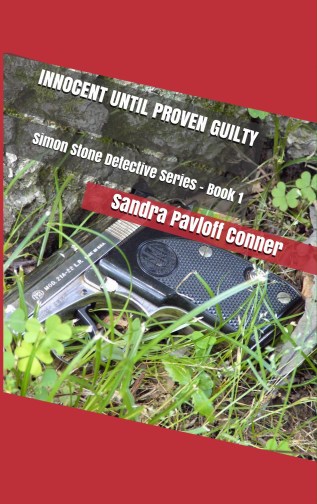
SIM. ST. INNOCENT FRONT AM. COVER2Well, naturally, I can’t pass up an opportunity like this. Today’s Daily Post Prompt is the word “sail.”  And it just so happens that the main character in my mystery novella Innocent Until Proven Guilty — Homicide Detective Simon Stone — loves to sail. And even though he suspects Deanna Forbes of murder, he can’t deny his deep attraction to her, so he invites her to go sailing with him on his boat, the Blue Swan.

As their relationship grows, Simon finds himself torn. One part of him wants to love and trust this woman who is the first to ever capture his heart. But another part of him fears that somewhere deep inside Deanna beats the heart of a possible killer. Can he solve the crime before he falls too deeply into the ocean of love? That’s the question that keeps readers turning the page.

Innocent Until Proven Guilty is Book 1 in the Simon Stone Detective Series: On target, quick-read novellas for the busy reader who still wants to enjoy stories of mystery and romance. Available on Amazon in Paperback right now, but coming in digital this week!


~~~

‘After the Storm’ – Friday Fictioneers 6/16/17

Photo Prompt:  Copyright Dale Rogerson


AFTER THE STORM

“Ouch! Hey, watch where you’re stepping!”

“Sorry. I was taking pictures of the moon breaking through.”

“What’s the big deal? The moon’s out every night.”

“Not bursting through the center of heavy storm clouds. Aren’t you glad that vicious storm’s over?”

“That storm destroyed my home and killed my dog. The moon won’t change any of that. Now move!”

He shoved past, and she froze, remembering how, years before, Hurricane Katrina had robbed her of her home, her husband, and her son.

Suddenly, she looked up and refocused her camera. It was important to remember that storms didn’t last forever.


To participate with your own 100-word story, visit Friday Fictioneers host at this link.


~~~

Friday Fictioneers 6/9/17: ‘The Gardener’

It’s been a while since I’ve had opportunity to participate in Friday Fictioneers, but this week’s photo just pulled this little tale right out of me. If you’d like to join in the fun, visit Rochelle at the link above.

This week’s photo is courtesy of Sarah Potter. There was no link for Sarah on the host site. Sorry. But her photo is below, and my story follows that.

summer house

Photo © Sarah Potter


THE GARDENER

There it was: the jar labeled plant food. Just as I’d left it when they’d handcuffed me and carted me off. It looked innocuous amidst the heinous overgrowth of Hilda’s desk-top garden. Everyone knew plants were her life, and a jar of food drew no attention at all.

The police finally released me; no trace of evidence I had poisoned her. The doctor identified the fatal stuff with some multi-syllabled word, but nothing pointed to my having any of it.

Now … to mix a drink for these damned plants with the rest of that powder.


~~~

Lost Without A Trace: Daily Post Prompt


SLATE AMAZON PAPERBACK FINAL COVER - frontToday’s Daily Post Prompt –Trace — gives me the perfect opportunity to plug one of my newest inspirational novels: SLATE.  The story of Slate and Vanessa plays out over a second story concerning Vanessa’s brother Ken. A private investigator, Ken traces a young girl from her home in Missouri to the Gulf coast of Florida, but then Ken himself suddenly disappears without a trace. That event causes Vanessa to head to Florida to look for him, and from the day she arrives and meets Slate, her life is changed forever. So is Slate’s.

Inspirational Fiction: Digital or Paperback at Amazon.

HERE’S 2 EXCERPTS:

From Chapter 1:

He hopped out of the metallic-blue corvette convertible, tossing his cigarette down and extinguishing it with his boot, then set off down the sidewalk toward Katy’s Koffee Korner. He walked with a definite swagger, and it was hard to tell if it was because of or in spite of the almost skin-tight blue jeans that covered his long legs. His light blue sleeveless, knit shirt exposed brown, sinewy arms and hugged a tight stomach before being swallowed up by the leather belted waistline that sported a gold buckle shaped like a pirate ship.

His hair was such a dark brown it looked black in certain light, and although he didn’t wear it long, any activity on his part, or the slightest of breezes, kept throwing one thick lock across his forehead. In spite of the fact that he brushed his hand through it periodically, that one lock just seemed to have a mind of its own.

As he passed a bench on the sidewalk where two older men sat chatting over Styrofoam cups of coffee, one of the men called to him, chuckling.

“Hear you spent the night in the clink again last Friday, Slate.”

The man he’d addressed stopped long enough to grin at him and then wink. “Trying to save on my electric bills, Chet.” Both of the old boys laughed, enjoying the little joke, as they did almost any little bit of conversation throughout the day as they sat on their favorite bench, trying to ease the tedium of their otherwise empty lives.

“Coffee’s especially good this morning,” Chet replied now, holding up his half-empty cup and motioning toward the café behind where he and his friend sat.

“I’m just on my way in to try it,” Slate answered and, giving them a thumbs-up sign, turned in to the doorway and opened the door to the Koffee Korner. …

This morning, though, Hally was on duty, and she always kept an eye out for Slate. She liked to wait on him … and flirt with him. Actually, she liked to flirt with him … and she tolerated having to work as a waitress in order to get the chance to do some serious flirting. Of course she didn’t save all of her attention for Slate. She shared it with several of the other men in town, but Slate was one of her favorites. He had taken her out two different times several months ago, and both times had proved to be the kind of night she liked … the kind that didn’t end until the following morning. …

While he ate, stopping every now and then to say something to one of the other patrons who passed his booth on the way to the restroom or back, Slate glanced over at the woman across from him. She had raised her head now and was sipping her coffee, her eyes closed. Her hair was a warm light brown shade, with just a tinge of highlights from the sun here and there. It barely skimmed her shoulders in soft waves. Her features weren’t classically beautiful, but she was really pleasant to look at. Her complexion was unblemished, and her eyes and eyebrows seemed to be etched in at exactly the right angles to highlight her whole face. Her mouth was rather wide, and her lips looked as if an artist had sculptured them. Yes, all in all, the sight was something he took pleasure in this morning.

He’d evidently taken just a little too much pleasure, because he’d been staring. Suddenly, she looked up and right at him, a question in her large, brown eyes. Almost exactly the color of a copper penny, Slate thought to himself as his attention focused on those eyes. He was caught off guard by the vulnerable look on her face, and instinctively he smiled his most genuine smile at her and then went back to concentrating on his food. A minute later, he heard her conversation with the waitress who had come back to bring her a fresh carafe of coffee.

“Can you give me exact directions from here to the Sandstone Motel?” she asked.

“Sure, Hon. It isn’t hard. I’ll write it down for you and be right back.”

“Thank you,” she answered, smiling and lighting up her face for just a moment, but when the waitress left, she went back to rubbing her temples and then her eyes. She finally leaned her head back against the high divider of her booth and closed her eyes, but Slate, glancing sideways at her, noticed a couple of tears trickling down her cheeks. After a minute more, she took a deep breath and opened her eyes, wiping the tears from her face with her hands, and by that time the waitress was back with her directions.

“Thank you so much,” she said and handed the waitress some bills. “This is for you.”

“Thanks, and you come and see us again, Okay?”

“If I have time,” she said smiling slightly at the retreating waitress, and then she slid out of her seat and stood up. Before she could take a step, she swayed and reached for the back of the booth to regain her balance. She was sitting in the last booth across from him, and no one else had noticed the unusual action. She sat back down on the edge of the booth, holding her head. Slate had learned better than to interfere in someone else’s business, but something about her just seemed so vulnerable that he couldn’t keep from getting up and walking over to her booth.

“Are you all right, Miss?” he asked, resting one hand on the table and leaning towards her. She looked up at him then, her eyes registering her pain.

“Yes,” she answered in almost a whisper. Then she cleared her throat and tried to speak louder. “It’s just this stupid migraine headache. They often make me woozy. Eating should help, but I guess the food just hasn’t had time to get into my system yet. I’ll just sit here another minute. Thanks,” she added, smiling wanly.

Slate sat down in the other side of the booth. “How about another cup of coffee?”

She turned back into the normal sitting position in the booth and nodded her head as he picked up the carafe and poured some into her cup. She began drinking it immediately, and Slate stepped over to his own booth and retrieved his cup, bringing it back with him. He poured fresh coffee for himself and topped hers off again. She smiled at him, her eyes seeming to show a little relief now.

“My sister often has migraine headaches,” he said. “They make her sick for days.”

She nodded her head. “They do some people. Usually, I’m not ill, but I have to be careful when they make me dizzy.” She took a deep breath. “I’m feeling better now. Thank you for your concern, Mr… .?”

“Slate’s fine,” he answered. “I heard you ask the waitress about the Sandstone. Is this your first visit in this area?”

“Yes, and it really isn’t a visit exactly.”

“Oh …?”

“Well … I guess there’s no reason to be secretive about it, so I might as well tell you. Anybody I meet around here just might be able to tell me something that will give me a lead.”

His eyebrows rose. “Are you a private detective?”

She chuckled a little. “No … I’m not, but my brother is. And he was on a case that led him to this area. His last call to his wife a week ago was from the Sandstone, and then he just disappeared.”

“Disappeared?”

She nodded. “None of us has heard from him again, not even the family whose daughter he was trailing. She was a runaway, and only seventeen. They had hired him to find her and bring her home, and he had caught up with her in Lakeland. Then she took a bus to Tampa, then hitched a ride out to this little town and on to the Sandstone Motel. He followed her that far, but we don’t have any idea what happened after that.”

“Have you contacted the police?”

“Oh yes. He’d been calling his wife every day, so after the third day without a call from him, we contacted our own sheriff’s department at home. He’s been in touch with the one here, but they don’t seem to have any leads.” She shrugged. “Not that I have any either, but I just couldn’t sit at home and do nothing when Kendall could be in some kind of serious danger or …” She stopped and swallowed hard. “Or worse,” she finished.

He leaned back in his seat. “Well, the sheriff’s department here is usually pretty thorough. I’ll say that for them at least.”

“I need to go talk to them personally, but I’ve been driving all night, and I want to get a room and shower and rest first. Hopefully I can get rid of the last of this headache.” She looked at him more intently then, taking in his manner of dress and his almost lazy way of leaning back in the booth.

“Please don’t let me keep you,” she said then in a tone he’d have attributed to some socialite addressing a lower-class citizen. “Thanks for your concern, but I can take care of myself from here,” she added, lifting her chin a little higher than normal, her voice edged with a bit of frost. Slate felt that he’d been dismissed. Well, so much for trying to help. How many times did he need to learn to mind his own business before he’d pay attention?

He rose from his seat and gave a sketchy salute. “Yes, M’am,” he said, a little frosty himself. He walked to the front and paid his bill. …

On his way down the highway twenty minutes later, headed back to the dock, he was in a foul mood. Most of the supplies he needed were back-ordered, and he was going to be in a bind. He was trying to force himself to stop worrying about it when he spotted what looked like Vanessa’s car up ahead sitting on the side of the road. He slowed as he passed, and recognizing her, he pulled over just in front of her. Part of his mind was telling him to stay out of her business and save himself another snubbing. But the other part was responding to the code he’d lived by all his life about helping anybody that was down. He got out now and walked back to her driver’s side, leaning down to see in the window. “Problems?”

“Yes … I don’t have any idea what’s wrong. A few minutes ago it just sputtered and then died. I barely got it off the road.”

“Are you out of gas?”

She looked daggers at him. “I’m not an idiot! I know a car has to have gas to run. There’s plenty of gas!”

Whew, he thought. I wish I didn’t have enough conscience to bother me if I just left her here. “Well … pull your hood release, and I’ll take a look.”

“Do you know anything about cars?”

He chuckled as he walked toward the front of the car. “No … I just get my kicks stopping by stranded motorists and asking to play under the hood of their cars.”

Vanessa got out and walked closer to him. “You don’t have to be sarcastic. A lot of men don’t know how to repair cars. I was just asking.”

“Well, I don’t know everything about ‘em; that’s for sure. But since I have to keep my boat engines in good running order, I can usually do a thing or two about car engines as well.”

“You have boats?”

He glanced up momentarily. “A few.” Vanessa recognized by his tone of voice that the conversation was at an end for the time being, so she remained quiet.

He checked a couple possible causes of the problem, but came up short of a solution. He was pretty sure he knew what was wrong, but didn’t have the equipment to fix it. “I’m sorry, but I don’t have the equipment necessary to fix it out here. We’ll have to get you towed in.” He stepped back and looked at her license plate again. “I’m guessing your name is Vanessa. Am I right?” he asked, grinning.

She seemed a little affronted that he’d asked, but she did answer him. “Yes … Vanessa Hayes.”

“Well, Vanessa Hayes, I can give you a lift to the Sandstone.”

He saw the briefest flash of fear in her eyes before she answered. “Oh … oh well … I don’t want to trouble you Mr. uh …”

“Slate’s good enough.”

“But don’t you have a last name?”

He looked straight at her, his blue eyes piercing hers, but he stood silent for another moment before he spoke again. “I’ll call for a tow truck.”

“I have a cell phone,” she said and started to turn back to the car.

“Never mind, I’ve got it,” he answered, already punching in some numbers. “I’ve given these guys a lot of business, so I think I can talk them into getting to you today.”

“I really don’t want to put you to this trouble, Mr. uh …”

He was talking to the man on the other end of the phone now, but he gave her an exasperated look. When he had finished the call, he snapped his phone shut and clipped it back onto his belt. “They said they’ll try to get here in a couple of hours.”

“Oh … well … I’ll just wait then.”

“Don’t be ridiculous.” He slammed down the hood. “There’s no point in you’re waiting out here two hours. By then it will be the hottest part of the day. Let’s get your luggage, and I’ll take you to your motel.”

Vanessa stepped back. “No … no, thank you, Mr. uh …”

“Slate!”

“Mr. Slate, thank you for your offer of a ride, but I’m going to stay here with my car.”

“That isn’t necessary. I told them I’d be by their place to check on it this evening, so you can be sure they’ll take good care of it.”

“Do you have that much influence?” she asked, her eyes widening with her obvious surprise. “I would have thought that someone like you wouldn’t …” She stopped in mid-sentence, realizing that what she had started to say would sound pretty rude.

He raised one eyebrow. “You mean you thought that someone like me wouldn’t have any good influence anywhere, right?”

“Well, it was a logical mistake,” she excused herself, in reality hating herself for such a stupid and unkind blunder. Who was she to judge this man by his outward appearance and manner? She could tell she’d made him angry.

“Just get in my car. I’ll get your bags.”

She pulled herself up to her full five and a half feet and stepped in front of her car door. Then she held out her hand to him as if to shake hands. He just looked at her for moment and then extended his hand too, not sure what a handshake right now meant. Vanessa spoke again. “Thank you for stopping, Mr. Slate, but you can be on your way now. I prefer not to ride with you.”

He could feel that she had tried to withdraw her hand after the briefest of contacts, but he had deliberately held on for several more seconds. He realized it discomfited her, but he felt she deserved it for the way she was acting. As soon as he released her hand, she wiped it down the side of her slacks as if to clean something off.

Slate stepped back a step and folded his arms across his chest, staring at her and squinting a little against the sun. “The uppity Miss Priss. Too good to ride with the likes of me. Well … suit yourself, Miss Priss. Sit out here and bake in this sun if you want to, but don’t be surprised if that tow truck doesn’t show up for four or five hours.”

“But you said they told you two!”

He laughed. “They did, and I knew that meant that they’d at least get to it before nightfall. That’s a lot around here, Miss Priss, and you’d best be thankful for that much.”

“Don’t call me that!”

“What?”

“Miss Priss!”

He chuckled. “You’re the prissiest little fox I’ve seen around here in a lifetime, Honey. The name suites you to a ‘T.’” He turned and started back to his car then. Let the prudish snob sit out here by herself, he thought as he reached to open his car door. But then he looked up at her. She was rubbing her temples again, and he remembered that she was suffering with a migraine. He remembered again how his sister wasn’t fit to live with when she had one because they affected her so badly.

He let out a heavy sigh and started back toward Vanessa. “Look,” he said as he got within a couple feet, “I’ll call the sheriff’s office. They know me. I give them a lot of business too. You can talk to the officer on duty, and I’ll tell them that I’m taking you to the Sandstone. That way, you know I’ll not abduct you into some isolated field and rape and kill you. How’s that?”

“Thank you,” she said in what was almost a whisper now. Then she turned and opened her door. “I’ll get the keys and open the trunk.”

From Chapter 4:

About twelve miles down the highway from the Sandstone Motel, a poorly paved road turned West and wound several miles out into the countryside. A half dozen old houses dotted the area, each one at least two or three miles away from its neighbor in any direction. But a little over five miles out on the paved road, there was a gravel turnoff, almost hidden by overgrown bushes, that led another four miles out to a house that sat on an inlet with its own worn out boat dock.

Inside that house, in an empty back bedroom, two people sat on the floor, their backs propped against the wall, their hands and feet tied securely enough to make sure they couldn’t leave their accommodations at will. The man was tall and muscular, with golden brown hair that matched that of his younger sister so much that people often thought they were twins. He wore thin, gold-rimmed glasses, and ordinarily made a handsome picture to most observers. Right now, though, his face was marred by an ugly scratch and a couple of bruises, and his clothes were wrinkled and stained.

His companion was a young girl with stringy, blond hair … which at one time had probably been thick and shiny enough to attract a second and third look from most men. Right now, she was sitting beside him, sick with fear and wishing she’d never seen most of the men she’d ever known in her seventeen years. The one exception to that wish was her companion in this make-shift prison.

The only reason he was here at all was because he had tried to come to her rescue when she had tried to get away from what had turned out to be a group of drug dealers, and had been losing the battle for her freedom. He hadn’t succeeded in his attempt to help her. And now they were both facing whatever unknown horrors were being planned for them by the thugs that had tied them up while they carried out their own ugly business.

Kendall Hayes leaned his head back against the wall, his eyes closed, and prayed for the umpteenth time that day … as he had done for the last six days sitting in this room. The one drug dealer of the bunch who interacted with him and Sarah, his cell-mate, was Gary – Sarah’s boyfriend until his true identity and occupation had come to light. Gary came in twice a day with food and water, and led them away, one at a time, to the bathroom, standing guard just outside the door. That was the only precaution necessary, since the bathroom didn’t have even one window, and there was certainly no chance of escape from that cubbyhole. If they made enough fuss, he came and escorted one of them to the bathroom at other times, but it was a chore to convince him he needed to heed their urgency.

After the first four days of incarceration, Sarah had talked Gary into allowing her and Kendall a change of clothes from the suitcases they’d had with them. But other than those concessions, the plight of the inhabitants of this back bedroom seemed to be of no interest to anybody else on the premises.

“You prayin’ again?” Sarah asked her companion now as she saw he had his eyes closed and his lips moving.

He opened his eyes and smiled at her slightly. “Yeah … gotta stay at it.”

“You really believe your God’s gonna get us outta here?”

He sighed. “You ask me that every day, Sarah. And the answer is still the same. Yes … I really believe that.”

Tears welled up in the girl’s eyes, as they had several times during the last several days. “I sure wish I could believe.”

She had said that at least a dozen times in the days they’d shared this room, and Kendall had always given her the same answer. “You can, Sarah. Just ask Jesus to make Himself real to you, and you’ll be able to believe.” She hadn’t been able to bring herself to do that yet, but Kendall could tell she was closer than she had been the first couple of days. He closed his eyes again now.

“Please, Lord Jesus,” he whispered just loud enough for the girl to hear him too, “please make Yourself real to Sarah. She can’t ask You for herself, Lord, so I’m asking for her. Just help her a little more, Lord to recognize that You’re here and that You love her and want to help her. And please, Lord … send your angels to open up this prison and lead both of us out of here. I’m trusting you, Lord. I’m trusting you with all the faith I have.”

He’d prayed those same words, or some very similar, so many times his rational mind told him that it was no use to pray them again. But he had belonged to Jesus Christ for most of his life, and he’d always found Jesus faithful in times of trouble. Kendall was determined even now that he would not give up his faith in God’s love and delivering power.

Daily Post Prompt: Impression

FACE LOOKING OVER SHOULDERMy impression of her was that she was a snob of the first order, sold on herself, and way too aware of how much money she had to throw away on her frivolous lifestyle. Everywhere she went, she wore only designer clothes and shoes, carried $200.00 designer handbags, and reeked with the scent of the world’s most exclusive colognes. I had read about her in the newspapers and tabloids for years, and I knew she was prone to taking all she could get and treating people who worked for her like indentured servants.

So when I arrived at her office for the interview that my editor had set up, I was surprised to see her sitting on the floor playing jacks with a six-year-old girl. When I introduced myself, she rose from the floor, offered me a seat on her office sofa and a cup of tea. Then she lifted the little girl to her feet, kissed her cheek, and told her to run to her mama and come back at noon when they would go out for corn dogs.

I sat there on the sofa with my mouth open until she sat in a chair beside and smiled broadly. “Well, now,” she said, “You’re Catherine Field, from Women On The Move magazine. I read that periodical every month without fail, and I’ve enjoyed your articles immensely. You have a real talent.”

I was stunned — couldn’t seem to find my tongue. Finally I stuttered out the words that I was thinking — about being surprised to find her playing jacks with the little girl she’d called Deborah.

“Oh, that,” she said — and gave a little chuckle. “You see, when I was a child — well, actually, until I was about sixteen — I lived in abject poverty. I barely had clothes enough to wear to school — when I went to school — and I never had dolls or tea sets or anything like that.” She paused and became lost in her own thoughts for a moment, then continued.

“But, you know, as odd it it sounds, it wasn’t the baby dolls or the tea sets that I missed the most. I remember seeing some other kids at school playing jacks at recess, and they always had so much fun. I wanted to play too, but they wouldn’t have anything to do with me — because I wore shabby clothes and hadn’t always had a recent bath. None of them would teach me to play, and I just watched them day after day, wishing that I could have a turn.”

“So when I grew up and managed to work hard enough to make all the money I needed, I bought scores of sets of jacks — all colors. And I play all the time. Deborah is one of my favorite partners. Her mother works for me, and I let her bring Deborah to work with her on Fridays because her baby sitter can’t come on that day.”

I swallowed my shame the best I could. It stuck in my throat and almost choked me, but I managed to get through the interview. The woman I got to know during that hour was so different from the impression I’d amassed in my own head that I felt as if I were interviewing someone else entirely.

All the media reports had focused on the surface elements of this woman — as I had — and strategically formulated a persona that fit what they wanted the public to read and believe. I fell for it completely — even though, as a journalist, I should have considered the possibility of such a hoax.

I can’t make up for all the horrible things I’ve thought and felt — and said — about her in the past. But I can do my best, through the article I write relating this interview, to make sure the rest of the world gets the correct impression of her from this point on.


Daily Post Prompt: Impression

~~~

Look Out for the Arrows!

`

QUIVER COVER FOR AMAZON - front

YAY!!!!! Finally!
A QUIVER FULL OF ARROWS is finally available in paperback at Amazon.

An author is by her books the way a mother is by her children: she never really has favorites. However, if I were forced to choose only one of my 12 novels as a favorite, I think it would have to be A QUIVER FULL OF ARROWS. It isn’t the most important novel I’ve written, and it hasn’t sold as well as the “Smoky Mountain Series” books, but it has a charm that no other book has.

Even though I wrote the story — and have read it multiple times to edit, correct, and tweak it — I can honestly say I still enjoy it immensely every time I read it. I laugh; I cry; I feel happy; I feel poignant. And I always come to the words “The End” with a huge grin on my face. I hope all my readers do as well.

You can have that experience too. Check out the synopsis and purchase your copy of A QUIVER FULL OF ARROWS for $7.99 at Amazon now.


~~~

Releasing the Creative Writer in You – Lesson 8

To access other lessons in this series, click on “Creative Writing Class” in the navigation bar and scroll through to find the lessons you need.
releasing-the-creative-writer-in-you-coverLESSON 8: EDITING – MAKING SURE WE’VE SAID IT IN THE BEST WAY POSSIBLE.
(What do we look for?  How do we fix it?)

1. GENERAL MANUSCRIPT FORM –  For both fiction and non-fiction:

If your material is published in book form, you will automatically have a title page, and a copyright page on the back of the title page. All of your identifying data for the book, for you, and for the publisher will go there. But if you are not to that point yet, and you’re preparing a manuscript to send to an agent or a publisher, there are some basic rules you want to follow. They are mostly just good sense and thoughtfulness, but sometimes people who are genuinely talented in creating stories have never had much training in laying out their material. So this section is primarily for those people.

Use regular letter size paper, and, in general, it’s best to leave the pages loose. Staples can sometimes get in the way when an editor reads. It’s often good to use a title page as your first page, and you’ll want to put the title, your name, and the copyright information on that page. Also, be sure to check the submission guidelines from whatever company you’re submitting to, in case they want other information as well. It’s a good idea to also include the word count on that title page as well.

On the first page of the actual text — if you have a short story — repeat the main title at the top and go down at least 3 or 4 lines (more if you like) before beginning the story. If you’re submitting a novel, then you don’t need to repeat the title at the top of that page; the Chapter number is sufficient.

Double-space every single line of the paper so that the editor can write between all the lines. (And even if you’re writing the final draft for yourself, having those blank spaces lets you do a lot of editing and re-writing where it can be easily read.)

Indent the first sentence of every paragraph at least 5 spaces to the right.

Leave at least a 1-inch margin on top, bottom, and both sides. (Always remember that white space is your friend.)

Use 12pt. Or 13pt. font for text of the story at all times. (Anything else is too small for comfortable reading, and anything larger causes your manuscript to be too bulky.)

In the top left corner of each consecutive page, put your last name and the title of the story. Put page numbers in right-hand corner.

All of these rules may seem unimportant, but you want to remember that all of those editors and agents you’re sending to generally have so many hundreds of manuscripts pouring in weekly that they cannot possibly read them all. As a result, they will just naturally gravitate to the manuscripts that are neat, easy to read, and pleasing to the eye.


2. GRAMMAR AND WORD CHOICE:

Run-On Sentences
One of the most common errors in the manuscripts I see is the run-on sentence. That problem develops when a writer tries to tie two complete thoughts together with just a comma between them. It has become so common in today’s society that I see it even in published books. But it is a serious mistake and often leads to confusion for the reader.  I have listed several examples of run-on sentences below along with a couple possibilities for fixing the problem.  The fix is generally just a matter of replacing incorrect commas with periods or semi-colons, which tell the reader that one thought is complete and another thought is beginning. When those two thoughts are very closely related, the semi-colon is an acceptable punctuation. Otherwise, use a period.

EXAMPLES:

I have this problem, well, more like a gift, no on second thought it’s a curse.

Correction: I have this problem, well, more like a gift; no, on second thought, it’s a curse.

Or: I have this problem, well, more like a gift. No, on second thought, it’s a curse.

Well, you won’t have any trouble with it, it was easy.

Correction: Well, you won’t have any trouble with it; it was easy.

Or: Well, you won’t have any trouble with it. It was easy.

Or: Well, you won’t have any trouble with it because it was easy.

She just stared at me, all of them did.

Correction: She just stared at me; all of them did.

Or: She just stared at me. All of them did.

Or: She just stared at me, as all of them did.


COMPUTER WITH TONGUE OUTActive Voice vs. Passive Voice Verbs

Every year at Christmas, hundreds of lights had been strung throughout the property, and each Christmas Eve carols were sung by the townspeople who gathered there.

Correction: Every year at Christmas, the owners strung hundreds of lights throughout the property, and each Christmas Eve, the townspeople gathered there and sang carols.

A wonderful time was had by all.

Correction: Every one had a wonderful time.

Papers had been drawn up by the city council to create a historical monument of the old mansion.

Correction: The city council drew up papers to allow for creating a historical monument of the old mansion.

The sale of the property three years ago had been handled by buyer’s attorney.

Correction: The buyer’s attorney had handled the sale of the property three years ago.

Lunches are packed, clothes laid out, and dogs let outside. Now it’s time to wake three sleepy headed children. Teeth are brushed, hair braided, backpacks are in front of the door. Warm coats, hats and gloves are put on the children.

Correction: After packing lunches, laying out clothes, and letting out the dogs, Dawn is now ready to tackle the job of waking three sleepy-headed children. After breakfast, she braids hair, and once the children have brushed their teeth, she helps them get their backpacks in front of the door and bundles them into warm coats, hats and gloves.


Parallelism

I had been fired, thrown out of my room, condemned to die, and had numerous curses about my future heaped upon my head.

Corrected: I had been fired, thrown out of my room, condemned to die, and cursed for the rest of my future.

She loved to sing, dance, play the piano, and talking with her friends.

Corrected: She loved to sing, dance, play the piano, and talk with her friends. – OR –

She loved singing, dancing, playing the piano, and talking with her friends.


She was intelligent, serious-minded, and liked being alone.

Corrected: She was intelligent, serious-minded, and introverted.


Punctuation

Quotation Marks:

Use quotation marks at the beginning and end of any words that are dialogue.

All commas and periods go INSIDE quotation marks — ALWAYS.

Question Marks and Exclamation Points go inside the quotes if they are actually part of the quoted material, but if they are not, they go outside.

“When do we eat?” he asked.

Did you hear him say “We will eat at six.”?

Also use quotes for titles of poems, songs, articles, chapter headings, or short stories.

Special Note About Dialogue: When writing dialogue, be sure to start a new paragraph every time the speaker in a conversation changes – even if the speaker says only one word. Being sure to change paragraphs helps your reader understand who is speaking in each sentence, and this procedure also cuts down on the need to use as many tag words (such as he said, she asked, etc.)

When you need to use tag words, try to use words that will not disrupt the important words in the dialogue itself. Occasionally a word like yelled, shouted, mumbled, etc. can be effective, but the vast majority of the time, writers need to stick with the simple words like said, asked, answered. Those words are generally acknowledged by the reader’s brain without the reader actually having to interrupt the flow of the dialogue to give them any attention. Never use tag words that do not fit the tone and vocabulary level of the rest of the story or that require a reader to have to figure out the meaning or run for a dictionary.

Example: “I think you need to re-think your decision,” he interposed. (Rather, simply say, “I think you need to re-think your decision,” he said.)

Italics:

Use italics to show emphasis of a word in your narration or in the dialogue of your story.

“I absolutely refuse to accept your excuse.”

Also put titles of books, newspapers, magazines, plays, major works of art, court cases, ships, aircraft, and spacecraft in italics.

(Titles of poems, articles, or short stories are put in quotes.)

Italicize foreign words and words, numbers, and letters referred to as such. (A few foreign words have become so accepted into the English language that they do not require italics, but if you have no idea whether that is the case or not, you may always italicize the foreign word.)

Your v’s look like u’s.

I can’t say the word detritus.

What is the meaning of the word moi?

Non-Essential Elements in a Sentence

All words or phrases that are not essential to the main meaning of a sentence – which are added simply for the sake of emphasis or as extra information – are set off from the rest of the sentence with a set of commas, parentheses, or dashes.

She gave her speech, surprisingly, without saying one critical word about her opponent.

My little dog (a fuzzy gray mutt) is very good with kids.

When interrupting the flow of a sentence in a manner that could confuse the reader – or when you want to draw special attention to the interruption – always use dashes on either side of the interrupting phrase.

Also use dashes when using dialogue in a story, and one character interrupts another.

“I will not listen –”

“Don’t tell me you will not listen to me.”


Past Perfect Verb Tense (Using the helping verb had)

When you write a sentence in past tense, but are also referring to an action that took place farther into the past than the main action of the sentence, you must use Past Perfect Tense for that previous action.

Donald worked with the equipment exactly as his dad had taught him.

We all knew that the teacher had endured all she could take from us for one afternoon.


Adjectives and Adverbs

Avoid using adjectives and adverbs whenever possible. Make every effort to use such strong, colorful, specific nouns and verbs that modifiers are unnecessary.

Instead of saying this: She wore a bright red dress. Say this: She wore a scarlet dress.

Instead of saying this: The man walked slowly down the road, as if his feet weighed a ton. Say this: The man plodded down the road.

In general, follow this rule: Never use two or more words then one will do the job.


Pronouns and Antecedents

Every time a pronoun is used, it MUST CLEARLY refer to a noun that has been used previously. And the pronoun must agree with the noun to which if refers (known as its antecedent) in both gender and number.

Examples: Everyone cleaned their plates. (Everyone is singular, so pronoun has to be as well.)

Correction: Everyone cleaned his plate.

Sarah was with Kate when she signed up for the play. (‘She’ is ambiguous; which ‘she’?)
Correction: Sarah was with Kate when Sarah signed up for the play.

Be especially careful with words such as this, that, which, it. When using these pronouns, double-check to make sure your reader will know exactly which noun used earlier is the antecedent, and if there is no one single noun to which they refer, avoid using those pronouns and find a noun to use instead. One of the biggest mistakes inexperienced writers make is using this or that or it to refer to a general idea or some vague concept that was mentioned earlier. The antecedent must be one single noun that can be pointed out easily.

Example:

Writers often misuse pronouns. This results in confusion.

Correction: Writers often misuse pronouns. This misuse often results in confusion.

Or: Writers often misuse pronouns. Such mistakes often results in confusion.

Or: Writers often misuse pronouns, thus causing confusion.


GREEN TYPTER - GOLD W. TEXT
Wordiness and/or Repetition

When you edit, one of your main jobs will be to cut out any words that are not absolutely necessary.

EXAMPLE 1

He was headed towards her. She wanted to run but knew he would see her. As he came closer, she sneaked around the tree. so he wouldn’t see her. She let out a sigh of relief as she watched him disappear over the hill. She knew what she had to do now. Run.

Just deleting the words is enough correction of this section.


EXAMPLE 2

She ran, heading for the path she had taken to get there. She was running for her life. or that’s how it felt anyway. She continuously looked over her shoulder, making sure she didn’t see the gunman. The scene of the gunman throwing his victim in the well kept flashing in her mind as she ran.

Corrected: She continuously looked over her shoulder and tried to keep scenes of the gunman throwing his victim in the well from flashing through her mind as she ran.

(This change cut 28 words out of the text without changing the meaning or the effectiveness of the scene. In fact, making the scene this much tighter makes it more effective in capturing the emotions of the reader.


EXAMPLE 3

The next step was to go to Cherokee and sign into our room and get ready. We had not taken into account the many curves in the road that have to be taken at twenty-five and thirty miles per hour when we had estimated the miles and time from Pigeon Forge to Cherokee. The drive seemed to take forever …..

We then headed for Cherokee to sign into our room and get ready. We were surprised by all the curves in the road and the twenty-five to thirty miles an hour speed limit. The drive seemed to take forever ….

(This change cut 20 words out of the text, and a reader involved in the story will appreciate the cut.)


Descriptions

When describing people, places, or events, keep in mind that you and your reader are concerned about three main aspects:

Space
Mood/Tone
The 5 Senses

When describing places, be sure to keep in mind how the reader will “see” the picture you are giving him. Ask yourself these questions:

Are you moving Front to Back, Side to Side, Top to Bottom, Bottom to Top, and are you consistent in those movements?

Are you moving Up a Hill or Down a Hill?

Are you entering through a door or looking through a window, and can you really see everything you’re describing from that vantage point?

When setting the Mood, be sure to use words that have connotations that will stir up the right emotions and thoughts in your reader.

Don’t forget to make use of all five senses whenever possible. Many writers resort to sight and sound for all of their sense information. But smell, touch, and taste can be very powerful descriptors and make your writing stand out.


Transition Words:

When connecting thoughts, ideas, or actions within a paragraph or in the move from one paragraph to another, be sure you do not leave your reader wondering what relationship the ideas/actions have to each other. Make use of good transition (connecting) words to avoid problems.

If you want your reader to understand that one idea or action causes another, using words like “therefore” or “as a result” or “thus” to begin the next sentence can be very helpful.

If you have been showing one side of an issue or idea, and you are now going to look at some aspect of the opposite side of the issue, words like “however” or “but” or “nevertheless” help the reader prepare his mind to switch gears.

If you are continuing to add multiple examples or layers of information to make your point, using words like “also” or “in addition” or “furthermore” will help keep the ideas connected.

Be sure the words you use for transition make absolutely clear what the relationship is between the ideas or actions. If in doubt, look up the words you are considering in a dictionary and be sure of their meanings before using them. Use of a thesaurus (lists of synonyms) is also helpful. If, for example, you know you want a word that means “also,” but you do not want to use that particular word again, you can use a thesaurus to get a good synonym that will do the same job. As you edit, look for places that need transition words or phrases, or that may be using words that confuse the issue.

Remember: Never add words just to add words. Be sure you NEED them to make the text flow well. Your number one rule is still to say as much as you can, as specifically and colorfully as you can, in as few words as possible.


Paragraphs:

Each individual paragraph should be devoted to developing one point or aspect of your article or story. In non-fiction, whatever you focus on in the first sentence of your paragraph should then get some detailed development before you move out of that paragraph — and any other main points should be saved for another paragraph, rather than having all the thoughts thrown in together. (Some writers use a form that does not make the main point of each paragraph in the first sentence, but until you are a seasoned, experienced writer, you will have much more success if you try to get your reader focused on the main idea of each individual paragraph with the first sentence.)

In fiction, paragraphs can change more irregularly. For example, in dialogue, every time the speaker changes, a new paragraph begins. And sometimes, in order to heighten suspense, authors may use a separate paragraph for each step of action in an especially important scene. Still, you want to be sure you are changing paragraphs for a specific and necessary reason, and not just because you don’t know how to develop ideas. Fiction allows for more freedom of form, but you want to be sure you decide on the form you will use throughout the story and stick with it from beginning to end.


When I teach my college creative writing classes, we don’t usually have much class time to spend on basic grammar. The curriculum assumes that students have learned the basics and used them for years prior to taking the writing classes. However, there are always students who, for one reason or another, never got a good grounding in grammar in the past, so I do try to include a lot of these basics in the material I hand out for them. We generally take one class period to go over most of these points, and then they take this chapter home to study. But they can ask questions throughout the rest of the term if they need to do so.

You may do the same. If any of these rules of good writing cause confusion or raise other questions in your minds, please feel free to leave your questions in a “Comment” window below.

Happy Writing.


* Releasing the Creative Writer in You, © 2013 by Sandra Pavloff Conner

~~~

An ‘Innocent’ Crime & Romance Story

SIM. ST. INNOCENT FRONT AM. COVER2My newest release is a Crime & Romance Novella — Book 1 of the Simon Stone Detective Series. The series is  composed of ‘On Target, Quick-Read’ Novellas that should appeal to busy readers.

Book 1 is a story that I originally wrote right here on this blog: INNOCENT UNTIL PROVEN GUILTY

Here’s a peek at what it’s about:

Deanna Forbes is a suspect in a murder investigation, but that fact doesn’t interfere with her desires. And, as a woman, she finds herself attracted to Detective Simon Stone, who conducts the two interviews with her before she is taken off the suspect list. She surprises Stone, and herself, when she invites him to have dinner with her so she can get to know him better.

Simon is a detective with a heart, and, so far, that heart has never been broken. So falling in love with a woman he suspects of murder doesn’t seem like a smart thing to do. But sometimes the heart has a mind of its own. He may be the sharpest detective on the force, but love is not a subject covered in the standard law enforcement manuals.

Paperback – $4.99 – from Amazon.


~~~

‘Smoky Mountain Series’ has come to Amazon in Paperback

`
SET FREE AMAZON FRONT COVERThis week Book 1 of the Smoky Mountain Series took it’s place in the Paperback Inspirational Novel section of the Amazon book store.  I’m really happy to report that this first book of the series —Set Free To Love —  is now available at a new lower price — only $8.99.

It’s only a story — but when Private Detective Maddison Holt, Uncle Matt, Beth Hanover, and her young brother Lex get hold of your heart, you won’t feel like it’s just a story —– and you won’t want to miss picking up Book 2 of the series as soon as possible. The Smoky Mountain Series brings you stories where strong, loving, courageous characters meet the challenges of life with the power of God’s Word, and where true romance wins out over all.

Set Free To Love

As his vision suddenly blurred, Maddison realized he’d let it happen again. He swiped at his eyes with a thumb and forefinger, trying at the same time to pinch back more tears. He’d have to pull off the highway if he didn’t get better control of himself. The next moment, he could feel the anger boiling up from deep inside, needing an outlet. He’d swung back and forth like this relentlessly, between tears and anger for … how many weeks had it been now? Way too many … but then not really enough … not enough to dull the pain or answer any of the questions.

This first book in the Smoky Mountain Series follows private detective Maddison Holt’s journey from grief, guilt, and self-incrimination to a place where he is released from all of those burdens and able to freely give himself to loving and being loved. Order it here.


^^^

Daily Post Prompt: ‘As the Plot Unravels’ – a short story

`

MAN AT DESK b & w“I don’t know what to do,” Neville groaned, rubbing his hands roughly over his face. Then he pushed his laptop out of the way and leaned both elbows onto the coffeehouse table, propping his chin in his hands.
“What’s wrong?” Clarence, the waiter bussing the table next to Neville’s, turned to question him

Neville looked up, startled. “Oh … blast … I didn’t realize I had said that out loud. Sorry,” he added looking sheepishly around the room to see if other customers had heard. He was relieved to see that Elixir of Life Coffeehouse was having one of its quieter days.

“No problem,” Clarence answered and walked over to Neville’s table. “Can I get you a refill?”

“Yeah, that would be great,” Neville answered, handing the boy his cup. “It’s been a rough writing day.”

The young man returned in record time with Neville’s refill and stayed to talk a moment. “Do you have what they call writer’s block?”

“No.” Neville shook his head and continued. “No, Clarence. This isn’t writer’s block. In fact, I almost wish I did have that dreaded condition. My problem isn’t that I can’t get the story to move along. This story is moving along at an incredible pace. The problem is that it’s writing itself, and my original plot is unraveling as fast as I can put my fingers to the keys.”

“You mean you’re not in control of your own story?” Clarence looked at Neville as if he had lost his mind — just a little. And that made Neville laugh.

“Don’t worry, my boy,” he said. “I’ve not gone bonkers yet. And … thanks for making me laugh. It helps. But to answer your question, no, I’m not in control of my own story.”

“Well, how does that happen?” Clarence asked, really into this new information he was being exposed to.

“Well it’s not too unusual for a writer to get into a novel and find that one of his characters seems to gravitate in a direction other than what he had originally planned — or that the story seems to be flowing toward an ending that’s different from what he jotted down in his outline. But what’s happening in my story is different.”

“How?”

Neville shook his head and sighed. “I’m not sure how it’s happened, but every character seems to be taking on a brand new identity and making his own decisions. The guy I had pegged as the hero has suddenly become the villain, and the woman he loves is rapidly developing feelings for his best friend — which means he will probably end up killing his best friend — he’s already entertained the idea — and maybe even offing the woman as well.”

“But does it matter who ends up being the villain and the hero — I mean — as long as you have one of each, it’ll come out even, right?”

Neville chuckled. “Well, it’s not quite that easy. My publisher assigned me a contract to do a specific kind of story. One that will be a believable sequel to my last three novels. They were moneymakers, and I’d hate to mess up a record like that. I spent the money I made on them, and now I need more.” He rubbed his face agitatedly again. “Besides that, I’d be breaking my contract if I didn’t give them what I guaranteed.”

“MmMmm, you do have a problem,” Clarence said, so engulfed in the conversation now that he just sat right down at the table beside Neville.  They both sat in silence for a moment, and then Clarence asked, “Well, why don’t you just delete all that part that changed and go back to your first chapter and start over on the story you intended to write. That would take care of it wouldn’t it?”

“Well, that’s the other problem. I’ve totally lost track of the story I intended to write … and besides ….” He paused and glanced off to the side, lost in thought for a long moment. Clarence waited, figuring Neville was trying to work out a plan.

Suddenly Neville looked back at Clarence with a smile on his face. He looked serene rather than agitated, and Clarence was a little confused. “You figure something out? How to stop this runaway story?”

“Nope,” Neville said, grinning wider. “I’m not going to stop this story, Clarence.”

“Huh?”

Neville reached over and rested his hand on Clarence’s shoulder. “Clarence, my boy, I’ve made a decision. I’m going to give this story my whole heart and soul and let it lead me wherever it wants to go.”

“But what about your contract and all?”

“Blast the contract,” Neville said, beginning to close up his laptop and slip his notes into his briefcase. “If that publisher can’t see the truth about the value of this story, then he can sue me.”

“But –”

“No more ‘but’s‘ my boy,” Neville answered, rising from his chair, laptop under his arm. “This is the best damn story I’ve ever written in my life, and I’ve just decided I’m free enough to give my creativity its own head and let it take me to my destiny.”

He slapped down his last five dollar bill as a tip for Clarence and headed out the door, whistling.


To participate visit Daily Post.

+++

‘Releasing the Creative Writer in You’ – Lesson 7

releasing-the-creative-writer-in-you-coverI’ll be posting my creative writing lessons only once a month now, on the first Saturday. Can you believe this is already the first day of April?  (NO FOOLIN’). To access other lessons in this series, click on “Creative Writing Class” in the navigation bar and scroll through to find the lessons you need.
LESSON 7: AVOIDING DRAGGY DETAILS AND CHOPPY SENTENCES

A.  DRAGGY DETAILS

When telling a story, you have to keep the dialogue and action moving at a good pace to hold the reader’s attention, and your details need to be specific things that make the scene more alive or more colorful.

Think about this example: If I were telling you about my date on Friday night, and I said, “We walked into the restaurant, and the waiter led us to a table at the back of the room. Then we picked up the menus and took some time looking over the possibilities. When the waiter came back with our drinks, we gave him our order,” you would think, “Well, of course, you walked to the table and sat down, and, of course, you looked at the menu and then gave the waiter your order.”

What I need to do — if I’m going to make my story interesting — is use only details that add something the average reader would not automatically put into the scene himself. So I could say something like “We had a great table, right by the window so that we could look out on the river. The spicy aromas wafting from the kitchen increased our appetites, and when the menu came, we both got so absorbed in the huge variety of entrees that it took us fifteen minutes to make a decision. But our waiter was extremely patient, and we finally decided on fruit cocktail,  Caesar salads, and Porter House steaks.”

But WHY are you putting this paragraph into the story in the first place? Ask yourself if these details are truly IMPORTANT to your story. If the answer is ‘no,’ then LEAVE THEM OUT. If the answer is yes, be sure the reader can easily make the connection.

One other alternative to that scene could be something like this scene, which emphasizes a totally different aspect of the evening, and which has a specific reason for being in the story: “The atmosphere in the restaurant seemed set for romance. From the time we sat down at the table, Roger and I both had trouble deciding on our choices for entrees because we just couldn’t seem to keep our eyes off each other. We finally managed to order, but as soon as the waiter stepped away from the table, Roger reached for my hand, and we were still holding hands when the first course arrived.” This scene is building on a relationship between characters and is simply using the meal as a setting.

Remember not to waste words telling your reader anything that he will already know. If you have a scene that is so very ordinary the reader could write it for you – if there is nothing really special, unusual, or super important to the plot in it – LEAVE IT OUT. You can refer to it having happened without describing it.

For example: If it’s important to my story to let the reader know that Roger and I went out Friday night, then I can always find a place to toss in that information. I can say to a friend, “When Roger and I went out Friday night, we tried a new restaurant.” OR “Roger and I went out again Friday night, and I can tell that our relationship is getting serious.” But I haven’t bored my reader with the details of an “ordinary” date.

Here’s another example of a scene that is too ordinary.

‘When the time came for the ceremony to begin, Abby’s father took her arm and walked her down the aisle. He turned her over to John, and as the bride and groom smiled at each other, the minister began the ceremony. Abby and John said their vows solemnly and then exchanged rings.”

Since everyone reading your book knows exactly what an “ordinary” wedding ceremony is like, they will be bored reading this. If there are several passages like that in your book, the chances are good the the reader will put it down before he’s done. So – again – if you do not have anything going on that the reader will not automatically assume anyway – just refer to it obliquely in order the let the reader know it happened.

However, if you want to make a point of how emotional the bride and groom were during the ceremony, then you may have a reason to give more details, and you can say something like this: “Abby was so excited that her knees wobbled as she took hold of her father’s arm to walk down the aisle, but he patted her hand and smiled reassuringly, as he had done all through her childhood. This moment would be her last opportunity to interact with her father as merely his child. In a few more minutes, she would be another man’s wife, and her life would never be the same. As she and John spoke their vows, they both had tears in their eyes, and their hands shook a little when they exchanged rings. But they weren’t nervous or afraid — just excited about living out this dream together.”

cartoon-writer-pink-spikey-hair-2
B. SHORT, CHOPPY SENTENCES

The best way to avoid short, choppy sentences is to make sure you use good variety. Make it a point to use some compound or complex sentences. Both of these are explained below, with examples of each.

The best writing always uses great variety in sentence structure and length. Most readers expect to feel a sort of ebb and flow in the way thoughts are expressed. It’s the way we think and the way we talk to each other. The most important thing to remember when deciding what kind of sentence to use is that emotions and/or thoughts cause actions – and actions cause thoughts and/or emotions. You never do or say anything for no reason, and neither do your characters. So you want the reader to understand the connections and relationships between thoughts, feelings, reasons, actions, etc. Tying thoughts together into some compound and complex sentences helps the reader do that. So, keep the writing interesting by using all three kinds of sentences to their best advantage.

Here are some examples of poor sentence choices and some corrections for those problems:

Very Poor Grammar:  Mary stopped at the store to get some milk, she bought lettuce and tomatoes too.  (This is a run-on sentence because it has 2 separate, complete thoughts, but only a comma between them.)

Slightly Better: Mary stopped at the store to get some milk. She bought lettuce and tomatoes too.  (This example is 2 choppy sentences.  Much better than the run-on — and they are okay once in a while — but you don’t want this pattern too often.)

Better:  Mary stopped at the store to get some milk, and she bought lettuce and tomatoes too. (Compound sentence because it connects 2 complete thoughts by using the conjunctions ‘and, but, or, nor, or yet.’ When using those conjunctions, you DO use the comma as well – before the conjunction. You just never use the comma alone to connect 2 complete thoughts.)

Best: Mary stopped at the store to get some milk, and while she was there anyway, she picked up lettuce and tomatoes too.

OR:  Since Mary had to stop at the store for some milk, she decided to get lettuce and tomatoes too.

(These last 2 sentences are Complex sentences, which use one completely independent clause (which could stand alone as a sentence) and one clause that cannot stand alone because it is dependent on the other clause to make sense. In both of these, the dependent clause tells the reader the reason Mary bought the extra food. Also, while giving that reason, the clause takes care of any other information that the reader needs, and that information doesn’t have to be put into its own short sentence.)

Remember, you want a variety. There are times when three or four short, choppy sentences can be very effective if you need a specific tone or mood in the scene, but make sure short, choppy, staccato is the feel you want your reader to have before using very many sentences like that.

Mainly, remember that you want the reader to understand the connections and relationships between thoughts, feelings, reasons, actions, etc. Tying thoughts together into some compound and complex sentences helps the reader do that.

Example:

Choppy:  Roger was afraid. He did not want to let it show. He was the first to volunteer for the rescue mission.

Much better:  Roger was afraid, but he did not want to let it show, so he made sure he was the first to volunteer for the rescue mission.

OR

Because Roger wanted to hide his fear, he made himself sign up as the first volunteer for the rescue mission.  (This example also cuts out words, and doesn’t leave out anything important. If you tell the reader Roger wants to hide his fear, then the reader knows Roger’s afraid, and you don’t have to say that.)

Question: Is there such a thing as a sentence that is too long? Yes, if you have included so much information that the reader could get confused – or if reading the sentence aloud causes the reader to run out of breath – then it may be too long. But that can be fixed as well, simply by taking one portion of the information and putting it into a separate sentence. There is no simple way to help any writer decide when he needs to go longer or shorter. But the more the writer observes real-live conversations, and the more he reads his work aloud, the better he will get at making those decisions.


* Releasing the Creative Writer in You, © 2013 by Sandra Pavloff Conner

+++

As Alike As Two Peas in a Pod?

TWIN GIRLS
Sandy and Mandy were identical twins.  Green-eyed beauties with dark brown hair, a smattering of freckles, and charming dispositions. From the day of their birth, mom had dressed them in identical outfits. When they started school, she bought them identical backpacks, and pulled their hair into identical pony tails.

She bragged to everyone about how “exactly alike” they were and insisted they do identical chores and play identical games at the same time. She sent them to Gramma’s farm together every year.

And every year, wearing blue jeans faded to exactly the same shade, with pony tails riding at exactly the same height and identical green eyes gazing into the peaceful pond at exactly the same time, they stood on the old wooden bridge and dreamed — totally separate, independent dreams.

And Mom couldn’t do anything about it

~~~