Darkness vs. Light

RACING FINAL AMAZON COVER - frontA mile out from shore, the ocean was a vast, undulating, lead-gray blanket. But as the currents approached the beach that held them in check by the decree of God, the waves became gentle, but persistent swirls of iridescent silver. As they washed against the land, their substance danced high into the air as if a huge bottle of champagne had been poured out into a giant punch bowl.

The dramatic change in the water’s color resulted from the fact that a lighthouse stood atop a modest knoll whose base stretched across the beach almost to the very edge of the water at high tide. The arm of light rushed out to meet the darkness, which was made more intense because of heavy clouds that almost rested on the surface of the water a couple miles out and covered most of the sky over the coast.

So the only radiance came from the beam that swept its ruling arc across its vast domain every fifteen seconds. But the beacon was so intense that it forced, not only the ocean, but even those heavy clouds to reflect its light into the atmosphere. It was in the brilliance of that light that the caps of the waves became like silver lace, and the hundreds of water droplets like sparkling diamonds ….


In response to the Daily Post Prompt, Undulate, I’m posting the opening setting of my inspirational novel RACING TOWARD THE LIGHT.      
(Available in digital or paperback)

`

`

~~~

Simon Stone Mystery – Daily Post Prompt

CHAPTER ONE

Deanna Forbes sat straight in the uncomfortable wooden chair. She kept her shoulders back and her right leg crossed over her left knee, making sure to hold her foot perfectly still. That effort, along with the pleasant expression on her face, cost her considerable energy, but she was a strong-willed woman and had had a lot of practice at maintaining proper demeanor.

Her ash blond hair, blunt cut to just below her jawline, was shiny smooth and added to her cool, collected composure. Only her gray eyes darted from place to place, taking in all the details of her surroundings and keeping up with her rapidly shifting thoughts.

“Now, Ms Forbes,” Detective Simon Stone addressed her from the opposite side of the table where they sat in the interrogation room. Her eyes focused totally on him as he continued. “I have here your earlier statement that you were with friends at a private party the evening Peter Crandell was shot, but so far, our office hasn’t been able to make contact with any of these – uh – friends.” As he said the last word, his left eyebrow lifted in a question, and his blue eyes pinned her.

The implication that real friendship was somewhat lacking here wasn’t lost on Deanna, but she couldn’t seem to keep herself from focusing on those eyes – well – on his whole appearance, which was commandingly attractive: dark complexion, black, wavy hair, and strong brows – all accented by the most brilliantly blue eyes she’d ever seen on a man. This meeting was the second time she’d sat with Simon Stone for questioning, and both times his extravagant good looks and his virile, no-nonsense manner, coupled with a surprisingly melodious voice, had interfered with her efforts to concentrate. That wasn’t good — not good at all. She needed all her wits about her for this one.

“Well, Detective Stone, as I explained in my original statement, it was a bon voyage party, and two of the couples were sailing that night. The other two couples live in Montrose, some 100 miles from here, so God only knows where they may be by this week. Besides – as I also said previously – you won’t find anyone who honestly thinks I had a motive for killing Peter Crandell. Why on earth would I want poor Peter dead?”

“I don’t know that you did want him dead, Ms Forbes. But right now we can’t rule out anyone who knew him, and an alibi for your whereabouts at the time of death is crucial.” There was a knock at the door of the interrogation room, and Stone got up to answer it. After the briefest whispered conversation, he turned to Deanna. “Excuse me a moment, Ms Forbes. I’ll be right back with you.” He then stepped out into the hall to continue the conversation.

After a good five minutes, he returned with a smile on his face. “Well, good news: “ he said, closing the door and returning to his seat at the table, “our men have finally made contact with one of the couples from the bon voyage party. They have corroborated your alibi completely, so it looks as though you’re free to go. I’m sorry we had to detain you so long.”

Deanna smiled widely. “That is good news, Detective. And I’m glad to know you think so too. I’d hate to have you believe I was guilty of such a terrible act as shooting someone.”

“Just because we question a person doesn’t necessarily mean we believe they committed the crime, Ms Forbes. But in cases like this, there are usually a number of people who are possible suspects until we can find good reason to eliminate them from the list.”

“I understand, Detective Stone. But I want to make sure I have the facts right: You are saying that your department no longer consider me a suspect in the shooting of Peter Crandell. Is that correct?”

Stone smiled. “You are correct, Ms Forbes,” he said and rose from his chair.

Deanna rose as well, and on a sudden impulse, she said, “Well … now that we’ve got all that matter cleared up, I wonder if you might consider having dinner with me tomorrow evening, Detective Stone. I feel I’d like to get to know you better.”

Stone’s first response was one of surprise, but it registered only momentarily. His easy smile replaced it, a smile that reached his eyes, and Deanna suddenly realized that it was that smile that came from deep inside of him that made him particularly attractive.

“I should be free tomorrow evening ─ barring some unexpected homicide, that is,” he said with a grin. “Do you have a particular place in mind?”

“I like dining at The Captain’s Table in the restored lighthouse a little south of the city. Do you know it?”

“Yes, I’m familiar with it. I enjoy it myself. Shall I pick you up?”

“It’s probably better if I meet you there. Say 7:00?”

“Fine. I’ll look forward to it, Ms Forbes.”

Deanna smiled widely again. “Why don’t you just call me Dee? All my friends do, and I think we could become friends now that this nasty murder business is behind us.”

“Well, then, Dee,” he said moving to the door and holding it open for her, “I’ll see you at The Captain’s Table at 7:00 tomorrow evening.”

“Good bye Detective Stone.” She smiled again and gave him a questioning look. “Perhaps you’ll give me permission to call you Simon when we meet for dinner.”

“Perhaps I shall,” he answered with a teasing grin. Deanna turned and walked out of the office and exited the police station without looking back. Keeping her back straight and her head up was second nature to her; smiling at everyone she passed didn’t come quite so naturally. However, she was determined not to let that smile slip until she was well out of sight of any law enforcement officers.

Simon Stone returned to his own desk and filled out his report on the interrogation – but he didn’t sign off on it. Instead, he entered Deanna Forbes’ name into a data base he used only when the normal sites failed to give him satisfactory information. He waited, holding his breath.

In the meantime, Deanna Forbes sat behind the wheel of her Lexus. Driving back to her home, she questioned her own sanity. Why on earth had she invited Simon Stone to dinner? Well, she knew the answer on the surface, of course: he was stunning, sexy, and captivating. He was also dangerous, but she had lived with danger most of her life.

Having been raised by a drunken father who came home to beat up on his wife and two kids on a regular basis ─ and then living with a grandmother who ran a gambling casino, with all the attending crime element casinos attracted ─ she was no stranger to dealing with danger and its threats to her own peace and security. In fact, sometimes she wondered if she had become too comfortable with danger. Maybe that’s why she’d never stuck with any relationships in the past that didn’t carry with them any kind of threat.

She shrugged her shoulders now. Oh well, her die was cast. She was having dinner with a man who, up until an hour ago, had considered her a possible murderer. Come to think of it, he hadn’t told her which couple had corroborated her alibi for that night. Of course, all six of the other guests had been so drunk that they couldn’t have been sure about who was there and who wasn’t.

One thing about most of her friends: they were so irresponsible in their own lives that they didn’t think twice about checking up on anyone else to make sure they weren’t doing something they shouldn’t be doing. It would never occur to them that one of their guests might have slipped away from the group long enough to put old Peter away and slipped right back into the crowd as if nothing had transpired except a trip to the bathroom.


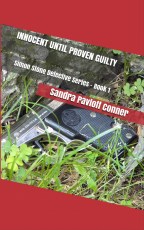
INNOCENT FRONT COVER = AMAZONThe mystery continues in book #1 of the Simon Stone Detective Series.
Read all of INNOCENT UNTIL PROVEN GUILTY. Available in paperback and digital at Amazon.


Daily Post Prompt: Mystery


~~~

Read It If You Dare . . .

Read it if you dare: You’ll never look at Halloween the same way again.

RACING TOWARD THE LIGHT: Supernatural Warfare in Inspirational Fiction

LAST 4 DAYS ON SALE

When a small coastal town is invaded by witchcraft that threatens the lives of the school children and the future of the entire community, the citizens must learn to fight back with a Higher Power.

Exhausted after a battle with supernatural forces, Sheriff Noah Bennett, with his white stallion Moondancer, travels to a small coastal community seeking rest and healing for his battered soul. While there, he befriends David, a 6-year-old boy who loves horses, and his aunt, beautiful Serenity Lawrence.

But the same forces of evil that invaded his own hometown have now invaded this small haven, and Noah must decide if he’s ready to be used as an instrument in God’s hands again to apply the principles of His Kingdom in defeating these powers once more. It will mean setting aside his recuperation – and his budding romance – until the job is done.

Can he teach the believers of Hamsted how to use the name of Jesus and His blood to destroy the witchcraft and the Satanic roots behind it? And is he willing? Walk through this journey with Noah, as he struggles to find a way to overcome his own fear and weakness in order to commit himself to fighting a new battle with forces from beyond this world.

Experience the power of God as angels and demons engage on the spiritual plane while believers discover the truth about their position of authority and their victory in the name of Jesus Christ and His blood.

RACING AMAZON COVER = 2 LINES - FRONT

Paperback and Digital — ON SALE at Amazon throughout October.
Paperback regularly sells for $10.49,  but you can buy it this month for $9.00
Digital is slashed from $3.99 to $2.99 until midnight October 31.

Let’s Hear It For the E-Book

REPAIRED AMAZON COVER - BLUE TEXT - FRONTI have a little news: In celebration of REPAIRED BY LOVE coming to Amazon in paperback, St. Ellen Press is offering a special one-week sale on the e-book version of that novel.

So from now until midnight next Sunday, September 17 (Central Daylight Savings Time) the e-book will be $1.99.

If you like reading on your Kindle, iPad, phone, or computer, you’ll probably prefer this version anyway. Personally, I have to admit that I really like holding a book in my hands, but don’t let me discourage any e-book readers out there from taking advantage of this surprise sale.

Buy it, buy it, buy it!!!   HERE


~~~

Sail Away With This Mystery Romance

SIM. ST. INNOCENT FRONT AM. COVER2Well, naturally, I can’t pass up an opportunity like this. Today’s Daily Post Prompt is the word “sail.”  And it just so happens that the main character in my mystery novella Innocent Until Proven Guilty — Homicide Detective Simon Stone — loves to sail. And even though he suspects Deanna Forbes of murder, he can’t deny his deep attraction to her, so he invites her to go sailing with him on his boat, the Blue Swan.

As their relationship grows, Simon finds himself torn. One part of him wants to love and trust this woman who is the first to ever capture his heart. But another part of him fears that somewhere deep inside Deanna beats the heart of a possible killer. Can he solve the crime before he falls too deeply into the ocean of love? That’s the question that keeps readers turning the page.

Innocent Until Proven Guilty is Book 1 in the Simon Stone Detective Series: On target, quick-read novellas for the busy reader who still wants to enjoy stories of mystery and romance. Available on Amazon in Paperback right now, but coming in digital this week!


~~~

Releasing the Creative Writer in You – Lesson 9

For other lessons, click on “Creative Writing Class” in the navigation bar and scroll through to find the lessons you need.
releasing-the-creative-writer-in-you-coverLESSON 9: GREAT BEGINNINGS – FIRST LINES, FIRST PARAGRAPHS, FIRST PAGES

Without a doubt, the first and primary job of your introduction to your story is to GRAB the reader’s attention and interest – and HOLD them securely. People sometimes consider attention and interest to be the same things. They are not. You must get the reader’s attention first. He has to pay enough attention to what your words are saying to read through more than the first few sentences. From that point on, you must have him interested enough to keep turning pages.

Once you have written a story, always go back to the first chapter and ask yourself, “Is there anything in this first chapter that is holding up the presentation of the really important characters or their action?” If so, delete it and get right into the “story” part of the story. If there is necessary information in the material you deleted, work it into the story later – perhaps through dialogue or even a character’s meditation.

Try your best to avoid prologues. In general, readers do not like prologues because they feel the material in that section of the book is keeping them from actually getting into the story itself. Occasionally, a prologue may be necessary, but the all-important operative words here are “occasionally” and “necessary.” In almost every novel, any material presented in the prologue can be worked into the first chapter of the book through dialogue and/or character meditation as the chapter flows along.

There are almost unlimited possibilities for great beginnings – as many possibilities as there are writers. But most of them will fall into 4 main categories.

Intros beginning with ACTION

This type of intro is almost always sure to get attention, and assuming the reader has picked up the book because he already has some degree of interest in the subject it covers, this plan is successful most of the time. However, be aware that if you begin action that is part of the main plot of the story, you may have to work your reader back to a place of beginning somewhere along the way, and you don’t want too much use of flashbacks, since they don’t move the story forward. Plan carefully so that most of the time you can avoid the need for flashbacks or the need to stop and give backstory information.

Intros beginning with DIALOGUE.

This type of intro is almost always a winner, as long as you can make clear who is speaking – and as long as the conversation is an important element in the story as a whole.

Intros beginning with SETTING.

These introductions are the hardest to use successfully because many readers are anxious to get to characters and action. However, settings that provide really strong appeal to the senses or emotions can work very well. Settings that immediately start building suspense or romance are often successful as well.

Intros beginning with a CHARACTER SKETCH.

Beginning with a strong character and presenting him/her in terms that immediately capture the senses and/or emotions will usually work well – mainly in character-driven stories, of course.

MAN TYPING HUGE PAGE - w. textAnd remember: always double-check your first chapter after the story is complete. That’s the time when you’ll know for sure whether you have the very best beginning possible.
More than once, I’ve changed my first chapter — particularly the first three paragraphs — in order to get the reader right into the important issues of the story, rather than just stuffing him with information.

I remember well the day I realized that the third chapter of my novel Quenton’s Honor should actually be Chapter 1 instead. I was sitting, thinking about offering Chapter 1 for a free reading on a couple different Internet sites. I caught myself thinking that I wished I could offer Chapter 3 instead because that’s where the real action of the story starts. Suddenly, I had this “light bulb” moment and realized “DUH!  If that’s where the action starts, then that should be Chapter 1 instead of Chapter 3.”

And so — I made it Chapter 1. However, it was not nearly as easy to do it as it was to decide. I was working with a change in location throughout the story — from St. Louis, USA, to Karachi, Pakistan. As I went back and forth with the plot, I had to keep reminding myself and making allowances for the time change — particularly since a good deal of the conversation in some chapters took place on computers between two people who were located literally a half a world away from each other.

Beginning the book with Chapter 3 — and allowing for all the time differences — put me in the position of actually losing 12 days of activity in the story that were important to the plot —  but not attention-grabbing enough to start the story with. So I had to find a way to let the reader know about everything that happened in those 12 days. I finally decided to use a very short flashback. As I mentioned above, it’s important not to use flashbacks often or for any long sections of the story. They don’t move the story forward, and that’s what readers want to do — keep going forward to the climax and conclusion. But once in a while a short flashback can come in handy, and if it means a much more  compelling beginning chapter, then it’s worth the risk of using it later in the story.


This lesson will be the final lesson in this series. I will try to post a few more later in the year. Also, when I get the online creative writing course set up — so that students can read the lessons and do an assignment which they turn in via e-mail — I’ll be letting my readers know about the details. It’s been fun sharing with you the same kinds of things I share with my students in the college classes. I hope they’ve been beneficial. Whatever you do, keep writing and keep having fun doing it!


* Releasing the Creative Writer in You, © 2013 by Sandra Pavloff Conner

~~~

Look Out for the Arrows!

`

QUIVER COVER FOR AMAZON - front

YAY!!!!! Finally!
A QUIVER FULL OF ARROWS is finally available in paperback at Amazon.

An author is by her books the way a mother is by her children: she never really has favorites. However, if I were forced to choose only one of my 12 novels as a favorite, I think it would have to be A QUIVER FULL OF ARROWS. It isn’t the most important novel I’ve written, and it hasn’t sold as well as the “Smoky Mountain Series” books, but it has a charm that no other book has.

Even though I wrote the story — and have read it multiple times to edit, correct, and tweak it — I can honestly say I still enjoy it immensely every time I read it. I laugh; I cry; I feel happy; I feel poignant. And I always come to the words “The End” with a huge grin on my face. I hope all my readers do as well.

You can have that experience too. Check out the synopsis and purchase your copy of A QUIVER FULL OF ARROWS for $7.99 at Amazon now.


~~~

A Celebration Sale

`

Hey, St. Ellen Press is offering a terrific sale of my Smoky Mountain Series e-books this month — in honor of the series coming to Amazon in paperback versions. Book # 1 in the Series – Set Free To Love – just went onto the Amazon market in paperback about a week ago, and Book # 2 – Cameron’s Rib – will be available there by the end of next week.

So —– to celebrate —- the e-book version of Set Free To Love goes on a wild sale for $0.99 for the next 7 days — beginning at 12:00 a.m. U. S. Pacific Time today, May 6.

And that’s not all: Beginning today, the three other books in the series will also be on sale for 2.99 for the rest of the Month of May. I’m excited. To read about each book and check out the reviews start at my Amazon Author’s page, where you’ll find links to all of them, as well as some other information.

Want a tiny hint about the stories?

Maddison Holt is a private detective who is so bound by grief, guilt, and self-incrimination that he feels unfit to love. Cameron McDaniels is a pastor who believes he has found the one woman who is the answer to his prayer for a helpmate, but she is still mourning the death of a past fiance and is afraid to love again. Lionel Butler has caused many a girl’s heart to flutter, but he never even notices because he’s convinced he’s destined to be a bad husband and father. His future looks bleak and hopeless. Professor Jonah McDaniels is a talented violinist and conductor. He’s intelligent, charming, and ‘knock-em-off-their-feet’ gorgeous. But he feels unworthy of being loved by the one woman he knows is the only woman he’ll ever give his heart to.

These 4 men’s lives intertwine as “The Smoky Mountain Series” carries the reader through the 4 novels. Read their stories and let God’s great plan for restoring their lives inspire and encourage your own heart.


P. S.   Or maybe I should make that Pssssssst.  I just had a thought. Mother’s Day is coming up, and if mom enjoys reading inspirational fiction, these would make a great gift. And Amazon offers a free app for any device, so she doesn’t even have to own a Kindle.

***

An ‘Innocent’ Crime & Romance Story

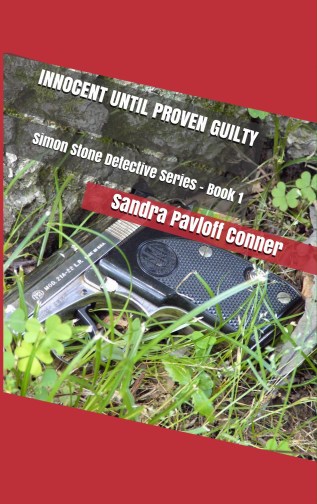
SIM. ST. INNOCENT FRONT AM. COVER2My newest release is a Crime & Romance Novella — Book 1 of the Simon Stone Detective Series. The series is  composed of ‘On Target, Quick-Read’ Novellas that should appeal to busy readers.

Book 1 is a story that I originally wrote right here on this blog: INNOCENT UNTIL PROVEN GUILTY

Here’s a peek at what it’s about:

Deanna Forbes is a suspect in a murder investigation, but that fact doesn’t interfere with her desires. And, as a woman, she finds herself attracted to Detective Simon Stone, who conducts the two interviews with her before she is taken off the suspect list. She surprises Stone, and herself, when she invites him to have dinner with her so she can get to know him better.

Simon is a detective with a heart, and, so far, that heart has never been broken. So falling in love with a woman he suspects of murder doesn’t seem like a smart thing to do. But sometimes the heart has a mind of its own. He may be the sharpest detective on the force, but love is not a subject covered in the standard law enforcement manuals.

Paperback – $4.99 – from Amazon.


~~~

‘Smoky Mountain Series’ has come to Amazon in Paperback

`
SET FREE AMAZON FRONT COVERThis week Book 1 of the Smoky Mountain Series took it’s place in the Paperback Inspirational Novel section of the Amazon book store.  I’m really happy to report that this first book of the series —Set Free To Love —  is now available at a new lower price — only $8.99.

It’s only a story — but when Private Detective Maddison Holt, Uncle Matt, Beth Hanover, and her young brother Lex get hold of your heart, you won’t feel like it’s just a story —– and you won’t want to miss picking up Book 2 of the series as soon as possible. The Smoky Mountain Series brings you stories where strong, loving, courageous characters meet the challenges of life with the power of God’s Word, and where true romance wins out over all.

Set Free To Love

As his vision suddenly blurred, Maddison realized he’d let it happen again. He swiped at his eyes with a thumb and forefinger, trying at the same time to pinch back more tears. He’d have to pull off the highway if he didn’t get better control of himself. The next moment, he could feel the anger boiling up from deep inside, needing an outlet. He’d swung back and forth like this relentlessly, between tears and anger for … how many weeks had it been now? Way too many … but then not really enough … not enough to dull the pain or answer any of the questions.

This first book in the Smoky Mountain Series follows private detective Maddison Holt’s journey from grief, guilt, and self-incrimination to a place where he is released from all of those burdens and able to freely give himself to loving and being loved. Order it here.


^^^

‘SLATE’ now in Paperback on Amazon

`

Okay, all you folks out there who — like me — want to read a “real” book instead of a digital device, I have good news. The wait is over. Amazon now has my newest inspirational novel, SLATE, in paperback. I do a lot of reading online for hours every day. But when I want to relax and forget the whole rest of the world, I like to curl up in a comfortable place and hold an honest-to-goodness “book” in my hands while I read. Most all of my books come out in paperback and digital both, but until this past year, the paperbacks were not available on Amazon. Now all of them will be available there very soon.

If you didn’t see my promo for SLATE (the e-book) several months ago, you probably want to know what the book’s about. So I’ll give you a short trailer here to whet your appetite.  Then you can find the book in paperback at this link.  And don’t forget: if you do read it and like it, please leave me a review on the Amazon page. And if you don’t like it — just don’t say anything, okay?  Thank you.


~~~

Daily Post Prompt: ‘As the Plot Unravels’ – a short story

`

MAN AT DESK b & w“I don’t know what to do,” Neville groaned, rubbing his hands roughly over his face. Then he pushed his laptop out of the way and leaned both elbows onto the coffeehouse table, propping his chin in his hands.

“What’s wrong?” Clarence, the waiter bussing the table next to Neville’s, turned to question him

Neville looked up, startled. “Oh … blast … I didn’t realize I had said that out loud. Sorry,” he added looking sheepishly around the room to see if other customers had heard. He was relieved to see that Elixir of Life Coffeehouse was having one of its quieter days.

“No problem,” Clarence answered and walked over to Neville’s table. “Can I get you a refill?”

“Yeah, that would be great,” Neville answered, handing the boy his cup. “It’s been a rough writing day.”

The young man returned in record time with Neville’s refill and stayed to talk a moment. “Do you have what they call writer’s block?”

“No.” Neville shook his head and continued. “No, Clarence. This isn’t writer’s block. In fact, I almost wish I did have that dreaded condition. My problem isn’t that I can’t get the story to move along. This story is moving along at an incredible pace. The problem is that it’s writing itself, and my original plot is unraveling as fast as I can put my fingers to the keys.”

“You mean you’re not in control of your own story?” Clarence looked at Neville as if he had lost his mind — just a little. And that made Neville laugh.

“Don’t worry, my boy,” he said. “I’ve not gone bonkers yet. And … thanks for making me laugh. It helps. But to answer your question, no, I’m not in control of my own story.”

“Well, how does that happen?” Clarence asked, really into this new information he was being exposed to.

“Well it’s not too unusual for a writer to get into a novel and find that one of his characters seems to gravitate in a direction other than what he had originally planned — or that the story seems to be flowing toward an ending that’s different from what he jotted down in his outline. But what’s happening in my story is different.”

“How?”

Neville shook his head and sighed. “I’m not sure how it’s happened, but every character seems to be taking on a brand new identity and making his own decisions. The guy I had pegged as the hero has suddenly become the villain, and the woman he loves is rapidly developing feelings for his best friend — which means he will probably end up killing his best friend — he’s already entertained the idea — and maybe even offing the woman as well.”

“But does it matter who ends up being the villain and the hero — I mean — as long as you have one of each, it’ll come out even, right?”

Neville chuckled. “Well, it’s not quite that easy. My publisher assigned me a contract to do a specific kind of story. One that will be a believable sequel to my last three novels. They were moneymakers, and I’d hate to mess up a record like that. I spent the money I made on them, and now I need more.” He rubbed his face agitatedly again. “Besides that, I’d be breaking my contract if I didn’t give them what I guaranteed.”

“MmMmm, you do have a problem,” Clarence said, so engulfed in the conversation now that he just sat right down at the table beside Neville.  They both sat in silence for a moment, and then Clarence asked, “Well, why don’t you just delete all that part that changed and go back to your first chapter and start over on the story you intended to write. That would take care of it wouldn’t it?”

“Well, that’s the other problem. I’ve totally lost track of the story I intended to write … and besides ….” He paused and glanced off to the side, lost in thought for a long moment. Clarence waited, figuring Neville was trying to work out a plan.

Suddenly Neville looked back at Clarence with a smile on his face. He looked serene rather than agitated, and Clarence was a little confused. “You figure something out? How to stop this runaway story?”

“Nope,” Neville said, grinning wider. “I’m not going to stop this story, Clarence.”

“Huh?”

Neville reached over and rested his hand on Clarence’s shoulder. “Clarence, my boy, I’ve made a decision. I’m going to give this story my whole heart and soul and let it lead me wherever it wants to go.”

“But what about your contract and all?”

“Blast the contract,” Neville said, beginning to close up his laptop and slip his notes into his briefcase. “If that publisher can’t see the truth about the value of this story, then he can sue me.”

“But –”

“No more ‘but’s‘ my boy,” Neville answered, rising from his chair, laptop under his arm. “This is the best damn story I’ve ever written in my life, and I’ve just decided I’m free enough to give my creativity its own head and let it take me to my destiny.”

He slapped down his last five dollar bill as a tip for Clarence and headed out the door, whistling.


To participate visit Daily Post.

+++

‘Releasing the Creative Writer in You’ – Lesson 7

releasing-the-creative-writer-in-you-coverI’ll be posting my creative writing lessons only once a month now, on the first Saturday. Can you believe this is already the first day of April?  (NO FOOLIN’). To access other lessons in this series, click on “Creative Writing Class” in the navigation bar and scroll through to find the lessons you need.

LESSON 7: AVOIDING DRAGGY DETAILS AND CHOPPY SENTENCES

A.  DRAGGY DETAILS

When telling a story, you have to keep the dialogue and action moving at a good pace to hold the reader’s attention, and your details need to be specific things that make the scene more alive or more colorful.

Think about this example: If I were telling you about my date on Friday night, and I said, “We walked into the restaurant, and the waiter led us to a table at the back of the room. Then we picked up the menus and took some time looking over the possibilities. When the waiter came back with our drinks, we gave him our order,” you would think, “Well, of course, you walked to the table and sat down, and, of course, you looked at the menu and then gave the waiter your order.”

What I need to do — if I’m going to make my story interesting — is use only details that add something the average reader would not automatically put into the scene himself. So I could say something like “We had a great table, right by the window so that we could look out on the river. The spicy aromas wafting from the kitchen increased our appetites, and when the menu came, we both got so absorbed in the huge variety of entrees that it took us fifteen minutes to make a decision. But our waiter was extremely patient, and we finally decided on fruit cocktail,  Caesar salads, and Porter House steaks.”

But WHY are you putting this paragraph into the story in the first place? Ask yourself if these details are truly IMPORTANT to your story. If the answer is ‘no,’ then LEAVE THEM OUT. If the answer is yes, be sure the reader can easily make the connection.

One other alternative to that scene could be something like this scene, which emphasizes a totally different aspect of the evening, and which has a specific reason for being in the story: “The atmosphere in the restaurant seemed set for romance. From the time we sat down at the table, Roger and I both had trouble deciding on our choices for entrees because we just couldn’t seem to keep our eyes off each other. We finally managed to order, but as soon as the waiter stepped away from the table, Roger reached for my hand, and we were still holding hands when the first course arrived.” This scene is building on a relationship between characters and is simply using the meal as a setting.

Remember not to waste words telling your reader anything that he will already know. If you have a scene that is so very ordinary the reader could write it for you – if there is nothing really special, unusual, or super important to the plot in it – LEAVE IT OUT. You can refer to it having happened without describing it.

For example: If it’s important to my story to let the reader know that Roger and I went out Friday night, then I can always find a place to toss in that information. I can say to a friend, “When Roger and I went out Friday night, we tried a new restaurant.” OR “Roger and I went out again Friday night, and I can tell that our relationship is getting serious.” But I haven’t bored my reader with the details of an “ordinary” date.

Here’s another example of a scene that is too ordinary.

‘When the time came for the ceremony to begin, Abby’s father took her arm and walked her down the aisle. He turned her over to John, and as the bride and groom smiled at each other, the minister began the ceremony. Abby and John said their vows solemnly and then exchanged rings.”

Since everyone reading your book knows exactly what an “ordinary” wedding ceremony is like, they will be bored reading this. If there are several passages like that in your book, the chances are good the the reader will put it down before he’s done. So – again – if you do not have anything going on that the reader will not automatically assume anyway – just refer to it obliquely in order the let the reader know it happened.

However, if you want to make a point of how emotional the bride and groom were during the ceremony, then you may have a reason to give more details, and you can say something like this: “Abby was so excited that her knees wobbled as she took hold of her father’s arm to walk down the aisle, but he patted her hand and smiled reassuringly, as he had done all through her childhood. This moment would be her last opportunity to interact with her father as merely his child. In a few more minutes, she would be another man’s wife, and her life would never be the same. As she and John spoke their vows, they both had tears in their eyes, and their hands shook a little when they exchanged rings. But they weren’t nervous or afraid — just excited about living out this dream together.”

cartoon-writer-pink-spikey-hair-2
B. SHORT, CHOPPY SENTENCES

The best way to avoid short, choppy sentences is to make sure you use good variety. Make it a point to use some compound or complex sentences. Both of these are explained below, with examples of each.

The best writing always uses great variety in sentence structure and length. Most readers expect to feel a sort of ebb and flow in the way thoughts are expressed. It’s the way we think and the way we talk to each other. The most important thing to remember when deciding what kind of sentence to use is that emotions and/or thoughts cause actions – and actions cause thoughts and/or emotions. You never do or say anything for no reason, and neither do your characters. So you want the reader to understand the connections and relationships between thoughts, feelings, reasons, actions, etc. Tying thoughts together into some compound and complex sentences helps the reader do that. So, keep the writing interesting by using all three kinds of sentences to their best advantage.

Here are some examples of poor sentence choices and some corrections for those problems:

Very Poor Grammar:  Mary stopped at the store to get some milk, she bought lettuce and tomatoes too.  (This is a run-on sentence because it has 2 separate, complete thoughts, but only a comma between them.)

Slightly Better: Mary stopped at the store to get some milk. She bought lettuce and tomatoes too.  (This example is 2 choppy sentences.  Much better than the run-on — and they are okay once in a while — but you don’t want this pattern too often.)

Better:  Mary stopped at the store to get some milk, and she bought lettuce and tomatoes too. (Compound sentence because it connects 2 complete thoughts by using the conjunctions ‘and, but, or, nor, or yet.’ When using those conjunctions, you DO use the comma as well – before the conjunction. You just never use the comma alone to connect 2 complete thoughts.)

Best: Mary stopped at the store to get some milk, and while she was there anyway, she picked up lettuce and tomatoes too.

OR:  Since Mary had to stop at the store for some milk, she decided to get lettuce and tomatoes too.

(These last 2 sentences are Complex sentences, which use one completely independent clause (which could stand alone as a sentence) and one clause that cannot stand alone because it is dependent on the other clause to make sense. In both of these, the dependent clause tells the reader the reason Mary bought the extra food. Also, while giving that reason, the clause takes care of any other information that the reader needs, and that information doesn’t have to be put into its own short sentence.)

Remember, you want a variety. There are times when three or four short, choppy sentences can be very effective if you need a specific tone or mood in the scene, but make sure short, choppy, staccato is the feel you want your reader to have before using very many sentences like that.

Mainly, remember that you want the reader to understand the connections and relationships between thoughts, feelings, reasons, actions, etc. Tying thoughts together into some compound and complex sentences helps the reader do that.

Example:

Choppy:  Roger was afraid. He did not want to let it show. He was the first to volunteer for the rescue mission.

Much better:  Roger was afraid, but he did not want to let it show, so he made sure he was the first to volunteer for the rescue mission.

OR

Because Roger wanted to hide his fear, he made himself sign up as the first volunteer for the rescue mission.  (This example also cuts out words, and doesn’t leave out anything important. If you tell the reader Roger wants to hide his fear, then the reader knows Roger’s afraid, and you don’t have to say that.)

Question: Is there such a thing as a sentence that is too long? Yes, if you have included so much information that the reader could get confused – or if reading the sentence aloud causes the reader to run out of breath – then it may be too long. But that can be fixed as well, simply by taking one portion of the information and putting it into a separate sentence. There is no simple way to help any writer decide when he needs to go longer or shorter. But the more the writer observes real-live conversations, and the more he reads his work aloud, the better he will get at making those decisions.


* Releasing the Creative Writer in You, © 2013 by Sandra Pavloff Conner

+++

‘Releasing the Creative Writer in You’ – Lesson 6

To access other lessons in this series, click on “Creative Writing Class” in the navigation bar and scroll through to find the lessons you need.

releasing-the-creative-writer-icover-editedLESSON # 6: BODY MOVEMENT AND DIALOGUE MAKE A STORY COME ALIVE

As you develop your plot, remember to use as much dialogue and body movement as possible to help the reader see and hear the words and actions. Simply narrating it is much less effective. Quote your characters directly, and let the reader hear a sigh or see the character lean against a door frame. Describe a smile or the sound of the laughter. Allow your character to lean forward or backward, prop his foot on a stool, rest his head against the back of a chair, or fold his arms across his chest. No real person carries on a conversation without body movement as well, and you need that kind of description to keep your reader’s attention and make your characters “real.”

Beginning writers often find themselves skipping this very important principle. They get involved in “telling” their story and just continue to narrate the events without any individual detailed action and without letting their characters carry on real conversations. That lack of material is generally why some beginning writers have problems filling out scenes and developing entire novels. But once you get into the habit of adding these two very important elements to your writing, you will find that you enjoy writing even more, and that you have less problem creating real-life, fully developed scenes for your story.

Now, of course, adding just any old movement or dialogue will not work either. The characters’ behavior and conversations have to fit the story and be totally relevant – even important – to the story itself. Keep checking to be sure that every conversation and every scene is actually moving your story forward and not just taking up space.

Remember also, that tag words (things like “he said / she asked”) need to be kept at a minimum and need to be simple, ordinary words as often as possible. Some new writers have the mistaken idea that they should reach for a variety of words or for unusual words to use with quotes. That’s exactly what you don’t want to do. Those unusual words stick out like the proverbial “sore thumb” in the middle of dialogue and interrupt it. Except in very rare instances, you’re much better off using the ordinary words like “said” or “asked.” Occasionally, in a scene where they would be perfectly applicable, you might venture out to tag words like “whispered” or “shouted.” But the number one rule is to keep those tags as inconspicuous as possible.

The next rule you want to remember is to begin a brand new paragraph each time the speaker changes in a conversation – even if the previous speaker said only one word. When you stay faithful to that rule, you end up needing far fewer tag words to begin with – particularly if you have only two speakers. Once you identify the original speaker and then identify the person who answers him, changing paragraphs for each one will keep your reader aware of who is saying what. If your conversation lasts for more than a page, you need to throw in a couple more tags here and there, just for extra clarity, but it’s amazing how easily readers will follow your conversations with no other help when you follow these two basic rules.

QUIVER FULL COVER - GOLDBelow, I’ve given you two versions of the same excerpt from my novel A Quiver Full of Arrows. The first excerpt uses very little body language and dialogue. The author narrates what is happening, but does not show the characters in action or let them speak on their own. In the second, you will see how much more color and interest is added by letting the characters speak their own words in normal conversation and by showing the reader even small unremarkable body movements.

In order to better grasp the way these writing tools are used, I’ve made the dialogue a sort of turquoise color and the body movement sections a shade of purple. I tried highlighting them, but could not get the highlights to copy and paste into this editing window. So I’ll work with what I’ve got.  And the color variation will help you see exactly what was added to get the better version.

Version # 1 – Mostly narration with only a small amount of body movement or dialogue. (Remember: dialogue is only the words within quotation marks. Any other mode of letting your reader know what a character said is narration.)

Peanut shells! Again! Handfuls of peanut shells scattered around the steps of the front porch!

How were they getting there?

Lawson Wainright walked around the small piles that were littering the sidewalk and the edge of the grass beside the steps. He stood for several more minutes, looking around the yard, turning his tall, lean body full circle . . . but there was no one in sight.

He looked up into the branches of the tree just a few yards away. He supposed it could be birds or squirrels. But he just didn’t think an animal would leave the shells looking like this. The nuts had obviously been broken open carefully. . . . .

He went to get a rake and some garbage bags to gather up the shells. While he was raking up the shells, Elmer Peabody, his 75-year-old neighbor from across the street came over. “Looks like you’re rakin’ up peanut shells again,” he said.

Lawson agreed and asked Mr. Peabody if he had seen anyone unusual in the neighborhood recently. Mr. Peabody replied that he hadn’t seen anything so far and asked if the shells were all still intact the way they had been the other times. Lawson told him that they were.

Eventually Mr. Peabody began to walk around the area himself, looking closely at the foundation of the house, where Lawson had added white latticework that ran along the front, below the porch, and met the steps on each side.

Elmer was leaning down close to the foundation right where Lawson had been raking up the shells, and all of a sudden he shouted. “By Jove! Did you know that your lattice is broken here, L.W.?”

“Broken?” Lawson asked. “Where?”

“Right here,” Mr. Peabody answered and handed Lawson a piece of the loose lattice.

Lawson couldn’t understand how it could have broken because he had put it in place last summer, and it was all secure. He finally stooped down and looked more closely.

The area under the porch was spacious and dry, and Lawson crawled in to have a better look.

“What in heaven’s name!” he shouted from under the porch.

“Did you find something?” Elmer asked.

Lawson crawled back out from under the porch and looked up at Elmer. “I found two sleeping bags and a can of peanuts under there,” he said. He was hoping Elmer might be able to help explain what was happening, but Elmer was equally stunned.

After a few seconds, Lawson laughed out loud. He told Elmer that he felt like the three bears who had come home and found someone had been sleeping in their beds. Elmer asked Lawson if he had any idea who it could be.

“I don’t have a clue,” Lawson said. But, suddenly, he remembered something.


Version # 2: A considerable amount of dialogue and body movement has been added to this version. Compare the effectiveness of Version # 2 with that of Version # 1. Which story will hold your reader’s attention better and help him relate to your characters?

Peanut shells! Again! Handfuls of peanut shells scattered around the steps of the front porch!

How were they getting there?

Lawson Wainright walked around the small piles that were littering the sidewalk and the edge of the grass beside the steps. In frustration, he ran his hands through his short brown hair, and as he did so, the sunshine caught sections of it and highlighted them with streaks of copper. He let his hand slip down to the back of his neck, massaging it a little as he shook his head back and forth slowly, still trying to reason out the solution to this strange development.

Then he stood for several more minutes, resting both hands on his hips and looking slowly around the yard, turning his tall, lean body full circle . . . but there was no one in sight. He looked up into the branches of the tree just a few yards away. He supposed it could be birds or squirrels. But after a moment, he shook his head again. No … he just didn’t think an animal would leave the shells looking like this. The nuts had obviously been broken open carefully. . . . .

He shrugged his shoulders now and let out a sigh, turning as he did so to walk around the house to the garage, where he extricated a lightweight rake from a jumbled collection of yard care equipment. He returned to the front yard, where he began to rake the small piles into one larger heap in order to scoop them into a garbage bag he had carried over along with the rake.

“Hey, L. W.” The voice of his seventy-five-year-old neighbor across the street got his attention. “Looks like you’re rakin’ up peanut shells again.”

Lawson couldn’t help chuckling and shaking his head in consternation again as he stilled his rake and looked at Mr. Elmer Peabody. “Looks like,” he called back, leaning slightly on the rake now as he gave his attention to his favorite neighbor.

“Still no idea how they’re gettin’ into your yard?” Elmer asked as he started across the street.

“Nope. You still haven’t seen anything or anyone unusual, have you?”

“Not so far.” Mr. Peabody took off his gardening hat as he crossed the yard and scratched his almost bald head. “’Course, that don’t mean nothin’,” he added. “I hardly ever look outside after dark, and early in the mornin’ I’m eatin’ my breakfast and lookin’ out my back window at the birds.” By the time he’d finished answering Lawson’s question, he was beside him, watching him finish his clean-up job. “Were the shells all neat and clean again like the other times?”

“Yeah … just exactly like the last three times.”

“Mm-mm!” Elmer Peabody grunted, shaking his head back and forth. He began to walk around the area in tight circles, finally bending over and looking along the foundation of the house, where Lawson had added white latticework that ran along the front, below the porch, and met the steps on each side. …

All of a sudden Elmer shouted, “By Jove! Did you know that your lattice is broken here, L.W.?”

“Broken?” Lawson asked, stepping over to stand beside his neighbor. “Where?”

“Right here,” Mr. Peabody said, reaching out to take hold of a loose 3-foot section of the white lattice and lift it away from the rest of the porch. He held it up for Lawson to inspect.

“Well, I’ll be!” Lawson said, taking the piece of latticework in his hands. “How on earth did that happen? I just put that up last summer, and it was all secure.” He studied the piece of wood he held in his hands. “Hmm … it looks like the nails have been worked loose and just pulled out, but nothing’s broken off.He stooped down to look more closely under the porch.

The area beneath the porch was quite spacious, and stayed fairly dry most of the year, unless they had heavy rain or snow. He could easily crawl under it himself and move around, but he hadn’t done so since he’d put up the lattice. Now he got down on his hands and knees and eased his way into the three-foot opening.

“What in Heaven’s name!” His voice came out sounding muffled from beneath the porch, and Elmer Peabody leaned a little closer to hear better as Lawson spoke again. “I don’t believe my eyes!”

“What’d you find?” Elmer asked, excitement filling his voice now. This was an adventure for him. He hadn’t had this much interesting activity in his neighborhood since Hilda Gates, next door to him, had set her kitchen on fire trying to make a big rum cake. ….

Lawson hadn’t said anything else for a minute or so, and Elmer leaned in even closer and stuck his head inside the opening.What did you find? What’s going on?”

“Sleeping bags!”

Sleeping bags?” Elmer couldn’t believe he’d heard right.

“Yeah … two of them, and a big metal can full of peanuts!” Lawson began to ease backwards out of the opening, and Elmer moved away to give him room.

“Did I hear you right? Sleeping bags?”

Lawson was still crouched down close to the ground, and he looked up at Elmer, his face a perfect picture of consternation. “Elmer, there are two rolled-up sleeping bags under my porch, and a large metal can full of peanuts in the shells.” His eyes still registered his shock, and then a quizzical look came into them, almost as if he hoped that his neighbor, somehow, would have the explanation.

When he realized that Elmer’s face was as full of surprise as his own must be, he added, grinning in spite of himself, “I feel a little like the three bears who came home and discovered that someone had been sleeping in their beds.” He laughed out loud then. In spite of the obvious seriousness of the discovery, he couldn’t help himself. “Mr. Peabody … somebody’s been sleeping under my porch!”

“And havin’ a midnight snack on top of that,” Elmer said, chuckling and scratching his head again. “By Jove! I wonder who in the world it could be.”

Lawson shook his head again and picked up the piece of lattice to replace it. “I can’t imagine – unless – ” His voice trailed off, and he sat back on his haunches, looking off into space. . . . He had just remembered a recent news story. …


With this second version, not only is the scene fully fleshed out, but the reader actually feels that he is getting to know the two people involved. As we discussed in the chapter on developing characters, we get to know real people in our lives by talking with them, seeing them in action, and learning how they treat and interact with others. That’s also the best way for readers to get to know the characters in a story. As a result, those characters seem real, and the reader connects with them enough to want to read to the end.
__________________

* Releasing the Creative Writer in You, © 2013 by Sandra Pavloff Conner

NOTE:  My schedule has become a little over-loaded this month, so I’m going to have to hit the ‘pause’ button on my plan to offer a creative writing lesson every Saturday. I’ll try to post a lesson at least once a month for a while, but that may be the best I can do. I hope these have been a help and encouragement to some of you, and I’ll add more as often as I can.

~~~

‘Releasing the Creative Writer in You’ Lesson 5

To access previous lessons in this series, simply click on “Creative Writing Class” in the navigation bar, and scroll through to find the lessons you need.

releasing-the-creative-writer-icover-editedLESSON # 5: DEVELOPING CHARACTERS

Plot-Driven Stories vs. Character-Driven Stories

(Plot, remember is basically the action – problem/conflict, attempts to resolve problem, climax, resolution)

Plot-Driven stories focus on the action. However, great-selling authors also develop their characters with care and detail. The most popular action novels generally have a large following because the readers can identify with the hero/heroine. It is hard to identify with characters that have no depth – are only one-dimensional. This problem is the biggest hazard of writing plot-driven literature. You must resist the tendency to let characters remain as one-dimensional beings who are obviously just manipulated by the author to fit the action.

Stories with no character development can entertain for the short-term but generally have no lasting quality.

Character-Driven stories give the reader someone to identify with. But those characters have to be “real, and they have to be living, changing, growing. (Unless your bent is focused on degeneration. Then they need to degenerate.) Every single character may not change significantly, but certainly your hero/herione will, and his changes will normally effect changes in other characters as well.

How Does Your Reader Get To Know Your Characters?

All great stories reveal and develop each individual character through use of three basic tools:

1. Pointedly describing the characters – physically, psychologically, emotionally. Giving your reader the details of the characters’ physical appearance or his psychological bent works well up to a point. But this tool needs to be used sparingly. It leads to just “telling” the reader about the character instead of letting the reader himself get to know that person the way he would get to know any person in real life.

2. Revealing a character’s speech, thoughts, and behavior. “A picture is worth a thousand words” is a quote often used to praise photography over verbal descriptions. But the truth of it applies to writing stories even when photographs or illustrations are not used. When an author uses his words carefully enough to show the reader what a character is like, rather than explaining through narration, the reader gets a much better handle on that character. Let your character speak and carry on dialogue with others. Let him act and react to others. His true nature will come out in his words and actions. It’s when the reader can discover for himself what a character is like that he more fully connects with him.

3. Describing opinions and reactions of other characters to that character. What the other members of the cast of your story feel and say about each character – and how they react to him — reveals that character in light of relationships within the story. That aspect of characterization adds much more depth to the story as a whole.

MAN PROFILEWhat About Your Hero/Heroine?

Hero/heroine: The principal figure in an action, event, or story. This person will obviously be the central focus of your story, and it is his development – his learning, changing, experiencing epiphanies, maturing, growing, becoming better, stronger, wiser, healthier, etc. that will give the story its meaning and satisfy your reader. It is the hero – along with the help of the other characters – who is the driving force behind the action.

WOMAN SILHOUETTE, PONYTAILAll other characters need good development as well. Having a well-developed hero with no one to interact with except one-dimensional, cardboard characters will stifle the hero’s development as well.

The Hero/Herione’s Progression:


Most good stories will take that hero through about 6 main stages as the story moves along:

1. Hero is introduced: You need to know how and why he is the center of your book.

Why will this guy – instead of someone else — do the job of making this book a great read?

2. The hero has experienced – or is experiencing – a certain amount of preparation for what he will do in the story. Let the reader see that he is a certain type of person and that he has had experiences that will eventually lead him to specific action or reactions later in the story. His actions and reactions need to seem real.

This process can include some involved background – if you have a long enough story to work with – and it can be added a little at a time as the action ensues. Or it can be a well-placed couple of sentences that use exact descriptive words. In a novel, you may tell the reader a little of the character’s background, but then let the rest come out through conversations with other characters, or a situation that causes the character to remember events in his past, etc. You may even introduce a separate character who reveals some of the main character’s past that lets the reader know what caused the hero to be the person he is today. Even in a short story, try to avoid just telling the facts. Let them come to light through as much natural action and interaction between characters as possible.

3. The hero moves into his journey – his quest – his effort to reach his goal – his effort to defeat an enemy. This aspect of the story will involve a series of battles or conflicts that come against him, and he must decide whether to go forward or pull back. His nature – that you have developed well – will determine that decision. (Now your reader may still be learning about his nature, and these decisions will give that reader a clearer and clearer picture of who this guy is. But YOU should already know his character well-enough to know what he will do and WHY.

(Occasionally, authors will find themselves in the middle of a scene, and suddenly feel the character pulling to go an unexpected direction. That situation can lead to a whole new aspect for the story that makes it better. However, it can also sidetrack a good story that’s well underway. So if this happens, take a little time to re-evaluate and determine if what this character seems to want to do really has value. You may even pull up a new document page and allow yourself to write the alternative scene with the character acting “out of character,” but don’t delete the original plan unless you are totally convinced that plan number two is much better.)

*** Keep double checking your story to make sure that every sentence is actually moving the story forward and not just filling up space on the page.  ***

4. The hero/herione will eventually come head-to-head with the main antagonist. You must decide how soon that takes place. They may have met very early in the story, but their battle for the climax of the story will not take place until your character development and your action is ready for it.

Who is that antagonist? He will be the killer, the rival lover, the mean banker ready to foreclose, the evil totalitarian government system that is taking over a free nation, a killer storm raging across the country, destructive beings from another planet, some mysterious disease that can’t be stopped by drugs, the devil himself. Whatever mask the antagonist wears, he is the embodiment of evil as opposed to the hero who is the embodiment of good. This antagonist, too, must be well-developed prior to this climaxing battle.

Note: Modern novels have had a tendency to produce heroes who are so imperfect and fallible that they offer no “higher level” of character or lifestyle to which the reader can aspire. That is certainly acceptable, of course, but the greatest novels of all time – those that have outlasted the millions that see bookstore shelves for 3 months and then dwindle away – are those with heroes or heroines who have something above and beyond the “average” or the mundane in their make-up. And in spite of the fact that people say they want “realism” in their books and movies, the truth is that almost every human being secretly wants a role model that is just a little “bigger than life” to identify with – and wants a level of life that is just a little bit better/higher/freer/more successful/more loving than what he is experiencing now.

So while you may not want to write a book that is particularly positive in theme or that has a “happy ending,” you may still want to be sure that your hero/heroine offers the reader something “better” than ordinary to identify with and aspire to.

By the time the hero enters into the decisive battle with the main antagonist, you must have made him so believable and reliable that your reader will know what to expect in his actions and reactions.

5. The hero will win the battle with the main antagonist. This action – whether physical, spiritual, or mental, will be the end of the climax of the story.

6. The hero will be changed/transformed by the end of the story. He will be different in some way. He may have learned something, found new qualities in himself he didn’t know were there, realized he’s capable of giving/loving/creating more, etc, etc. Also, as he moves into and enjoys these changes, they transfer to the reader, and the reader benefits from them as well.

This kind of strong identification makes for memorable, lasting stories – and also builds a strong base for any sequels or series that you want to create.

Needless to say, the other characters in the story will undergo their own changes, and these will be important to your reader as well. But the process of developing the hero and moving him through his 6-step process works the same way for each character. For the most part, you need to create each character with as much care as you do your hero. The “realness” of the other characters can make or break the story as well.

DRAGON W. BOY - LARGERThese basic rules of good character development apply equally in children’s literature — whether the characters are children or animals. The principles are still the same, and the readers respond to characters pretty much the same way at all levels.

So take time to get to know your characters personally. Write out a checklist that will clarify the basics aspects of their personalities, experiences, and relationships. Even writing up a complete character sketch on each one is never a waste of time. Everything you can do to make sure those characters are “real” will give your story that much better chance to find a special place in the hearts of readers for generations to come.


* Releasing the Creative Writer in You, © 2013 by Sandra Pavloff Conner

~~~