Share Your World February 27, 2017 – by Guest Blogger Mariah Jacoby

`
Disclaimer: The following is a blatant advertisement:

everythings-jake-amazon-cover-2-for-e-bookI decided I’d do something different this week: Instead of answering Cee’s questions as myself, I’m giving a guest blogger the opportunity to answer. Cee keeps telling us to just have fun with this challenge and even let our alter ego answer if we like. So meet Mariah Jacoby, the heroine in my inspirational romance Everything’s Jake. Here’s Mariah’s take on this week’s Share Your World.

Question # 1: Ever ran out of gas in your vehicle?

Are you kidding?  Really?  Never!  But, of course, you may not realize that I’m an auto mechanic. I didn’t start out to be. But after two college degrees in journalism and education — and a host of jobs that I just couldn’t fit into — I finally admitted to myself that I’m just a grease-monkey at heart. I love cars, trucks, vans, and busses. Anything with an engine that purrs when it’s happy makes me happy. And, in reference to the question at hand, why, I’d never forget to put gas in a car anymore than I’d forget to eat. So  — I guess the short answer to that question is — No.

Question # 2: Which are better: black or green olives?

Now, that’s a hard one. I love both. I enjoy the smooth, sweetness in the black olives, but sometimes I crave something salty, and you can’t beat the green olives for that, especially since they add just the tiniest bitter bite along with the brine. I  especially love olives on pizza. Neil Warner and I have been having pizza together every Friday night for the past month — when we work on the books for his auto repair business. It’s sort of like a non-date, which I hope will eventually get us to a date date — if you know what I mean. But that’s all in the book.

Question # 3: If you were a great explorer, what would you explore?

Chrysler Manufacturing plant, General Motors manufacturing plant, Toyota manufacturing plant, and Neil.  Oooops, I guess that didn’t come out exactly right. What I mean is that I’d like to get to know Neil even better — learn what all makes him happy and sad, what his dreams are, what I can do to be number one in his life. He’s probably someone you’d consider just an ordinary guy: late thirties, slightly overweight, kind eyes, a mega-watt smile — and he looks sexy in his green coveralls with a dab of grease on his chin. (sigh). I think I fell half in love with him the first day I met him because he was so kind to me, giving me a chance to prove myself even when he knew he was taking a chance where his business reputation was concerned. Yep, I think I’d like exploring that man more than anything else.

Question # 4: Quotes List: At least three of your favorite quotes?

I’m going to share just one quote: It’s my favorite of all time:

“To thine own self be true.” (William Shakespeare as the character Polonius in Hamlet)

I’ve finally followed that advice. One day, after a horrible relationship failure, I got up from my bed where I had lain for an hour bawling, looked into my bathroom mirror, and got real with myself. I said, “All right, so maybe you’re not a femme fatale who can bring men to their knees. But you’re a gentle, kind, loving, hard-working woman of God. And, dang it, girl! You’re also the best darn mechanic that this town has ever laid eyes on!” (Everything’s Jake, p. 89).

That’s when I really started enjoying my life completely, and that’s also when I opened the door to the love relationship I’d wanted my whole life.

Bonus Question: What are you grateful for from last week, and what are you looking forward to in the week coming up?

I’m grateful I discovered the truth about Carter Sanford and what he wanted from his relationship with me. And in the weeks to come, I’m looking forward to becoming the one woman Neil Warner can’t live without.

If you’d like to find out how successful I am in that endeavor, be sure to read my story. You can find it in paperback or digital at Amazon.


~~~

‘Releasing the Creative Writer in You’ – Lesson 3

releasing-the-creative-writer-icover-editedTo access other lessons in this series, click on “Creative Writing Class” in the navigation bar and scroll through to find the lessons you need.

LESSON # 3: WRITING FICTION

Fiction covers a wide range of genres, including short stories, novels, novellas, novelettes, scripts, screenplays, young adult literature, and children’s literature. Having a knack for writing well in one of those genres does not guarantee that a writer has an equal knack for the others. However, most of the time writers find that, with experience and practice, they can write successfully in several different genres at the same time. While all good writing requires some of the same characteristics, each of the different genres of fiction has certain elements that are peculiar to it alone.

SHORT STORIES

There are no hard and fast rules followed by all writers and publishers concerning what constitutes the length of different genres of literature. Each literary guide has its own specifications, but the information given in this text offers an average that takes into consideration the high and low ends of various guides. In general, short stories are considered any stories between 100 words (generally referred to as “flash fiction”) and 20,000 words. Often the stories that run between 100 and 3,000 words are referred to as “short-short” stories. Length does not matter, except for the purpose of meeting the requirements of a particular assignment. (Ex. Writing for a magazine that has a word limit, etc.)

What matters is whether you have all the elements required to satisfy the readers of the stories, and if you have developed the characters, setting, and plot thoroughly – without letting any areas of the work drag or become unnecessarily verbose. The writer must tell a complete story: an attention-grabbing beginning, the development of a problem or conflict, attempts to resolve that conflict, the climax, and a resolution/conclusion.)

In short stories, word choices are even more pressing than in longer fiction. Character development is trickier, due to less time. There are also fewer words for describing setting and characters, as well as for developing plot.

NOVELS

Novels require a larger tale – so a larger scope. You have more time to develop setting and characters, as well conflict and climax. Generally readers expect a little more than one simple conflict in a story of any significant length – simply because real life is that way.

Word choices are still extremely important because nothing drags as badly as a novel that is too wordy.

Novel length is generally considered anything between 50,000 and 300,000 words. But most publishers have a policy concerning length of each genre they publish, and authors will need to consult each individual publisher’s guidelines when considering submissions.

Novellas: When you have a story that really needs more than a short story format, but hasn’t enough plot for a full novel, novellas offer a good alternative. If you find yourself working on a short story, but realize you are up to 30,000 words, you need to consider expanding the story a little more and making it a novella. (Generally 40,000-50,000 words on average).

Novelettes: This category offers one more level in alternatives to short stories and novels. Novelettes also give the reader a story that is more involved than a short story, but that does not have enough plot to carry it the length of a full novel. Any work running between 10,000 and 30,000 words can be considered novelette length.

SCRIPTS AND SCREENPLAYS

For scripts and screenplays, dialogue will generally rule, and action must be 100% do-able. Words are at their highest premium in a story that must be acted out. The author must also consider and write in all the stage directions as well.

CHILDREN’S LITERATURE

In children’s literature, writers deal with all the elements common to adult short stories and novels, but children’s works require special attention to the level of language and frames of reference so that they fit exactly the age group for which the pieces are written. The ONLY way to do that successfully is to SPEND A LOT OF TIME WITH CHILDREN. Children’s literature is also generally much more successful with pictures and illustrations. Therefore, the author needs to be able to provide these elements or develop a good relationship with an artist/photographer who can.


ELEMENTS REQUIRED BY ALL FICTION GENRES

So what are the elements of a good story?

1. Characters

Get to know your characters personally. Your reader may never need to know how your main character did in school, whether he played baseball or worked cross-word puzzles, whether or not he took vacations with his family, etc. But you need to know him well enough to know those things. That doesn’t mean you have to list every event in his life before he steps onto the stage of your book, but you do need to sit and think about him from every direction. What are his strengths, his weaknesses, his fears, his goals, etc. It’s a good idea to sit down and write out a few of those traits and qualities for each character before you build your story around those people.

Chances are most of your characters will come from a real person you have had experience with, or – more likely – a composite of a number of real people. That is why keeping a journal and making character sketches is so important. You may be surprised how often an unusual trait you jotted down in a journal as you watched a man on the bus will come in very handy in making a person in your book seem more real.  Also, think about the fact that your characters had lives before they came into your book, and you need to know what those lives were like so that each character will seem REAL and not just an automation you have invented to walk through the pages and say certain words.

Sometimes the characters will be there to carry out the plot (Plot-driven story)

Other times, the characters will be the main story, and their inner struggles, changes, and growth (or deterioration) are what constitutes the story. (Character-driven story).

2. Setting

You know yourself best, and you must decide if you are a person who enjoys detailed descriptions of settings or not. If you enjoy them, chances are you will write them well enough that your readers will also enjoy them. However, if you do not enjoy them, then you must work at giving your story a setting that needs a minimum of description and that has no real importance to the story itself.

The purpose of your story will also determine a lot about the degree of attention paid to the setting. If you write a story focused solely on a romance, making the characters and their personal, emotional interaction the meat of your story, you can get by with simply letting the reader know the characters live in a large American city, or a village in the English countryside, etc., with very little detail. But if you write a story set on another planet, you need to be prepared with loads of details so that your reader will not feel out of sync with the characters they want to identify with.

(You will find more details concerning setting in the upcoming chapter on that particular element.)

3. Plot (Action – either physical or mental)

The plot of a story includes the following  5 basics:

A. Introduction.

Occasionally, a story may open with ordinary action shortly before the important action begins, but this method is tricky because of the need to engage your reader from page one. It’s generally better to open in the middle of some important action or conversation that will be explained in subsequent pages. Or you may use a prologue if you have to lay some groundwork that is not part of the main story. However, you need to use prologues and epilogues very sparingly. Some readers skip them altogether. This course discusses good opening ideas in a subsequent lesson.

B. Development of a Problem or Conflict

This problem/conflict can be physical, mental, emotional, or all three. (More details are available in the chapter on conflict, which will be included in a later lesson.)

C. Attempts to fix the problem, which generally do not resolve the main issue.

D. Climax – Problem comes to a head and meets the solution head-on

E. Resolution/Conclusion/The End

For more details concerning plot, see the chapter entitled “Plotting Your Story,” coming in a future lesson.

4. Theme: The central, recurring, unifying idea of a piece of literature.

What is the Purpose of Specific Action or Dialogue in Your Story?

Your theme can generally be found in the answer to the questions of why something happened or what effect it is meant to have. As your story develops, you (and your reader) will generally find that virtually all of the action and dialogue is happening – ultimately — for the same purpose: to bring about specific outcomes – all of which work together to affect the reader the way you want him affected.

5. Body Language and Dialogue

As you develop your plot, remember to use as much dialogue and body language as possible to help the reader see and hear the words and actions. Simply narrating them is much less effective. Quote your characters directly, and let the reader hear a sigh or see the character lean against a door frame. Describe a smile or the sound of the laughter. Allow your character to lean forward or backward, rest his head against the back of a chair, or fold his arms across his chest. No real person carries on a conversation without body movement as well, and you need that kind of description to keep your reader’s attention and make your characters “real.”

(More discussion on this aspect of writing stories is covered in the material on Developing Characters and in the chapter on Dialogue and Body Language. These segments will be included in upcoming lessons.)


cartoon-writer-pink-spikey-hair-2Do you need an outline before beginning?

The short answer is ‘No.’ Sometimes stories just jump out at us when we are doing a simple writing exercise or sitting quietly and meditating. It’s fine to just sit down to the keyboard and start writing out what is flowing through our minds.

However, do not expect to write excellent stories on a regular basis without having a strong idea of what you want the story to do – how you want it to play out – and who the characters are. You will need some kind of guidelines to help you stay focused and to make sure you have a thoroughly developed plot.

If you find that a story begins coming to life in your mind, go ahead and start writing it. Write until you know you are finished with what was pressing to get onto paper. However, once that is done, you do need to try to determine where you are going – what is going to happen to your characters – what do you want the ending to be – are you wanting the story to stir up particular emotions or teach any particular lesson or moral?

Then lay out a “loose” outline. You will, no doubt, change this outline a number of times, but having something to look at now will at least help you stay with your story instead of writing two or three different stories because of running off on tangents as you write.

You can use the old tried-and-true classic outline format to do your planning, or you can simply write out a few notes or a paragraph for each scene you plan to include in your story. Many authors plan out their entire novels in such paragraphs. And some writers plan out each individual scene as well as the effects of each scene on the people who were involved in it.

One plan includes writing each scene on a note card, followed by a second card explaining the effects of that scene. The writer can then lay out the cards in front of him as he begins each new chapter and write out what he sees in his notes. Naturally, there may be a number of additions or subtractions – or some moving scenes around – putting them into a different chapter – but that’s what creative writing is all about.

(NOTE: If, while you are writing one story, you do get an idea for a totally different story, stop long enough to jot down the main idea that came to you – along with any notes about a character that you know will be a part of that story. Then put those notes away until you are finished with the story in progress. EXCEPTION: The exception to this rule is that if you find yourself pulled back to the new story again and again – or the ideas for it are coming much easier than the ideas for the first story, then, by all means, put #1 away in a drawer, and write # 2. This may be your masterpiece!)

Most of the time, characters and plot tend to take on a life of their own as you write. Do not be alarmed if you find a character wanting to do some things or say some things that you had not intended. If you are brave, let it happen. Then go back to the piece a day later and see how you feel about it. The same is true with plot. You will very likely have new ideas that come along as you write, and your story may turn in a direction you hadn’t even considered in the beginning. You may end up with an entirely different ending than you planned.

Now, there is a thin line between letting your imagination and creativity have this freedom and in being confused about what you are writing. That is one reason to have an initial loose outline. Each time you find a character changing his or her nature, you can stop and ask yourself, is this helping the story or hurting it? The same is true with plot. Often, you will have to wait a day or two and go back to the story to make that decision, but most of the time, you will not be on a strict deadline.


* Releasing the Creative Writer in You, © 2013 by Sandra Pavloff Conner

~~~

‘Releasing the Creative Writer in You’ – Lesson 2

To access other lessons in this series, click on “Creative Writing Class” in the navigation bar and scroll through to find the lessons you need.

releasing-the-creative-writer-icover-edited

LESSON # 2: IN THE BEGINNING

Introductory Thoughts, Answers to Frequently Asked Questions, And Fun Ideas to Get You Started

`

QUESTION: Where Do Good Writing Ideas Come From?

Successful Writing Rule # 1: If you are a writer, you’re full of ideas.

Ideas come from a myriad of directions, but two of the most common places – two that you can always depend on – are the following:

A. We have a storehouse of ideas inside us. Sometimes they just need a trigger in order to cause those ideas to “go off” enough to ignite a story. What are the subjects that you care about in the various aspects of your life? What do you feel passionate about? What do you like to discuss with friends or colleagues? What do you argue about most ardently? What makes you happy? What makes you sad?

The answers to all of these personal questions can be the key to a successful writing venture – whether fiction or non-fiction.

Do not accept the position of a “would-be” writer who feels he has to run around and ask other people for ideas because he has none of his own. The very idea that you have no ideas is a deception. So your first rule in fulfilling your writing goals is to recognize that you do, indeed, have ideas of your own, and if they are not rising to the surface, start digging as deeply as necessary until you find them.

B. We can see ideas and themes for writing all around us in life itself. How can we be sure we don’t miss them? Simply make a habit of deliberately allowing your curiosity and your imagination to exist unfettered. When your curiosity is free, and it latches onto something, then let your imagination go to work on that subject.

Author/Editor Micheal Seidman discusses this subject in his book Fiction: The Art and Craft of Writing and Getting Published (p. 20., Pomegranate Press, Ltd. ).  Let me pause here to say that I highly recommend this book, as well as other works by Mr. Seidman. He is an excellent instructor in the field of writing and marketing what we write.

In that book, he shares his belief that often we can find ideas most easily when we are not looking for them. He shares about an army lieutenant who trained Seidman’s unit in the expert use of rifles – particularly regarding sniper fire. Seidman quotes his lieutenant as saying, “Don’t stare directly in front of you; you won’t see anything … or you’ll see things that aren’t there. Either is deadly. What you do, gentlemen, is watch the horizon … use your peripheral vision. That’s how you’ll see the movement you have to be aware of.” Seidman often tells writing students of his own that the advice from his lieutenant can be applied to the writer’s craft as well.

And most writers would agree. Those of us who follow the advice proffered by the lieutenant often find that it is a great help in becoming an expert with our own weapon – the pen.

cartoon-writer-with-nin-quoteWhen you get up every morning, get up as a writer. Intentionally go through your day seeking to learn something you did not know previously – or learn more about a subject you thought you did know. Be open and expectant. Allow yourself to ask questions concerning the things you see people do or the things you hear them say. You will not always be in a position to ask the questions of others. In fact, only rarely will that plan work. But you can search your own conscious and subconscious mind for answers.

Apply the principle to events as well as people. When you find yourself involved in an event, ask yourself how and why things are happening as they are – or what would happen if one aspect of the event were opposite of what is taking place in reality. Once you learn to operate this way on a regular basis, you will be surprised at all the questions you will come up with, as well as some of the answers you receive. And remember, you are not necessarily stuck with the “real” answers. Often they are a great catalyst for a story or a non-fiction piece. But just as often the unexpected ideas that your own imagination comes up with in answer to those questions will be just as effective.

And always keep in mind that there are some basic questions that every generation has asked, since the beginning of time – and there are as many different answers as there have been generations. But it’s those questions – the ones that apply to every human being just because he’s a human being – that have a universality about them. And, as a result, those very questions often provide great subject matter for the stories we write.

Author Wally Lamb quoted one of his former writing teachers during an interview for Writer’s Digest recently. His teacher said, “You’re never going to tell an original story. … The world is a very old place and all the stories that matter to people have been told over and over.” (Writer’s Digest, March/April, 2014, p.43). The key to your success, dear writer, is to find a fresh way to tell those same stories. But you must begin by asking the same questions that caused them to be written in previous generations.

A word of caution: Bear in mind that writing a story with a universal theme does not mean that every person who reads your work will like it. He will not. And that is a good thing. If everyone liked everything that every great writer published, the human race would be nothing but a mass of confused, undecided, and uncommitted people. You want to live in a world – and write for a world – that is made up of people who are real individuals. They have ideologies, prejudices, and emotional attachments that differ astronomically. Some of them will find your writing exactly to their taste because it agrees with their ideologies, touches their emotional roots, and satisfies their longings. Those who do not find your work to their liking will like someone else’s work – and that simple fact, dear writers, is what makes the literary world – and the literary market – go  ’round.

Successful Writing Rule # 2: Never throw anything away.

If you write a sentence that records how you feel about one brief conversation, keep it. If you try to write a short story for an assignment, but it just won’t fit into the assignment requirements, don’t wad it up and toss it into the trash. That currently disqualified story may be the root of your finest novel some day. Create a file and keep everything you write that came from your own creativity. In fact, you can also keep quotes from many other writers as well, because they may spark ideas in the future. Remember, of course, that you are not allowed to “borrow” their ideas – just let them spark brand new ideas in you.

Successful Writing Rule # 3: Make frequent use of writing exercises.

Below are some examples of successful writing exercises that generations of writers have found helpful:

A. This first exercise is similar to the process followed in some party games, but it is also a never-fail story starter. Make yourself a collection of 1, 2 or 3-word phrases, single sentences, or longer specifically detailed single sentences. (If you have opportunity to have someone else create the lists, that will be even more challenging.) Write them in a tablet you do not use frequently, or, better yet, write each one on a separate piece of paper, fold it, and put it in a box or jar, or sandwich bag – whatever your style. When in need of an exercise for your creativity, draw one folded suggestion from the collection and sit down at your computer (or notebook) and begin writing. Write non-stop for a pre-specified time (5-15 minutes). Do not stop to edit or even think for any significant amount of time. This is a time when you are letting the creativity in your subconscious have its way without hindrance. (If, after the specified minutes, you find you’re onto a good thing, just keep writing.)

The really important thing about this kind of exercise is that you are totally disregarding all the “rules” of writing. You’re not interested in grammar, syntax, or even organization. And because you are free from all those restraints, your imagination is totally unfettered and able to release things from inside your conscious and subconscious mind that may never have seen the light of day otherwise.

I recall one evening when I was feeling sort of dull where my writing was concerned. I had been working on a couple pieces, but neither of them held any interest for me right then. So I decided to do what I instruct my students to do: pick up a two-word phrase and just start writing until I ran out of steam. No thinking. No editing. No rules. Just writing. By the time my imagination came to a halt, I had written the first two chapters of one of the best novels I’ve ever put out. Now I had no idea I was working on a whole novel. But what I discovered down deep inside of myself as I wrote birthed a beautiful idea that just begged to become a story. It needed some editing, of course, but that can always be done later. What matters first is getting the idea and the story onto paper.

B. Take an hour or so in a public place: restaurant, mall, grocery store, department store, book store, civic event – any place where you can observe people and listen to conversation. Watch how they act and interact; notice what they purchase, what they read, what they eat.  Listen to them converse. Jot down excerpts of their conversations that grab your attention. One particularly interesting writing exercise involves jotting down the last sentence you hear in an overheard conversation and, for the next five minutes (or tomorrow if necessary), sit quietly and let your imagination pick up at that point and continue the conversation, taking it whatever direction your own muse leads. It’s these times of faithful observation of “real” life that lead to the creation of believable characters who act and speak like “real” people.

One of the major earmarks of poor fiction is the creation of characters who often tend to move and speak as some programmed components of the book. They do what the author needs them to do, but they are not interacting and conversing in ways that real human beings would act and speak without the author’s contrivance.  However, many an observant author has watched and listened to an individual in a restaurant or public event and discovered the main character of his next successful novel in that person’s “real” behavior and speech. The character so conceived has the potential to grab the reader’s attention – and possibly his heart – and stay with him long after the last page of the book as been turned.

But back to the specific exercise: now take the notes you’ve made during observation and write a character sketch or a flash fiction story about what you’ve observed. (Flash fiction is simply a super short piece of fiction — generally between 25 and 500 words). Keep it and be on the alert to recognize a place where you can use that material in future work.

C. The third exercise is helpful for writers who are already involved in creating a story but are having trouble with one aspect or one scene. Take the scene you’ve been having trouble with and meditate on it during a long period of quiet and rest. Forget about what you originally intended to do with the scene and set your imagination free with it. It is important to be relaxed in this exercise. Even if you doze off, it is not a problem. Often in those moments between sleeping and waking, ideas rise to the surface of our minds easily because there is less conscious restraint on them at that time. More than once, I’ve wakened in the middle of a brilliant, technicolor action scene playing in my mind – a scene that I doubt I would have imagined with as much quality had I been awake to start with. Let your mind wonder and meander through as many pathways and mazes as it wants during this exercise, and see where your subconscious takes you. You may find that you have a whole new avenue for using the scene in that story – and you just might find that you have an entirely new story altogether.

dreaming-man-with-pencil-blueDeciding on Genre

A. Write what you are hooked on – what you read all the time or think about all the time. Many of you will read various genres, but there are one or two that really spark your interest or give you the greatest pleasure. Focus your own writing in those directions – at least to begin with.

B. Do Not try to write to fit what seems to be selling in the marketplace. Some writers/editors/publisher will tell you the opposite. But when all is said and done – particularly if you are interested in publishing with a mainstream publishing house – what you submit to a publisher today will not see a marketplace bookshelf in less than one full year and sometimes two. Self publishing will get your work out faster in the initial stages, but getting wide-spread distribution may take a lot longer.

As a result you cannot count on the best-selling genre this year to still be the best-selling two years from now, when your book is finally sitting in the bookstore or on the Internet retailer’s site. Some genres, of course (such as romance) are best sellers all the time. However, if you cannot write great stories in those particular genres, then your competition is going to be too stiff. Look for the niche that you and your creative talents fit, and you will have the best chance of capturing your share of the market.

C. Another point to consider: How important is personal satisfaction with your work in your estimate of whether or not you are a success? Do you see yourself as a strong individual – a leader? Or do you see yourself as a good follower – perhaps even a clone? There are possible sales for both kinds of writers, but the personal satisfaction with your work can be significantly lacking if you are a leader at the core of your being, but expend all your time and talent just following the crowd.


Examples of Non-Fiction Genres & Categories

Essays
Academic Assignments
Literary Anthologies

These may fall into various categories, including
descriptive, analytical, expository, persuasive, comic, etc.

Articles
Newspapers
Magazines
Educational Journals
Literary Anthologies

These may fall into various categories, including
descriptive, analytical, expository, persuasive, comic, etc.

Books
Autobiographies
Biographies
Memoirs
Travel Journals
Analysis/Expository
How To/Self Help
Histories

Media Reviews
Books
Movies/Plays
Music

Miscellaneous Categories
Precis
Book Report
Letters
Business Reports


Examples of Fiction Genres & Categories

Commercial Fiction Category

This genre makes up a large part of the books found on
mainstream mass-market bookstore shelves and Internet sales sites.
They include both plot-driven and character-driven stories and
can sometimes cross over into the Literary Fiction Market.

Literary Fiction Category

Often more character-driven than plot-driven and generally
considered a little more “intellectual” than commercial fiction. However, more and
more writers are crossing the barriers between these two categories.

Some of the Most Common Genres From Both Categories
Romance
Women’s Fiction
Mystery/Cozy Mystery
Horror
Thriller/Psychological Thriller
Political Intrigue/Espionage
Science Fiction
Humor


*Releasing the Creative Writer in You, © 2013 by Sandra Pavloff Conner

~~~

Prompt Nights: Valentine’s Day Special

Well, it’s only natural that the topic for this week should be “love.”  I decided to offer up one serious piece and one not-so-serious (make that totally irreverent) piece. I’m sure you’ll be able to decide which is which. And you might as well hop over to “A Dash of Sunny” and take part in this week’s challenge.

LOVE RUNS THROUGH ME

Exif JPEG

Like a stream running through the mountains,
Like a cool wind sweeping o’er the plains,
Like a river rushing to the ocean,
Like blood coursing through the veins,

Like a current running through a cable,
Like a song swirling through the mind,
Like inspiration flowing through the poet,
Like compassion coursing through the kind,

So love for you is running through my soul,
Super-charging me; causing me to grow,
Reminding me that loving makes us whole.


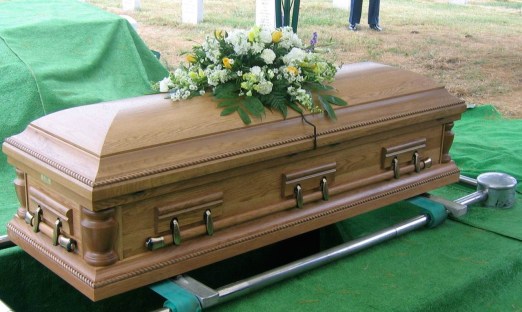
VALEDICTION TO A PASSING LOVE

casket-over-plot-cropped

I have not loved you well,
Nor have I loved you long.
So it is with no strong regret
I sing this parting song.

Your passage through my life
Has barely touched my soul,
So mourning will not weigh me down.
In fact, I feel quite whole.

Adieu, my love, adieu.
I bid you fond goodbye.
And at your grave, for memory’s sake,
A few tears I will cry.


~~~

‘Releasing the Creative Writer in You’-Lesson 1

releasing-the-creative-writer-icover-editedWelcome to the first of a series of lessons excerpted from my writing curriculum Releasing the Creative Writer in You.*  As I mentioned in the post last week introducing this series, I’m beginning with a couple articles I have posted previously — about three years ago. But they provide the best introduction to this series, and then we will proceed from there into other territory. I hope writers find these posts encouraging, comforting, enlightening, challenging, entertaining, or all of the above.

LESSON# 1: SO YOU WANT TO BE A WRITER?

Then DO IT!

Mystery author Agatha Christie once said, “The best time for planning a book is while you’re doing the dishes.” There’s a lot of wisdom in that statement.

You know, you don’t have to live an unusual life — or even a particularly exciting life — to be a great author. In fact you can live a very ordinary, chicken-frying, auto-repairing, laundry-washing, diaper-changing kind of life and still write books that will lift people out of the ordinary and into a place where imaginations rise to peak places, where new dreams are ignited, and where hope and faith bring victory into life’s struggles.

So pick up that pen, sit down to that computer keyboard, or start dictating into that recorder — whatever method works for you.  If you’re sure you want to write, start writing.

cartoon-quote-kingNow that you’ve started, you come to your next decision. Do you want to be an “occasional writer” – sharing an idea or a complaint only now and then – when the mood strikes you? Or do you want to be a “serious writer” – making writing one of your primary goals in life and, therefore, at the top of your list of priorities.? If your answer is the first option, then you are free to write or not, depending on how you feel on any particular day. However, even in that situation, the more you write, the better you will be at it when you feel it counts.

But if you are serious about writing – if you feel it is a necessary part of your feeling successful in your life – then you must live by a different law: You must commit to writing on a regular basis and stick with the program, regardless of how you feel on any particular day – or how anyone else feels about your work. Now that doesn’t mean you must be at your keyboard every single day from 6:00 to 8:00 a.m. or from 12:00 to 3:00 every afternoon. In this crazy world of ours, most of us have so many responsibilities and so many people and things needing our attention that there are just going to be some days when nothing goes according you plan.

But being serious does mean that writing gets a place of priority in your plans. If you really do want to write things that matter and that people will want to read and look forward to more of the same, then you do have to force yourself to develop some kind of schedule that gives the process of sitting down and writing more attention than you would give a hobby.

Unfortunately, this decision to be a serious writer must be made anew every few days. The “new” wears off after a while. The excitement turns to frustration after several days of reaching for just the right words and falling short time after time. The bright ideas seem to fade a little when the family and friends don’t find your first chapter exciting enough to want to listen to you talk about it for three hours non-stop. But if you really do want to write, you must make yourself write faithfully and regularly, regardless of the struggles involved. If you sit at your keyboard three hours and type onto the screen only one sentence worth keeping, you have accomplished writing a sentence that never existed before.

And therein lies the intrinsic value of writing. Everyone who writes becomes a creator. Once you have written an original piece – no matter how small or how large – you have created something that never before existed! That fact is not dependent upon whether anyone else reads it.  Or whether anyone else likes it if they do read it. The proof of your creativity does not rest in your work’s boasting a publisher’s imprint or finding a place on a bookstore shelf.  Get this straight: once you have written an original piece, you have created an entity that never before existed. I repeat that point because it is a powerful reality that very few writers recognize.

And another related fact that many unpublished writers seem to miss is that once you have created a written product, you are a writer. You’re not “going to be” a writer. You’re not a “would-be” writer. You’re not an “aspiring” writer. You are a writer. You are an author. You are a creator. When you do recognize these two truth, they will empower you to keep creating and to create even more effectively.

Also, once you recognize them, you will come to realize a third truth that is just as important: As a writer, you have a heavy responsibility to your readers. From the moment an individual picks up your work and reads the first sentence, you begin to influence that person – for good or evil. And the more of your work people read, the greater your influence grows.

So it is important to remember that, although you may feel you are writing for yourself, if you intend to allow your work to be read by anyone else at all, your words will have some kind of influence on that reader. There is a passage in the Bible, Luke 12:48, that says, “For unto whomsoever much is given, of him shall much be required.”

Although the statement is found within the pages of Scripture, it is a truth outside of those pages as well. It is a law of life for anyone committed to living responsibly. When we are endowed with the powerful gifts and talents that allow us to create through the written word, we then become accountable for what we do with that word.

One final thought: If you love to write, then you have a gift for writing. You may need to develop it, nurture it, and discipline it. Most writers have to work hard at those endeavors. But you need to recognize that if you genuinely love to write, then there is a gift inside that calls you to give yourself to it.

cartoon-quote-wrightThe goal of this course, then, is four-fold:

1. To acquaint students with the basic skills required to express themselves well through writing.

2.   To help students discover and use their innate talents and abilities for creative expression.

3. To acquaint students with the unique characteristics and requirements of multiple genres of literature and help them determine which genres best fit their individual writing strengths.

4. To help students develop a consciousness concerning their responsibility as writers and help them learn to use every tool at their command to fulfill that responsibility successfully.


* Releasing the Creative Writer in You, © 2013 by Sandra Pavloff Conner
–  –  –  –  –  –  –  –
To access other lessons in this series, click on “Creative Writing Class” in the navigation bar and scroll through to find the lessons you need.

~~~

Daily Post Prompt: Heard

`smiley-no-circle-black-wh`

I heard
The word ‘cinquain.’
It popped into my head.
And so I knew I had to write
Cinquain.


My motto is this: If you want to participate in a “Daily Post” prompt, but you have nothing of substance to write — write a cinquain. Now, it isn’t that I don’t feel cinquain can have substance. It’s more the fact that, for some reason (maybe because I like the form so much), I seem to be able to write a cinquain on almost any subject under the sun. In fact, that point makes me want to write one about — what else — the sun.

Sunshine
Poured out on me
Is like a lovely bath:
It cleanses and invigorates
My soul.


Okay. I’m done now. Here’s the link in case you want to have a go at today’s prompt.


Introducing ‘Ole Bill’


cartoon-writer-yell-spikey-hair-2You all know — well, at least all my readers who have been around a while know — how much I love to introduce new bloggers and channel visits their way. Today I’m really happy to tell you about a blog called “Pen In Hand.”  It’s hosted by a delightful man and good friend named Bill Murphy (hence the “Ole Bill” handle in his Internet address).  And let me hasten to add that I’m not the one who started referring to him as “Ole Bill.” That’s his own choice for handles, and it just about sums up his fun personality.
Bill and his wife hail from Mississippi, USA, but they now live closer to me in Illinois. He has written most of his life — and is quite good at it — but only recently decided to jump into Cyberspace with his talent. He writes about all kinds of things — both fiction and non-fiction — and he often draws on his real-life personal experiences for material.

If you enjoy sitting back, propping up your feet, and just enjoying life, you’ll like visiting Bill’s site. Just follow the link in the blog title above and pay him a visit. Be sure and tell him I sent you.


~~~

‘Releasing the Creative Writer in You’- Instruction in the Craft of Writing

releasing-the-creative-writer-in-you-coverToday’s prompt from the Daily Post gives me the perfect opportunity to introduce a new series of articles I’ll be offering on this site. I’ve taught creative writing for years, and I am currently gearing up to begin an online instructional course (via e-mail) that I can offer to people who want to take my writing courses but who don’t live within commuting distance. While preparing for that online project, I decided to offer a series of instructional articles here on my website as well.

Of course, the articles here won’t include any editing or feedback for people who do the exercises or write stories connected with the instruction. That service will be part of the actual online e-mail course only. But I thought there might be several readers who would like to glean from the information, suggestions, and experience that I can share from this venue.

The material will come primarily from my writing curriculum Releasing the Creative Writer in You (2013, St. Ellen Press). Some articles will simply be encouragement in certain areas, but many of them will offer specific suggestions that can lead us to keep making our writing better.

I know for certain that I am a much better writer today than I was 10 years ago. In fact, there’s such a difference that I rarely go back and read any of the novels I wrote the first couple years of my fiction writing because I always want to change way too many things, and I’m frustrated because the books are already in publication. But my improvement in writing was primarily the result of writing.  As simple as that sounds, it’s the truth. The more we write — and the more we challenge ourselves to stretch out into new territory and experiment in areas beyond our comfort zones — the better we become at our craft.

So I’ll be posting some segments of my curriculum on here once a week for several weeks. Some of my readers are brand new writers, who can glean something useful from all of the posts. However, I know many of you will already be very familiar with the skills and techniques I’ll be discussing. Hopefully, even for the very experienced, the articles will still give a lift and maybe a new surge of energy. The first couple of posts will be articles that I’ve posted in the past, but they are the best way to introduce the curriculum, so I’ll begin with them.

My plan is to post the instructional articles on Saturdays. I hope they are a source of real help to any readers who are just beginning to delve into their own creativity and writing skills, and an encouragement to several of you out there who already enjoy practicing and maturing your craft.

I love teaching my creative writing classes, and I’m excited about sharing more of that same material here.


Prompt Nights – Glimpse Into the World of Edgar Allen Poe

This week on “Prompt Nights” Sanaa has challenged us to get our inspiration from Edgar Allen Poe. I’m super pressed with my regular teaching this week, so I don’t have time to write a brand new piece, but Sanaa assures us that previously written work is welcome. So since the theme immediately brought to mind a story I wrote some time ago — and since it’s a story I think even Ol’ Edgar himself would appreciate — I’ll share it this week. (Those of you who have read it previously have my permission to skip it this time.)

THE FOG

LIGHTHOUSE WITH FOG
The fog’s especially heavy tonight. I can’t see three feet past the door, so I guess it’s a good time to stay inside and write this letter. The lighthouse on the island has sounded the foghorn every two minutes for hours now.

I haven’t been back to the island since that night. In some ways, I wish I had moved away when you did. I’m sure it’s a lot easier on you not having to look out across the water and see that island every day. I know the spot is overgrown now, but I can still pick it out as clearly as if we’d left a marker. And hearing that blasted horn blow every time the fog moves in really gets on my nerves.

Tonight it’s as thick out there as it was the night we buried him. I often wonder what would have happened if the fog had lifted in time for someone to see us digging the grave. But, of course, that wasn’t likely to happen. Once the dratted stuff moves in, it clings to us like a shroud for the whole night.

I wish you were sitting here with me, sharing a bottle of our favorite whiskey. I hate being alone with my thoughts. I’m always chilled and shaky when there’s fog. And it feels as if something’s choking me. I wonder if that’s how he felt as we tightened that rope around his neck until he stopped breathing.

I sure wish you were here with me. I hate fog.

~~~

Saturday Mix 1/14/17 – ‘Last-Minute Decisions’

This week is the first time I’ve taken part in the “Mindlovesmisery” writing challenges. This week we are to write a story in 100 words or less. The host site offered a picture for inspiration, but I put that aside because the idea I wanted to work with didn’t fit that particular picture. To take part you can visit here.


wedding-cakeLAST-MINUTE DECISIONS

The auditorium was full of guests, the organist waiting for her cue. The best man stood at the door, ready to enter as soon as the groom came back inside. He’d just stepped out for some air. Where the heck was he?

Suddenly Carter hurried into the room, passed by his best man, and entered the auditorium. Looking at the guests, he took a deep breath and spoke:

“Sorry folks. Seems my bride eloped with someone else.” He laughed. “She took the car I’d arranged for my own last-minute escape.”


~~~

Prompt Nights -1/6/17

This week’s prompt: ‘Tomorrow when the sun will rise, who knows what the tide could bring.’

brendas-ocean-side-cropped

TREASURE FROM THE TIDE

Each morning eight-year-old Aran, his mahogany skin warmed by the sun, trekked to the shore to greet his best friend. The brilliant blue of the water delighted him, and as the waves danced and frolicked on their way to the beach, Aran waited eagerly for them to spill onto the sand at his feet so that he could dance with them.

After splashing in the tide to his heart’s content, he then hurried to the small cave set into the rocky cliff overlooking the beach, where he kept his stash of sea-polished rocks. Daily, he scoured the beach, collecting new ones, always anticipating some special treasure that he was sure, one day, would be deposited on this tiny island by this best of friends, the ocean.

Today he’d found that gift. But what was it? Coral? It didn’t feel like coral. It wasn’t quite hard enough. He examined it closely, his nimble fingers tracing the scores of tiny hollows that formed a pattern and offered a mystery.

He carried it home at lunch time to show his mom and Grandfather. “What is it, Poppy?” he’d asked Grandfather. He knew Poppy had traveled to distant lands many years ago, and he would surely know what this beautiful treasure was.

“It’s a wasps’ nest,” was the rep!y, and then, because the island had no wasps, Poppy had to explain about the insects and how they built their homes.

Fascinated by Poppy’s words, Aran held the delicate structure close. Here it was! His anticipated treasure from another world! His connection with people and adventures that were beyond his ocean! He would treasure this gift … keep it safe … and some day … some day he would set off from this tiny island that had been his home for eight years, and – carried in the arms of his best friend – he would discover the rest of the world for himself.

~~~

Adoption – flash fiction

I wrote this story almost two years ago for a flash-fiction writing challenge, and I’m not sure why it’s been on my mind and heart the past few days. But it has been, and I figured that was a good reason to give it another few minutes in the spotlight. 

small-brown-dog-pub-dom-raincarnation40
raincarnation40 / pixabay

Hair bristled on my neck. I was bein’ followed. I whirled ’round and found Zanzibar ploddin’ behind me, head down, tail draggin’.

“Hey, boy,” I said, squattin’ down. “Where’s ol’ Toby?”

Zanzibar whined, licked my hand, whined again. Somethin’ was wrong. Zanzibar and that ol’ hobo were thicker’n fam’ly. They came through here first week of ever month. Stayed ’till the coal train came through and stopped at the crossin’. But this weren’t the first week. Where was ol’ Toby?

I hunted three days for Toby; no luck. Reckon that lung problem finally got ‘im. Zanzibar’s tail’s still draggin’, and he won’t let me out of ‘is sight. Reckon I got me a dog.

~~~

Daily Post Prompt: Panoply

IRKSOME ASSIGNMENT

MAN'S FACE, FINGER ON CHINI must write a post using “panoply.”
But I’m stuck and a little confused.
For it isn’t a world I use commonly,
For with snobb’ry I feel it’s infused.

I did look up its definition
Just to make sure I wasn’t quite wrong.
Now I’m even more sure it’s pretentious,
For it’s synonym list is quite long.

Now, I’m likely to use the word “trappings,”
Or “collection,” or even “array.”
And in reference to a suit of armor,
Well – “armor” is just what I’d say.

I find this prompt most aggravating.
It offers no useful rewards.
To describe just how irksome I find it
Takes a literal panoply of words.


To take part in the prompt, visit Daily Post.


~


Cinquain for the Tired Poet

man-dreaming-writing-blueI’m tired
But want to write.
Eyelids are drooping now.
But nobly I choose to pursue
My craft.

Let’s see:
What theme to use?
My sleepy brain says, “Well,
It must be something simple with
Short plot.”

I know:
I’ll write a verse.
I’ll keep it short and sweet,
With twenty-two nice syllables:
Cinquain.


~~~

Seven Reasons I Love Blogging

cartoon-writer-pink-spikey-hair-2


1) Meeting people and making friends from around the world.

2) Taking part in all kinds of writing challenges that force me to get out of my comfort zone and stretch myself as a writer.

3) Opportunities to share my thoughts and beliefs with people I’d never have a chance to communicate with through any other medium.

4) Communicating with other extraordinarily creative people. Creativity begets creativity, so my own creative gifts are strengthened and stretched by that communication.

5) Opportunities to present some of my work and receive honest feedback from my peers.

6) Opportunities to lift and lighten someone else’s day by positive things I’m able to share.

7) Opportunities to make myself available to other writers and artists who would like to draw from my years of experience in the field of journalism and literature.


I’d be delighted to hear from some of the rest of you about why you love blogging. Just post your thoughts in the “Comments” section below — or if you want to write a whole post on your own site, you can share the link to it.


~~~