`

To participate, visit here.
^^^

`
One of my favorite coffees is Maxwell House. I also really enjoy Folger’s and one or two other brands. But my family and I used Maxwell House regularly for years. One of my favorite places to live has always been Nashville, Tennessee, and, interestingly enough, Maxwell House coffee was born there.
A colonel by the name of John Overton, Jr. built a magnificent hotel in Nashville in 1869 and named it in honor of his wife, whose maiden name was Maxwell. Over the years, until it was destroyed by fire in 1961, that hotel hosted seven different Presidents of the U. S. , as well as many other famous persons.
About 23 years after the Maxwell House opened, a man by the name of Joel Owsley Cheek came to the Maxwell House to offer the owners his special-blend coffee. Joel Cheek had moved to Nashville from Kentucky, worked as a salesman for a wholesale grocery company, developed a serious interest in coffee, and eventually established his own coffee company and developed his own special blends. Believing he had a blend that was perfect for use at the Maxwell House Hotel, he offered them the opportunity to purchase from him.
The Hotel contracted to sell the coffee on trial for a period of time, and during that time so many of the visitors to the Maxwell House raved about the coffee that it became a house feature and gained a wide reputation. Cheek named it after the hotel. President Theodore Roosevelt is quoted as complimenting the coffee during his visit to the hotel in 1907, and it is he who is credited with the statement “It’s good to the last drop.” That simple sentence became the advertising slogan for Maxwell House Coffee for many years.
And, of course, the Maxwell House coffee, as a product of Cheek’s coffee company, went on to be sold nationwide and even further. Cheek acquired a partner named Neal, and eventually the Cheek Neal company was bought out by another company, which changed the name to Maxwell House Products Corporation (later changing to General Foods Corporation).
The Maxwell House Hotel now has a brand new home in Nashville (Millennium Maxwell House, Nashville), but the coffee is still the same great-tasting beverage it has always been. And it really is “good to the last drop.”
Now, just for the fun of it, I’ve thrown in two very old Maxwell House Coffee TV commercials. (And don’t forget to share your own thoughts on coffee in a post on your blog, then leave us the link in a comment box below.)
~~~
`

===
`
 “I don’t know what to do,” Neville groaned, rubbing his hands roughly over his face. Then he pushed his laptop out of the way and leaned both elbows onto the coffeehouse table, propping his chin in his hands.
“What’s wrong?” Clarence, the waiter bussing the table next to Neville’s, turned to question him
Neville looked up, startled. “Oh … blast … I didn’t realize I had said that out loud. Sorry,” he added looking sheepishly around the room to see if other customers had heard. He was relieved to see that Elixir of Life Coffeehouse was having one of its quieter days.
“No problem,” Clarence answered and walked over to Neville’s table. “Can I get you a refill?”
“Yeah, that would be great,” Neville answered, handing the boy his cup. “It’s been a rough writing day.”
The young man returned in record time with Neville’s refill and stayed to talk a moment. “Do you have what they call writer’s block?”
“No.” Neville shook his head and continued. “No, Clarence. This isn’t writer’s block. In fact, I almost wish I did have that dreaded condition. My problem isn’t that I can’t get the story to move along. This story is moving along at an incredible pace. The problem is that it’s writing itself, and my original plot is unraveling as fast as I can put my fingers to the keys.”
“You mean you’re not in control of your own story?” Clarence looked at Neville as if he had lost his mind — just a little. And that made Neville laugh.
“Don’t worry, my boy,” he said. “I’ve not gone bonkers yet. And … thanks for making me laugh. It helps. But to answer your question, no, I’m not in control of my own story.”
“Well, how does that happen?” Clarence asked, really into this new information he was being exposed to.
“Well it’s not too unusual for a writer to get into a novel and find that one of his characters seems to gravitate in a direction other than what he had originally planned — or that the story seems to be flowing toward an ending that’s different from what he jotted down in his outline. But what’s happening in my story is different.”
“How?”
Neville shook his head and sighed. “I’m not sure how it’s happened, but every character seems to be taking on a brand new identity and making his own decisions. The guy I had pegged as the hero has suddenly become the villain, and the woman he loves is rapidly developing feelings for his best friend — which means he will probably end up killing his best friend — he’s already entertained the idea — and maybe even offing the woman as well.”
“But does it matter who ends up being the villain and the hero — I mean — as long as you have one of each, it’ll come out even, right?”
Neville chuckled. “Well, it’s not quite that easy. My publisher assigned me a contract to do a specific kind of story. One that will be a believable sequel to my last three novels. They were moneymakers, and I’d hate to mess up a record like that. I spent the money I made on them, and now I need more.” He rubbed his face agitatedly again. “Besides that, I’d be breaking my contract if I didn’t give them what I guaranteed.”
“MmMmm, you do have a problem,” Clarence said, so engulfed in the conversation now that he just sat right down at the table beside Neville. They both sat in silence for a moment, and then Clarence asked, “Well, why don’t you just delete all that part that changed and go back to your first chapter and start over on the story you intended to write. That would take care of it wouldn’t it?”
“Well, that’s the other problem. I’ve totally lost track of the story I intended to write … and besides ….” He paused and glanced off to the side, lost in thought for a long moment. Clarence waited, figuring Neville was trying to work out a plan.
Suddenly Neville looked back at Clarence with a smile on his face. He looked serene rather than agitated, and Clarence was a little confused. “You figure something out? How to stop this runaway story?”
“Nope,” Neville said, grinning wider. “I’m not going to stop this story, Clarence.”
“Huh?”
Neville reached over and rested his hand on Clarence’s shoulder. “Clarence, my boy, I’ve made a decision. I’m going to give this story my whole heart and soul and let it lead me wherever it wants to go.”
“But what about your contract and all?”
“Blast the contract,” Neville said, beginning to close up his laptop and slip his notes into his briefcase. “If that publisher can’t see the truth about the value of this story, then he can sue me.”
“But –”
“No more ‘but’s‘ my boy,” Neville answered, rising from his chair, laptop under his arm. “This is the best damn story I’ve ever written in my life, and I’ve just decided I’m free enough to give my creativity its own head and let it take me to my destiny.”
He slapped down his last five dollar bill as a tip for Clarence and headed out the door, whistling.
To participate visit Daily Post.
+++

I’m normally not a big potato chip eater. When I was a teenager, I could eat chips by the bag full, but in my adult years, I only rarely have some with a sandwich. However, occasionally — very occasionally, thank God — I get sort of a craving for them, and I’ll go out and buy 2 or 3 bags — or cans, depending on the brand.
Unfortunately, this past week I discovered Lays’ Southern Biscuits & Gravy potato chips. Evidently they are a new flavor that is not really all that new. They’ve been on the market since 2015, but I didn’t know it. I guess that was a year that I didn’t have any particular craving for chips, because I never even noticed them. Now I can’t believe I ever lived without them.
I don’t know what it is for sure that makes them sooooooo gooooood I can’t quit eating them. The flavor is terrific. And, yes, they do taste like sausage biscuits and gravy. But when I eat biscuits and gravy, I don’t have any trouble stopping after two biscuits. Not so with these chips. I literally have to FORCE myself to close the bag and put it away. Then I end up going back to it before the day’s over.
A couple years ago, at Christmas time, Pringles came out with a new flavor chip called Pecan Pie. Some of my family and friends turned their noses up at the thought, but since I really like the combination of sweet and salty, I decided I’d like to try them. OHHHH MY GOODNESS! They were delicious! So, naturally, I bought several cans. But I did stop eating those chips fairly easily — because they were seasonal and left the market after January. They came back again during this last Christmas season though, and I lost count of the cans I bought.
Oh, well, I’m sure that since I hadn’t seen these biscuits and gravy chips before now, they will not be on the store shelves all the time either. So I’ll just enjoy them while I can and TRY not to feel too guilty. One thing that helps is having all my work online to do. When you have to type on a keyboard almost all day, it’s really hard to do if your fingers are greasy and salty from eating potato chips. So I do have good reason to put the bag away. And I will … well … after just one more … and maybe just one more ….
~~~
`
 Did you know that you can learn how to do absolutely anything on YouTube? Whether you want to learn how to operate the newest technological device, bake a cake, build a website, fix a toilet stool, make a podcast, correct a grammar problem, skin a beaver, or find Jesus Christ — instruction is at your fingertips on YouTube. What a revolution in education.
Of course, we do have to be sensible enough to distinguish what’s genuine instruction from some “nit-wit’s” bid for attention, but that’s not too hard to do — especially if you watch more than one video on the same subject. So if you’re in need of instruction and haven’t checked out YouTube, go for it. You’ll be surprised at how much you can learn to do for free. I continually stand amazed at — and grateful for — such technology.
Anybody seen my beaver-skinning knife?????????
~~~

Today
Is Saturday.
It ends the current week.
Sunday brings a new beginning:
Start fresh.
`

+++
`
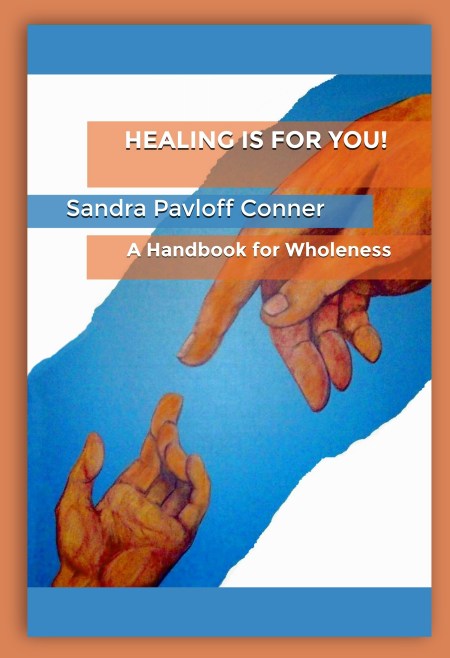
I have much to share about today’s Daily Post prompt: heal. And the best way I know to do that is to share two links. The first is a video reading of Chapter One of my book Healing Is For You! I hope it encourages and lifts all my readers. The second link is to the Amazon page where you can find the book in paperback or digital, in case you’d like your own copy.
Now, have a blessed and healthy day!
You can click on the book to go to the Amazon store and purchase a copy.
+++

I normally prefer a mug for coffee.
Although I’ve drunk my share in Styrofoam.
And when I’m traveling for work or pleasure,
I take a travel cup with lid from home.
A cup that’s big and roomy has its assets.
It lets me warm my hands around it’s bowl.
Unfortunately, it also has its drawbacks.
For long before I’ve finished, coffee’s cold.
Of course, that’s not a problem in this tech world.
For microwaves are everywhere these days.
And I just pop my cup inside to warm it.
Then sipping merrily, go on my way.
I’ll drink my brew from old-time percolator,
Or from a modern Keurig brewing pot,
Vending machines and fancy coffee houses,
And my drip coffee maker hits the spot.
I’m not too hard to please, and I’m a purist,
Just black with nothing added that’s bizarre.
Just please don’t bring me Starbucks or Gervalia,
And, for heaven’s sake, no instant from a jar!
Wouldn't you like to share your love for coffee with us? Pictures, poetry, prose, quotes .... whatever your favorite form of expression. Post on your own site and then hop over here and paste the link into a comment window below.
+++
+++
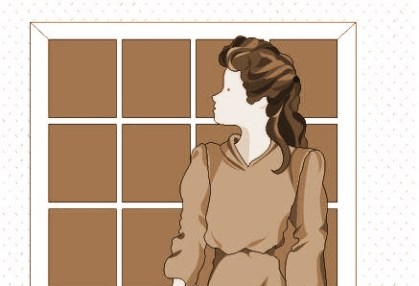
THE CROOKED CUSP OF LOVE
I was just on the cusp of deciding
When everything went so awry.
How could they be so hateful to me?
I can’t do a thing now but cry.
I’d dated Sebastian on Mondays,
And Thursdays were his days as well.
Then Trevor had Wednesdays and Fridays,
And Raymond thought weekends were swell.
We’d gone along happily – I thought,
Until they demanded I choose.
Well, you can imagine my chagrin
At having them give me such news.
I told them I’d have to have some time
To make a decision so hard.
But every time I thought I’d made one,
I couldn’t quite settle my heart.
It’s been only six months – this process;
Each day I did several hours spend.
Now I’m just on the cusp of decision,
But they’ve run off and married my friends!
+++
`
+++
 I’ll be posting my creative writing lessons only once a month now, on the first Saturday. Can you believe this is already the first day of April? (NO FOOLIN’). To access other lessons in this series, click on “Creative Writing Class” in the navigation bar and scroll through to find the lessons you need.
LESSON 7: AVOIDING DRAGGY DETAILS AND CHOPPY SENTENCES
A. DRAGGY DETAILS
When telling a story, you have to keep the dialogue and action moving at a good pace to hold the reader’s attention, and your details need to be specific things that make the scene more alive or more colorful.
Think about this example: If I were telling you about my date on Friday night, and I said, “We walked into the restaurant, and the waiter led us to a table at the back of the room. Then we picked up the menus and took some time looking over the possibilities. When the waiter came back with our drinks, we gave him our order,” you would think, “Well, of course, you walked to the table and sat down, and, of course, you looked at the menu and then gave the waiter your order.”
What I need to do — if I’m going to make my story interesting — is use only details that add something the average reader would not automatically put into the scene himself. So I could say something like “We had a great table, right by the window so that we could look out on the river. The spicy aromas wafting from the kitchen increased our appetites, and when the menu came, we both got so absorbed in the huge variety of entrees that it took us fifteen minutes to make a decision. But our waiter was extremely patient, and we finally decided on fruit cocktail, Caesar salads, and Porter House steaks.”
But WHY are you putting this paragraph into the story in the first place? Ask yourself if these details are truly IMPORTANT to your story. If the answer is ‘no,’ then LEAVE THEM OUT. If the answer is yes, be sure the reader can easily make the connection.
One other alternative to that scene could be something like this scene, which emphasizes a totally different aspect of the evening, and which has a specific reason for being in the story: “The atmosphere in the restaurant seemed set for romance. From the time we sat down at the table, Roger and I both had trouble deciding on our choices for entrees because we just couldn’t seem to keep our eyes off each other. We finally managed to order, but as soon as the waiter stepped away from the table, Roger reached for my hand, and we were still holding hands when the first course arrived.” This scene is building on a relationship between characters and is simply using the meal as a setting.
Remember not to waste words telling your reader anything that he will already know. If you have a scene that is so very ordinary the reader could write it for you – if there is nothing really special, unusual, or super important to the plot in it – LEAVE IT OUT. You can refer to it having happened without describing it.
For example: If it’s important to my story to let the reader know that Roger and I went out Friday night, then I can always find a place to toss in that information. I can say to a friend, “When Roger and I went out Friday night, we tried a new restaurant.” OR “Roger and I went out again Friday night, and I can tell that our relationship is getting serious.” But I haven’t bored my reader with the details of an “ordinary” date.
Here’s another example of a scene that is too ordinary.
‘When the time came for the ceremony to begin, Abby’s father took her arm and walked her down the aisle. He turned her over to John, and as the bride and groom smiled at each other, the minister began the ceremony. Abby and John said their vows solemnly and then exchanged rings.”
Since everyone reading your book knows exactly what an “ordinary” wedding ceremony is like, they will be bored reading this. If there are several passages like that in your book, the chances are good the the reader will put it down before he’s done. So – again – if you do not have anything going on that the reader will not automatically assume anyway – just refer to it obliquely in order the let the reader know it happened.
However, if you want to make a point of how emotional the bride and groom were during the ceremony, then you may have a reason to give more details, and you can say something like this: “Abby was so excited that her knees wobbled as she took hold of her father’s arm to walk down the aisle, but he patted her hand and smiled reassuringly, as he had done all through her childhood. This moment would be her last opportunity to interact with her father as merely his child. In a few more minutes, she would be another man’s wife, and her life would never be the same. As she and John spoke their vows, they both had tears in their eyes, and their hands shook a little when they exchanged rings. But they weren’t nervous or afraid — just excited about living out this dream together.”
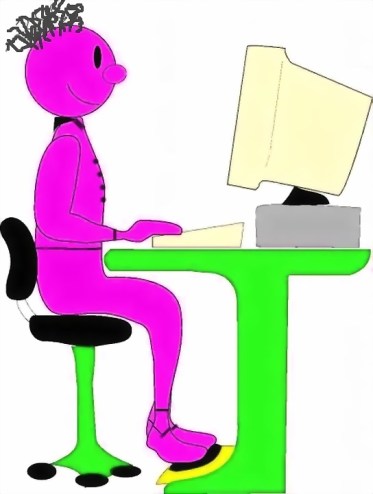
B. SHORT, CHOPPY SENTENCES
The best way to avoid short, choppy sentences is to make sure you use good variety. Make it a point to use some compound or complex sentences. Both of these are explained below, with examples of each.
The best writing always uses great variety in sentence structure and length. Most readers expect to feel a sort of ebb and flow in the way thoughts are expressed. It’s the way we think and the way we talk to each other. The most important thing to remember when deciding what kind of sentence to use is that emotions and/or thoughts cause actions – and actions cause thoughts and/or emotions. You never do or say anything for no reason, and neither do your characters. So you want the reader to understand the connections and relationships between thoughts, feelings, reasons, actions, etc. Tying thoughts together into some compound and complex sentences helps the reader do that. So, keep the writing interesting by using all three kinds of sentences to their best advantage.
Here are some examples of poor sentence choices and some corrections for those problems:
Very Poor Grammar: Mary stopped at the store to get some milk, she bought lettuce and tomatoes too. (This is a run-on sentence because it has 2 separate, complete thoughts, but only a comma between them.)
Slightly Better: Mary stopped at the store to get some milk. She bought lettuce and tomatoes too. (This example is 2 choppy sentences. Much better than the run-on — and they are okay once in a while — but you don’t want this pattern too often.)
Better: Mary stopped at the store to get some milk, and she bought lettuce and tomatoes too. (Compound sentence because it connects 2 complete thoughts by using the conjunctions ‘and, but, or, nor, or yet.’ When using those conjunctions, you DO use the comma as well – before the conjunction. You just never use the comma alone to connect 2 complete thoughts.)
Best: Mary stopped at the store to get some milk, and while she was there anyway, she picked up lettuce and tomatoes too.
OR: Since Mary had to stop at the store for some milk, she decided to get lettuce and tomatoes too.
(These last 2 sentences are Complex sentences, which use one completely independent clause (which could stand alone as a sentence) and one clause that cannot stand alone because it is dependent on the other clause to make sense. In both of these, the dependent clause tells the reader the reason Mary bought the extra food. Also, while giving that reason, the clause takes care of any other information that the reader needs, and that information doesn’t have to be put into its own short sentence.)
Remember, you want a variety. There are times when three or four short, choppy sentences can be very effective if you need a specific tone or mood in the scene, but make sure short, choppy, staccato is the feel you want your reader to have before using very many sentences like that.
Mainly, remember that you want the reader to understand the connections and relationships between thoughts, feelings, reasons, actions, etc. Tying thoughts together into some compound and complex sentences helps the reader do that.
Example:
Choppy: Roger was afraid. He did not want to let it show. He was the first to volunteer for the rescue mission.
Much better: Roger was afraid, but he did not want to let it show, so he made sure he was the first to volunteer for the rescue mission.
OR
Because Roger wanted to hide his fear, he made himself sign up as the first volunteer for the rescue mission. (This example also cuts out words, and doesn’t leave out anything important. If you tell the reader Roger wants to hide his fear, then the reader knows Roger’s afraid, and you don’t have to say that.)
Question: Is there such a thing as a sentence that is too long? Yes, if you have included so much information that the reader could get confused – or if reading the sentence aloud causes the reader to run out of breath – then it may be too long. But that can be fixed as well, simply by taking one portion of the information and putting it into a separate sentence. There is no simple way to help any writer decide when he needs to go longer or shorter. But the more the writer observes real-live conversations, and the more he reads his work aloud, the better he will get at making those decisions.
* Releasing the Creative Writer in You, © 2013 by Sandra Pavloff Conner
+++

Sandy and Mandy were identical twins. Green-eyed beauties with dark brown hair, a smattering of freckles, and charming dispositions. From the day of their birth, mom had dressed them in identical outfits. When they started school, she bought them identical backpacks, and pulled their hair into identical pony tails.
She bragged to everyone about how “exactly alike” they were and insisted they do identical chores and play identical games at the same time. She sent them to Gramma’s farm together every year.
And every year, wearing blue jeans faded to exactly the same shade, with pony tails riding at exactly the same height and identical green eyes gazing into the peaceful pond at exactly the same time, they stood on the old wooden bridge and dreamed — totally separate, independent dreams.
And Mom couldn’t do anything about it
~~~

 The Happy Wordcrafter