The Sky Is Falling???


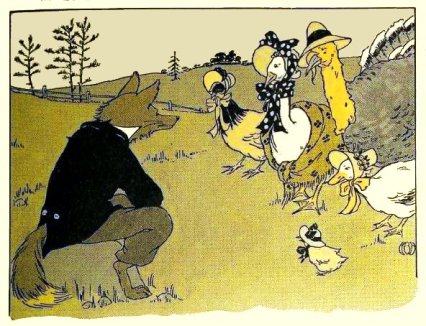
chicken-little-illustration-pd
Illustration for “Chicken Little” during early 1900’s.

I think of Chicken Little
When I hear the world is doomed.
It would seem the sky is falling,
And there’s nothing left but gloom.

Disaster by disaster,
It’s reported in the news,
And mega-media stars now
Wailing out their liberal blues.

Seems it’s all the fault of one man
No one thought could ever be
Sitting in the oval office
Working hard to keep us free.

Life was out of balance
And it was an ugly sight:
Illegals, Gays, and Muslims
Were the only ones with rights.

Now suddenly we’re sitting
At a table that’s been turned,
And once again the average guy
Can get the rights he’s earned.

The honest business owner
Whose invested all he’s got
Again can have the freedom
To serve customers or not.

And the Christian workers
Who’ve been faithful employees
Have the same rights now as Muslims
For religious liberties.

And little helpless babies
Resting in their mother’s womb
Now have someone voting
That the womb is not a tomb.

Liberals, they are crying,
Running hateful, wild, and scared.
Chicken Littles all,
Warning that we should beware:

Running through the streets
Crying over what is past.
For them the sky is falling.
They have lost control at last.

~~~

How Do I Love Thee? I Don’t Have a Clue

question-faceHow do I love thee?
Frankly, I don’t know.
Your aggravating habits are extreme.
You wear on my patience,
Need forgiveness daily,
Sometimes, I’d like to pull my hair and scream.

How do I love thee?
It is a mystery.
That I should feel the least bit of romance.
Each time I’m with you
I find myself on edge
And often have to look at you askance.

Oh, how do I love thee?
Well, maybe I do not.
It just now dawned on me that this is so.
I don’t really love thee.
Whew! what a relief.
I think I’ll simply pack my bags and go.


~~~

Daily Post Prompt: I Have a Lovely Rhythm in My Bones

`

I have a lovely rhythm in my bones.
It’s sort of soft and groovy, and beguiling.
I’m in the mood for waltzing over stones,
And even if I fell, I’d come up smiling.

It’s now becoming kind of quick and quirky –
This rhythm – as it runs throughout my soul.
My feet are tapping now – a little jerky;
And there’s no stopping me; I’m on a roll.

I got up feeling tired and kind of lazy,
But then I thought about the guy I love.
That’s all it took to jump-start this great rhythm;
It’s put me in top form and in the groove.


To participate in the prompt visit Daily Post.

~~~

‘Releasing the Creative Writer in You’ – Lesson 2

To access other lessons in this series, click on “Creative Writing Class” in the navigation bar and scroll through to find the lessons you need.

releasing-the-creative-writer-icover-edited

LESSON # 2: IN THE BEGINNING

Introductory Thoughts, Answers to Frequently Asked Questions, And Fun Ideas to Get You Started

`

QUESTION: Where Do Good Writing Ideas Come From?

Successful Writing Rule # 1: If you are a writer, you’re full of ideas.

Ideas come from a myriad of directions, but two of the most common places – two that you can always depend on – are the following:

A. We have a storehouse of ideas inside us. Sometimes they just need a trigger in order to cause those ideas to “go off” enough to ignite a story. What are the subjects that you care about in the various aspects of your life? What do you feel passionate about? What do you like to discuss with friends or colleagues? What do you argue about most ardently? What makes you happy? What makes you sad?

The answers to all of these personal questions can be the key to a successful writing venture – whether fiction or non-fiction.

Do not accept the position of a “would-be” writer who feels he has to run around and ask other people for ideas because he has none of his own. The very idea that you have no ideas is a deception. So your first rule in fulfilling your writing goals is to recognize that you do, indeed, have ideas of your own, and if they are not rising to the surface, start digging as deeply as necessary until you find them.

B. We can see ideas and themes for writing all around us in life itself. How can we be sure we don’t miss them? Simply make a habit of deliberately allowing your curiosity and your imagination to exist unfettered. When your curiosity is free, and it latches onto something, then let your imagination go to work on that subject.

Author/Editor Micheal Seidman discusses this subject in his book Fiction: The Art and Craft of Writing and Getting Published (p. 20., Pomegranate Press, Ltd. ).  Let me pause here to say that I highly recommend this book, as well as other works by Mr. Seidman. He is an excellent instructor in the field of writing and marketing what we write.

In that book, he shares his belief that often we can find ideas most easily when we are not looking for them. He shares about an army lieutenant who trained Seidman’s unit in the expert use of rifles – particularly regarding sniper fire. Seidman quotes his lieutenant as saying, “Don’t stare directly in front of you; you won’t see anything … or you’ll see things that aren’t there. Either is deadly. What you do, gentlemen, is watch the horizon … use your peripheral vision. That’s how you’ll see the movement you have to be aware of.” Seidman often tells writing students of his own that the advice from his lieutenant can be applied to the writer’s craft as well.

And most writers would agree. Those of us who follow the advice proffered by the lieutenant often find that it is a great help in becoming an expert with our own weapon – the pen.

cartoon-writer-with-nin-quoteWhen you get up every morning, get up as a writer. Intentionally go through your day seeking to learn something you did not know previously – or learn more about a subject you thought you did know. Be open and expectant. Allow yourself to ask questions concerning the things you see people do or the things you hear them say. You will not always be in a position to ask the questions of others. In fact, only rarely will that plan work. But you can search your own conscious and subconscious mind for answers.

Apply the principle to events as well as people. When you find yourself involved in an event, ask yourself how and why things are happening as they are – or what would happen if one aspect of the event were opposite of what is taking place in reality. Once you learn to operate this way on a regular basis, you will be surprised at all the questions you will come up with, as well as some of the answers you receive. And remember, you are not necessarily stuck with the “real” answers. Often they are a great catalyst for a story or a non-fiction piece. But just as often the unexpected ideas that your own imagination comes up with in answer to those questions will be just as effective.

And always keep in mind that there are some basic questions that every generation has asked, since the beginning of time – and there are as many different answers as there have been generations. But it’s those questions – the ones that apply to every human being just because he’s a human being – that have a universality about them. And, as a result, those very questions often provide great subject matter for the stories we write.

Author Wally Lamb quoted one of his former writing teachers during an interview for Writer’s Digest recently. His teacher said, “You’re never going to tell an original story. … The world is a very old place and all the stories that matter to people have been told over and over.” (Writer’s Digest, March/April, 2014, p.43). The key to your success, dear writer, is to find a fresh way to tell those same stories. But you must begin by asking the same questions that caused them to be written in previous generations.

A word of caution: Bear in mind that writing a story with a universal theme does not mean that every person who reads your work will like it. He will not. And that is a good thing. If everyone liked everything that every great writer published, the human race would be nothing but a mass of confused, undecided, and uncommitted people. You want to live in a world – and write for a world – that is made up of people who are real individuals. They have ideologies, prejudices, and emotional attachments that differ astronomically. Some of them will find your writing exactly to their taste because it agrees with their ideologies, touches their emotional roots, and satisfies their longings. Those who do not find your work to their liking will like someone else’s work – and that simple fact, dear writers, is what makes the literary world – and the literary market – go  ’round.

Successful Writing Rule # 2: Never throw anything away.

If you write a sentence that records how you feel about one brief conversation, keep it. If you try to write a short story for an assignment, but it just won’t fit into the assignment requirements, don’t wad it up and toss it into the trash. That currently disqualified story may be the root of your finest novel some day. Create a file and keep everything you write that came from your own creativity. In fact, you can also keep quotes from many other writers as well, because they may spark ideas in the future. Remember, of course, that you are not allowed to “borrow” their ideas – just let them spark brand new ideas in you.

Successful Writing Rule # 3: Make frequent use of writing exercises.

Below are some examples of successful writing exercises that generations of writers have found helpful:

A. This first exercise is similar to the process followed in some party games, but it is also a never-fail story starter. Make yourself a collection of 1, 2 or 3-word phrases, single sentences, or longer specifically detailed single sentences. (If you have opportunity to have someone else create the lists, that will be even more challenging.) Write them in a tablet you do not use frequently, or, better yet, write each one on a separate piece of paper, fold it, and put it in a box or jar, or sandwich bag – whatever your style. When in need of an exercise for your creativity, draw one folded suggestion from the collection and sit down at your computer (or notebook) and begin writing. Write non-stop for a pre-specified time (5-15 minutes). Do not stop to edit or even think for any significant amount of time. This is a time when you are letting the creativity in your subconscious have its way without hindrance. (If, after the specified minutes, you find you’re onto a good thing, just keep writing.)

The really important thing about this kind of exercise is that you are totally disregarding all the “rules” of writing. You’re not interested in grammar, syntax, or even organization. And because you are free from all those restraints, your imagination is totally unfettered and able to release things from inside your conscious and subconscious mind that may never have seen the light of day otherwise.

I recall one evening when I was feeling sort of dull where my writing was concerned. I had been working on a couple pieces, but neither of them held any interest for me right then. So I decided to do what I instruct my students to do: pick up a two-word phrase and just start writing until I ran out of steam. No thinking. No editing. No rules. Just writing. By the time my imagination came to a halt, I had written the first two chapters of one of the best novels I’ve ever put out. Now I had no idea I was working on a whole novel. But what I discovered down deep inside of myself as I wrote birthed a beautiful idea that just begged to become a story. It needed some editing, of course, but that can always be done later. What matters first is getting the idea and the story onto paper.

B. Take an hour or so in a public place: restaurant, mall, grocery store, department store, book store, civic event – any place where you can observe people and listen to conversation. Watch how they act and interact; notice what they purchase, what they read, what they eat.  Listen to them converse. Jot down excerpts of their conversations that grab your attention. One particularly interesting writing exercise involves jotting down the last sentence you hear in an overheard conversation and, for the next five minutes (or tomorrow if necessary), sit quietly and let your imagination pick up at that point and continue the conversation, taking it whatever direction your own muse leads. It’s these times of faithful observation of “real” life that lead to the creation of believable characters who act and speak like “real” people.

One of the major earmarks of poor fiction is the creation of characters who often tend to move and speak as some programmed components of the book. They do what the author needs them to do, but they are not interacting and conversing in ways that real human beings would act and speak without the author’s contrivance.  However, many an observant author has watched and listened to an individual in a restaurant or public event and discovered the main character of his next successful novel in that person’s “real” behavior and speech. The character so conceived has the potential to grab the reader’s attention – and possibly his heart – and stay with him long after the last page of the book as been turned.

But back to the specific exercise: now take the notes you’ve made during observation and write a character sketch or a flash fiction story about what you’ve observed. (Flash fiction is simply a super short piece of fiction — generally between 25 and 500 words). Keep it and be on the alert to recognize a place where you can use that material in future work.

C. The third exercise is helpful for writers who are already involved in creating a story but are having trouble with one aspect or one scene. Take the scene you’ve been having trouble with and meditate on it during a long period of quiet and rest. Forget about what you originally intended to do with the scene and set your imagination free with it. It is important to be relaxed in this exercise. Even if you doze off, it is not a problem. Often in those moments between sleeping and waking, ideas rise to the surface of our minds easily because there is less conscious restraint on them at that time. More than once, I’ve wakened in the middle of a brilliant, technicolor action scene playing in my mind – a scene that I doubt I would have imagined with as much quality had I been awake to start with. Let your mind wonder and meander through as many pathways and mazes as it wants during this exercise, and see where your subconscious takes you. You may find that you have a whole new avenue for using the scene in that story – and you just might find that you have an entirely new story altogether.

dreaming-man-with-pencil-blueDeciding on Genre

A. Write what you are hooked on – what you read all the time or think about all the time. Many of you will read various genres, but there are one or two that really spark your interest or give you the greatest pleasure. Focus your own writing in those directions – at least to begin with.

B. Do Not try to write to fit what seems to be selling in the marketplace. Some writers/editors/publisher will tell you the opposite. But when all is said and done – particularly if you are interested in publishing with a mainstream publishing house – what you submit to a publisher today will not see a marketplace bookshelf in less than one full year and sometimes two. Self publishing will get your work out faster in the initial stages, but getting wide-spread distribution may take a lot longer.

As a result you cannot count on the best-selling genre this year to still be the best-selling two years from now, when your book is finally sitting in the bookstore or on the Internet retailer’s site. Some genres, of course (such as romance) are best sellers all the time. However, if you cannot write great stories in those particular genres, then your competition is going to be too stiff. Look for the niche that you and your creative talents fit, and you will have the best chance of capturing your share of the market.

C. Another point to consider: How important is personal satisfaction with your work in your estimate of whether or not you are a success? Do you see yourself as a strong individual – a leader? Or do you see yourself as a good follower – perhaps even a clone? There are possible sales for both kinds of writers, but the personal satisfaction with your work can be significantly lacking if you are a leader at the core of your being, but expend all your time and talent just following the crowd.


Examples of Non-Fiction Genres & Categories

Essays
Academic Assignments
Literary Anthologies

These may fall into various categories, including
descriptive, analytical, expository, persuasive, comic, etc.

Articles
Newspapers
Magazines
Educational Journals
Literary Anthologies

These may fall into various categories, including
descriptive, analytical, expository, persuasive, comic, etc.

Books
Autobiographies
Biographies
Memoirs
Travel Journals
Analysis/Expository
How To/Self Help
Histories

Media Reviews
Books
Movies/Plays
Music

Miscellaneous Categories
Precis
Book Report
Letters
Business Reports


Examples of Fiction Genres & Categories

Commercial Fiction Category

This genre makes up a large part of the books found on
mainstream mass-market bookstore shelves and Internet sales sites.
They include both plot-driven and character-driven stories and
can sometimes cross over into the Literary Fiction Market.

Literary Fiction Category

Often more character-driven than plot-driven and generally
considered a little more “intellectual” than commercial fiction. However, more and
more writers are crossing the barriers between these two categories.

Some of the Most Common Genres From Both Categories
Romance
Women’s Fiction
Mystery/Cozy Mystery
Horror
Thriller/Psychological Thriller
Political Intrigue/Espionage
Science Fiction
Humor


*Releasing the Creative Writer in You, © 2013 by Sandra Pavloff Conner

~~~

69 and Feelin’ Fine


coffee-steaming-neon-green-jpg
Editor’s Note: Coffee & chocolate help keep you young.

I turned 69 on the very first day of this month. There, I’ve said it again without any pain. It’s been amazing to me how truly painless the experience has been.

Now, I’ve never been a person who was particularly concerned about my age. I’ve never tried to hide it or felt the need to lie. I did lose the opportunity to further a relationship with a man who, before finding out my age, was seriously interested in our friendship growing. However, when he discovered — to his shock I might add (what can I say: I look good for my age) — that I was 9 years older than he, his interest just switched off completely.

Personally, I think he is rather shallow — but I won’t say that out loud because it would sound like I was guilty of “sour grapes.” But I really do have a reason to consider him less than mature in that area because I know several very happily married couples with the hubby being the younger of the two. In fact, it’s quite a common thing in my experience, so, naturally, I figure anyone who doesn’t at least want to give the relationship a chance has to be a little shallow.

But I digress. Back to the subject at hand: When I was in my 20’s, I looked forward to being 30. In fact, I was eager to get there because I was just sure that I would be mature and stable and have my life well under control, with a positive future ahead. But, doggone it, when I got to 30, I discovered I was still the same not-very-organized, procrastination-oriented, speak-before-thinking, but fairly happy girl that I’d always been. Not to say that I didn’t have a sensible job or didn’t take responsibilities seriously. I did, but I wasn’t established in the career I had degrees for, nor did I have a husband and family. So much for being “settled.”

As the years rolled by, I realized that “being settled” wasn’t all it was made to look like, and I relaxed and decided to just be who I was and give it my best. That was a great decision, and since then, the Lord has led me into several avenues that have made my life very rich and fulfilling.

When I got to 40, I didn’t sweat it. I was married by then and was pursuing one career that gave me a lot of enjoyment. I was involved in a lot of Christian ministry, and that had always been one of my more important goals. So 50 came along with no sweat as well and rolled right on by. I lost my husband when I was 54, and I will admit that the prospect of facing going into my 60’s alone did seem a little daunting, but I knew the same Lord who had carried me through all the other years of my life was still there.

So, even though I can’t say that I was excited about turning 60, I am happy to say that it didn’t depress me, and I sailed right on through just fine, still basically enjoying life.

But for some reason — and I honestly don’t know why — the idea of turning 69 hit me very hard. When I thought about it, my stomach sort of knotted up, and I felt vaguely depressed. I prayed about it, and the sensible part of me lectured me about being silly. Nevertheless, I continued to feel “down” and found myself hesitant to accept the age transfer. If anyone asked me how old I would be on February 1st, I found myself feeling a little choked at saying the number out loud.

But then the big day came — and went — and I enjoyed every minute of it. And yes — if you think I sound surprised — you’re right. I was surprised. But it was like something broke loose inside of me — or got unlocked somehow. I was able to say the number without the slightest hesitation. I was able to, with a genuine smile, actually take ownership of 69 years of age.

From the moment I took that ownership, I realized that something very positive was going on. Now I suddenly feel as if I have a new beginning — sort of right out of nowhere. It’s as if I’ve got my ‘second wind,’ as athlete’s term the experience. Some kind of shadow has been lifted, the way ahead is clear, hurdles don’t even look as big as they used to, and I’ve decided I’m definitely going for the gold. So — 101, here I come!

~~~

Daily Post Prompt: Squat

`
“You don’t know diddly squat about it!”

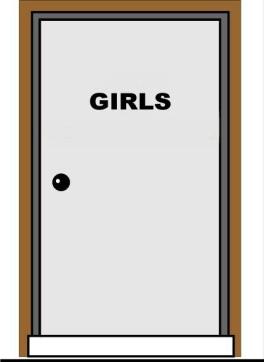
bathroom-door-for-girlsjpg“Oh, yes I do. I know you broke a date with Mary Jane to go out with Hildy.”

Sam Paskell stood toe-to-toe with his best friend, Herman Gates. “Herman,” he growled, grasping his friend by the shirt collar and pulling him forward, “if you say one word about that to anyone else, I’ll clobber you.”

“Hey, I don’t squeal on my friends; you know that. It just made me mad that you insisted I didn’t know what I was talkin’ about.”

“How’d you find out?”

“I heard some girls talkin’ about it when I was listenin’ outside the girls’ bathroom door.”

Sam smirked. “I’ve told you over and over that one of these days the teacher’s going to catch you doin’ that.”

“Yeah … prob’ly … but in the mean time, I get me some good learnin'”

“So who was talking about me?”

“Della Thompson. She said she saw you out with Hildy at the movies that night. Mary Jane had already told her you broke your date because you got sick.”

“Darn! I gotta think of somethin’ to tell Mary Jane.”

“Well, I got a idea.”

“What?”

“Tell her your mom is best friends with Hildy’s aunt, and she insisted that you take Hildy out. Then tell Mary Jane you was too ashamed to admit that you couldn’t stand up to your mom about it, because you care so much for Mary Jane that you couldn’t bear for her to think badly of you. And then ask her to please forgive you for not being completely honest. Tell her you don’t deserve anyone as good as her, and that you’ll understand if she can’t forgive you, but you’ll be broken-hearted over it.”

“You think that’ll work?”

“Gets ’em every time.”

“How do you know all this?”

“Man … I keep tellin’ ya. I learn all this stuff standin’ outside the girls’ bathroom door.”

“They do all this talkin while they’re squatting over the stool?”

“Heck no, man. Don’t you know nothin’? Girls don’t go to the bathroom just to squat over the stool. They go to talk. Ain’t you ever noticed how one girl don’t ever go to the bathroom alone? They always go in two’s and three’s. It’s to do all the gossipin'”

“Well, I’ll be. Maybe I need to spend some time outside that bathroom door getting myself a real education.”   

_______________________________________________________________
Okay, I know it’s a stupid little story, but I didn’t have much time to think of a better one. And besides — there’s a lot of truth in it.”

To participate in today’s prompt challenge visit here.

~~~

Daily Post Prompt: Sound / ‘The Approaching Silence’

Ear 2
In response to today’s Daily Post Prompt (Sound), I’ve offered the first few pages of a story in progress. Just a little sci-fi to flavor your day.

THE APPROACHING SILENCE

“In other news today, Dr. Leopold Barnes, director of the U. S. Atmospheric and Meteorological Testing Center located inside the Arctic Circle, issued reports of unusual occurrences of silence in a fifty-mile radius surrounding their base. ‘For a period of eight or nine hours, there was no sound of any kind,’ said Barnes. ‘It was the strangest phenomena I’ve ever experienced,’ he added, ‘and all of my co-workers here agree. We could hear nothing, even when we spoke or pounded on a door.’ Barnes went on to say that the experience lasted only for that time period, and then things returned to normal. Scientists from the AMTC are doing further investigations, and Dr. Ruben Perez, director of the center’s headquarters in Leadville, Colorado, has declined comment until those investigations are finished.”

Ruben switched off the small TV in his office, his thoughts whirling, his adrenalin building. He walked to his desk in the next room and pulled a file from his drawer. It contained hard copy of a report that had been e-mailed to him yesterday from the British-manned testing base at the South Pole. The e-mail had been sent to seven scientists on a pre-approved list, and he’d been unable to get the words off his mind all night. “… total and absolute silence for a period of 7 hours,” it had said.

He picked up the sheet he’d printed out earlier. “Not one machine noise could be heard. We spoke to each other, but could hear nothing and, in fact, had to rely on reading lips and sign language even to do the work necessary to run some tests and figure out what was happening. So far, we just don’t know. But at the end of the 7 hours — can’t be more precise since it took several minutes to even realize that the situation existed all over the base – but at the end of that time, all sound returned and hasn’t fluctuated at all in these past 3 hours.”

That report had come in at almost midnight last night, and now this similar experience involving their own people up by the North Pole today was too much of a coincidence to be coincidence. Based on his experience – which covered the first twenty years of the new millennium – it was one for the books. He picked up the phone, punching in numbers memorized long ago. “Hello, John.” He spoke briskly, but the warmth in his voice denoted his long friendship with the listener.

“Ruben, my boy. Good to hear from you.”

“Same here, John, but I’m going to get right down to business this morning. You’ve, no doubt, been apprised of the report coming out of Barnes’ Arctic base this morning.”

“Yes, I read it this afternoon.” He paused, and Ruben waited. After the slight hesitation, John continued. “Boy, I’ve experienced some odd phenomena in my forty years of research, but this one beats the best of them in my book.”

“Right. I agree, but there’s more. Have you received any word about the e-mailed report from McGregor at the South Pole?”

“McGreggor? No, is he experiencing something similar?”

Ruben picked up the printed report again to read it to his colleague. “Well, I’m on the list of seven men who are kept updated on the work there, and let me read you my e-mail from last night.” He read the whole text and waited.

A long, low whistle sounded through the line. “Man!” Another pause as both men processed the facts they’d encountered. They couldn’t refute them, but they certainly didn’t want to believe them. Finally Ruben broke the silence.

“No thoughts on it?”

“Hmmm. Well … I have to say I’m stymied. No … more than that. … I guess I’d have to admit I’m a little troubled.”

Ruben sighed. “That’s not like you, John. You’re generally the last one to consider something alarming. What’s the difference here?”

John Cartwright sighed heavily. “I think it’s time for me to share some things that I’ve been keeping an eye on – privately – for the past few months. But, Ruben, this information has to be kept confidential until I decide how far to spread it. I’m sure I can trust you – and Soren Petroff. Does anyone else come to your mind who would be the soul of discretion in the face of some evidence that could – just possibly – be world-shaking?”

“Whoa! You mean you’ve been looking into something connected with this loss of sound for several months?”

“Let’s just say that I’ve been checking out a couple of minor – very minor – events that I’ve encountered and wondered about. Now … in the face of these two larger events … I don’t think I want to keep it to myself any longer. But I can’t begin to impress on you how vital secrecy is at this point, Ruben. I’m sure you can appreciate that fact.”

Ruben nodded, even though he knew his friend could not see him. “I do understand. I’m not arguing that point. I guess … well, I guess I’m just still in some degree of shock where all of it’s concerned. But, as far as a good man with a closed mouth is concerned, I do have a suggestion – although it’s not exactly a good man.”

“What?”

Ruben couldn’t resist a chuckle. “I’m talking about Dr. Lenora Coleman, John. She’s worked with me here in this center for three years now, and I’ve rarely worked with anyone more intelligent – or wise. She not only has what it takes in the brains department, but she seems to have a kind of sixth sense about how to use the knowledge she has to the best advantage for all parties concerned. That’s a rare quality in our work.”

“Well, if you have such high regard for her, I’m willing to let her in on the meeting. But, Ruben, it will have to take place at my home in Denver. I’m not taking any chances of being overheard by anyone else at this point. This whole situation may be one short, aberrant period of atmospheric distress and may have no meaning for the future at all. So I don’t want anyone overhearing bits and pieces and running wild with them. I don’t think we can afford not to be careful with our discussions at this point.”

John’s words were reverberating through Ruben’s mind even as he answered. “Agreed. When should we set the meeting?”

“I’d like to suggest tomorrow morning if you and Lenora can make it that soon. Say 10:00. I’ll give everyone lunch.”

“I’ll check with Nora and get right back to you.”

“Good. I’ll do the same with Soren, but I’m pretty positive he’ll drop anything else when I tell him the details.”

“Thanks, John. I’ll call back soon.”

“I’ll be waiting.”

Ruben couldn’t sit still. He got up and paced his office, hearing John’s words over and over: “… may be just one short aberrant period … may have no meaning for the future …” Ruben rubbed the back of his neck, trying to erase the tension that had grabbed him with those words. Before that statement, he’d felt they were dealing with a weird, but interesting phenomenon of nature that would prove to be one for the text books but little else. With those few words – coming from one of the nation’s most eminent scientists, whose hunches Ruben had learned long ago to trust implicitly – he could feel something else creeping in. He refused to acknowledge it as fear. He tore his thoughts away from the repetition of words and started down the hall to Nora’s office.

~

The following morning four puzzled scientists convened in the dining room of Dr. John Cartwright. The three men knew each other well since they had worked on several projects together over the years. Ruben introduced Dr. Coleman to his friends and explained that he had briefed her on all that he had discussed with John the previous day.

“Nora told me during our drive here that she spent two years working with Dr. Armond Newman in Germany.”

Soren looked up sharply. “The physicist who received so much notoriety for his work in acoustics?”

“Yes,” Nora said. “He discovered some interesting fluctuations in how sound waves traveled through air and through several other substances when there was a change in the magnetic field around the immediate area in which the sounds were being emitted.”

“But tell them about the experiments he did even after his article was published,” said Ruben.

“I was fascinated by some of the work he was doing and kept asking so many questions that he finally confided in me about some private experiments he was conducting and eventually allowed me to observe them and take part in them. He manipulated the magnetic fields in these experiments until he was able to strike a metal gong with a metal hammer, but not one sound came from it. Or, at least that’s what seemed to be the case. But when he checked the instruments that measured the sound waves themselves, he discovered that sound had been emitted, but was not picked up by our ears.”

“Fascinating,” John said, scooting his chair closer to the table and leaning his elbows on it, allowing him to come closer to Nora as she spoke.

“Yes,” she said. “I was totally fascinated – in fact I was captivated by all of it. “He then called in his dog and had him sit with us as he repeated the striking of the gong. Again we heard nothing, but his dog did. And, as I’m sure all of you know, dogs are capable of hearing a much higher pitch than humans, but are deaf to sound pitches below 40 hertz. His dog heard the gong, but in a later experiment, where Dr. Newman tried several different materials which would produce sound at much lower hertz than the gong, his dog heard only one of those experiments, and he and I still heard nothing.”

“And you say it was the change in the magnetic field? Nothing else?” asked John.

“That was the most fascinating part of the experiments. Absolutely everything remained the same in every experiment except the magnetic field around the instrument emitting the sound and its immediate area. With every significant change in that magnetic field, the ability to hear the sounds changed as well.”

“But physics doesn’t lead us to believe that the magnetic field plays that large a part in the emission and transmission of sound waves,” said Soren.

Ruben spoke for the first time then. “Well, up to this point in time, science hasn’t proven a connection, but you know as well as I, Soren, that one of the things we pride ourselves on as scientist is that we are learning more about the universe and its vagaries all the time.”

John spoke again. “Ruben, you have a degree in geomagnetics. Was there anything – anything at all – in your studies that hinted at a possibility of connection?”

“I did come across one interesting theory, proposed during the early 1940’s.” ………………


©2014 Sandra Conner

Living a Grateful Life

SMILEY - YEL,ORANGEHave you ever noticed how much better your life is when you’re grateful for all the good things in it? Oh, I know, I know … life is full of aggravations — some huge, but most of them quite small in the scheme of things. I’ve had my share and, frankly, I’ve had a lot more than my share a few times. But I’ve realized that being aggravated, upset, worried, angry, or just out of peace does no real good for me or anyone else and takes a negative toll on me personally.

In contrast, when I am actively grateful for the positive gifts in my life, I find I feel better physically, I think much more quickly and clearly, and I make a positive difference in other people’s lives. Of course I’m referring to being grateful for the big things like a loving family, trustworthy friends, a job, a place to live, food to eat, etc. But sometimes I’m actually sensible enough to be grateful for the small, ordinary things like being able to see the night sky and wonder at it — for being treated kindly by a clerk in a store — for having pleasant-scented dishwashing liquid to enjoy as I do the day’s dishes (by hand).

Whether it’s a small patch of flowers in the yard, a delicious cup of coffee, a local police officer who offers to help with a contrary auto license plate, a computer tech on the other end of the phone who’s willing to go the extra mile to fix my problem, or a family of the cutest little groundhogs out enjoying the day even though they are living where they shouldn’t be (in my neighbor’s yard) — when I realize that they have actually added beauty, energy, interest, and/or some degree of help to my life — and when I take the time and energy of thought to just appreciate that fact — my whole quality of life is just better.

One day a few years ago I was quietly meditating on spiritual things, and the Lord suddenly dropped a little chorus into my heart. I started singing it over and over (to the tune of a little fun song I used to sing as a child), and the truth of it registered deeply inside of me. Now, you won’t be able to hear the tune (because I’m not inclined to sing it into my computer and post a sound bite at this point), but I will share the words with you:

“I will have a grateful heart;
A grateful heart is a cheerful heart;
A cheerful heart is medicine,
So I can be well and strong.”

Now, I believe the Word of God is exactly that: The Word of God. So I believe that, not only is it true and trustworthy, but it also works. If we will believe it and live it, it will manifest God’s blessings in our lives. And that Word tells us in Proverbs 17:22 that a cheerful heart does good like a medicine in our bodies. Long years after that Word was written, human physicians have proven that cheerfulness and inner joy have a very positive effect on our physical health and, in fact can actually get people well. So the words of that little chorus the Lord gave me are a very good prescription for well-being.

I’m not perfect at maintaining a grateful heart — yet — but my mind is made up: I know for myself that being actively grateful for all the positive, pleasant things in my everyday life, no matter how small they are, makes my entire life a much better experience. And one of the things I’m grateful for today is that I’ve learned that lesson.


After writing this piece, I realized it was a good answer to Colline’s question about what we’re grateful for this week, so I’ll link to her post in case you’d like to respond to it as well.

~~~

IRREVERENT VALENTINE SENTIMENTS ~ RE-RUN

`
I can’t help it. I just HAVE to revisit my “Irreverent Valentine Sentiments” from three years ago.


IRREVERENT VALENTINE SENTIMENT # 1


WOMAN AT WINDOW - RED
HIDE AND SEEK SIGN

~


IRREVERENT VALENTINE SENTIMENT # 2

“Baby, I ain’t askin’ much of you.
Just a big-a, big-a hunk of love will do.”
Never sing these words aloud when standing out in the open.

AMOEBA MAN UNDER LOVE WEIGHT

~

Lyrics of “Big Hunk of Love” © Imagem U. S. LLC, A. Schroeder International LLC, Regent Music Corporation


IRREVERENT VALENTINE SENTIMENT # 3

AMOEBA MAN LOVE SICK - RIPPLED

If it’s true that love makes the world go round (round … round … round …) then I think the best gift I can give my valentine is shares of stock in a company that manufactures motion sickness medicine.

~


IRREVERENT VALENTINE SENTIMENT # 4

BORED GIRL - PEACH

~
If love is all around, then I must be someplace else.


IRREVERENT VALENTINE SENTIMENT # 5

`

heart-border-with-xs-smallerPlease Be My Valentine:
I want to be loved by you,
Just you, and nobody else but you.
However, if you’re busy this week,
I’ll call the next guy on my list.

`


IRREVERENT VALENTINE SENTIMENT # 6

fireworks-for-profile

pdphoto.org

If love is a many-splendored thing,
that could account for all the fireworks
that go off in a divorce court.


`
IRREVERENT VALENTINE SENTIMENT # 7

STREET SIGNS - MULTIPLE, LOVE

LOVE AROUND CORNER SIGN

~


*

HAPPY

HAPPY VALENTINE’S DAY!


♥ ♥ ♥

Prompt Nights: Valentine’s Day Special

Well, it’s only natural that the topic for this week should be “love.”  I decided to offer up one serious piece and one not-so-serious (make that totally irreverent) piece. I’m sure you’ll be able to decide which is which. And you might as well hop over to “A Dash of Sunny” and take part in this week’s challenge.

LOVE RUNS THROUGH ME

Exif JPEG

Like a stream running through the mountains,
Like a cool wind sweeping o’er the plains,
Like a river rushing to the ocean,
Like blood coursing through the veins,

Like a current running through a cable,
Like a song swirling through the mind,
Like inspiration flowing through the poet,
Like compassion coursing through the kind,

So love for you is running through my soul,
Super-charging me; causing me to grow,
Reminding me that loving makes us whole.


VALEDICTION TO A PASSING LOVE

casket-over-plot-cropped

I have not loved you well,
Nor have I loved you long.
So it is with no strong regret
I sing this parting song.

Your passage through my life
Has barely touched my soul,
So mourning will not weigh me down.
In fact, I feel quite whole.

Adieu, my love, adieu.
I bid you fond goodbye.
And at your grave, for memory’s sake,
A few tears I will cry.


~~~

‘Releasing the Creative Writer in You’-Lesson 1

releasing-the-creative-writer-icover-editedWelcome to the first of a series of lessons excerpted from my writing curriculum Releasing the Creative Writer in You.*  As I mentioned in the post last week introducing this series, I’m beginning with a couple articles I have posted previously — about three years ago. But they provide the best introduction to this series, and then we will proceed from there into other territory. I hope writers find these posts encouraging, comforting, enlightening, challenging, entertaining, or all of the above.

LESSON# 1: SO YOU WANT TO BE A WRITER?

Then DO IT!

Mystery author Agatha Christie once said, “The best time for planning a book is while you’re doing the dishes.” There’s a lot of wisdom in that statement.

You know, you don’t have to live an unusual life — or even a particularly exciting life — to be a great author. In fact you can live a very ordinary, chicken-frying, auto-repairing, laundry-washing, diaper-changing kind of life and still write books that will lift people out of the ordinary and into a place where imaginations rise to peak places, where new dreams are ignited, and where hope and faith bring victory into life’s struggles.

So pick up that pen, sit down to that computer keyboard, or start dictating into that recorder — whatever method works for you.  If you’re sure you want to write, start writing.

cartoon-quote-kingNow that you’ve started, you come to your next decision. Do you want to be an “occasional writer” – sharing an idea or a complaint only now and then – when the mood strikes you? Or do you want to be a “serious writer” – making writing one of your primary goals in life and, therefore, at the top of your list of priorities.? If your answer is the first option, then you are free to write or not, depending on how you feel on any particular day. However, even in that situation, the more you write, the better you will be at it when you feel it counts.

But if you are serious about writing – if you feel it is a necessary part of your feeling successful in your life – then you must live by a different law: You must commit to writing on a regular basis and stick with the program, regardless of how you feel on any particular day – or how anyone else feels about your work. Now that doesn’t mean you must be at your keyboard every single day from 6:00 to 8:00 a.m. or from 12:00 to 3:00 every afternoon. In this crazy world of ours, most of us have so many responsibilities and so many people and things needing our attention that there are just going to be some days when nothing goes according you plan.

But being serious does mean that writing gets a place of priority in your plans. If you really do want to write things that matter and that people will want to read and look forward to more of the same, then you do have to force yourself to develop some kind of schedule that gives the process of sitting down and writing more attention than you would give a hobby.

Unfortunately, this decision to be a serious writer must be made anew every few days. The “new” wears off after a while. The excitement turns to frustration after several days of reaching for just the right words and falling short time after time. The bright ideas seem to fade a little when the family and friends don’t find your first chapter exciting enough to want to listen to you talk about it for three hours non-stop. But if you really do want to write, you must make yourself write faithfully and regularly, regardless of the struggles involved. If you sit at your keyboard three hours and type onto the screen only one sentence worth keeping, you have accomplished writing a sentence that never existed before.

And therein lies the intrinsic value of writing. Everyone who writes becomes a creator. Once you have written an original piece – no matter how small or how large – you have created something that never before existed! That fact is not dependent upon whether anyone else reads it.  Or whether anyone else likes it if they do read it. The proof of your creativity does not rest in your work’s boasting a publisher’s imprint or finding a place on a bookstore shelf.  Get this straight: once you have written an original piece, you have created an entity that never before existed. I repeat that point because it is a powerful reality that very few writers recognize.

And another related fact that many unpublished writers seem to miss is that once you have created a written product, you are a writer. You’re not “going to be” a writer. You’re not a “would-be” writer. You’re not an “aspiring” writer. You are a writer. You are an author. You are a creator. When you do recognize these two truth, they will empower you to keep creating and to create even more effectively.

Also, once you recognize them, you will come to realize a third truth that is just as important: As a writer, you have a heavy responsibility to your readers. From the moment an individual picks up your work and reads the first sentence, you begin to influence that person – for good or evil. And the more of your work people read, the greater your influence grows.

So it is important to remember that, although you may feel you are writing for yourself, if you intend to allow your work to be read by anyone else at all, your words will have some kind of influence on that reader. There is a passage in the Bible, Luke 12:48, that says, “For unto whomsoever much is given, of him shall much be required.”

Although the statement is found within the pages of Scripture, it is a truth outside of those pages as well. It is a law of life for anyone committed to living responsibly. When we are endowed with the powerful gifts and talents that allow us to create through the written word, we then become accountable for what we do with that word.

One final thought: If you love to write, then you have a gift for writing. You may need to develop it, nurture it, and discipline it. Most writers have to work hard at those endeavors. But you need to recognize that if you genuinely love to write, then there is a gift inside that calls you to give yourself to it.

cartoon-quote-wrightThe goal of this course, then, is four-fold:
1. To acquaint students with the basic skills required to express themselves well through writing.

2.   To help students discover and use their innate talents and abilities for creative expression.

3. To acquaint students with the unique characteristics and requirements of multiple genres of literature and help them determine which genres best fit their individual writing strengths.

4. To help students develop a consciousness concerning their responsibility as writers and help them learn to use every tool at their command to fulfill that responsibility successfully.


* Releasing the Creative Writer in You, © 2013 by Sandra Pavloff Conner
–  –  –  –  –  –  –  –
To access other lessons in this series, click on “Creative Writing Class” in the navigation bar and scroll through to find the lessons you need.

~~~

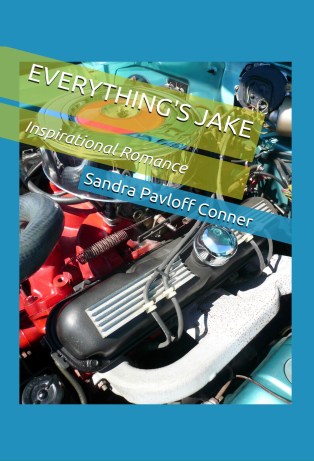
‘Everything’s Jake’ – Love at the Auto Repair Shop

everythings-jake-amazon-cover-2-for-e-bookIt all began with a dream. Yep, it’s another one of those stories. Two of my novels came from dreams that stayed with me long after I woke. I just knew I had to pick up from that point and finish those stories — one of which turned out to be EVERYTHING’S JAKE.

In fact, I can’t even take credit for the title because it was part of my dream as well.

It’s just a little love story. But, then again, it’s a whole lot more than a love story. It’s about finding out who you really are and learning to like that person – and discovering that liking who you are opens the door for the best relationships with other people. It’s about family – and friends who are just like family. It’s about letting God’s way of loving take control of your heart.

In this inspirational novella, you’ll meet Mariah Jacoby. She’s happiest working under the hood of a car, but she’s convinced that grimy hands and greasy smudges on her face aren’t exactly what guys are looking for in a girlfriend. Unfortunately, though, she’s having trouble holding down a job in any other field, despite college degrees and an upbeat personality. Desperate to change her unemployed status, she finally admits it’s time to face the fact that she’s really a “grease monkey” at heart. But dare she hope there’s a guy in her future who’s dreaming of a girl who smells like engine oil?

It’s a relaxing read, and it’s available from Amazon in print as well as in digital format.

Print Version is $4.99

Digital Version is $1.99

Check it out, and please don’t forget one other thing. If you like it, please go back to Amazon and leave a short review telling everyone how you enjoyed it. As most of you know, we authors are dependent on word of mouth from our readers to help us find more readers. So thanks in advance. (Oh, and if for some reason you don’t happen to like it — well — just don’t say anything, okay?) 🙂

~~~

Daily Post Prompt: Heard

`smiley-no-circle-black-wh`

I heard
The word ‘cinquain.’
It popped into my head.
And so I knew I had to write
Cinquain.


My motto is this: If you want to participate in a “Daily Post” prompt, but you have nothing of substance to write — write a cinquain. Now, it isn’t that I don’t feel cinquain can have substance. It’s more the fact that, for some reason (maybe because I like the form so much), I seem to be able to write a cinquain on almost any subject under the sun. In fact, that point makes me want to write one about — what else — the sun.

Sunshine
Poured out on me
Is like a lovely bath:
It cleanses and invigorates
My soul.


Okay. I’m done now. Here’s the link in case you want to have a go at today’s prompt.