Friday Fictioneers: 7/14/17

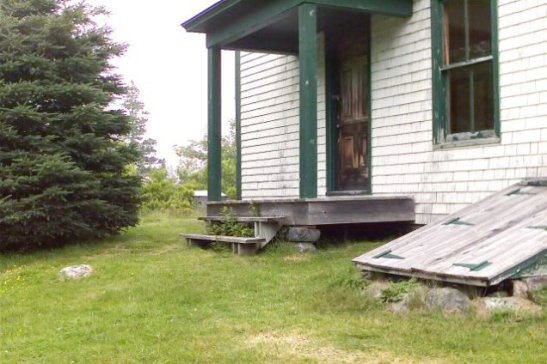
To participate in this week’s Friday Fictioneers, visit Rochelle’s site. The picture prompt below is the property of  Janet Webb.


BETRAYED BY TECHNOLOGY

He’d done it. He smiled at the perfect job. He’d left her lying across the bed with the pill bottle in her hand. And she hadn’t even suspected that he’d doctored her drink.

She did love to drink, and that had made it so easy. He smiled again as he leaned back in his easy chair savoring his success. Leaving the lone candle burning was an artistic touch. And his fake alibi was so tight, he’d never be suspected.

Now, to call Bernard and report his success. Reaching into his pocket, he froze. Where the hell was his cell phone?


~~~

Daily Post Prompt: Jangle

The jangling of the bells gradually seeped into Garret’s unconsciousness and began to nudge him into a little clarity.  He listened for several moments before trying to open his eyes. When he finally lifted the heavy lids, the light seemed blinding and pain shot through is head at the entrance of that light. He immediately shut his eyelids again and groaned.

Unfortunately, the groan itself caused more pain in his head. He was lying flat on hard ground, and he tried to lift his right arm to touch his head and see if he could determine what was wrong. He did manage to get his arm up, but it felt so heavy, he didn’t bother to take it all the way to his head.

The jangling sound was coming closer, and he wondered why the sound itself didn’t cause him more pain. Maybe because it was very low-toned and rhythmic. It reminded him of something, but he couldn’t think what.  In fact, he felt as if he couldn’t think much of anything.  That scared him, but before he could delve into that problem, a gentle voice spoke to him, and a soft hand touched his shoulder.

“Mister, are you alive?”  The voice sounded young, but masculine. He opened his eyes again and, in spite of the pain, managed to roll his eyes to the side enough to see a young boy — perhaps twelve or thirteen — kneeling beside him on the ground. He spoke again. “Oh, you are alive. Thank goodness. Can you move?”

Garret put all his strength into slowly moving his head toward the boy and forcing out the words. “A little.”

The boy heaved a sigh of relief. “You’re not far from my house. I’m on my way home with our cows now, and I will tell my father. He will come for you and help you.”

Garrett gave a small nod of his head, but stopped immediately. Too much pain. So he croaked out his thanks and closed his eyelids again. The young boy patted him on the shoulder and rose, calling to his cows.  As he did so, the jangling sound, which had been intermittent during the conversation with the boy, now began its rhythmic music again as the herd evidently obeyed the boy’s command.

During the wait for the boy’s father, Garrett slipped in and out of consciousness, but his periods of lucidity were longer now and more clear. The pain had dulled a little, and when he heard an engine approaching, he took heart and even lifted his head slightly to look that direction. Pain seared him, but he took courage when he saw the old truck.

The farmer had his young boy with him, as well as another grown man. They stooped down and the second man spoke. “I was a medic in the army, sir, and I’m going to try to check you before we try to get you up.”

“Thanks,” Garrett managed to whisper. The young man began to feel Garrett’s arms and legs and press on his abdomen, checking for broken bones or internal injuries. As he worked he reported that he was fairly sure Garrett had a concussion, and that one leg was broken and a shoulder dislocated. But with the help of some splinting materials he had brought along, he felt it was safe to get Garret up and into the truck. They had already phoned the doctor before leaving the house, and he’d promised to come out to the farm when he was finished with hospital rounds.

During the transfer to the truck, Garrett lost consciousness again, but when he was finally lying flat and had a cold cloth on his head, he came to. “Can you tell us your name, Son,” the farmer asked, as he sat beside Garrett in the truck bed for the trip.

Garrett opened his mouth, but nothing came out. He couldn’t find a name — no name at all. He couldn’t find any identity in his conscious mind. He turned fear-filled eyes to the farmer.  “No sir,” Garrett said.  “I don’t know my name … I don’t know who I am ….”


Daily Post Prompt: Jangle


~~~


‘After the Storm’ – Friday Fictioneers 6/16/17

Photo Prompt:  Copyright Dale Rogerson


AFTER THE STORM

“Ouch! Hey, watch where you’re stepping!”

“Sorry. I was taking pictures of the moon breaking through.”

“What’s the big deal? The moon’s out every night.”

“Not bursting through the center of heavy storm clouds. Aren’t you glad that vicious storm’s over?”

“That storm destroyed my home and killed my dog. The moon won’t change any of that. Now move!”

He shoved past, and she froze, remembering how, years before, Hurricane Katrina had robbed her of her home, her husband, and her son.

Suddenly, she looked up and refocused her camera. It was important to remember that storms didn’t last forever.


To participate with your own 100-word story, visit Friday Fictioneers host at this link.


~~~

Friday Fictioneers 6/9/17: ‘The Gardener’

It’s been a while since I’ve had opportunity to participate in Friday Fictioneers, but this week’s photo just pulled this little tale right out of me. If you’d like to join in the fun, visit Rochelle at the link above.

This week’s photo is courtesy of Sarah Potter. There was no link for Sarah on the host site. Sorry. But her photo is below, and my story follows that.

summer house

Photo © Sarah Potter


THE GARDENER

There it was: the jar labeled plant food. Just as I’d left it when they’d handcuffed me and carted me off. It looked innocuous amidst the heinous overgrowth of Hilda’s desk-top garden. Everyone knew plants were her life, and a jar of food drew no attention at all.

The police finally released me; no trace of evidence I had poisoned her. The doctor identified the fatal stuff with some multi-syllabled word, but nothing pointed to my having any of it.

Now … to mix a drink for these damned plants with the rest of that powder.


~~~

Daily Post Prompt: ‘As the Plot Unravels’ – a short story

`

MAN AT DESK b & w“I don’t know what to do,” Neville groaned, rubbing his hands roughly over his face. Then he pushed his laptop out of the way and leaned both elbows onto the coffeehouse table, propping his chin in his hands.

“What’s wrong?” Clarence, the waiter bussing the table next to Neville’s, turned to question him

Neville looked up, startled. “Oh … blast … I didn’t realize I had said that out loud. Sorry,” he added looking sheepishly around the room to see if other customers had heard. He was relieved to see that Elixir of Life Coffeehouse was having one of its quieter days.

“No problem,” Clarence answered and walked over to Neville’s table. “Can I get you a refill?”

“Yeah, that would be great,” Neville answered, handing the boy his cup. “It’s been a rough writing day.”

The young man returned in record time with Neville’s refill and stayed to talk a moment. “Do you have what they call writer’s block?”

“No.” Neville shook his head and continued. “No, Clarence. This isn’t writer’s block. In fact, I almost wish I did have that dreaded condition. My problem isn’t that I can’t get the story to move along. This story is moving along at an incredible pace. The problem is that it’s writing itself, and my original plot is unraveling as fast as I can put my fingers to the keys.”

“You mean you’re not in control of your own story?” Clarence looked at Neville as if he had lost his mind — just a little. And that made Neville laugh.

“Don’t worry, my boy,” he said. “I’ve not gone bonkers yet. And … thanks for making me laugh. It helps. But to answer your question, no, I’m not in control of my own story.”

“Well, how does that happen?” Clarence asked, really into this new information he was being exposed to.

“Well it’s not too unusual for a writer to get into a novel and find that one of his characters seems to gravitate in a direction other than what he had originally planned — or that the story seems to be flowing toward an ending that’s different from what he jotted down in his outline. But what’s happening in my story is different.”

“How?”

Neville shook his head and sighed. “I’m not sure how it’s happened, but every character seems to be taking on a brand new identity and making his own decisions. The guy I had pegged as the hero has suddenly become the villain, and the woman he loves is rapidly developing feelings for his best friend — which means he will probably end up killing his best friend — he’s already entertained the idea — and maybe even offing the woman as well.”

“But does it matter who ends up being the villain and the hero — I mean — as long as you have one of each, it’ll come out even, right?”

Neville chuckled. “Well, it’s not quite that easy. My publisher assigned me a contract to do a specific kind of story. One that will be a believable sequel to my last three novels. They were moneymakers, and I’d hate to mess up a record like that. I spent the money I made on them, and now I need more.” He rubbed his face agitatedly again. “Besides that, I’d be breaking my contract if I didn’t give them what I guaranteed.”

“MmMmm, you do have a problem,” Clarence said, so engulfed in the conversation now that he just sat right down at the table beside Neville.  They both sat in silence for a moment, and then Clarence asked, “Well, why don’t you just delete all that part that changed and go back to your first chapter and start over on the story you intended to write. That would take care of it wouldn’t it?”

“Well, that’s the other problem. I’ve totally lost track of the story I intended to write … and besides ….” He paused and glanced off to the side, lost in thought for a long moment. Clarence waited, figuring Neville was trying to work out a plan.

Suddenly Neville looked back at Clarence with a smile on his face. He looked serene rather than agitated, and Clarence was a little confused. “You figure something out? How to stop this runaway story?”

“Nope,” Neville said, grinning wider. “I’m not going to stop this story, Clarence.”

“Huh?”

Neville reached over and rested his hand on Clarence’s shoulder. “Clarence, my boy, I’ve made a decision. I’m going to give this story my whole heart and soul and let it lead me wherever it wants to go.”

“But what about your contract and all?”

“Blast the contract,” Neville said, beginning to close up his laptop and slip his notes into his briefcase. “If that publisher can’t see the truth about the value of this story, then he can sue me.”

“But –”

“No more ‘but’s‘ my boy,” Neville answered, rising from his chair, laptop under his arm. “This is the best damn story I’ve ever written in my life, and I’ve just decided I’m free enough to give my creativity its own head and let it take me to my destiny.”

He slapped down his last five dollar bill as a tip for Clarence and headed out the door, whistling.


To participate visit Daily Post.

+++

As Alike As Two Peas in a Pod?

TWIN GIRLS
Sandy and Mandy were identical twins.  Green-eyed beauties with dark brown hair, a smattering of freckles, and charming dispositions. From the day of their birth, mom had dressed them in identical outfits. When they started school, she bought them identical backpacks, and pulled their hair into identical pony tails.

She bragged to everyone about how “exactly alike” they were and insisted they do identical chores and play identical games at the same time. She sent them to Gramma’s farm together every year.

And every year, wearing blue jeans faded to exactly the same shade, with pony tails riding at exactly the same height and identical green eyes gazing into the peaceful pond at exactly the same time, they stood on the old wooden bridge and dreamed — totally separate, independent dreams.

And Mom couldn’t do anything about it

~~~

Daily Post Prompt: Sound / ‘The Approaching Silence’

Ear 2
In response to today’s Daily Post Prompt (Sound), I’ve offered the first few pages of a story in progress. Just a little sci-fi to flavor your day.

THE APPROACHING SILENCE

“In other news today, Dr. Leopold Barnes, director of the U. S. Atmospheric and Meteorological Testing Center located inside the Arctic Circle, issued reports of unusual occurrences of silence in a fifty-mile radius surrounding their base. ‘For a period of eight or nine hours, there was no sound of any kind,’ said Barnes. ‘It was the strangest phenomena I’ve ever experienced,’ he added, ‘and all of my co-workers here agree. We could hear nothing, even when we spoke or pounded on a door.’ Barnes went on to say that the experience lasted only for that time period, and then things returned to normal. Scientists from the AMTC are doing further investigations, and Dr. Ruben Perez, director of the center’s headquarters in Leadville, Colorado, has declined comment until those investigations are finished.”

Ruben switched off the small TV in his office, his thoughts whirling, his adrenalin building. He walked to his desk in the next room and pulled a file from his drawer. It contained hard copy of a report that had been e-mailed to him yesterday from the British-manned testing base at the South Pole. The e-mail had been sent to seven scientists on a pre-approved list, and he’d been unable to get the words off his mind all night. “… total and absolute silence for a period of 7 hours,” it had said.

He picked up the sheet he’d printed out earlier. “Not one machine noise could be heard. We spoke to each other, but could hear nothing and, in fact, had to rely on reading lips and sign language even to do the work necessary to run some tests and figure out what was happening. So far, we just don’t know. But at the end of the 7 hours — can’t be more precise since it took several minutes to even realize that the situation existed all over the base – but at the end of that time, all sound returned and hasn’t fluctuated at all in these past 3 hours.”

That report had come in at almost midnight last night, and now this similar experience involving their own people up by the North Pole today was too much of a coincidence to be coincidence. Based on his experience – which covered the first twenty years of the new millennium – it was one for the books. He picked up the phone, punching in numbers memorized long ago. “Hello, John.” He spoke briskly, but the warmth in his voice denoted his long friendship with the listener.

“Ruben, my boy. Good to hear from you.”

“Same here, John, but I’m going to get right down to business this morning. You’ve, no doubt, been apprised of the report coming out of Barnes’ Arctic base this morning.”

“Yes, I read it this afternoon.” He paused, and Ruben waited. After the slight hesitation, John continued. “Boy, I’ve experienced some odd phenomena in my forty years of research, but this one beats the best of them in my book.”

“Right. I agree, but there’s more. Have you received any word about the e-mailed report from McGregor at the South Pole?”

“McGreggor? No, is he experiencing something similar?”

Ruben picked up the printed report again to read it to his colleague. “Well, I’m on the list of seven men who are kept updated on the work there, and let me read you my e-mail from last night.” He read the whole text and waited.

A long, low whistle sounded through the line. “Man!” Another pause as both men processed the facts they’d encountered. They couldn’t refute them, but they certainly didn’t want to believe them. Finally Ruben broke the silence.

“No thoughts on it?”

“Hmmm. Well … I have to say I’m stymied. No … more than that. … I guess I’d have to admit I’m a little troubled.”

Ruben sighed. “That’s not like you, John. You’re generally the last one to consider something alarming. What’s the difference here?”

John Cartwright sighed heavily. “I think it’s time for me to share some things that I’ve been keeping an eye on – privately – for the past few months. But, Ruben, this information has to be kept confidential until I decide how far to spread it. I’m sure I can trust you – and Soren Petroff. Does anyone else come to your mind who would be the soul of discretion in the face of some evidence that could – just possibly – be world-shaking?”

“Whoa! You mean you’ve been looking into something connected with this loss of sound for several months?”

“Let’s just say that I’ve been checking out a couple of minor – very minor – events that I’ve encountered and wondered about. Now … in the face of these two larger events … I don’t think I want to keep it to myself any longer. But I can’t begin to impress on you how vital secrecy is at this point, Ruben. I’m sure you can appreciate that fact.”

Ruben nodded, even though he knew his friend could not see him. “I do understand. I’m not arguing that point. I guess … well, I guess I’m just still in some degree of shock where all of it’s concerned. But, as far as a good man with a closed mouth is concerned, I do have a suggestion – although it’s not exactly a good man.”

“What?”

Ruben couldn’t resist a chuckle. “I’m talking about Dr. Lenora Coleman, John. She’s worked with me here in this center for three years now, and I’ve rarely worked with anyone more intelligent – or wise. She not only has what it takes in the brains department, but she seems to have a kind of sixth sense about how to use the knowledge she has to the best advantage for all parties concerned. That’s a rare quality in our work.”

“Well, if you have such high regard for her, I’m willing to let her in on the meeting. But, Ruben, it will have to take place at my home in Denver. I’m not taking any chances of being overheard by anyone else at this point. This whole situation may be one short, aberrant period of atmospheric distress and may have no meaning for the future at all. So I don’t want anyone overhearing bits and pieces and running wild with them. I don’t think we can afford not to be careful with our discussions at this point.”

John’s words were reverberating through Ruben’s mind even as he answered. “Agreed. When should we set the meeting?”

“I’d like to suggest tomorrow morning if you and Lenora can make it that soon. Say 10:00. I’ll give everyone lunch.”

“I’ll check with Nora and get right back to you.”

“Good. I’ll do the same with Soren, but I’m pretty positive he’ll drop anything else when I tell him the details.”

“Thanks, John. I’ll call back soon.”

“I’ll be waiting.”

Ruben couldn’t sit still. He got up and paced his office, hearing John’s words over and over: “… may be just one short aberrant period … may have no meaning for the future …” Ruben rubbed the back of his neck, trying to erase the tension that had grabbed him with those words. Before that statement, he’d felt they were dealing with a weird, but interesting phenomenon of nature that would prove to be one for the text books but little else. With those few words – coming from one of the nation’s most eminent scientists, whose hunches Ruben had learned long ago to trust implicitly – he could feel something else creeping in. He refused to acknowledge it as fear. He tore his thoughts away from the repetition of words and started down the hall to Nora’s office.

~

The following morning four puzzled scientists convened in the dining room of Dr. John Cartwright. The three men knew each other well since they had worked on several projects together over the years. Ruben introduced Dr. Coleman to his friends and explained that he had briefed her on all that he had discussed with John the previous day.

“Nora told me during our drive here that she spent two years working with Dr. Armond Newman in Germany.”

Soren looked up sharply. “The physicist who received so much notoriety for his work in acoustics?”

“Yes,” Nora said. “He discovered some interesting fluctuations in how sound waves traveled through air and through several other substances when there was a change in the magnetic field around the immediate area in which the sounds were being emitted.”

“But tell them about the experiments he did even after his article was published,” said Ruben.

“I was fascinated by some of the work he was doing and kept asking so many questions that he finally confided in me about some private experiments he was conducting and eventually allowed me to observe them and take part in them. He manipulated the magnetic fields in these experiments until he was able to strike a metal gong with a metal hammer, but not one sound came from it. Or, at least that’s what seemed to be the case. But when he checked the instruments that measured the sound waves themselves, he discovered that sound had been emitted, but was not picked up by our ears.”

“Fascinating,” John said, scooting his chair closer to the table and leaning his elbows on it, allowing him to come closer to Nora as she spoke.

“Yes,” she said. “I was totally fascinated – in fact I was captivated by all of it. “He then called in his dog and had him sit with us as he repeated the striking of the gong. Again we heard nothing, but his dog did. And, as I’m sure all of you know, dogs are capable of hearing a much higher pitch than humans, but are deaf to sound pitches below 40 hertz. His dog heard the gong, but in a later experiment, where Dr. Newman tried several different materials which would produce sound at much lower hertz than the gong, his dog heard only one of those experiments, and he and I still heard nothing.”

“And you say it was the change in the magnetic field? Nothing else?” asked John.

“That was the most fascinating part of the experiments. Absolutely everything remained the same in every experiment except the magnetic field around the instrument emitting the sound and its immediate area. With every significant change in that magnetic field, the ability to hear the sounds changed as well.”

“But physics doesn’t lead us to believe that the magnetic field plays that large a part in the emission and transmission of sound waves,” said Soren.

Ruben spoke for the first time then. “Well, up to this point in time, science hasn’t proven a connection, but you know as well as I, Soren, that one of the things we pride ourselves on as scientist is that we are learning more about the universe and its vagaries all the time.”

John spoke again. “Ruben, you have a degree in geomagnetics. Was there anything – anything at all – in your studies that hinted at a possibility of connection?”

“I did come across one interesting theory, proposed during the early 1940’s.” ………………


©2014 Sandra Conner

Friday Fictioneers 1/27/17 – The Date

This week’s Friday Fictioneers 100-Word challenge was hard for me. I just couldn’t get “connected” with those antique cars. But finally, thanks to Orville and Julie-Bell, I managed to come up with something. If you’d like to join the fun follow the link and get the details.

My story is below Al’s photo prompt.

PHOTO PROMPT © Al Forbes
Copyright Al Forbes

THE DATE


“Orville! Stop pretending we’re out of gas, and get me home!”

“But – ”

“Stop. Aunt Pearl always said never trust any man who drives a crank-up machine with no top.”

“Oh, Julie-Bell … Honey,” Orville cooed, wrapping his arms around her. “Just one little kiss.”

Julie squirmed, blushed, fluttered her eyelids. “Well …”

“That’s my girl.”

Just as Orville’s lips settled firmly in place, the sky burst open, and drenched the lovers.

“Now look what you’ve done,” Julie wailed.

Orville hopped out and went to crank the motor. “Well, at least I can skip the cold shower when I get home.”


~~~

Prompt Nights – Glimpse Into the World of Edgar Allen Poe

This week on “Prompt Nights” Sanaa has challenged us to get our inspiration from Edgar Allen Poe. I’m super pressed with my regular teaching this week, so I don’t have time to write a brand new piece, but Sanaa assures us that previously written work is welcome. So since the theme immediately brought to mind a story I wrote some time ago — and since it’s a story I think even Ol’ Edgar himself would appreciate — I’ll share it this week. (Those of you who have read it previously have my permission to skip it this time.)

THE FOG

LIGHTHOUSE WITH FOG
The fog’s especially heavy tonight. I can’t see three feet past the door, so I guess it’s a good time to stay inside and write this letter. The lighthouse on the island has sounded the foghorn every two minutes for hours now.

I haven’t been back to the island since that night. In some ways, I wish I had moved away when you did. I’m sure it’s a lot easier on you not having to look out across the water and see that island every day. I know the spot is overgrown now, but I can still pick it out as clearly as if we’d left a marker. And hearing that blasted horn blow every time the fog moves in really gets on my nerves.

Tonight it’s as thick out there as it was the night we buried him. I often wonder what would have happened if the fog had lifted in time for someone to see us digging the grave. But, of course, that wasn’t likely to happen. Once the dratted stuff moves in, it clings to us like a shroud for the whole night.

I wish you were sitting here with me, sharing a bottle of our favorite whiskey. I hate being alone with my thoughts. I’m always chilled and shaky when there’s fog. And it feels as if something’s choking me. I wonder if that’s how he felt as we tightened that rope around his neck until he stopped breathing.

I sure wish you were here with me. I hate fog.

~~~

Saturday Mix – Lorraine

Lorraine is the challenger for this week’s Saturday Mix. She has offered three possibilities to stir up our writing egos. I was most drawn to the 25-word challenge based on the picture. But you may enjoy the other two as well. So if you like writing and want to stretch yourself a little, take a look at the details of the challenge here.

My story is below the picture.

untitled-4
Photo copyright: Lorraine

FROM THE CELLAR

A twelve-year-old, I gaped at the twister roaring toward us, tossing houses and livestock like matchsticks. From the cellar, I watched my world change forever.

~~~

Saturday Mix 1/14/17 – ‘Last-Minute Decisions’

This week is the first time I’ve taken part in the “Mindlovesmisery” writing challenges. This week we are to write a story in 100 words or less. The host site offered a picture for inspiration, but I put that aside because the idea I wanted to work with didn’t fit that particular picture. To take part you can visit here.


wedding-cakeLAST-MINUTE DECISIONS

The auditorium was full of guests, the organist waiting for her cue. The best man stood at the door, ready to enter as soon as the groom came back inside. He’d just stepped out for some air. Where the heck was he?

Suddenly Carter hurried into the room, passed by his best man, and entered the auditorium. Looking at the guests, he took a deep breath and spoke:

“Sorry folks. Seems my bride eloped with someone else.” He laughed. “She took the car I’d arranged for my own last-minute escape.”


~~~

Prompt Nights -1/6/17

This week’s prompt: ‘Tomorrow when the sun will rise, who knows what the tide could bring.’

brendas-ocean-side-cropped

TREASURE FROM THE TIDE

Each morning eight-year-old Aran, his mahogany skin warmed by the sun, trekked to the shore to greet his best friend. The brilliant blue of the water delighted him, and as the waves danced and frolicked on their way to the beach, Aran waited eagerly for them to spill onto the sand at his feet so that he could dance with them.

After splashing in the tide to his heart’s content, he then hurried to the small cave set into the rocky cliff overlooking the beach, where he kept his stash of sea-polished rocks. Daily, he scoured the beach, collecting new ones, always anticipating some special treasure that he was sure, one day, would be deposited on this tiny island by this best of friends, the ocean.

Today he’d found that gift. But what was it? Coral? It didn’t feel like coral. It wasn’t quite hard enough. He examined it closely, his nimble fingers tracing the scores of tiny hollows that formed a pattern and offered a mystery.

He carried it home at lunch time to show his mom and Grandfather. “What is it, Poppy?” he’d asked Grandfather. He knew Poppy had traveled to distant lands many years ago, and he would surely know what this beautiful treasure was.

“It’s a wasps’ nest,” was the rep!y, and then, because the island had no wasps, Poppy had to explain about the insects and how they built their homes.

Fascinated by Poppy’s words, Aran held the delicate structure close. Here it was! His anticipated treasure from another world! His connection with people and adventures that were beyond his ocean! He would treasure this gift … keep it safe … and some day … some day he would set off from this tiny island that had been his home for eight years, and – carried in the arms of his best friend – he would discover the rest of the world for himself.

~~~

Friday Fictioneers 12/23/16: Dear Diary

To get involved in this week’s 100-word story challenge, visit Rochelle’s site.  This week’s photo is courtesy of Roger Bultot. My story’s below the photo.

PHOTO PROMPT © Roger Bultot

Dear Diary,

Tonight after play practice, Sheila, Janice, and I drove to Rudy’s Drive-In for burgers and root beers. We’d planned on going inside, but as soon as we drove up, I recognized Jimmy’s car. He was with Roberta!!!

I talked the girls into settling for curb service so that I could scrunch down in the back seat and watch Jimmy’s car. He and Roberta were totally absorbed in each other – laughing, having a great time. When our burgers came, I couldn’t swallow a single bite.


~~~

Adoption – flash fiction

I wrote this story almost two years ago for a flash-fiction writing challenge, and I’m not sure why it’s been on my mind and heart the past few days. But it has been, and I figured that was a good reason to give it another few minutes in the spotlight. 

small-brown-dog-pub-dom-raincarnation40
raincarnation40 / pixabay

Hair bristled on my neck. I was bein’ followed. I whirled ’round and found Zanzibar ploddin’ behind me, head down, tail draggin’.

“Hey, boy,” I said, squattin’ down. “Where’s ol’ Toby?”

Zanzibar whined, licked my hand, whined again. Somethin’ was wrong. Zanzibar and that ol’ hobo were thicker’n fam’ly. They came through here first week of ever month. Stayed ’till the coal train came through and stopped at the crossin’. But this weren’t the first week. Where was ol’ Toby?

I hunted three days for Toby; no luck. Reckon that lung problem finally got ‘im. Zanzibar’s tail’s still draggin’, and he won’t let me out of ‘is sight. Reckon I got me a dog.

~~~

The Rescue: A Christmas Story – Part 3

Find Part 1 HERE.

boy-praying-1-itense-bronzePART 3

At the end of the program, all the children received bags full of treats to help celebrate the Lord’s birthday, and as Papa and Mama led David out of the church, they turned once more toward the corner where he had spent three lonely, fearful days. “We’ll just sit here a short minute, David, and make sure your Mama isn’t right around here looking for you,” Papa said, and sat down, putting one arm around Mama and the other around David. But after about ten minutes, Papa shifted his position so that he could look right into David’s eyes. Mama looked over Papa’s shoulder, her face registering her pain for the boy’s situation.

“David,” Papa said, clearing his throat a little. “I know you want to believe your mama is coming back here to get you. But you see, son, I believe she was having some big problems and didn’t want you to have to go through them too. I believe she probably knew she couldn’t find another place to live with you, and that’s why she didn’t pack any of your clothes. She packed only her own, because she intended to have you sit here until someone came along who could help you and give you a good place to live. A place like she couldn’t give you.” Papa could see the tears glistening in David’s eyes just before the boy turned his head to look up the street as far as he could see, and then turned to look in the other direction one more time.

“Now, we could let you stay here, of course,” Papa continued. “But Mama and I …” he turned slightly to see his wife’s face, and she smiled at him through her own tears and nodded, so Papa continued. “Mama and I would like to have you come and stay with us as long as you’d want to.” He stopped and waited.

David looked at him and then at Mama. “Please come home with us, David,” Mama said in almost a whisper. “We’ll love you just like we did our own little boys years ago.”

“You can decide, David,” Papa said. “But we need to decide right now, because I don’t want to keep Mama out in this cold any longer. So what do you say?”

Once more David looked up and down the street, and then back at Papa. Suddenly he put his hands to his face and whisked away the tears that tracked down his cheeks. Papa could see decision in his eyes, and he knew the moment the boy faced the truth that his mother was not ever coming back to him. He heard Mama whisper just behind him, “Please help him, Jesus.”

David stood to his feet. “Okay,” he said.

Mama gave a glad cry and jumped up to gather the boy into her arms. Papa forced the tears filling his eyes to stay where they were, and he reached out to rest a hand on David’s shoulder. “You made the decision your Mama would have wanted you to make, Son,” he said. Then he stood up, putting an arm around each of them again. “Now,” he said with authority, “let’s go home and celebrate Christmas!”

Which is exactly what they did. And before David went to sleep, Mama and Papa told him more about the Jesus he’d learned about in the Christmas play. They told him how Jesus took all of people’s sins so that they could become good in God’s sight. They told him about the Father who loved little boys and welcomed them into His own family, and how they’d never have to be alone, no matter what, if they would allow the Father and Jesus to come and live in their hearts. So David made another right decision that night and offered Jesus a home in his own heart.

Just as they were getting into their own bed, Mama said, “Oh, my goodness Papa! We forgot about listening to the Lord about our $700.00!” But Papa reached out to take her hand in his. “Not to worry, Mama. I believe the Lord has shown us where to use the money this year, don’t you?” he asked, nodding toward the bedroom next door to theirs where David slept peacefully.

“Oh, of course!” she said, and giggled as he hadn’t heard her do since their own boys had been toddlers. “Clothes and books and toys and schooling, and so many other things. Isn’t it exciting, Papa? The Lord has trusted us with another little boy to raise for Him!”

So they did. And the days and weeks passed. Mama and Papa simply told friends and acquaintances that David was a friend of the family whose mother had become seriously ill and needed him to stay with the Larsons until she was well. In their own hearts and minds, they believed she would have had to be spiritually and emotionally sick to make the choices she’d made.

Friends were glad to see how much the elderly couple enjoyed giving the boy a safe, loving home, and they approved when Papa and Mama asked a young mother who home-schooled her own three children to add David to her classes. Papa used the $700.00 to help pay for the schooling expenses.

And the months rolled along, into the next year, and on to the next Christmas. That next Christmas Eve, Papa announced after their lunch, “It’s time for us to take a drive.”

So all three of them settled into the car, warm and cozy and ready for some kind of adventure. But as they neared their destination and David saw where they were going, he began to feel a tightness in his throat. His stomach began to ache, and tears burned his eyes.

Sure enough, Papa pulled the car into a parking place right beside the corner where they had first seen David sitting on a bench. And the bench was still there. “Let’s get out,” Papa said. He walked around the car and opened Mama’s door and then the back door for David.

“No … please!” David said, panic in his voice. “I’m sorry! Whatever I did that was wrong, I’m sorry. I won’t do it again! Please don’t leave me here again!” And then the tears that had started coursing down his cheeks became a flood of sobbing. “Please don’t make me stay here. I’ll be good. I promise!”

Papa and Mama were stunned. Mama sat down in the back seat, grabbed the boy, and held him close, “Shhh,” she said. “What’s wrong, dear?”

Papa knelt down in front of the door, reached in, and took David’s hand. “David … David … we’re not going to leave you here! Is that what you thought?”

David nodded his head, sniffing back tears as well as he could and leaning hard into Mama’s shoulder.

“Oh, no, no, no!” Mama said.

“No indeed, David,” Papa added. “We’d never give you up. Not ever! I’ve just brought us all back here so that we could remember how the Lord first brought us together. And I thought it would be good for us to sit here a minute and pray and thank Him for making us a family.”

“Would you like for us to do that, David?” Mama asked.

Sniffing again and trying to get the last of his crying under control, David looked at one and then the other with wide, surprised eyes. “You’re not going to leave me here?”

“Never, Son!” Papa said. “You’re part of our family for as long as you want to be. Just like you’re part of God’s family forever!”

So they got out of the car and sat on the bench together, hand in hand. They prayed and thanked the Lord that Christmas Eve for His love and mercies in their lives. Then the months rolled by again, and the next Christmas Eve found them at the same bench, praying the same prayer. They made the same journey the next Christmas Eve … and the next … and the next ….

~~~~~~~~~~

“Pastor McKenzie?” The voice seemed to come from far away. “Pastor McKenzie?” It came again more insistently. David shook himself slightly, realizing that his thoughts had been so concentrated on the testimony he’d been giving that he’d almost forgotten he was on an international Christian television program.

“I’m sorry,” he said, smiling apologetically now. “I was so caught up in remembering.”

“Do you still go back to that same spot every Christmas Eve?” the interviewer asked, her own voice husky with her response to his emotions.

“Yes,” he said, discreetly wiping the dampness from beneath his eyes with two fingers. Releasing a quiet sigh, David McKenzie leaned back in his chair and continued. “Yes, I still go back every year, and … and that’s also why I make sure that I drive one of the buses throughout those neighborhoods every Christmas Eve and pick up all the kids I can personally and take them to our church service.”

“Not many pastors of such a huge inner-city church would drive the bus themselves. It must be a heavy load of work, considering the fact that you have the Sunday School classes for several thousand children every week, plus all of the extra Christmas season services where you serve meals and hand out clothes and gifts to the thousands in need in the city.

“And you’ve begun similar work with children in similar situations in other nations, is that correct?”

“Yes. There are so many hurting children, and we touch only a fraction of them,” he answered.

“I’m sure after almost three decades of serving the Lord, you’ve had opportunities to move into many other areas of ministry. You’re a powerful preacher in your own right, and I’m sure you have connections that would open any number of doors to you. Have you ever thought about doing anything else besides reaching the hurting children in inner cities?”

He paused a long minute before answering. “I can’t do anything else,” he said, looking almost surprised that she had asked the question. “I can’t do anything else!”

“So … you would never consider turning your attention to any other kind of evangelism? Something on a larger scale that would bring you more into the public eye?”

David McKenzie smiled. It was a knowing smile. A smile that spoke of contentment and peace. And he looked directly into the eyes of the young woman asking the question. “No,” he said quietly, shaking his head gently. “No, I’d never considere that alternative even for one minute.”

“That’s interesting. May I ask why?”

“Because it’s only on the streets of New York, and countless cities like it, driving the bus through those ugly neighborhoods of ragged, hungry, frightened, hopeless kids to take them to Jesus … it’s only there that I can rescue the person I’m looking for.”

The interviewer’s eyes grew wide as she asked, “And who is that, Pastor McKenzie?”

“Myself,” he said, smiling at her as another trickle of tears made its way down his weathered cheeks. “Every time I pick up one of those hopeless kids … I’m really picking up myself.”

~ THE END ~

~~~