Weekly Photo Challenge — Contrast
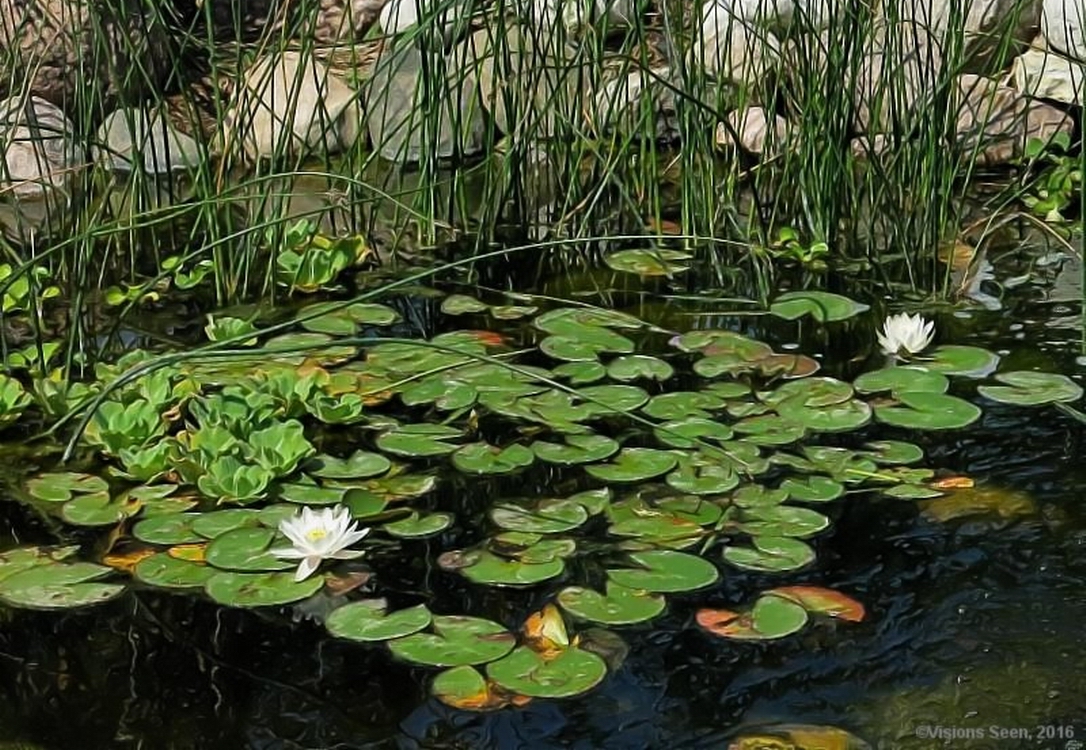

I shared this photo on one of my other blogs as well, but this truth is too
powerful and too important to miss an opportunity to repeat it here.
If I had known in days gone by
The things I know today, 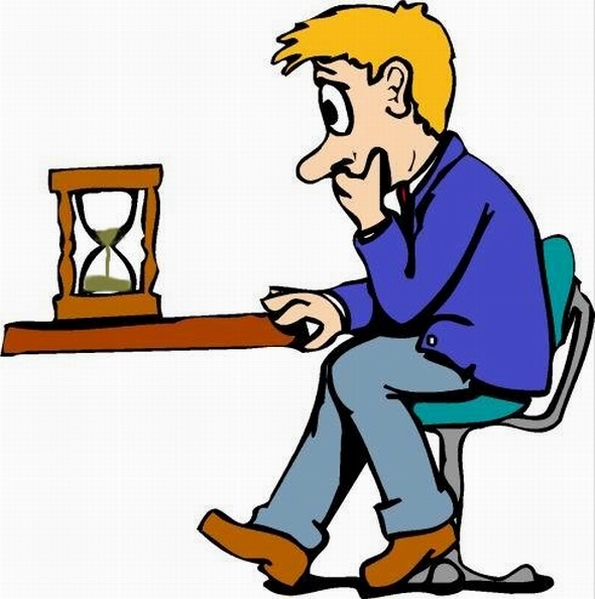
I’d have thought and felt and acted,
Sometimes, in different ways.
If yesterday’s tomorrows
Hadn’t come ahead of time,
If they’d waited ’till I’d learned some more
And had made it to my prime,
I would have done a better job
Of living properly;
If wisdom from today had been
More than a mystery.
And now I’d like to put a hold
On life’s full speed ahead,
Just until tomorrow brings me
Knowledge from up ahead.
Why, I could guarantee success!
I could live the perfect way!
Could I just get my tomorrows
To become my yesterdays!
©Sandra Conner 2012
Just couldn’t decide which of these “DISTORTIONS” I liked best, so I posted all three.
Hope they add a little color to someone else’s day as well.
“Cocoa Sky With Marshmallows”

~ ~ ~
“Fire In The Sky”

~ ~ ~
“Falling Into The Sky”

~ ~ ~
I took the original picture early one morning from my front porch. I knew it was a gorgeous sight, but I never dreamed I’d have so much fun with it until WordPress challenged me with this week’s word, “Distorted.”
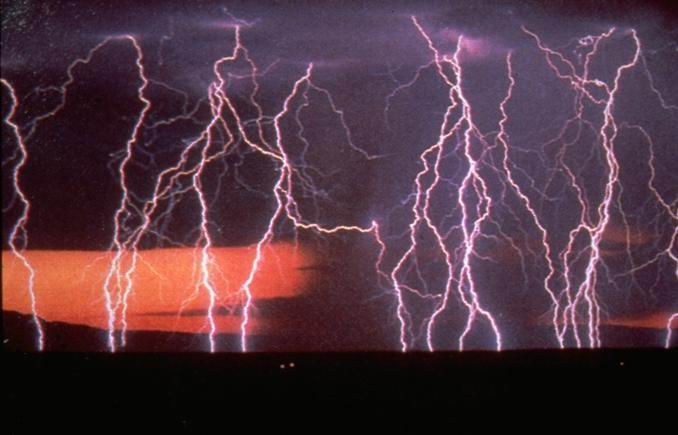 (I live in the Heartland of the United States — in the southern third of Illinois to be more exact. And as most of the nation — probably the world — knows by now, a portion of that area was hit really hard by devastating, killer storms again in the very early morning hours of February 29th. Last year, we saw the same kind of devastation from similar storms in many states and over a long period of time. When horrific events like that take place, there are a number of people who automatically suppose that God is behind those events — or that He deliberately allows them as a way of teaching or punishing the people on earth. Nothing could be further from the truth, and in response to a number of misguided comments by both Christians and non-Christians, I am posting this article in an effort to clear the record and bring to light the truth — both about devastating storms and about God.)
Jesus said, “The thief comes only to steal, and kill, and destroy; I came that they might have life, and might have it abundantly.”
There you have it, friends: the answer to the question of whether tornadoes and other “killer storms” are from God. Do they kill? Do they destroy? Then according to Jesus Christ Himself, they are not from God. Where do they come from? They come from an aberration and twisted use of the natural elements that is orchestrated by Satanic power in operation on this earth.
God made all natural elements, including the elements of weather, to be a blessing to man. And even in Psalm 8, He tells us that man is to rule over “all the works” of God’s hands. But man rebelled against God and His purposes in the garden, and listened to Satan instead. His actions in response to Satan put man in a position of subservience to the devil, and that sin opened the door to a curse that would effect all of the created earth. (Gen. 3 / Rom. 8). When man gave Satan the right to operate in this earth, Satan then moved into a position of being able to take hold of any of the natural elements, adulterate them, twist them, and use them to inflict evil upon mankind — and the planet itself. He operates this way on a regular basis and then tries to convince the world that God causes it all. That’s his M.O.
However, that is not the last word in the story. God’s Covenant with man – which He calls a “covenant of peace” (Is.54) – restored man’s right to rule over the elements again — only through that covenant — and to take authority over those demonic powers. Even in the Old Covenant, the Lord expected His faithful servants to know how to use that authority over the natural elements. When Jesus is with His disciples in the boat, and they are struck by a severe storm (Matt.8), He tells them that they are showing a serious lack of faith in responding in fear rather than authority. He finally stills the storm for them, but at the same time, He asks them “Where is your faith?”
And it gets better still: As part of the New Covenant, Jesus literally bought back man’s right to govern in the earth as He was intended to do. We as believers are made the Body of Christ, and since the government is now upon His shoulders – His body – us – we are supposed to be “governing.” (Is. 9). The devil still has the right that man gave him to operate in this earth, but we now have absolute power and authority to bind his power and activity wherever we will make the effort.
Since the finished work of Jesus, we are now literally in the highest position of authority on this planet. Philippians 2 says that every created thing — in heaven, on earth, and under the earth — must bow its knee to and obey the name of Jesus Christ. Do we believe that? Ephesians 1 says that Jesus reins over all principalities and powers and that He is the head of His body – which is the Church. If we are His body, and all things are “under His feet,” then all things are under us as well. Do we believe that?
We now have the blood-bought spiritual authority living in us to take command over every natural thing. All natural things were created by a Spirit God, and they will respond to the commands of the Spirit God in us.
What do we do with that authority? In Mark 11 — as well as several other scriptures in the Gospels — Jesus says that if we will speak to a mountain or a tree [ or a storm??? ] and tell it to move, and not doubt in our hearts, but believe that it will come to pass, we will have what we say. Do we believe Him?
Unfortunately, some Christians seem to think that all natural calamities are some kind of judgment from God. There will certainly come a time for God’s judgment to be unleashed — at the end — but that time is not now, if we are to believe the commission of Jesus Christ to His church. Jesus said twice in the Gospel of John that He did notcome to judge the world, but to save it. He then told His disciples, and all of those who would become disciples, to follow His specific examples and continue to carry on that work of taking the Gospel to the world. That being the case, we need to get into agreement with Jesus and say God is not judging right now; He is delivering the grace and mercy of the Gospel of salvation.
We do need to be aware, however, that when a nation or a people deliberately throw God’s Word in His face and deliberately take a stand or practice things that God clearly says are against Him and His ways, they are literally opening the door to an attack from demonic power. When we do those things, we set ourselves up for that attack — even invite it. God isn’t sending it, but it will come. But even in that kind of situation, God has repeatedly shown mercy and turned destruction away from people — even in the Old Covenant — because faithful believers prayed and took a stand of faith.
Many times in my own life, I have experienced the power of God’s Word and the name of Jesus Christ taking authority over destructive storms, and as a result, seen those storms dissipated, turned away, and or destroyed. Many other believers have experienced the same thing. And yes, I’m talking about deadly tornadoes and hurricanes as well as severe thunderstorms.
But when you are facing a huge battle, sometimes you need a huge, united front to win. The need in this nation is for a strong united front of faith on the part of the Christian believers to stand in authority against these deadly storms and weather systems. This whole massive movement of deadly, destructive weather is nothing but a spiritual war being waged by demonic forces, using natural elements. We must learn to recognize it as such and command the demonic forces to take their hands off — and command those elements to obey the purposes of God in the name of Jesus Christ.
Come on, Church! Rise up and take your authority! If true believers in this nation will unite in faith, take a strong stand on God’s Word, and take authority over these destructive storms in the name of Jesus Christ, the storms and elements of weather will obey!
I was browsing this week through some old newspaper columns I had written and came across one that focused on Winnie the Pooh, By A. A. Milne. In the column, I had mentioned that, had he still been with us, Milne would have turned 125 that year. But as I perused the article, I began to think more and more about how long-lasting books and their effects on us can be. I still remember so many things that I read in books as a child. And I am constantly amazed when I look at the authors that I have loved best over the years and realize that, since those books were written (some even hundreds of years ago),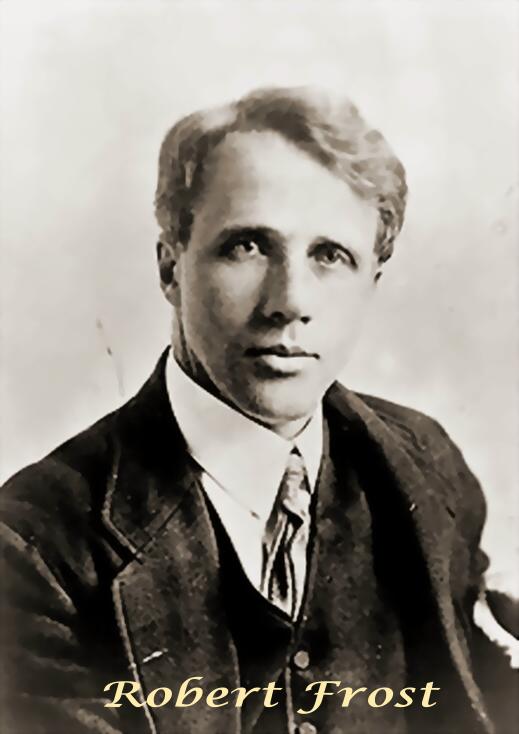 every single generation has discovered them anew and chosen them as favorites.
I was especially blessed to learn that one of my little nephews, Josiah, at the age of two, had come to love one of my favorite poets almost as much as I do. There’s no question that Robert Frost has been one of the most quoted, most loved, and most written about poets to grace American literature. And several succeeding generations have read his works with great pleasure. But I did not suspect that a 2-year-old boy would find him so appealing, until I realized that amid the scores and scores of books Josiah has in his ownership, his very favorite is a book devoted entirely to the poem “Stopping By Woods On A Snowy Evening.” Now, this book is not a children’s version, paraphrased for young minds. Not at all. It is the entire poem in the author’s original text, along with a few photos that are applicable. His love for this poem caused me to realize anew just how powerful and almost eternal great writing can be. In an age when all kinds of multi-dimensional media are vying for kids’ attention, this quiet, unpretentious poem — this great piece of literature — is a 2-year-olds’ favorite “story.” How blessed Robert Frost would feel to know that. Hopefully he does.
Naturally, all of this thinking led to my going over in my mind the list of my personal favorites. Now, I won’t try to write out that list in this article, because it would make this piece way too long — and inevitably I’d forget one and feel compelled to come back and edit. Then the next day, I’d have to edit again to add another, and so on. But I’m sure most of you who love to read know exactly what I mean. And it gives me a warm, comforting feeling to know that, no matter how “modern” or “technologically advanced” we get, people keep looking for and finding something valuable, lasting, and often life-changing in books that have been around a long time.
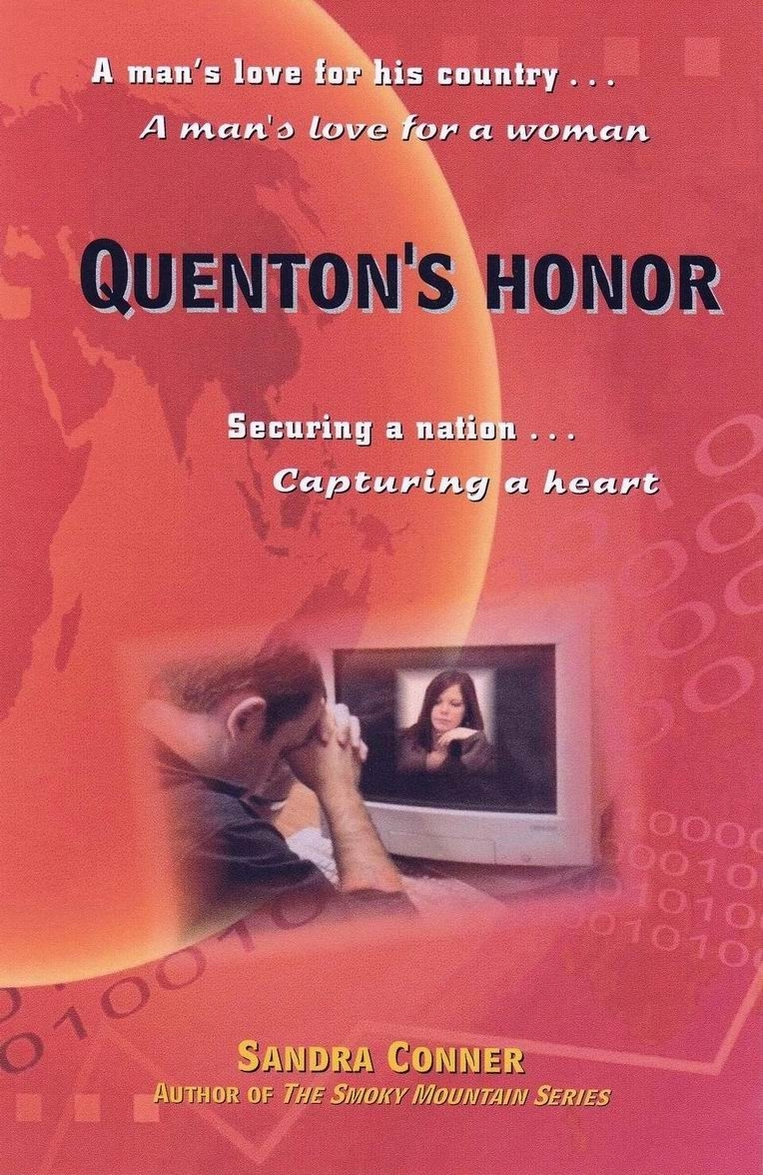
As an author myself, I hope I too can write books that will touch people at the core places of their hearts and lives so that what I write will be considered valuable enough to be chosen by generation after generation. I will never forget the thrill of realizing for the first time that something I had written really did have the power to capture people’s attention to the point of making them forget everything else and to move them to great depths of emotion. A couple years ago, a woman who was reading one of my inspirational novels, Quenton’s Honor, said to me one day, “Boy, I’m not happy with you! I started reading that book last night, and I couldn’t put it down. It was 2:00 in the morning before I was able to make myself put it down and get some sleep.”
She has absolutely no idea how thrilled I was at her words. But it got better. A couple days later, I walked into the office where she worked. She was in tears — almost sobbing. I hurried over to her and said, “Barbara, what’s wrong?” She mopped her face and blew her nose, trying to stem the tears enough to answer. In the meantime, I saw that she had the book in front of her on the desk. She then looked up at me with tears still streaming down her face and slobbered out the words, “I’m just now reading where …” (and proceeded to tell me the scene she was reading from the book) ” … and I just can’t stop crying!”
 I remember thinking, “Yes! That’s exactly where I wanted you to cry!” I decided maybe she’d feel better if she knew that, so I said, “Wow, Barbara, that’s great! That’s exactly what I want the reader to feel from that scene. Thank you! You couldn’t put it down to go to sleep, and you cried in all the right places! That’s terrific!”
Of course, I’d like to have the same powerful effect on readers all the time, the way a couple of other current authors do. For example, I’m a Vince Flynn fan. In my opinion, he literally “wrote the book” on high-concept political intrigue. Every sentence is packed, and for that reason, I find it almost impossible to put his books down once I start reading. And since he has kept me up past 3:00 a. m. on a number of occasions, one of my goals in life is to write a novel that will keep Vince Flynn up until 3:00 a. m. as well. Wish me success.
 I cannot take credit for snapping this picture, because I am in it. I am the ‘guzzler’ on the right. My cousin and I were aged one (me) and two, and our families often spent time together. Our dads were definitely not heavy drinkers, but they did enjoy a bottle of beer or a glass of wine occasionally. This photo was taken just after they had each finished off a bottle of beer, and handed the empty bottles to us to play with for the picture. Never one to let an opportunity for new experiences pass me by, I indulged myself.
 THREE DOWN
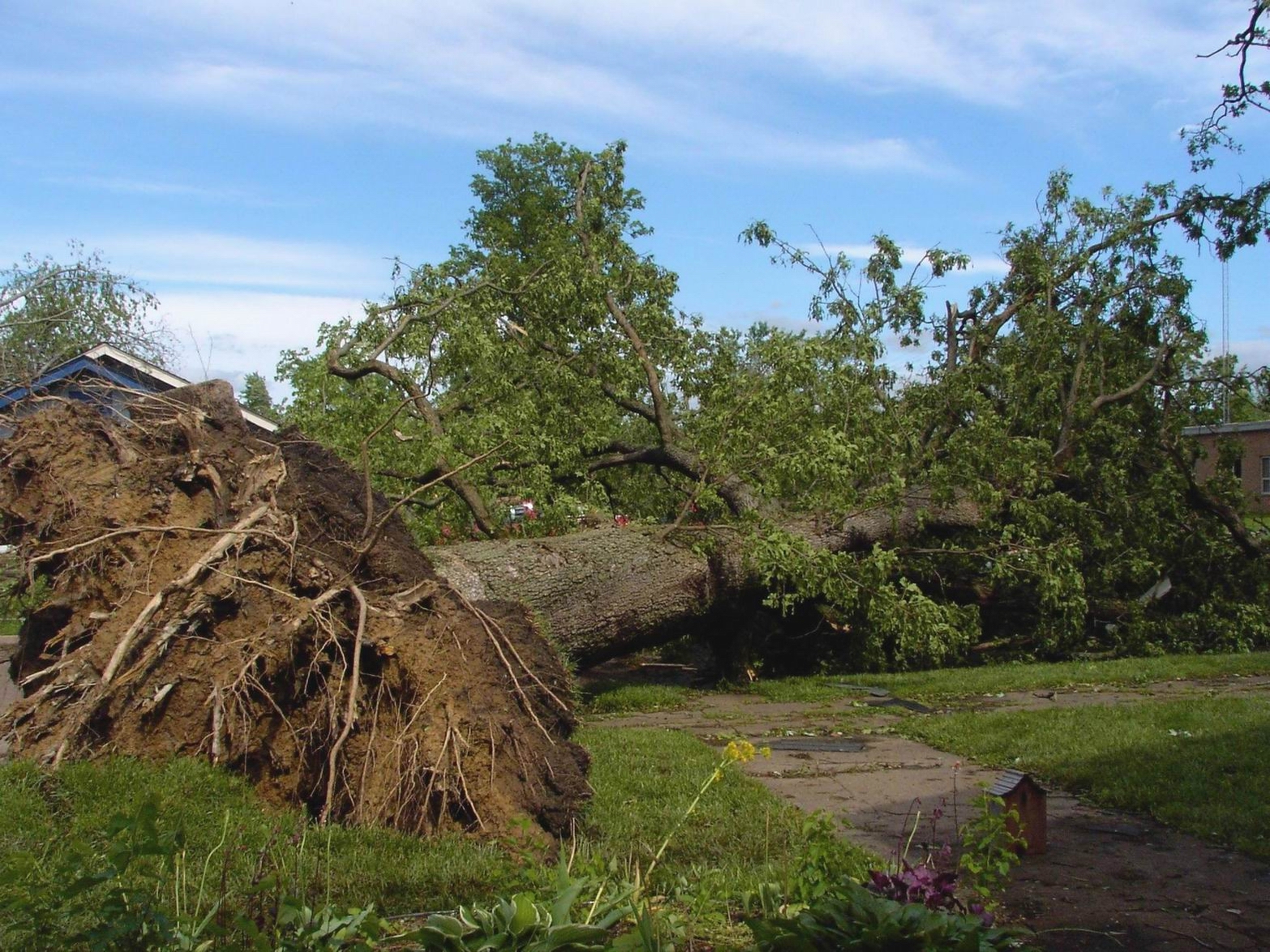
There are actually three things “down” in this photo, taken right after a Derecho (inland storm with winds of 80-100 mph.) This 100-year-old tree was uprooted and slammed down in one piece by that storm — which, by the way, did the same thing to literally hundreds of trees in a three-county area. We looked like a war zone after it was over. In this photo you can see the tree itself ‘down.’ There is also a little birdhouse sitting on the sidewalk in the foreground of the picture. (Another home lost due to the storm). But the third item is not visible to the camera. The owner of the tree also owned a truck that was parked on the street in front of his house. The tree fell completely across it, and it is also “down.” But perhaps I should actually say this picture represents four “downs,” when it’s all said and done, because the family who experienced this much loss was feeling very “down” about the whole situation.
I apologize for the confusion on the “Read Free Novel” page for the past couple of days. Chapters were out of order, due to a technical error on my part. I think everything is back in good order now. If you’re reading the novel and run into problems, please leave a comment and let me know. Or you can always e-mail me at sandraconner3@gmail.com.
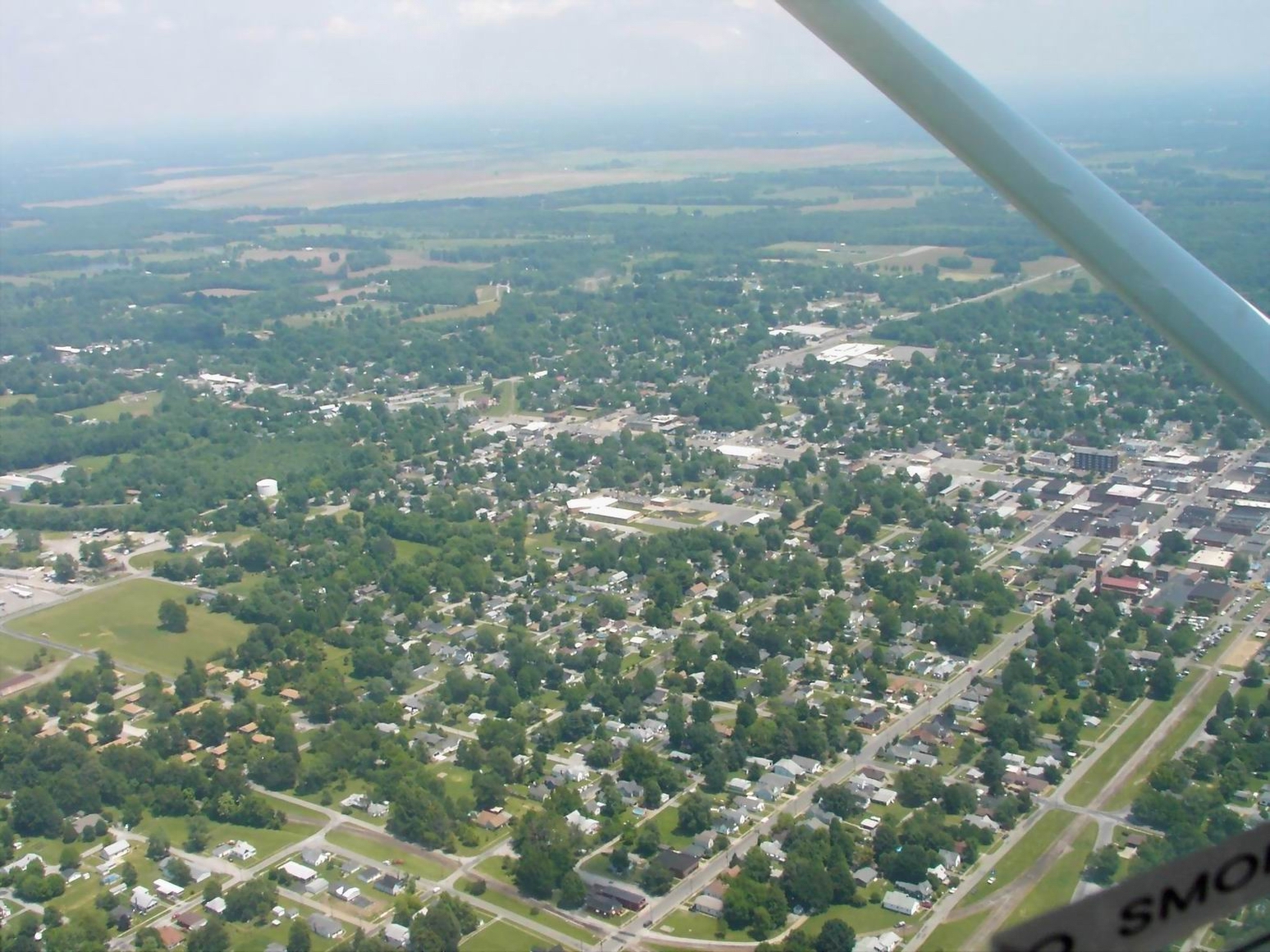 I took this photo while riding with my sister as she took her very first flying lesson. I went along, carrying my camera and two of hers, in order to document the event for posterity. Although flying in large jets does not make me dizzy at all, flying in this tiny three-seater put my head on a merry-go-round. The only time I could keep it settled was when I looked down, so I concentrated on taking a lot of pictures of the ground. This photo is my favorite. It is a section of my home town, and when I enlarge it, I can actually pick out my house.
 You will see in this exceptional photo that the horse is literally flying over this double hurdle with a measurable amount of space to spare. A particularly difficult feat, and a beautiful sight to behold. I was inspired to see in this photo the meeting of a challenge in a quote from a woman named Dorothea Brande. She said: “Act as if it were impossible to fail.”
The beautiful horse in this picture believed he could fly over this hurdle with room to spare. That is the only reason he is doing it successfully. I found that looking at this picture and dwelling on it encouraged me to challenge myself to do the same, and I’m passing on that challenge. Whatever it is in your life that you need — or even want — to accomplish successfully, believe that you can do it. See yourself doing it. Throw your heart over the hurdles that look like they could hinder you.
A famous trapeze artist from two generations ago was training a new student who, one day, suddenly became filled with fear as he looked at the precarious perch where he had to perform. He froze — couldn’t move a muscle — and began to gasp, “I can’t do it! I can’t do it!” The long-time veteran put his arm around the young man and said, “Yes, son, you can do it, and I will tell you how: throw your heart over the bar, and your body will follow.” The Word of God backs up that premise with the truth from Proverbs 23:7, which says of man, “As he thinketh in his heart, so is he.”
The horse in this picture had been trained by his master to jump over those hurdles successfully. He knew the thrill of doing so, and he knew the rewards of success. That training caused him to believe that he could make this jump with plenty of room to spare. Our God teaches us that we can “do all things through Christ who strengthens us” (Phil. 4:13), and that “with God nothing shall be impossible.” (Luke 1:37). He also tells us that if a man has faith in God and shall “not doubt in his heart, but shall believe that those things which he saith shall come to pass; he shall have whatsoever he saith.” (Mark 11:23). We too have been “trained,” by the Word of God, to accomplish what we set our hearts to do.
That horse threw his heart over those bars because he believed he could make that jump. So he did. He simply acted on what he believed and succeeded. Let his example stir you. When you go through a difficult situation in your life or you find yourself facing the challenge of doing something that looks a little too big or too high for you, go back and take a long look at this photo. Meditate on it until the power of it has saturated your own soul. Then obey Dorothea Brande’s wise words: “Act as if it were impossible to fail.”
We recently had a weather forecast for snow and other wintery precipitation in our area. I was feeling all the usual negatives that come with that kind of forecast, while hearing children and a few friends exclaim how much they were looking forward to it. Their attitude put me in a worse mood, and while sitting looking out the window, wondering when it would start, this poem came to me. I hope it strikes a chord in a few of you, my readers. The photograph is of my gorgeous Blue Spruce tree in my front yard.

SNOWCHILD
When I was a child, I thought as a child,
And snow was a thing so delightful!
From school we were free; we got wet to the knees,
And our mom’s day was thrown all off schedule.
But now that I’m grown, I must do on my own
All the chores Mom and Dad used to dread:
Stock up food by the loads, drive on slippery roads,
Shovel snow, and repair that old sled.
Now I look with dismay at the skies leaden gray
As I trudge to the store for supplies.
De-icer and salt sell out fast with no halt.
I need new boots to tread on the ice.
The wind from the north is bitter and harsh,
But my temperature, still it is rising;
I am in a foul mood, for I see nothing good
That can come from a snowstorm arriving.
But then the flakes start, and I feel in my heart –
Watching white, fluffy, wonderful, wild
Filling all of my world with such beauty unfurled –
That in truth I am still just a child!
~
In an episode of the uniquely popular TV program The Andy Griffith Show, an episode entitled “The Rivals,” Andy tries to help his son 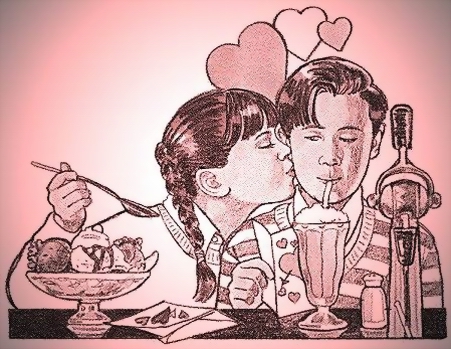 Opie come to terms with the troubling symptoms of being in the throes of first love. As they sit together in the living room, Opie opens the conversation: “Paw, when you like someone a whole lot, that means you love ’em, don’t it?”
“It depends,” says Andy.
“Well, when I’m with Karen, I get a lump in my throat, my ears ring, and my knees get all squiggly. Does that mean I’m in love?’
“Either that or you’ve got a real bad case of the measles.”
“Paw, if I marry Karen someday, her name becomes Taylor, don’t it?”
“That’s right, and all your children become Taylors too.”
“Children? … I don’t think we’d have any children, Paw. We already know enough kids to play with.”
And so – with childhood’s blurry vision of the details of this state called marriage — Opie easily dismisses one of the most important results of engaging in the deepest mysteries of the marriage covenant. Children are a very visible product of those mysteries.
But there are other products as well. Many of them are not so easily seen or identified, but they can be just as important and just as life-changing. There is a sense of fulfillment and a greater sense of wholeness. There’s a sense of security and oneness that melts away all the coldness of being alone. And there’s a new knowledge of self – an understanding of oneself on a new level. The man and woman who have previously been “their own person” have now, for the first time, realized that they are much more complex and much more capable of enjoying that complexity as a result of this new relationship and the new identity that results from it.
But all of this change is not easy. Nor is it simple. In fact, it is so complex that sometimes it’s weeks, or unfortunately even years, before one or both partners actually realize that they have become a part of a brand new whole and are no longer exactly the same persons they were before marriage.
That realization could be frightening if not seen through the plan of God. He, after all, is Love (1 John 4:8). He created this thing called marriage – and the sex that is an integral part of it. And guess what? He knows what He’s talking about. His plan is that each partner in this holy covenant relationship will find in the mate the answer to longings that have never been fulfilled; the key to opening doors in the soul that have never been unlocked; and the love that saturates and nurtures our unique gifts and abilities so that they mature and bring us to the highest and best we can be. In short, it’s this new person, conceived from the two, that is finally complete and whole in a way that nothing but a “covenant” marriage relationship can accomplish.
It is true that our mate cannot fill the place in us that is reserved for God Himself. And we will never be truly whole until He is at home in us, giving us all of Himself. But it is God Himself who has told us clearly, “It is not good for the man to be alone. I will make him a helper suitable for him. … And the Lord God fashioned into a woman the rib which He had taken from the man and brought her to the man. And the man said, ‘This is now bone of my bones and flesh of my flesh.’ … For this cause a man shall leave his father and his mother and shall cleave to his wife; and they shall become one flesh.” (Gen. 2: 18, 22-24, NAS). God said of his “perfect” man that he needed a woman to be complete. And He created the woman to be so much a part of the man that she would have a need of him to be complete as well. Isn’t it interesting that this “need” of each other was created into us as part of our perfection? And this unique completeness that results is probably the one most powerful and thrilling product of a man and woman entering into and enjoying the blessed mysteries of God’s kind of marriage.
I know in this 21st century – especially in the hollowed political halls of this world — it is not considered “politically correct” to make such statements. But, thank God, there is still one Document that supersedes all the political attitudes and postures of every society on the face of the earth. It still supersedes every new “law” on the books that would try to make marriage something different from the commitment of one male and one female partner in covenant with each other and with the God who created them. Thank God that Document — The Word of God – The Holy Bible – still gives the human race the blessed, supernatural opportunity to experience total completeness through love – when they enter into it the way God Himself created it to be experienced.
Truly, a Valentine gift to be treasured forever.


HAPPY VALENTINE’S DAY!
(Copyright: Sandra Conner 2009)

“Will you read me a story?” Just how many times I asked that question of parents and grandparents during my growing-up years I’ll never know. But ask it I did, because I loved stories. In fact, I loved the whole idea of someone being able to pick up a book of pages filled with letters, and being able to understand those letters to such an extent that they told a complete story that I could then understand and enjoy.
Reading. It was one of my fondest dreams and proudest accomplishments when still a very young child. Along with learning how to write those same letters on a page myself so that they would make sense for someone else. To say that I was fascinated with books would be an understatement indeed, and I have since spent my life pursuing the adventure of devouring written matter in virtually every form in which I could find it.
Now, in my middle-age season, as I work toward getting more of my own written work published, I’ve naturally been looking into all the various media currently available for getting written material into the hands of the public. With each passing day, I’ve become even more aware of the fact that I am now living on a new planet — Computer-World. Virtually every kind of transaction and correspondence is carried on via the internet, and even a good deal of our entertainment and recreation is now often found in the hallowed halls of the computer terminal.
But I’ve been especially concerned personally with understanding the whole electronic book media, since it is gaining more ground every year. One of the young men who was working with me a few years ago in the development of a publishing enterprise threw me for a loop when we were talking about my getting two or three manuscripts to him in order for him to help critique and edit the material. He suggested that I just send the manuscripts by e-mail. I looked at him in surprise and said, “But then you’d have to print them out yourself, because you wouldn’t want to have to sit in front of the computer to read whole books.” He gave me what I call a sympathetic but condescending look, smiled sweetly, and said, “We’re a new generation . . . we read off the screen.”
I’m sure my face registered my shock, and his words stayed with me for weeks after that conversation. (Now, I think I should add here, for the sake of any writers out there who are working on editing their work on the screen: Be sure you print out a hard copy of your manuscript and do at least one edit from that. Every good editor knows that you will inevitably find errors that simply do not come to your attention on the screen.) But back to my main thought: I began to ask myself, “Is that what we’re coming to then … a time when nobody will want to pick up a book and hold it while they read the words printed on the pages?” Something deep down inside of me answered, “No.”
Shortly after that, I spent a couple of hours talking with the owner of three large independent bookstores, and I asked him if he thought there would be a total shift to electronic books soon. He said that he could see a slight swing in that direction, but he believed it would be another four or five years before it made any major difference. It’s now all those five years later, and it has made a definite difference, but it still hasn’t emptied the hardcopy bookshelves enough to see the dust on them.
So still the question has been hanging around in my head … and in my heart. I say in my heart because the idea had made me a little sad … like realizing that instead of sitting with friends and being able to touch them while you visited, you’d have to just listen to their voice over a phone line. There’s just something about picking up a book and holding it in your hands … feeling the weight of it … smoothing your fingers over the cover … whether it’s made of fine leather, soft paper, or some other material … it doesn’t matter … it’s a book. And then there’s the expectancy of opening it for the first time … or even the hundredth time … and moving through the pages, smelling the scent of paper and ink that no computer will ever be able to simulate.
Those experiences are the appetizers, leading me into the bountiful main course of the book itself, which is followed, of course, by the sense of being satisfied and replete at the end of a magnificent meal. Nothing else can quite compare to that sense of fulfillment and that gratified smile that accompanies the reading of the words, “The End” at the conclusion of a good book, and the feeling that I’ve truly completed something worthwhile when I close the back cover for the last time.
But then I thought, “That experience can’t be the only reason I prefer to hold a book while I read it.” And as I meditated on my reasons, I came to this conclusion: I enjoy television programs and movies; I see a real merit to using audio books if one has a vision problem, or is driving for long periods; and I can understand the value of e-books scrolling across my palm pilot if I’m sitting in a busy airport or bus terminal and don’t want the fuss of several heavy books to carry. However, it’s a fact that when I’m actually holding the book in my own hands and reading the material, I’m somehow absorbing what I’m reading and becoming a part of it more completely than I do when I’m just looking at the words or actions on a screen.
Then I began to think about how blessed I feel to be able to walk into a bookstore or a library and let my eyes feast on aisle after aisle of shelves covered in beautiful books. I thought about all of the excitement and joy of choosing from all of that bounty and wanting to hurry home, quickly getting other chores out of the way, so that I can sit down and open my treasure and … read.
So I’ve decided: No, I don’t believe that any other media will ever totally replace reading a real book. No other media will ever be able to give the joy and total gratification that is ours when we hold a book and let our eyes search out and devour what resides within it. Or when our children or grandchildren cuddle up with us and lean in close to see for themselvesthose printed words that make the special magic when we “read them a story.”
So now, although I’m going with the flow – Facebooking, blogging, online news reporting, and formatting my own books for digital readers – I’m also committing myself to help the “new generation of screen-readers” to discover and understand the unique satisfaction and thrill of picking up a book and reading it. I’m making it my job to encourage them not to get so involved with trying to get in touch with their computer that they get out of touch with books. Even those friends of mine who feels that man’s best friend is the “mouse” can benefit from taking a break and picking up a book.
So let me offer this personal invitation to one and all. Take some time to visit your nearest library or bookstore and wander through the aisles of beautiful books. Choose one; take it home; sit down in a comfortable chair and prop your feet up. Smooth your hands over the cover a few times; smell that sometimes new — sometimes musty — but always unique scent of a book. Open the cover, and turn the page. Give yourself the gift that no one else can give you: read a REAL book!
 The Happy Wordcrafter